Table of Contents
Imagine walking from your sun-drenched living room into a chilly basement office without breaking stride, knowing every space in your home maintains your ideal temperature without constant manual adjustments. Multi-room climate control has evolved from a luxury into a practical solution for modern households, where remote thermostat controls transform how we interact with our heating and cooling systems. These intelligent devices put unprecedented power in your hands, letting you fine-tune comfort zones from anywhere—whether you’re curled up in bed, stuck in traffic, or vacationing across the country.
As we look toward 2026, the landscape of remote thermostat technology continues to advance at a remarkable pace, offering sophisticated features that go far beyond simple temperature adjustments. Understanding what separates a basic remote from a truly effective multi-room system can save you thousands in energy costs while eliminating the frustration of hot and cold spots throughout your home. This comprehensive guide explores the essential features, system types, and critical considerations you need to evaluate before investing in a remote control solution for whole-home comfort.
Top 10 Remote Controls for Thermostats
Detailed Product Reviews
1. DIGITEN Wireless Thermostat Outlet Temperature Controlled Outlet with Power Cord for Heating and Cooling, Remote Control Plug in Thermostat 1800w for Space Heater, Fan, AC

Overview: The DIGITEN Wireless Thermostat Outlet delivers targeted climate control through a simple plug-and-play design. Rated for 15A/1800W, it features a unique power cord configuration that prevents blocking adjacent outlets—a common frustration with direct-plug models. The remote controller integrates the temperature sensor and offers an LCD display with backlight for easy monitoring of current and target temperatures.
What Makes It Stand Out: The separate input/output socket architecture reduces electrical resistance and heat buildup, enhancing safety and equipment longevity. Unlike wall-mounted thermostats, the power cord design preserves outlet accessibility. The remote’s built-in sensor provides flexibility in temperature monitoring location, while the sliding mode selector simplifies switching between heating and cooling operations.
Value for Money: This unit offers exceptional versatility at a price point competitive with basic programmable outlets. It eliminates the need for expensive dedicated circuits or professional HVAC modifications, making it ideal for supplemental climate control in specific zones like greenhouses, basements, or pet enclosures. The FCC certification adds credibility without inflating cost.
Strengths and Weaknesses: Strengths include true plug-and-play simplicity, space-saving design, enhanced electrical safety, and broad appliance compatibility. The separate socket architecture is genuinely innovative. Weaknesses include batteries not included, unspecified wireless range limitations, lack of smartphone connectivity, and potential temperature lag from remote sensor placement. It’s unsuitable for whole-home HVAC integration.
Bottom Line: Perfect for controlling individual appliances in defined spaces. Excellent for space heaters, window AC units, and specialty applications like reptile habitats or mushroom cultivation. While lacking smart home features, its safety-conscious design and straightforward operation make it a reliable choice for targeted temperature management.
2. Heagstat WiFi Thermostats for Home Single-Stage 1Heat/ 1Cool, APP Remote Control, 7-Day or 0-Day Programmable. (C-Wire Required)

Overview: The Heagstat WiFi Thermostat brings intelligent climate control to single-stage HVAC systems through 2.4GHz connectivity and smartphone app integration. Engineered for 1H/1C configurations, it delivers ±1°F temperature accuracy with 7-day programmable scheduling. The backlit LCD display ensures easy manual operation in low-light conditions like basements or hallways.
What Makes It Stand Out: This thermostat excels at precise temperature maintenance, eliminating the frustrating fluctuations common in budget models. The intuitive app interface enables remote adjustments and real-time system monitoring from anywhere. Its 7-day programming supports multiple daily periods, optimizing energy usage while maintaining consistent comfort. The device focuses specifically on single-stage systems, ensuring reliable operation without unnecessary complexity.
Value for Money: Positioned as a budget-friendly smart thermostat, it costs significantly less than premium brands while delivering core remote control and scheduling features. For compatible systems, it offers comparable energy savings potential without subscription fees or premium pricing. The precision control alone justifies the investment over non-programmable alternatives.
Strengths and Weaknesses: Strengths include reliable app connectivity, accurate temperature regulation, flexible scheduling, and clear display. Installation is straightforward for those with C-wire access. Critical weaknesses are 2.4GHz-only WiFi limitation, incompatibility with heat pumps or multi-stage systems, and mandatory C-wire requirement that may necessitate professional installation. No battery backup exists for power outages.
Bottom Line: An excellent entry-level smart thermostat for homeowners with compatible single-stage systems. Ideal for those wanting remote access and scheduling without advanced features. Verify your HVAC compatibility and C-wire availability before purchasing. For supported configurations, it delivers reliable performance and meaningful energy savings at an attractive price point.
3. Durablow TR1003 On/Off Gas Fire Fireplace Remote Control Kit + Thermostat + Timer with LCD Screen for Millivolt Valve, IPI Module, Replaces Wall Switch | Thermostat Control Module

Overview: The Durablow TR1003 is a specialized wireless control kit designed exclusively for gas fireplaces with millivolt valves. This battery-powered system provides on/off functionality, thermostat automation, and timer operations without generating ignition voltage itself—instead safely passing voltage from the fireplace’s thermopile. It serves as a smart replacement for standard wall switches across numerous fireplace brands.
What Makes It Stand Out: This kit uniquely combines thermostat and timer functions with extensive cross-brand compatibility, replacing over 20 manufacturer-specific models. The childproof safety lock prevents accidental activation, while non-directional RF signaling works within a 20-foot range without requiring line-of-sight. The receiver’s compact 2.6"x2.4"x1.54" dimensions fit most outlet boxes, and the LEARN function simplifies pairing.
Value for Money: For gas fireplace owners, this represents substantial savings compared to OEM remotes or professional control upgrades. Its broad compatibility eliminates the need to hunt for model-specific replacements, making it particularly valuable for older installations. The dual thermostat/timer functionality adds convenience typically found in more expensive systems.
Strengths and Weaknesses: Strengths include extensive compatibility list, safety-conscious non-ignitor design, childproof lock, and FCC approval. The thermostat allows 1-3°F swing adjustment, and timer options range from 15 minutes to 9 hours. Weaknesses include mandatory compatibility verification, limited 20-foot range, and installation complexity requiring valve identification. The technical nature of millivolt systems may challenge DIY novices.
Bottom Line: Essential for gas fireplace owners seeking wireless convenience without compromising safety. Perfect for those with compatible millivolt valves wanting thermostat automation and timer functionality. Thoroughly verify your fireplace’s valve type before purchasing. While installation demands careful attention, the versatility and safety features make it a worthwhile upgrade for eligible units.
4. SENSTREE Remote Control Thermostat, pre-Wire Temp Controller with Heating/Cooling Mode, ℃ /℉ Switch, Temperature-Controlled Plug for Space heaters, Window AC, Fans, 110V

Overview: The SENSTREE Remote Control Thermostat offers wireless plug-in temperature management with an impressive 100-meter open-space range. The pre-wired design eliminates installation complexity while handling 1800W loads. A standout feature is its power-loss memory that retains all settings during outages. The portable remote provides both handheld and wall-mount options, with real-time LCD display showing current and target temperatures simultaneously.
What Makes It Stand Out: Exceptional wireless range distinguishes this from competitors, making it ideal for outbuildings, large basements, or attic ventilation control. The remote’s flexibility in placement and mounting options provides unmatched convenience. The power-failure memory ensures your programming persists, while the dual-temperature display offers immediate system status without button presses.
Value for Money: This unit competes directly with other plug-in thermostats while offering superior range and memory features at a comparable price. For controlling detached spaces or multiple zones without wiring, it delivers professional-grade functionality at a fraction of hardwired system costs. The 100m range alone provides value unavailable in similarly priced alternatives.
Strengths and Weaknesses: Strengths include outstanding wireless range, setting retention after power failure, versatile mounting options, clear dual-temperature display, and 1800W capacity. The remote’s portability is genuinely useful. Weaknesses include potential signal interference in congested wireless environments, unspecified temperature accuracy tolerance, and lack of smartphone connectivity. Remote battery dependency requires monitoring, and the generic brand may raise reliability questions.
Bottom Line: An excellent choice for controlling appliances in distant or hard-to-reach locations. Perfect for workshops, greenhouses, or vacation homes where wireless range is critical. While lacking smart home integration, its reliability, memory function, and exceptional range make it superior to standard plug-in thermostats for challenging spatial configurations.
5. WiFi Thermostats for Home Single-Stage 1Heat/ 1Cool, APP Remote Control, 7-Day or 0-Day Programmable. (C-Wire Required)
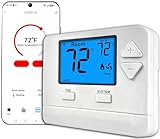
Overview: This generic WiFi Thermostat provides fundamental smart home functionality for single-stage heating and cooling systems. Requiring a C-wire for power, it connects to 2.4GHz networks for smartphone app control and 7-day programmable scheduling. Designed for standard 1H/1C residential HVAC, it offers straightforward temperature management without advanced learning algorithms or premium features.
What Makes It Stand Out: As a no-frills smart thermostat, it concentrates on essential remote access and scheduling capabilities without overwhelming users with complexity. The 7-day programming allows customized daily schedules to optimize energy consumption. Its single-stage specificity ensures reliable operation for compatible systems without the cost of unnecessary multi-stage capabilities.
Value for Money: This generic option typically undercuts name-brand competitors by 30-50%, appealing to budget-conscious homeowners wanting basic WiFi control. It delivers core smart thermostat benefits—remote access and scheduling—without premium pricing or potential subscription costs. For compatible systems, the energy savings can recoup the investment within a heating/cooling season.
Strengths and Weaknesses: Strengths include affordable pricing, fundamental app control, 7-day programming, and simple interface. It provides energy savings potential for compatible systems. Weaknesses include unknown brand reliability, limited customer support, 2.4GHz-only connectivity, and mandatory C-wire requirement. Lack of advanced features like learning algorithms, geofencing, or energy reports may disappoint tech enthusiasts. Build quality may not match premium alternatives.
Bottom Line: A functional, cost-effective entry into smart climate control for compatible single-stage systems. Best suited for homeowners prioritizing basic remote access over advanced features. Verify C-wire availability and system compatibility before purchase. While lacking brand recognition and premium capabilities, it delivers acceptable performance for its price tier and meets fundamental smart thermostat requirements.
6. DIGITEN Wireless Thermostat WTC100 Pro Temperature Controller for Cooling & Heating, Remote Controlled Outlet, Easy-to-Use and Non-Programmable Plug in Thermostats for Home

Overview: The DIGITEN WTC100 Pro is a straightforward wireless thermostat controller designed for plug-and-play temperature management of heating and cooling devices. This non-programmable unit prioritizes simplicity over complexity, making it accessible for users who want basic climate control without navigating complicated menus.
What Makes It Stand Out: The built-in temperature sensor in the remote controller delivers precise readings and automatically switches connected devices on or off when reaching target temperatures. The dual heating and cooling modes provide year-round utility, while the large backlit LCD ensures visibility in dim conditions. Its three-button operation eliminates learning curves.
Value for Money: Priced competitively against basic programmable thermostats, the WTC100 Pro offers exceptional value for those seeking uncomplicated automation. The energy savings from maintaining consistent temperatures rather than manual cycling quickly offset the initial investment. It eliminates the premium cost of smart thermostats while delivering core functionality.
Strengths and Weaknesses: Strengths include true plug-and-play setup, wireless convenience, dual-mode operation, and wide appliance compatibility from A/C units to greenhouse equipment. The remote sensor provides more accurate room readings than outlet-mounted alternatives. Weaknesses stem from its non-programmable nature—no scheduling capabilities means manual adjustment for routine changes. The lack of smart home integration may disappoint tech-savvy users.
Bottom Line: The DIGITEN WTC100 Pro excels as a reliable, no-fuss temperature controller for specific applications like greenhouses, reptile enclosures, or supplemental room heating. While it won’t replace a whole-home smart thermostat, it’s an excellent dedicated solution for targeted climate control where simplicity and accuracy matter most.
7. DIGITEN Gas Fireplace Remote Control Kit, Thermostat with Timer Kit for Millivolt Valve Gas Fireplaces, Large LCD Display, Wireless Thermostat Switch System On/Off/AUTO Control with Safety Lock

Overview: The DIGITEN Gas Fireplace Remote Control Kit modernizes millivolt valve fireplaces by replacing manual switches with intelligent wireless operation. Designed specifically for millivolt systems, this kit adds thermostat and timer functionality to compatible units from major brands like Skytech, Majestic, and Empire.
What Makes It Stand Out: Three-mode operation (ON/AUTO/OFF) provides flexible control, with AUTO mode using the remote’s temperature sensor to maintain desired comfort levels automatically. The child safety lock prevents accidental activation, while the large backlit LCD displays room temperature, set temperature, and system status clearly. The 65-foot signal range covers most living spaces effectively.
Value for Money: Positioned in the mid-range for fireplace controls, this kit delivers substantial convenience and safety features that justify its price. Compared to basic on/off remotes, the added thermostat intelligence and timer functions provide meaningful upgrades without professional installation costs.
Strengths and Weaknesses: Strengths include broad millivolt system compatibility, essential safety features like the child lock and heat-resistant receiver design, intuitive operation, and the convenience of thermostat automation. The clear LCD display and simple installation are notable advantages. Weaknesses include battery requirements not met out-of-box (2 AAA and 4 AA needed), the receiver’s heat exposure limitations requiring careful placement, and lack of smart home integration. Users must remember manual gas valve shutoff during extended absences.
Bottom Line: This DIGITEN kit is an excellent upgrade for millivolt fireplace owners seeking convenient remote operation with intelligent temperature management. The safety features and broad compatibility make it a worthwhile investment, though users should factor in battery costs and placement considerations during installation.
8. meross Smart Thermostat for Home, WiFi Thermostat Works with Matter, Alexa, Apple Home, Google Assistant, App & Voice Control, 7x24h Scheduling, Energy Saving, C-Wire Required

Overview: The meross Smart Thermostat brings Matter-certified intelligence to home climate control, offering comprehensive WiFi connectivity and multi-platform compatibility. Designed for modern HVAC systems, it replaces traditional thermostats with app-based scheduling, voice control, and energy management capabilities.
What Makes It Stand Out: Matter integration ensures seamless local connectivity with Apple Home, Amazon Alexa, Google Home, and SmartThings without cloud dependency. The 24/7 scheduling adapts to occupancy patterns, while smart alerts notify users of filter changes and system malfunctions. Remote access via the meross app provides control from anywhere.
Value for Money: Though priced higher than basic digital thermostats, it undercuts premium smart competitors while delivering Matter certification—a future-proofing advantage. Energy tracking and optimized scheduling can yield measurable utility savings, potentially recouping costs within one to two heating/cooling seasons.
Strengths and Weaknesses: Strengths include robust multi-platform support, intuitive app interface, proactive maintenance alerts, and flexible scheduling that balances comfort with efficiency. The Matter certification represents significant forward compatibility. Weaknesses center on installation requirements—C-wire necessity excludes many older systems, and incompatibility with millivolt, electric baseboard, and two-wire configurations limits applicability. Setup complexity may challenge non-technical users.
Bottom Line: For homeowners with compatible HVAC systems seeking smart climate control, the meross thermostat is a compelling choice. Its Matter support and energy management features make it a wise long-term investment, but verify C-wire availability and system compatibility before purchasing to avoid installation headaches.
9. Fireplace Thermostat Remote Control Kit, for Millivolt Gas Valve & Electronic Ignition Systems, 65ft Range, LCD Display, ON/AUTO/Off Modes, Timer & Child Lock Function
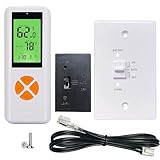
Overview: This Fireplace Thermostat Remote Control Kit combines digital thermostat precision with wireless convenience for millivolt gas valves and electronic ignition systems. It replaces manual wall switches with handheld control, offering ON, AUTO, and OFF modes plus programmable timer functionality.
What Makes It Stand Out: The all-in-one design integrates temperature sensing and remote operation in a single handheld unit. A nine-hour countdown timer provides automated shutoff for safety and energy savings. The 65-foot signal range ensures reliable operation throughout most homes. Safety lock functionality prevents unintended adjustments from children or pets.
Value for Money: This kit offers an affordable pathway to modernize fireplace control without professional installation costs. The combination of thermostat intelligence and timer features at this price point undercuts many brand-specific alternatives while delivering comparable performance.
Strengths and Weaknesses: Strengths include versatile compatibility with both millivolt and electronic ignition systems, the convenient plug-in wiring harness, clear backlit LCD showing comprehensive status information, and robust safety features. The extended timer range exceeds many competitors. Weaknesses include recommended professional installation for safety, battery dependency without included cells, and lack of smart home integration. The remote’s plastic construction feels less premium than some alternatives.
Bottom Line: This remote kit is an excellent value for fireplace owners wanting thermostat automation and timer convenience. While professional installation is advisable, the user-friendly operation and safety features make it a practical upgrade from manual controls. Ideal for those prioritizing function over smart connectivity.
10. WTC100 Wireless Temperature Controller Digital Plug-in Thermostat Outlet Remote Control Heating Cooling Mode for Window A/C Fan Heater Greenhouse Homebrewing Reptile (Built-in Temp Sensor)

Overview: The WTC100 Wireless Temperature Controller is a versatile plug-in thermostat outlet designed for diverse applications from greenhouse management to homebrewing. This dual-mode controller automatically operates heating or cooling devices based on preset temperatures, offering both remote and manual control options.
What Makes It Stand Out: An impressive 100-meter open-space range provides exceptional wireless flexibility. The manual ON/OFF button on the outlet itself offers backup control when the remote is misplaced. High and low temperature alarms add monitoring capabilities uncommon in this price tier. The three-prong grounded socket ensures safe operation with higher-wattage appliances.
Value for Money: This controller delivers remarkable versatility at a budget-friendly price point. Competing units with similar range and alarm features typically cost significantly more. The ability to manage multiple appliance types—from attic fans to reptile heaters—maximizes return on investment through year-round utility.
Strengths and Weaknesses: Strengths include exceptional wireless range, dual heating/cooling modes, manual outlet override, temperature alarms, and broad application compatibility. The grounded outlet supports safe use with substantial equipment. Weaknesses include basic non-programmable operation, lack of smart home integration, and plastic construction that may not withstand harsh industrial environments. The receiver’s display is smaller than some competitors.
Bottom Line: The WTC100 is a practical workhorse for specialized temperature control needs. Its outstanding range and alarm features make it particularly valuable for greenhouses, garages, and remote installations. While lacking advanced automation, it provides reliable, accurate control for users who prioritize wireless flexibility and manual override capabilities over smart features.
Understanding Remote Thermostat Controls for Multi-Room Setups
What Are Remote Thermostat Controls?
Remote thermostat controls are devices or applications that allow you to manage your home’s heating and cooling systems without physically interacting with the main thermostat unit. These solutions range from handheld wireless remotes to sophisticated smartphone apps, web dashboards, and voice-activated commands. For multi-room applications, they provide centralized command over multiple temperature zones, enabling you to create distinct climate profiles for different areas of your home based on usage patterns, occupancy, and personal preferences.
How Multi-Room Systems Differ from Single-Zone
Single-zone thermostats treat your entire home as one homogeneous space, forcing a one-size-fits-all approach to temperature management. Multi-room systems, by contrast, divide your home into independent zones—typically defined by rooms, floors, or functional areas like sleeping quarters versus living spaces. Each zone operates with its own temperature sensors and control dampers within your ductwork, while the remote interface lets you manage all zones simultaneously or individually. This segmentation prevents energy waste in unused areas while optimizing comfort where you need it most.
Benefits of Remote Access for Whole-Home Comfort
The primary advantage of remote access lies in its ability to adapt to your unpredictable schedule. Forgot to adjust the temperature before leaving for a weekend trip? You can modify settings from your phone. Working late in your home office while the family sleeps? Boost comfort in just that room without affecting the entire house. Remote controls also enable precise pre-conditioning—warming up the bedrooms before bedtime or cooling the kitchen before you start cooking dinner. For households with elderly members, children, or individuals with health conditions, the ability to monitor and adjust temperatures from anywhere provides valuable peace of mind.
Key Features to Look for in Multi-Room Remote Controls
Zoning Capabilities and Zone Management
Effective multi-room remote controls must support a robust number of zones—typically between four and eight for average homes, though larger properties may require twelve or more. Look for systems that allow you to name zones intuitively (“Master Bedroom,” “Basement Gym”) rather than generic labels. The interface should display all zones simultaneously on a single screen, showing current temperatures, setpoints, and system status at a glance. Advanced systems let you group zones into scenes or routines, such as “Night Mode” that automatically adjusts sleeping areas while reducing conditioning in common spaces.
Wireless Connectivity Options
The backbone of any remote thermostat system is its wireless technology. Wi-Fi connectivity provides the most versatile remote access from anywhere with internet service, while proprietary radio frequency (RF) connections offer more reliable communication within the home without depending on your router. Bluetooth can serve as a backup for local control when internet service fails. The most robust systems utilize mesh networking, where each thermostat or sensor acts as a repeater, extending range and eliminating dead spots in larger homes or properties with thick walls that block signals.
Temperature Scheduling and Automation
Sophisticated scheduling goes far beyond simple 7-day programs. Seek remote controls that support multiple daily periods per zone, vacation scheduling that automatically resumes normal operation upon your return, and seasonal templates that adjust baseline temperatures as weather patterns shift. True automation means the system learns from your manual adjustments over time, gradually reducing the need for intervention. The remote interface should make these schedules visually intuitive, perhaps through color-coded timelines or drag-and-drop time blocks rather than confusing menu trees.
User Interface and Display Quality
Whether you’re using a physical remote or a touchscreen app, clarity is paramount. The display should present information hierarchically—showing critical data like current temperature prominently, with secondary details accessible through logical navigation. For wall-mounted control panels, consider screen brightness that automatically adjusts to ambient light and viewing angles that remain clear from various positions. Mobile apps should feature customizable dashboards where you can pin frequently adjusted zones and hide rarely used functions to reduce clutter.
Mobile App Integration and Smart Home Compatibility
A well-designed mobile app transforms your smartphone into a powerful climate command center. Beyond basic temperature control, look for features like usage analytics, maintenance reminders, and push notifications for unusual temperature swings or system malfunctions. Smart home integration means your thermostat remote can communicate with other devices—triggering ceiling fans when cooling starts, adjusting window shades based on solar heat gain, or coordinating with whole-house humidifiers. The most advanced systems support IFTTT (If This Then That) protocols, allowing you to create custom automation chains that extend far beyond native capabilities.
Voice Control Functionality
Voice integration has become increasingly sophisticated, moving beyond simple “set temperature to 72” commands. Modern systems understand contextual requests like “make the nursery warmer” or “reduce conditioning in unused rooms.” They can handle complex multi-zone adjustments through single commands and provide verbal confirmations of changes. When evaluating voice control, consider which platforms are supported and whether the system requires specific wake words or can process natural language variations. The best implementations work seamlessly across multiple voice assistants without forcing you to commit to a single ecosystem.
Sensor Technology and Room-by-Room Monitoring
Accurate temperature control requires more than a single sensor per zone. Advanced remote systems integrate occupancy sensors that detect whether rooms are actually in use, humidity sensors that factor moisture levels into comfort calculations, and even light sensors that account for solar gain. Remote temperature sensors—small wireless devices you place in representative locations—provide more accurate readings than thermostats mounted on walls near HVAC equipment. The remote control interface should display data from all these sensors, allowing you to see not just temperature but a complete environmental picture for each zone.
Energy Usage Tracking and Reporting
Understanding your consumption patterns is crucial for optimizing both comfort and costs. Comprehensive remote controls provide detailed energy reports showing usage by zone, time of day, and day of week. They should calculate cost estimates based on your local utility rates and identify opportunities for savings—perhaps suggesting you lower bedroom temperatures by two degrees during winter nights. The best systems benchmark your usage against similar homes and provide gamified challenges to encourage more efficient behavior. Look for exportable data that you can analyze in spreadsheet applications for deeper insights.
Types of Remote Thermostat Control Systems
Wireless Remote Controllers
Dedicated handheld remotes offer tactile control without needing to unlock your phone or navigate apps. These devices typically feature LCD screens and button layouts designed specifically for thermostat functions. They’re ideal for elderly users who may struggle with smartphones or for quick adjustments when your phone isn’t within reach. High-end wireless remotes include voice feedback confirming your commands and backlit buttons for nighttime use. Battery life varies dramatically—from six months to two years—so consider power management features and the availability of rechargeable options.
Smartphone and Tablet Apps
Mobile applications provide the richest feature set and most intuitive interface for tech-savvy users. They leverage your device’s capabilities—GPS for geofencing, cameras for scanning installation QR codes, and notifications for alerts. The best apps work consistently across iOS and Android, maintaining feature parity and receiving simultaneous updates. Offline functionality is crucial; the app should cache recent data and queue commands to execute when connectivity returns. Look for apps that support multiple users with permission levels, allowing family members full control while giving guests limited access.
Web-Based Dashboard Controls
For comprehensive home management, web dashboards accessed through browsers offer superior data visualization and easier bulk editing of schedules. These interfaces excel at displaying historical trends through interactive charts and allow you to manage multiple properties from a single login—particularly valuable for vacation home owners or landlords. Browser-based controls don’t consume phone storage and receive instant updates without requiring app downloads. However, they depend on continuous internet connectivity and may lack the convenience of mobile push notifications.
Wall-Mounted Control Panels
Strategically placed wall panels throughout your home provide localized control without requiring personal devices. These permanent installations feature touchscreen interfaces similar to the main thermostat but are simplified for zone-specific adjustments. They’re perfect for common areas where anyone might need to make quick changes—think kitchen or family room. Premium panels include proximity sensors that wake the display as you approach and ambient light sensors that prevent the screen from being overly bright in darkened rooms. Some models feature physical dials or sliders alongside touchscreens, offering the best of both worlds.
Voice Assistant Integration
Direct integration with smart speakers and displays eliminates the need for dedicated remotes entirely. You can control temperatures through existing devices like smart speakers, displays, or even your car’s infotainment system while driving home. This approach centralizes home control but requires careful consideration of privacy implications and the potential for accidental activations. The most sophisticated implementations support multi-user voice recognition, automatically applying individual temperature preferences based on who’s speaking.
Installation and Setup Considerations
DIY vs. Professional Installation
Many remote thermostat systems are marketed as DIY-friendly, but multi-zone installations introduce complexity that can overwhelm average homeowners. Professional installation ensures proper placement of dampers within ductwork, optimal sensor locations, and correct wiring of multiple thermostats. However, DIY installation can save significant money if you’re comfortable with basic electrical work and following detailed instructions. Consider hybrid approaches where you handle the remote control setup and basic thermostat mounting while hiring professionals for the zone damper integration and HVAC system configuration.
Compatibility with Existing HVAC Systems
Not all remote controls work with all heating and cooling equipment. Heat pumps, multi-stage furnaces, radiant floor heating, and mini-split systems each have specific control requirements. Before purchasing any remote system, verify compatibility with your HVAC equipment’s voltage, control protocols, and communication standards. Some advanced systems require a common wire (C-wire) for continuous power, which older homes may lack. While adapters exist, they add complexity and potential failure points. Document your current system’s specifications—including model numbers and wiring diagrams—before evaluating remote control options.
Wiring Requirements and Wireless Range
Multi-zone systems require communication between the main control board, individual thermostats, and remote sensors. Wired systems use low-voltage cables (typically 18-gauge) running through walls, offering reliable communication but requiring significant installation effort. Wireless systems eliminate wiring but depend on signal strength. Test wireless range in your home before committing, especially if you have metal ductwork, concrete walls, or other materials that interfere with radio signals. Consider systems that support signal repeaters or mesh networking to overcome range limitations in sprawling homes.
Multi-Story Home Challenges
Heat naturally rises, making temperature control particularly challenging in multi-story homes. Remote systems for these properties should support temperature averaging between floors, automatically adjusting dampers to compensate for stratification. Look for controls that let you create “stack effect” schedules—perhaps cooling upper floors more aggressively during summer afternoons while focusing heating efforts on lower levels in winter. Remote sensors become even more critical in tall homes, as a single thermostat on the main floor cannot accurately represent conditions in a third-floor bedroom or basement rec room.
Advanced Features for Enhanced Comfort
Geofencing and Occupancy Detection
Geofencing uses your smartphone’s location to automatically adjust temperatures based on proximity to home. Advanced systems support multiple users with individual geofences, ensuring the house stays comfortable when anyone is home but enters energy-saving mode only when the last person leaves. Occupancy detection through motion sensors or door/window contacts provides room-level intelligence, conditioning spaces only when they’re actively used. The remote interface should let you set occupancy timeouts—perhaps waiting 30 minutes after a room is vacated before reducing conditioning—to avoid constant cycling.
Learning Algorithms and Adaptive Scheduling
Machine learning transforms your manual adjustments into automatic optimization. These systems analyze patterns—perhaps noticing you always warm the home office on Tuesday and Thursday afternoons—and proactively prepare those zones. They account for external factors like weather forecasts, automatically pre-cooling before a heatwave or delaying morning warm-up on sunny winter days when solar gain will help. The remote control should provide transparency into what the system has learned, allowing you to approve, modify, or discard its automated suggestions.
Humidity Control Integration
True comfort depends on both temperature and humidity. Advanced remote controls integrate with whole-home dehumidifiers, humidifiers, and ventilation systems, maintaining optimal moisture levels alongside temperature. In summer, they might overcool slightly to remove humidity, then reheat to maintain comfort without energy waste. The remote interface should display relative humidity for each zone and allow you to set humidity targets independent of temperature. Look for systems that provide dew point calculations, preventing condensation issues in basements or crawl spaces.
Vacation and Away Modes
Sophisticated away modes do more than simply maintain a single temperature. They can randomize lighting and temperature patterns to simulate occupancy, automatically resume normal schedules the day before your return, and send alerts if temperatures drop near freezing (preventing pipe damage) or spike excessively (indicating system failure). The remote control should let you specify return dates and times, automatically calculating when to resume conditioning so you walk into a perfectly comfortable home without wasting energy heating or cooling an empty house for days.
Integration with Air Quality Sensors
Modern remote systems increasingly coordinate with air quality monitors, adjusting ventilation rates when VOCs, CO2, or particulate levels rise. During poor outdoor air quality events like wildfires, they can automatically switch to recirculation mode and increase filtration. The remote interface should display air quality indices for both indoor and outdoor air, providing recommendations for ventilation versus sealing the home. This integration is particularly valuable for households with allergies, asthma, or sensitivity to pollutants.
Budget and Value Considerations
Upfront Costs vs. Long-Term Savings
A comprehensive multi-room remote system represents a significant investment, often ranging from several hundred to several thousand dollars depending on zone count and feature complexity. However, the energy savings typically yield payback periods of three to seven years. Calculate potential savings by analyzing your current utility bills and estimating reductions from zoned control—usually 20-30% for well-implemented systems. Factor in potential rebates from utility companies, which increasingly offer incentives for smart thermostat installations. Some systems provide ROI calculators in their apps, helping you track savings in real-time and justify the initial expense.
Subscription Fees and Hidden Costs
Many advanced remote control features require ongoing subscriptions for cloud services, data analytics, or extended warranties. These fees can range from modest monthly charges to substantial annual costs that quickly exceed the hardware investment. Scrutinize what features work without subscriptions—basic remote access should never require payment. Consider whether premium features like advanced AI learning, multi-property management, or professional monitoring justify recurring costs. Some systems offer lifetime service tiers for an upfront payment, which may be more economical for long-term homeowners.
Warranty and Support Options
Multi-zone systems involve multiple potential failure points, making robust warranty coverage essential. Look for at least three-year warranties on hardware and one-year warranties on installation work. Premium systems offer extended warranties covering accidental damage and lightning strikes. Evaluate support channels—24/7 phone support, live chat, and comprehensive online knowledge bases indicate manufacturer confidence. Check user forums and community support; active user communities often provide faster solutions than official channels for common issues. Consider the company’s longevity; a startup offering cutting-edge features may not exist in five years to honor warranties.
Troubleshooting and Maintenance
Common Connectivity Issues
Wireless interference from microwaves, baby monitors, or neighboring Wi-Fi networks can disrupt remote control functionality. Symptoms include delayed responses, failed commands, or zones showing offline. Most systems include signal strength diagnostics in their remote interfaces—use these tools to identify weak connections. Solutions range from relocating wireless access points to adding signal repeaters. Some systems automatically switch between 2.4GHz and 5GHz Wi-Fi bands to find the clearest channel. For RF-based systems, check for firmware updates that improve interference rejection.
Battery Life and Power Management
Wireless sensors and remote controls depend on batteries that can fail at inconvenient times. Quality systems provide months of warning before batteries die, sending notifications through the remote interface. Lithium batteries last significantly longer than alkaline in extreme temperatures, making them preferable for sensors in attics or unconditioned spaces. Some advanced sensors harvest energy from room light or temperature differentials, eliminating batteries entirely. The remote control should display battery levels for all devices and allow you to set custom alert thresholds—perhaps warning you at 25% remaining rather than waiting for critical levels.
Software Updates and Security Patches
Smart thermostat systems require regular updates to add features, fix bugs, and patch security vulnerabilities. The best systems update automatically during low-usage hours, with the remote interface showing update progress and changelogs. Manual update options are crucial if automatic updates fail. Security is paramount; ensure the manufacturer has a track record of prompt patching and uses encrypted communications. The remote control should notify you of available updates and allow you to schedule installations to avoid disrupting important events.
When to Upgrade Your System
Consider upgrading when your current remote control lacks support for new HVAC equipment, cannot integrate with your expanding smart home ecosystem, or no longer receives security updates. If you’re consistently fighting temperature imbalances despite proper damper operation, newer sensor technologies may provide better data. Upgrading individual components—perhaps adding newer remote sensors to an older base system—can extend system life. However, if the core controller is more than eight years old, a complete replacement often delivers better value through improved efficiency and modern features.
Future Trends in Remote Thermostat Technology
AI-Powered Climate Prediction
Emerging systems are beginning to integrate hyperlocal weather forecasting with home thermal modeling, predicting how your specific home will respond to approaching weather systems. They’ll pre-condition zones hours in advance based on predicted solar gain, wind patterns, and outdoor temperature curves. These AI models will learn your home’s unique thermal mass characteristics—perhaps recognizing that your brick facade retains heat longer than neighboring homes—optimizing start times and temperature ramps accordingly. The remote interface will evolve to show predictive comfort scores and confidence intervals for its automated decisions.
Integration with Renewable Energy Systems
As solar panels and battery storage become standard, remote thermostats will coordinate climate control with energy production and grid pricing. They’ll pre-cool your home during sunny afternoons when solar generation peaks and electricity is cheap, then coast through expensive evening utility rates. Some systems will even integrate with electric vehicle charging, prioritizing car charging when renewable energy is abundant and shifting HVAC loads accordingly. The remote control will display real-time energy costs and carbon intensity, letting you choose between maximum comfort and minimum environmental impact.
Advanced Occupancy Sensing
Next-generation occupancy detection will move beyond simple motion sensors to include millimeter-wave radar that can detect breathing patterns through walls, thermal imaging that distinguishes humans from pets, and even analysis of water usage patterns to infer occupancy. These technologies will enable true room-by-room conditioning, heating or cooling spaces moments before you enter based on learned movement patterns. The remote control will provide privacy controls, letting you disable specific sensing modalities and view occupancy logs to understand how the system makes decisions.
Frequently Asked Questions
How many zones do I realistically need for effective multi-room comfort?
Most 2,000-3,000 square foot homes benefit from four to six zones: main living areas, master suite, additional bedrooms, basement, and possibly a home office or sunroom. The key is grouping spaces with similar usage patterns and thermal characteristics rather than creating a zone for every single room, which adds unnecessary cost and complexity.
Can I add remote controls to my existing single-zone thermostat system?
You can add wireless sensors and smart thermostats to existing single-zone systems for remote monitoring, but true multi-room control requires installing motorized dampers within your ductwork to direct airflow independently. This typically involves professional HVAC modification. However, ductless mini-split systems can be added to problematic rooms as a simpler alternative to full zone conversion.
What’s the typical wireless range for remote thermostat sensors?
Standard wireless sensors reliably communicate within 30-50 feet through typical residential walls. Mesh network systems extend this dramatically, as each device acts as a repeater. For larger homes, expect to need signal repeaters every 75-100 feet. Metal ductwork, concrete walls, and radiant floor heating systems can reduce range by 50% or more, so always test signal strength before finalizing sensor placement.
Do remote thermostat controls work during internet outages?
Most systems retain basic functionality locally, maintaining programmed schedules and responding to manual adjustments at the thermostat itself. However, remote access via smartphone apps and web dashboards requires internet connectivity. Systems with local RF or Bluetooth backup let you control zones from within the home even when broadband is down. Some advanced systems can leverage cellular failover for critical alerts.
How difficult is it to reconfigure zones after initial installation?
Quality systems allow you to rename, merge, or split zones through the remote interface without physical rewiring. However, changing which physical dampers or equipment serve each zone typically requires accessing your HVAC system. Software-based reconfiguration takes minutes; hardware changes may need professional service. Plan your zones carefully during initial installation to minimize future physical modifications.
Will remote controls for thermostats really reduce my energy bills?
Properly implemented multi-zone systems with remote controls typically reduce heating and cooling costs by 20-30% by eliminating conditioning of unused spaces and optimizing temperature setbacks. The savings depend heavily on your climate, home insulation, and lifestyle. Homes with large unused areas or inconsistent occupancy patterns see the greatest returns. Most users achieve full payback within 3-7 years through utility savings alone.
Can multiple family members control the system simultaneously?
Modern remote systems support multiple user accounts with customizable permission levels. Parents can have full access while children might only control their bedroom zones. Some systems implement “voting” where conflicting commands are resolved based on occupancy or priority settings. The remote interface should show which user made recent changes and allow you to lock specific zones from adjustment during certain hours.
What happens if I sell my home—can I take the remote system with me?
Thermostats and sensors are generally considered personal property and can be removed, but the zone dampers and wiring integrated into your HVAC system typically stay with the house. Many homeowners leave the main controller while taking their personalized remote sensors. Consider this when investing; portable components like wireless remotes and sensors offer more flexibility than hardwired wall panels.
Are there security risks with internet-connected thermostat remotes?
Any internet-connected device presents potential vulnerabilities. Reputable manufacturers employ bank-level encryption, two-factor authentication, and regular security audits. Risks include unauthorized access to temperature controls (more nuisance than danger) and potential entry points to your broader home network. Mitigate risks by using unique passwords, enabling automatic updates, and choosing systems with local control options that don’t require continuous cloud connectivity.
How long do remote thermostat systems typically last before needing replacement?
The main controller and thermostats generally last 10-15 years, similar to standard thermostats. Wireless sensors and remotes may need replacement every 5-8 years as batteries become non-serviceable and wireless standards evolve. Software support typically continues for 7-10 years after a model is discontinued. Plan for incremental upgrades rather than complete system replacement, as modern systems are designed for backward compatibility with older sensors and components.
See Also
- Top 10 Best Remote Controls for Thermostats for Whole-Home Comfort in 2026
- 10 Best Remote Controls for Thermostats for Seniors with Easy-to-Use Interfaces in 2026
- The 10 Best Remote Controls for Thermostats Every First-Time Homeowner Needs This Year
- 10 Premium Remote Controls for Thermostats (Worth the Investment) for Luxury Homes
- Dual-Zone Smart Thermostats Explained: Customize Comfort Room-by-Room