Table of Contents
There’s nothing quite like stepping into your garage on a frigid winter morning only to be greeted by air so cold it takes your breath away. Whether you’re tinkering with your classic car, tackling a woodworking project, or simply trying to get your vehicle started without frostbite, an unheated garage in cold climates can render the space virtually unusable for months. The constant battle against the cold doesn’t just affect your comfort—it impacts productivity, tool performance, and can even damage sensitive equipment stored in the space.
Propane garage heaters have emerged as the go-to solution for homeowners seeking powerful, efficient warmth without the need for complicated electrical upgrades or sky-high utility bills. As we look ahead to 2026, advances in combustion technology, safety features, and fuel efficiency make these heaters more appealing than ever for extreme cold applications. This comprehensive guide walks you through everything you need to know about selecting, installing, and operating a propane heating system that will transform your frigid garage into a comfortable, year-round workspace.
Top 10 Propane Garage Heaters
Detailed Product Reviews
1. Habitio 60,000 BTU Forced Air Propane Heater, Portable Torpedo Heater for Jobsite, Garage, and Construction Sites, 10 ft Hose with Regulator Included, CSA Certified

Overview:
The Habitio 60,000 BTU Forced Air Propane Heater delivers industrial-grade heating power for demanding environments. This torpedo-style unit produces 40,000 to 60,000 BTU/hour, covering up to 2,195 square feet, making it ideal for construction sites, large garages, and workshops. The package includes a 10-foot hose and regulator, and the unit is CSA certified for safety.
What Makes It Stand Out:
The adjustable height function and portable handle enhance versatility across various workspaces. Its pulse ignition technology ensures reliable startups while preventing flame-out and gas leakage. The overheat protection and automatic power-outage shutdown provide critical safety assurances. Runtime is impressive: 53 hours on low and 36 hours on high using a 100-pound propane tank.
Value for Money:
For heavy-duty applications, this heater offers excellent value. The extended runtime reduces refueling interruptions, and the robust safety features minimize liability concerns on jobsites. While it requires a larger propane investment upfront, the efficiency and coverage justify the cost for professional users.
Strengths and Weaknesses:
Pros include powerful heating capacity, extensive coverage area, comprehensive safety systems, and adjustable positioning. Cons are the need for a 100-pound tank for optimal runtime, acceptable but noticeable operational noise, and requirement of a wrench for gas connection assembly.
Bottom Line:
This is a top-tier choice for professionals needing reliable, powerful heating across large spaces. The Habitio excels in performance and safety for commercial applications.
2. Flame King 60,000 BTU Portable Propane Forced Air Heater Outdoor Great for Jobsite, Construction, Garage, Patio, Stainless Steel

Overview:
The Flame King 60,000 BTU Portable Propane Forced Air Heater combines stainless steel durability with practical heating performance. Designed for spaces up to 1,500 square feet, this unit runs on a standard 20-pound propane tank, delivering up to 8 hours of continuous heat at maximum output. The included LP hose with built-in regulator and 120-volt plug makes setup straightforward.
What Makes It Stand Out:
The stainless steel construction ensures longevity in harsh environments. Safety is paramount with built-in fuel shutoff, fire detection system, and tilt shutoff protection. The auto piezo ignition and gas control button provide convenient operation without manual lighting.
Value for Money:
This heater strikes a balance between performance and affordability. Running on readily available 20-pound tanks reduces initial investment compared to larger models. The stainless steel build adds durability value, though the shorter runtime and smaller coverage area may limit appeal for large-scale projects.
Strengths and Weaknesses:
Pros include robust safety features, corrosion-resistant stainless steel design, easy piezo ignition, and compatibility with standard propane tanks. Cons are limited 8-hour runtime at full power, smaller coverage area than comparable 60,000 BTU units, and potential for higher fuel costs with frequent tank swaps.
Bottom Line:
A reliable mid-range option perfect for homeowners and light commercial use. The Flame King excels in safety and build quality for garages, patios, and smaller jobsites.
3. Mr. Heater 60,000 BTU Forced Air Propane Space Heater with 10 ft. Hose and Regulator

Overview:
The Mr. Heater 60,000 BTU Forced Air Propane Space Heater delivers variable heating output from 30,000 to 60,000 BTU, making it adaptable to different space requirements. This unit includes a 10-foot hose and regulator, featuring a large glove-friendly handle for easy transport and an adjustable heating angle for targeted warmth.
What Makes It Stand Out:
The Mr. Heater brand carries decades of reputation for reliable heating solutions. The variable BTU output allows users to dial in precise heat levels, conserving fuel when full power isn’t necessary. The glove-friendly design demonstrates thoughtful engineering for cold-weather operation where dexterity is limited.
Value for Money:
Positioned as a mid-range offering from an industry leader, this heater provides solid value through brand reliability and flexible output. While it lacks some advanced safety features mentioned in competitors, the proven design and warranty support justify the investment for brand-loyal customers seeking hassle-free operation.
Strengths and Weaknesses:
Pros include variable heat output, trusted manufacturer reputation, ergonomic glove-friendly handle, and adjustable heating angle. Cons are limited safety feature documentation, potentially shorter runtime than specified competitors, and basic design without height adjustment or extended hose options.
Bottom Line:
A dependable workhorse for users who prioritize brand trust and variable output. The Mr. Heater MHC60FAV is ideal for those wanting proven performance without unnecessary complexity.
4. Original 540-Degree 45,000 BTU Tank Top Radiant Propane Heater

Overview:
The Original 540-Degree 45,000 BTU Tank Top Radiant Propane Heater offers a unique approach to outdoor heating by mounting directly onto a 20-pound propane tank. This unit delivers radiant heat in multiple directions with its 540-degree design, providing 30,000 to 45,000 BTU output across three settings. The tip-over safety shut-off enhances operational security for outdoor activities.
What Makes It Stand Out:
The multi-directional radiant heating eliminates the need for electricity or fans, making it completely silent and highly portable. Its compact tank-top design creates a minimal footprint perfect for camping, fishing, and tailgating where space is at a premium. The high-medium-low regulator provides simple, intuitive control without complex electronics.
Value for Money:
As an affordable outdoor heating solution, this heater excels in simplicity and portability. The 9.5-hour runtime on high using a standard tank offers reasonable efficiency for intermittent use. While BTU output is lower than forced-air models, the targeted radiant heat feels warmer in immediate proximity, making it efficient for personal heating zones.
Strengths and Weaknesses:
Pros include 540-degree heat distribution, no electricity required, lightweight portability, simple operation, and tip-over protection. Cons are outdoor-use-only limitation, lower total BTU output, shorter runtime than some competitors, and lack of thermostat or fan-forced circulation.
Bottom Line:
Perfect for outdoor enthusiasts needing simple, effective spot heating. The Original 540-Degree heater prioritizes portability and ease-of-use over raw power, making it ideal for recreational use.
5. Breeze Touch Double Tank Top Propane Outdoor Heater, 30,000 BTU Propane Radiant Heater with 3 Heating Modes, Shut-off Valve and Tip-over Switch for Camping, Fishing, Garage, Patio

Overview:
The Breeze Touch Double Tank Top Propane Outdoor Heater features dual heating heads with independent operation, delivering up to 30,000 BTU across six adjustable settings. This versatile unit mounts on 5 to 30-pound propane tanks, offering 18 hours of runtime on high with a 20-pound tank. The 45-degree rotating heads direct heat precisely where needed across 800 square feet.
What Makes It Stand Out:
The six heat settings (ranging from 9,000 to 30,000 BTU) provide unmatched versatility, allowing users to run one or both heads at low, medium, or high. The independent head operation creates customizable heating zones for different group sizes. Stainless steel construction and a chrome emitter guard ensure durability and user safety in rugged outdoor conditions.
Value for Money:
This heater offers exceptional value for outdoor enthusiasts. The extended 18-hour runtime exceeds most competitors, while the dual-head design effectively replaces two single heaters. Compatibility with multiple tank sizes adds flexibility without additional equipment costs, making it economical for frequent campers.
Strengths and Weaknesses:
Pros include six heat settings, independent dual heads, 18-hour runtime, 45-degree rotation, tip-over and flame-out protection, and multi-tank compatibility. Cons are lower maximum BTU than forced-air models, outdoor-only use, manual match-lighting requirement, and potential complexity of dual-head operation for some users.
Bottom Line:
The ultimate choice for campers and outdoor adventurers seeking customizable, efficient heating. The Breeze Touch combines versatility and extended runtime in a durable, portable package.
6. Baotree 12,500 BTU Forced Air Propane Heater, 10 ft Hose with Regulator Included,Portable Space Heater for Garage, Adjustable Liquid Propane for Shop, Jobsite, Construction Sites

Overview: The Baotree forced-air propane heater delivers an impressive 95,000-125,000 BTU output, making it a powerhouse for heating spaces up to 2,497 square feet. This heavy-duty unit targets construction sites, large garages, and agricultural facilities where rapid temperature elevation is critical. The integrated 10-foot hose and regulator provide immediate setup capability, while the adjustable heating angle (30-45 degrees) allows for customized heat distribution.
What Makes It Stand Out: The pulse ignition technology ensures reliable startups while preventing dangerous flameouts and gas leaks. The overheat protection system adds another layer of safety by automatically shutting down during power interruptions. Its portability features—including a sturdy handle and adjustable height—make it surprisingly mobile for such a robust unit.
Value for Money: Positioned in the professional-grade category, this heater competes with contractor-grade equipment costing significantly more. The rapid 10-minute heating capability translates to productivity gains on jobsites, justifying its mid-range price point for serious users.
Strengths and Weaknesses: Strengths include exceptional heating power, comprehensive safety systems, and genuine portability. The heavy-duty fan ensures even heat distribution across vast areas. However, the manufacturer acknowledges operational noise levels, and propane consumption at maximum output can be substantial. The requirement to manually tighten gas connections with a wrench may deter casual users.
Bottom Line: This Baotree heater excels for demanding applications where raw heating power and mobility are paramount. It’s ideal for contractors, large workshop owners, and those needing reliable outdoor heating. While noisy and fuel-hungry at full blast, its performance-to-price ratio makes it a smart investment for professional use.
7. Mr. Heater F260550 Big Maxx MHU50NG Natural Gas Unit Heater,Black

Overview: The Mr. Heater Big Maxx MHU50NG transforms unheated structures into comfortable workspaces through ceiling-mounted natural gas forced-air technology. Delivering 50,000 BTUs, this unit efficiently warms areas up to 1,667 square feet—equivalent to a three-car garage. Its permanent installation design eliminates floor clutter while providing consistent, thermostat-controlled heating.
What Makes It Stand Out: Natural gas operation offers substantially lower fuel costs compared to propane alternatives, making it economical for frequent use. The unit’s compatibility with both standard 24-volt and modern Wi-Fi enabled thermostats provides flexible temperature management options. The ceiling-mounted configuration maximizes floor space in busy workshops and garages.
Value for Money: While carrying a higher initial investment than portable heaters, the Big Maxx delivers exceptional long-term value through reduced operating expenses. Natural gas typically costs 50-70% less than propane per BTU, quickly offsetting the premium price for regular users. Professional installation adds cost but ensures safe, code-compliant operation.
Strengths and Weaknesses: Strengths include cost-effective fuel consumption, space-saving design, and reliable thermostat integration. The forced-air system distributes heat evenly without the hot spots common in radiant heaters. Weaknesses include requiring a natural gas line connection, professional installation, and permanent mounting that limits flexibility. It’s unsuitable for renters or temporary heating needs.
Bottom Line: The Big Maxx MHU50NG is the optimal solution for property owners seeking permanent, economical garage heating. It’s perfect for dedicated workshops where daily use justifies installation costs. For those with natural gas access wanting set-it-and-forget-it convenience, this unit is unmatched.
8. SANAUVULCAN 18,000 BTU Propane Heater for Garages, Construction sites and yards, Propane Garage Heater Quiet with Gas Regulator and Hose, Heating Area Up to 450 sq. Ft(Black)
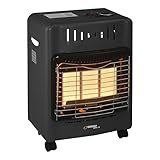
Overview: The SANAUVULCAN 18,000 BTU cabinet propane heater prioritizes safety and serenity in workspace heating. Designed for areas up to 450 square feet, this unit operates at an exceptionally quiet 30dB or lower—quieter than a library. Its three-mode output (6,000/12,000/18,000 BTU) provides precise temperature control while extending runtime to an impressive 69 hours on low using a standard 20-pound tank.
What Makes It Stand Out: Triple protection technology includes tip-over shutoff, oxygen depletion sensor, and automatic gas cutoff—exceeding standard safety requirements. The five rotating casters (two locking) and side handles deliver true portability without lifting strain. The piezoelectric ignition requires no electricity, ensuring operation during power outages.
Value for Money: This mid-priced heater delivers premium safety features typically found in higher-end models. The extended runtime on low settings and efficient propane consumption translate to lower operating costs. For small-to-medium garage owners, it eliminates the need for multiple heating solutions.
Strengths and Weaknesses: Strengths include whisper-quiet operation, comprehensive safety systems, excellent mobility, and outage-ready functionality. The variable heat settings accommodate seasonal temperature swings efficiently. Weaknesses include limited heating capacity for larger spaces and slower heat-up times compared to forced-air units. The lower BTU output makes it unsuitable for poorly insulated areas or extreme climates.
Bottom Line: Ideal for hobbyists, home mechanics, and workshop users prioritizing quiet operation and safety. The SANAUVULCAN excels in enclosed spaces where noise and ventilation are concerns. While not a powerhouse, it’s a reliable, economical choice for well-defined heating zones.
9. ProCom Heating Liquid Propane Ventless Infrared Plaque Heater With Base Feet - 25,000 BTU, T-Stat Control - Model# ML250TPA-B

Overview: The ProCom ML250TPA-B ventless infrared plaque heater delivers 25,000 BTUs of radiant warmth without requiring electricity or external venting. This dual-purpose unit heats up to 1,150 square feet and functions during power outages, making it a reliable emergency heating solution for residential spaces. The included hardware allows either wall mounting or floor placement using base feet.
What Makes It Stand Out: The oxygen depletion sensor with automatic shutoff provides critical safety monitoring in enclosed environments. Its ventless design eliminates installation complexity and heat loss through exhaust. The thermostat control offers high/medium/low settings for customizable comfort, while the push-button ignition ensures effortless startups without matches or batteries.
Value for Money: As one of the most affordable heaters in its BTU class, it delivers exceptional versatility. The lack of installation costs and ability to operate without electricity provides significant value for homeowners seeking backup heating. Compared to vented systems, it saves hundreds in installation expenses.
Strengths and Weaknesses: Strengths include dual mounting options, outage readiness, simple operation, and impressive coverage area. The infrared technology heats objects directly, creating comfortable warmth quickly. Weaknesses involve ventless operation concerns—while ANSI certified, it requires adequate room ventilation and may affect indoor air quality. Propane consumption is moderate, and the unit lacks a fan for heat circulation.
Bottom Line: This ProCom heater shines as a supplemental or emergency heat source for homeowners wanting flexibility and simplicity. It’s particularly valuable in regions prone to power outages. Ensure proper ventilation and consider it a secondary heater rather than primary heating solution for optimal safety and performance.
10. XtremepowerUS 30,000 BTU Propane Tanktop Heater Infrared Dual Burner Safety Shut-Off Valve, Tip-Over Switch for Garage, Camping, Hunting Double Burner
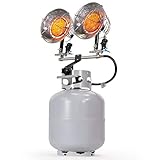
Overview: The XtremepowerUS 30,000 BTU propane tanktop heater provides instant infrared heat through a rugged dual-burner design that mounts directly to a 20-pound propane cylinder. This no-frills workhorse prioritizes portability and simplicity for outdoor applications like camping, hunting, and construction sites. The adjustable heat settings (15,000/30,000 BTU) allow users to match output to conditions.
What Makes It Stand Out: The direct tank mounting eliminates hoses and regulators, creating an ultra-portable heating solution. The tip-over switch provides essential safety for active environments, while the rust-proof steel frame withstands harsh outdoor conditions. The chrome emitter guard prevents accidental contact burns, and the metal dish focuses heat directionally.
Value for Money: Among the most budget-friendly options in this BTU range, it delivers remarkable heating power per dollar. The simple design means minimal maintenance and no additional component costs. For occasional outdoor heating needs, it outperforms more expensive portable units in practicality.
Strengths and Weaknesses: Strengths include exceptional portability, instant heat production, wind resistance, and straightforward operation. The dual-burner configuration provides flexibility for different weather conditions. Weaknesses include unsuitability for enclosed spaces due to ventilation requirements, limited heating area coverage compared to forced-air units, and lack of thermostat control. Wind can still affect performance despite the metal dish design.
Bottom Line: Perfect for outdoor enthusiasts and contractors needing immediate, localized heat. The XtremepowerUS excels in open-air environments where portability trumps precision. It’s not a garage heater substitute but an excellent companion for activities requiring on-demand warmth. For its intended purpose, it’s an unbeatable value.
Understanding Propane Garage Heaters
How Propane Heaters Work
Propane heaters operate by burning liquefied petroleum gas to produce heat through infrared radiation or forced-air convection. When propane combusts, it releases approximately 91,500 BTUs per gallon, creating intense warmth that can quickly raise temperatures even in poorly insulated spaces. The combustion process requires oxygen from the surrounding air and produces carbon dioxide, water vapor, and trace amounts of other byproducts. Modern units feature precision-engineered burners that optimize the fuel-to-air mixture, ensuring complete combustion and minimizing waste.
Types of Propane Garage Heaters
You’ll encounter three primary designs when shopping for garage heating solutions. Forced-air torpedo heaters blast hot air throughout the space, making them ideal for large, open areas but potentially noisy for smaller workshops. Radiant plaque heaters emit infrared heat that warms objects and people directly rather than heating the air, perfect for spot heating work areas. Convection heaters rely on natural air circulation to distribute warmth silently, though they heat spaces more gradually. Each type serves different garage layouts and usage patterns.
Benefits for Cold Climates
Propane excels in extreme cold because it remains effective at temperatures well below zero, unlike some electric systems that struggle in severe conditions. The fuel stores compactly in tanks, eliminating reliance on grid power that can fail during winter storms. Propane’s high energy density means you can heat substantial square footage without the amperage demands that would require expensive electrical panel upgrades. For detached garages without easy electrical access, propane often becomes the most practical primary heating source.
Key Features to Consider When Buying
Heating Capacity and BTU Ratings
BTU (British Thermal Unit) ratings determine how much heat a unit produces. Calculate your needs by multiplying your garage’s cubic footage by the temperature rise you want, then adjusting for insulation quality. A poorly insulated 24x24 foot garage in Minnesota might require 60,000 BTUs, while the same space in a milder climate with good insulation could need only 30,000 BTUs. Oversizing leads to short cycling and inefficiency, while undersizing leaves you cold and frustrated.
Garage Size and Insulation Factors
Your garage’s thermal envelope dramatically impacts heater performance. Uninsulated concrete slabs, single-pane windows, and metal garage doors act as massive heat sinks. Before selecting a heater, assess your R-values—walls should ideally be R-13 to R-21, ceilings R-38 to R-49. Even the best propane heater will struggle in a leaky garage. Consider air sealing and insulation upgrades as part of your heating project; they’ll reduce the BTU requirements and slash fuel costs.
Ventilation Requirements
Proper ventilation isn’t optional—it’s critical for safety. Unvented heaters, while convenient, release combustion byproducts directly into your space and require specific air exchange rates to prevent oxygen depletion. Vented systems exhaust gases outside through a flue but need proper installation to avoid backdrafting. Most building codes mandate a minimum of one square inch of fresh air intake per 1,000 BTUs for unvented units. Always follow manufacturer specifications and local regulations.
Safety Features
Modern propane heaters include multiple redundant safety systems. Oxygen depletion sensors (ODS) automatically shut off the unit if oxygen levels fall below safe thresholds. Tip-over switches instantly cut fuel supply if the heater falls. Overheat protection prevents damage from blocked airflow or component failure. Look for units certified by CSA International or UL that meet current ANSI standards. In 2026, expect enhanced electronic diagnostics that alert you to potential issues before they become dangerous.
Ignition Systems
Piezo igniters create a spark through mechanical pressure—reliable but requiring manual operation for each use. Electronic ignition systems offer push-button convenience and often include remote controls or smartphone integration. Continuous pilot lights waste fuel but work during power outages. Intermittent ignition devices (IID) light the pilot only when heat is called for, maximizing efficiency. Consider your climate’s power reliability when choosing between electronic and pilot-based systems.
Thermostat and Temperature Control
Built-in thermostats maintain consistent temperatures and prevent fuel waste. Basic models offer simple dial controls with 5-10 degree variance, while advanced units provide digital accuracy within 1-2 degrees. Some systems integrate with smart home platforms, allowing you to pre-warm the garage before you arrive. Forced-air units with variable-speed blowers modulate output based on demand, reducing temperature swings and noise levels compared to simple on/off operation.
Portability and Mounting Options
Wheel-mounted portable heaters let you direct heat exactly where needed and store the unit safely when not in use. Wall-mounted units free up floor space and stay protected from vehicle traffic and shop activities. Ceiling-mounted forced-air systems distribute heat evenly throughout large garages but require permanent installation. Consider your workflow—do you need heat at a fixed workbench, or throughout the entire space? Portability adds versatility but may sacrifice some efficiency.
Fuel Efficiency and Consumption Rates
Check the unit’s rated efficiency percentage—quality heaters convert 80-95% of propane’s energy into usable heat. Calculate operating costs by dividing BTU output by 91,500 (BTUs per gallon) to determine hourly consumption. A 50,000 BTU heater running at 85% efficiency burns about 0.64 gallons per hour at full output. In 2026, look for modulating burners that adjust output to match demand, reducing fuel consumption during milder weather by up to 30% compared to fixed-output models.
Durability and Weather Resistance
Garage environments expose heaters to dust, moisture, and temperature extremes. Powder-coated steel cabinets resist corrosion better than painted finishes. Internal components should be sealed against airborne particles from woodworking or metal grinding. Look for heaters rated for garage/shop use rather than residential models, with protected controls and reinforced construction. Stainless steel heat exchangers last significantly longer than aluminized steel in humid or coastal environments.
Installation and Setup Considerations
Professional vs. DIY Installation
While portable units simply connect to a propane tank, permanent installations involve gas line routing, venting, and electrical connections. Most jurisdictions require licensed professionals for gas line work and permits for vented installations. DIY installation might void warranties and create insurance liabilities if done improperly. Factor $300-$800 for professional installation of a wall-mounted unit, more if running gas lines from an external tank. Complex installations in detached garages may need trenching for buried propane lines.
Clearance and Space Requirements
Maintain manufacturer-specified clearances from combustible materials—typically 3 feet from walls, 6 feet from vehicles, and specific distances from overhead storage. Never install heaters near gasoline, solvents, or other flammable vapors. Consider the “blast radius” of forced-air units, which can blow dust and debris around your workspace. Radiant heaters need line-of-sight to the area you’re heating, while convection units require unobstructed air circulation paths.
Propane Tank Sizing and Placement
A standard 20-pound barbecue tank lasts 8-12 hours with a 50,000 BTU heater—impractical for regular use. For frequent heating, install a 100-pound cylinder (25-30 hours) or a permanent 250-500 gallon underground tank. Keep tanks outdoors at least 10 feet from ignition sources, protected from vehicle impact. Regulators must be rated for the heater’s BTU demand—undersized regulators cause poor performance and sooting. In extremely cold climates, consider tank heaters to maintain adequate vapor pressure.
Venting Systems for Indoor Safety
Vented heaters require proper flue installation with correct pitch and termination caps to prevent downdrafts. Type B venting works for most applications, but direct-vent systems offer greater efficiency by using outside air for combustion. Never vent into attic spaces or under deck overhangs. Install carbon monoxide detectors at breathing height, not just near the ceiling. In 2026, expect more units with sealed combustion chambers that completely isolate exhaust from indoor air.
Operating Your Propane Heater Safely
Carbon Monoxide Monitoring
Even with ODS-equipped unvented heaters, install multiple CO detectors in your garage. Place one at workbench height where you breathe and another near the heater. Test detectors monthly and replace them every 5-7 years. Recognize CO poisoning symptoms—headache, dizziness, nausea—and ensure proper ventilation if these occur. Never sleep in a garage with an operating propane heater, and always crack a window or door for fresh air exchange.
Regular Maintenance Schedule
Clean dust from burners and air intakes monthly during heavy use seasons. Check propane connections for leaks using soapy water—never use open flames. Inspect venting systems annually for corrosion, blockages, or disconnections. Have a qualified technician service the unit yearly, checking gas pressure, combustion efficiency, and safety control operation. Replace thermocouples and ODS sensors every 3-5 years as preventive maintenance. Keep a maintenance log to track service intervals and performance changes.
Troubleshooting Common Issues
If your heater won’t ignite, check propane levels first, then verify the regulator isn’t frozen or clogged. Yellow or orange flames indicate incomplete combustion—often from dirty burners or insufficient air supply. Soot buildup signals serious problems requiring immediate professional attention. Short cycling usually means the unit is oversized or the thermostat is poorly positioned. Weak heat output in extreme cold may indicate tank pressure issues—try warming the tank gently or switching to a larger size.
Cost Analysis and Budget Planning
Initial Investment vs. Long-Term Savings
Entry-level portable propane heaters start around $150, while premium wall-mounted units with advanced controls can exceed $1,500. Factor in installation costs, ventilation upgrades, and propane tank installation. However, propane typically costs 30-50% less than electric resistance heating in most markets. The payback period for a quality system often ranges from 2-5 years compared to electric alternatives, especially in regions with expensive electricity.
Propane Fuel Costs in 2026
Propane prices fluctuate seasonally, typically peaking in January-February. Lock in pre-buy contracts during summer months when prices are 15-25% lower. Expect regional variations—propane tends to be cheaper in the Midwest near production hubs, more expensive in the Northeast. Budget $1.50-$3.00 per gallon depending on your location and purchase volume. A 500-gallon tank refill might cost $750-$1,500 but could last an entire heating season for a moderately insulated garage.
Maintenance and Replacement Parts
Annual professional service typically runs $100-$200. Budget for periodic replacement of thermocouples ($15-$30), ODS sensors ($25-$50), and igniters ($20-$40). Heat exchangers and gas valves are expensive repairs ($200-$500) but should last 10+ years with proper care. Keep spare parts on hand for critical components during winter months when service calls are delayed. Extended warranties often pay for themselves if they cover labor, which is typically more expensive than parts.
Regulations and Compliance
Local Building Codes
Most municipalities require permits for permanently installed gas appliances. Codes specify minimum ceiling heights, ventilation rates, and clearance distances. Some areas prohibit unvented heaters in attached garages due to CO risks. Contact your local building department before purchasing to understand requirements. Code violations can void insurance claims and create resale issues. In 2026, expect stricter regulations around emissions and efficiency, particularly in urban air quality management districts.
Insurance Requirements
Notify your homeowner’s insurance company about any permanently installed propane heater. Some policies require professional installation certification and annual inspection records. Improperly installed units can lead to claim denials if fires or CO incidents occur. Consider increased liability coverage if you regularly have others in your heated garage. Keep all manuals, installation records, and maintenance logs in a safe place for insurance documentation.
Environmental Considerations
While propane burns cleaner than heating oil or coal, it’s still a fossil fuel. Newer models with lower NOx emissions help meet stricter air quality standards. Some jurisdictions offer rebates for high-efficiency units that meet Energy Star or equivalent certifications. Consider your carbon footprint—propane produces about 139 pounds of CO2 per million BTUs. For environmentally conscious users, hybrid systems combining propane with solar thermal preheating can reduce emissions while maintaining reliability during cloudy periods.
Frequently Asked Questions
1. How do I calculate the correct BTU size for my garage? Measure your garage’s length, width, and ceiling height to determine cubic footage. Multiply by the desired temperature increase (e.g., from 20°F to 60°F = 40 degrees). For well-insulated spaces, multiply by 0.5; for moderately insulated, use 1.0; for uninsulated, use 1.5. This gives you the approximate BTU requirement. When in doubt, consult a heating professional who can perform precise heat loss calculations.
2. Can I use a propane heater in an attached garage? Yes, but with strict precautions. Attached garages require vented heaters in most jurisdictions to prevent carbon monoxide from entering living spaces. Install CO detectors in both the garage and adjacent rooms. Ensure the shared wall is properly sealed and fire-rated. Some areas prohibit any combustion heating in attached garages, so verify local codes before installation.
3. What’s the difference between infrared and forced-air propane heaters? Infrared heaters warm objects and people directly through radiant heat, like the sun. They’re silent, efficient for spot heating, and don’t stir up dust. Forced-air heaters heat the air itself and circulate it with a fan, warming the entire space faster but potentially creating drafts and noise. Choose infrared for stationary work at a bench, forced-air for heating the whole garage evenly.
4. How often will I need to refill my propane tank? A 100-pound tank (25 gallons) running a 50,000 BTU heater at 50% duty cycle lasts roughly 45-50 hours. If you heat your garage 4 hours daily, that’s about 12 days. For regular use, install a 250-gallon or larger tank that might last an entire season. Monitor consumption during the first month to establish your actual usage pattern and schedule deliveries accordingly.
5. Are unvented propane heaters safe for garage use? Modern unvented heaters include oxygen depletion sensors and are designed for supplemental heating. However, they release moisture and combustion byproducts into your space. They’re generally safe for intermittent use with proper ventilation—crack a window or door to ensure fresh air exchange. Never use them in tightly sealed garages or for extended periods without airflow. Vented heaters are safer for frequent or long-duration heating.
6. What maintenance does a propane garage heater require? Clean air intakes and burners monthly during use season. Check for gas leaks regularly with soapy water. Test safety controls and ignition systems before each heating season. Have a professional service the unit annually, checking combustion efficiency and gas pressure. Replace batteries in CO detectors twice yearly. Keep the exterior clean and ensure vents remain unobstructed.
7. Can I install a propane heater myself? Portable units simply connect to a propane tank and require no installation. Permanent wall or ceiling-mounted units should be installed by licensed professionals, especially for gas line connections and venting. DIY installation can void warranties, violate building codes, and create insurance liabilities. At minimum, have a professional inspect any work before first use.
8. How cold can it get before propane stops working? Propane remains liquid at -44°F, but vapor pressure drops significantly as temperatures fall below 0°F. At -20°F, a standard tank may not supply enough vapor for high-BTU heaters. Use larger tanks (which have more surface area) or install tank heaters in extreme climates. Underground tanks maintain more consistent temperatures and perform better in severe cold.
9. Will a propane heater damage my car or tools? Properly functioning propane heaters produce carbon dioxide and water vapor. The moisture can increase humidity, potentially causing rust on unprotected metal surfaces. Maintain moderate temperatures (45-55°F) rather than overheating the space. Use dehumidifiers if moisture becomes an issue. Never point radiant heaters directly at vehicles or sensitive equipment for extended periods.
10. What’s more cost-effective: propane or electric garage heating? Propane typically costs 30-50% less than electric resistance heating per BTU of heat delivered. However, electric heat pumps can be more efficient in milder cold climates. Consider your local propane and electricity rates, garage insulation level, and heating frequency. For occasional heating in extremely cold climates, propane usually wins. For daily, all-day heating, compare rates carefully—electricity might be competitive if you have access to off-peak rates.
See Also
- The 10 Ultimate Best Propane Garage Heaters for Cold Climates in 2026
- 10 Premium Electric Garage Heaters for Cold Climates (Worth the Investment)
- How to Choose the 10 Best Garage Heaters for Cold Climates in 2026
- Top 10 Best Garage Heaters for Cold Climate Workshops in 2026
- 10 Most Durable Propane Garage Heaters Based on Real User Reviews in 2026