Table of Contents
Chilly mornings in a compact apartment can make even the coziest space feel unwelcoming. You huddle under blankets, hoping the central heating kicks in, only to realize it’s inefficiently warming the entire building while your little corner remains stubbornly cold. Portable space heaters offer a targeted solution, but navigating the sea of options designed specifically for smaller living areas can feel overwhelming. It’s not just about warmth; it’s about safety, efficiency, and finding a unit that seamlessly integrates into your limited square footage without becoming a hazard or an eyesore. The right choice transforms your apartment from drafty to delightfully snug.
Forget generic “best of” lists that quickly become outdated. Choosing a portable heater for a small apartment demands a thoughtful evaluation of your unique space and needs. Factors like room layout, existing insulation, safety certifications, noise levels, and even aesthetic compatibility play crucial roles that a simple ranking ignores. This guide cuts through the marketing noise, focusing on the essential features and considerations that truly matter when selecting a reliable, safe, and effective heating solution tailored for confined urban dwellings. We’ll equip you with the knowledge to make a confident, informed decision that prioritizes your comfort and peace of mind.
Top 10 Portable Space Heaters for Small Apartments
Detailed Product Reviews
1. BLACK+DECKER Portable Space Heater, Room Space Heater with Carry Handle for Easy Transport

Overview: The BLACK+DECKER Portable Space Heater is a compact, budget-friendly solution for spot heating small to medium indoor spaces like bedrooms, offices, or kitchens. Its minimalist design prioritizes essential functionality with a focus on portability and basic safety.
What Makes It Stand Out: Its standout features are the versatile floor/tabletop mounting options, triple-mode operation (Fan, 750W Low, 1500W High), and integrated carry handle for effortless movement. The manual thermostat and tip-over/overheat safety shutoff provide reliable baseline protection without unnecessary complexity.
Value for Money: Priced accessibly, it delivers solid value for users needing straightforward, localized warmth without advanced tech. While lacking a digital thermostat or remote, it outperforms cheaper no-name heaters in safety and build quality, matching competitors at similar price points.
Strengths and Weaknesses: Strengths: Extremely portable (2.8 lbs), intuitive controls, robust safety features, and versatile placement. Weaknesses: Manual thermostat lacks precision, no timer or oscillation, and the fan-only mode is less effective for cooling.
Bottom Line: An excellent entry-level heater for cost-conscious buyers seeking reliable, no-frills warmth in personal spaces. Ideal for dorms or small rooms, though limited features may disappoint users wanting smart controls.
2. GiveBest Portable Electric Space Heater with Thermostat, 1500W/750W Safe and Quiet Ceramic Heater Fan, Heat Up 200 Square Feet for Office Room Desk Indoor Use, Silver

Overview: The GiveBest Ceramic Heater combines efficient heating with year-round utility via its 2-in-1 heater/fan function, targeting small indoor areas up to 200 sq. ft. It emphasizes safety and quiet operation for bedrooms or offices.
What Makes It Stand Out: Its dual-season versatility (heating + cool-air fan), V0 flame-retardant housing, and whisper-quiet PTC ceramic tech distinguish it. The auto-thermostat maintains set temps effortlessly, while the audible tip-over alarm adds a safety layer missing in quieter models.
Value for Money: Justifying its mid-range price, it offers superior energy efficiency via thermostat control and robust safety certifications. It outperforms basic heaters with its fan mode and faster heating, though premium models like DREO include remotes at higher costs.
Strengths and Weaknesses: Strengths: Exceptionally quiet operation, effective 200 sq. ft. coverage, cool-air fan function, and rigorous fire safety. Weaknesses: Tip-over alarm’s loud beep may disturb sleep, and lacks remote control or oscillation.
Bottom Line: A top pick for noise-sensitive environments like bedrooms, offering reliable, safe warmth with useful year-round functionality. Best for those prioritizing quietness over smart features.
3. Small Portable Space Heater for Indoor Use - VOCRS 1500W PTC Electric Heater with Thermostat, Remote Control, 12H Timer, Eco and Fan Mode, Rapid and Safe Heating for Bedroom, Office

Overview: The VOCRS 1500W Heater delivers advanced climate control for personal spaces, featuring precise temperature management and user-friendly automation ideal for bedrooms or home offices.
What Makes It Stand Out: Its remote control (with clear digital display), granular 3-mode wattage settings (700W/1000W/1500W), and 1-12 hour timer provide exceptional convenience. ECO mode optimizes energy use, while ETL certification ensures safety compliance.
Value for Money: Priced competitively, it offers premium features like remote operation and multi-wattage modes typically found in costlier units. The 12-month warranty and responsive support enhance long-term value versus basic heaters.
Strengths and Weaknesses: Strengths: Highly customizable settings, useful remote/timer, strong safety protections, and portable design. Weaknesses: Remote requires separate batteries, no oscillation, and display can be overly bright at night.
Bottom Line: A versatile, feature-rich heater perfect for tech-savvy users wanting precise control. Highly recommended for offices or bedrooms, though the lack of oscillation limits even heat distribution.
4. DREO Space Heater, 1500W Portable Electric Heaters for Indoor Use, PTC Ceramic Heater for Office with Remote, Thermostat, 70°Oscillation, 12H Timer, 5 Modes, Safe Quiet Room Heater for Bedroom
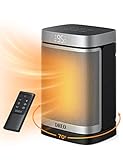
Overview: The DREO Atom One Heater represents a premium tier with innovative engineering, targeting users seeking rapid, silent, and evenly distributed warmth for rooms up to 150 sq. ft.
What Makes It Stand Out: DREO’s Hyperamics Technology enables near-instant heat, while 70° oscillation and a 37.5dB noise level (quieter than a whisper) set industry benchmarks. ECO mode fine-tunes energy use, and Shield360° safety with UL94 V-0 materials exceeds standard certifications.
Value for Money: At a higher price point, it justifies costs through unmatched quietness, oscillation, and energy efficiency. It outperforms similarly priced rivals in heat dispersion and build quality, making it worthwhile for frequent use.
Strengths and Weaknesses: Strengths: Ultra-quiet operation, wide oscillation, precise thermostat, and robust safety suite. Weaknesses: Shorter cord than competitors, premium price, and oscillation can slightly reduce max heat intensity.
Bottom Line: The best-in-class choice for noise-sensitive or tech-demanding users. Highly recommended for bedrooms or home offices where silent, even heating is critical, despite the steeper investment.
5. Portable Space Heater, 1500W Ceramic Heating Fan with Thermostat, Remote Control, 3 Heating Modes, 70° Oscillation, Ideal for Office, Home, and Bedroom Use

Overview: This versatile heater merges affordability with premium features like oscillation and remote control, targeting users needing flexible, safe heating for desks or small living areas.
What Makes It Stand Out: Its standout traits include rapid 3-second ceramic heating, 70° oscillation for broader coverage, and comprehensive ETL-certified safety (including 24-hour auto-off). The non-radiative remote enables precise adjustments from a distance.
Value for Money: Exceptional value at mid-range pricing—it packs oscillation, remote, and multiple safety layers often reserved for premium models. Outperforms non-oscillating competitors like GiveBest while costing less than DREO.
Strengths and Weaknesses: Strengths: Fast heating, effective oscillation, robust safety suite, and intuitive remote. Weaknesses: Remote requires batteries, oscillation mechanism adds slight bulk, and thermostat lacks 1°F granularity.
Bottom Line: A near-perfect balance of features and affordability. Highly recommended for most users seeking reliable, even heating without overspending, especially in offices or medium-sized bedrooms.
6. Small Portable Space Heater for Indoor Use - with 70°Rotating Feature, JIBUFI 1500W PTC Electric Heater, Rapid and Safe Heating, Remote Control, 1-12 Hr Timer for Bedroom, Office

Overview:
The JIBUFI 1500W PTC space heater combines rapid heating with versatile portability for indoor spaces up to 200 sq. ft. Designed for bedrooms, offices, or even tents, it features a 70° oscillation range, remote control, and multiple operation modes, prioritizing both efficiency and safety in a compact form.
What Makes It Stand Out:
Its 70° wide-angle oscillation ensures even heat distribution, while the ECO mode self-adjusts temperature for energy savings. The inclusion of a 1–12-hour timer, remote control (batteries not included), and quiet operation—coupled with ETL certification, tip-over protection, and flame-retardant materials—makes it uniquely adaptable for sleep or work environments without disturbance.
Value for Money:
Priced competitively for its feature set, the JIBUFI outperforms basic heaters with its oscillation, precise thermostat control, and multi-mode flexibility. It justifies its cost by replacing less efficient single-mode units, though the need for separate remote batteries slightly offsets savings.
Strengths and Weaknesses:
Strengths: Rapid 1500W heating; comprehensive safety certifications; ultra-quiet ECO mode; oscillation covers broad areas; highly portable for varied indoor use.
Weaknesses: Remote requires separate batteries; not ideal for rooms beyond 200 sq. ft.; oscillation mechanism may wear over time.
Bottom Line:
An excellent investment for targeted, safe heating in medium-sized rooms. Its smart features and robust safety make it a top-tier choice for bedrooms or offices, though larger spaces may require supplemental heating.
7. Amazon Basics Ceramic Space Heater, Portable Indoor Heating Solution, With Overheat and Tip-Over Protection, Thermostat, Non-Oscillating, 1500W, 7.52"D x 6.34"W x 9.45"H, Silver

Overview:
This no-frills Amazon Basics ceramic heater delivers reliable 1500W heating for small to medium rooms. Weighing just 3 lbs, its ultra-compact design suits desks or tight spaces, featuring essential safety tech and a simple thermostat for straightforward, efficient warmth.
What Makes It Stand Out:
Its standout trait is portability—among the lightest 1500W heaters available—paired with whisper-quiet 43 dB operation. The non-oscillating design focuses heat directionally, while three power settings (High/Low/Fan) and automatic safety shutoffs provide dependable, fuss-free performance for minimalists.
Value for Money:
Exceptional value for budget-conscious buyers. It matches pricier models in core functionality (rapid ceramic heating, tip-over protection) but lacks extras like timers or remotes. Ideal for temporary or supplemental heating where simplicity and low cost are priorities.
Strengths and Weaknesses:
Strengths: Extremely lightweight and compact; near-silent operation; effective rapid heating; affordable; reliable safety features.
Weaknesses: No oscillation or timer; unsuitable for humid areas (e.g., bathrooms); basic controls lack precision.
Bottom Line:
A superb basic heater for offices or small rooms needing quick, quiet warmth without advanced features. Skip if you require timers or broad heat coverage, but perfect for cost-effective, portable heating.
8. ASNUG Space Heater, Portable Electric 500W PTC Ceramic Heaters for Indoor Use, Efficient Fast Heating, Tip-Over & Overheat Protection, Quiet Small Mini Desk Heater for Bathroom Home Office Bedroom

Overview:
The ASNUG 500W mini heater targets intimate spaces like desks or bathrooms with ultra-quiet operation and instant 2-second PTC heating. Its diminutive size (6.1" x 5.75") and safety-centric design make it ideal for personal warmth without overwhelming small areas.
What Makes It Stand Out:
Uniquely compact yet powerful for its class, it heats rapidly while operating near-silently—perfect for bedrooms. The flip-switch tip-over protection, flame-retardant shell, and one-touch operation emphasize safety and convenience, all wrapped in a discreet, gift-ready package.
Value for Money:
Great value for micro-space heating needs. Though lower wattage limits room size (ideal for ≤100 sq. ft.), its efficiency and quietness justify the price for personal use. Less versatile than 1500W models but unmatched for bedside or desk duty.
Strengths and Weaknesses:
Strengths: Near-silent operation; heats in seconds; ultra-portable; excellent safety features; simple one-touch control.
Weaknesses: Too weak for larger rooms; no thermostat or timer; limited to very small areas.
Bottom Line:
The go-to mini heater for personal comfort in tight spots. Choose it for desks, bathrooms, or nightstands where silence and safety matter most—but avoid for whole-room heating.
9. Space Heater, WINHL 17 Inches Electric Heaters for Indoor Use with Thermostat and Remote, 70°Oscillation, 12H Timer, 5 Modes, 1500W PTC Ceramic Fast Safety Heat for Office Bedroom Home

Overview:
The WINHL 1500W heater merges precision heating with smart controls, featuring adjustable wattage (700W/1000W/1500W), 70° oscillation, and ETL-certified safety. Tailored for bedrooms or offices, it balances powerful warmth with energy-conscious operation via thermostat and remote.
What Makes It Stand Out:
Triple wattage settings and automatic thermostat adjustment let it adapt to ambient temps, while the 12-hour timer and oscillation ensure even, customizable coverage. V0 flame-retardant materials and 24-hour auto-shutoff elevate safety beyond competitors, all controllable remotely.
Value for Money:
Premium features justify a mid-range price. The granular heat control saves energy over single-mode heaters, and robust safety tech reduces long-term risks. Slightly pricier than basics but offers superior versatility for frequent use.
Strengths and Weaknesses:
Strengths: Flexible wattage settings; reliable auto-thermostat; extensive safety certifications; quiet oscillation; responsive remote.
Weaknesses: Remote batteries not included; oscillation range narrower than some; bulkier than mini-heaters.
Bottom Line:
A top recommendation for those seeking adaptable, safe heating. Its smart controls and safety make it ideal for daily home/office use, though size may limit portability in cramped spaces.
10. Space Heater, Portable Heater for Indoor Use, Small Electric Heaters with Overheat & Tip-Over Protection, Mini Desk Heaters for Office Bedroom Bathroom, Compact & Efficient Heating, White

Overview:
KIDEE’s mini heater delivers 2-second PTC warmth in an ultra-compact white chassis (5.28" x 4.45"), designed for desks or bathrooms. With UL safety certification, dual heat modes, and a carry handle, it prioritizes portability and quiet operation for personal spaces.
What Makes It Stand Out:
Its standout trait is instant “2S Fast Heating” paired with exceptional portability—a built-in handle and 4ft cord simplify movement between rooms. Bathroom-safe design (unlike many competitors) and near-silent operation make it uniquely suited for humid zones and sleep environments.
Value for Money:
Offers solid value for hyper-portable needs. Though limited to small areas, its bathroom compatibility and dual heat settings outperform similar mini-heaters. A steal for targeted warmth where larger units are impractical.
Strengths and Weaknesses:
Strengths: Heats almost instantly; safe for bathrooms; exceptionally compact; quiet; affordable.
Weaknesses: Only two heat settings; short power cord; insufficient for rooms >100 sq. ft.
Bottom Line:
The best mini heater for bathrooms or tiny offices. Opt for it when space is tight and quick, quiet warmth is essential—but skip for larger or multi-room use.
Understanding Your Small Space Heating Needs
Before browsing any models, honestly assess your specific situation. A one-size-fits-all approach rarely works in compact living.
Evaluating Room Size and Layout
Square footage is the starting point, but ceiling height and open-plan versus compartmentalized layouts significantly impact heating requirements. A 300-square-foot studio with 9-foot ceilings needs more heating power than the same footprint with standard 8-foot ceilings. Consider obstacles like furniture placement and doorways that can block heat circulation; a unit tucked behind a sofa won’t efficiently warm the entire room.
Identifying Primary Heating Goals
Are you looking for supplemental warmth to take the edge off a slightly cool room, or is this heater expected to be the primary heat source for your apartment? The answer dictates the necessary heating capacity (measured in BTUs or watts). Supplemental heating might only require 750-1000 watts, while primary heating in a poorly insulated small space could demand 1500 watts. Also, consider if you need rapid warmth for short periods (like a bathroom) versus sustained, gentle heating throughout the day.
Considering Existing Insulation and Drafts
Older apartments often have single-pane windows and drafty doors, causing significant heat loss. If your space leaks warmth quickly, you’ll need a heater with adequate power and potentially features like oscillation to combat cold spots. Identifying and sealing drafts (using weather stripping or window insulation kits) before relying heavily on a portable heater is a smart energy-saving step that makes any heater more effective.
Safety: The Non-Negotiable Priority for Apartments
Safety isn’t just important; it’s paramount when placing a heat source in close quarters with furniture, curtains, and limited escape routes. Cutting corners here is never an option.
Overheat Protection Mechanisms
This critical feature automatically shuts the heater off if internal components reach unsafe temperatures, often caused by blocked air intake or exhaust vents. Look for units where this is a standard, non-optional feature certified by independent labs. It’s your first line of defense against potential fire hazards, especially crucial in tight spaces where airflow can be inadvertently restricted.
Tip-Over Switches Explained
Portable heaters can be accidentally knocked over by pets, children, or even vigorous movement nearby. A reliable tip-over switch instantly cuts power the moment the unit tilts beyond a safe angle. Ensure the mechanism is robust and tested – this simple feature prevents a toppled heater from continuing to blast heat onto flammable surfaces like carpets or rugs.
Essential Safety Certifications Demystified
Never purchase a heater lacking certification from a recognized national testing laboratory (such as UL, ETL, or CSA in North America). These rigorous certifications verify the unit meets strict electrical and fire safety standards. Counterfeit or uncertified heaters pose significant fire and electrocution risks and are often banned in apartment buildings. Always check for the physical certification mark on the unit and its packaging.
Heating Technologies: Matching Type to Your Space
Not all heaters work the same way. Understanding the core technologies helps you select the right heat delivery method for comfort and efficiency in your apartment.
Convection Heaters: Gentle, Whole-Room Warmth
These heaters warm the air itself, which then circulates naturally (or via a fan) to heat the entire room gradually. Oil-filled radiators are a popular convection type, providing steady, silent, radiant-convective heat that lingers even after turning off. They excel in small bedrooms or living areas where consistent background warmth is desired, though they take longer to initially heat a space.
Radiant Heaters: Instant Spot Heating
Radiant heaters (often using quartz or halogen elements) emit infrared radiation that directly warms objects and people in their line of sight, like sunshine. They provide near-instant warmth but don’t significantly heat the air. Ideal for quickly taking the chill off you while sitting at a desk or dining table, but less effective for evenly heating an entire small room unless strategically positioned.
Fan-Forced Heaters: Rapid Air Warming
These combine a heating element (ceramic is common) with a fan to actively blow warm air into the room. They heat up very quickly and distribute warmth more evenly than radiant models. However, the fan noise can be disruptive in quiet apartments, especially at night. Look for models with adjustable fan speeds or “silent mode” settings for better adaptability.
Size, Portability, and Space-Saving Design
In a small apartment, the heater itself shouldn’t dominate your precious real estate or become a storage headache.
Footprint and Height Considerations
Measure potential locations before buying. Will it fit securely on that narrow shelf? Can it stand safely on the floor without blocking walkways or tripping hazards? Compact, low-profile designs are often preferable. Taller, slimmer units might fit better in corners than wide, short ones. Avoid anything so bulky it forces you to compromise on safe placement distances.
Weight and Handle Ergonomics
Consider how often you might need to move it – from the living room to the bedroom, for example. A very heavy unit becomes cumbersome. Integrated, sturdy handles make a huge difference. Lightweight ceramic heaters are often easiest to relocate, while oil-filled radiators, though stable, are significantly heavier due to the oil.
Cord Management Solutions
A long, trailing power cord is both a tripping hazard and an eyesore in tight spaces. Features like wrap-around cord storage hooks or recessed cord compartments keep things tidy and safe. Ensure the cord length is sufficient to reach an outlet without needing an extension cord, which is a major fire risk and often violates apartment safety policies.
Noise Levels: Maintaining Apartment Peace
Quiet operation is essential in close quarters where you live, work, and sleep in the same general area.
Understanding Decibel Ratings
Heater noise is measured in decibels (dB). Anything below 40 dB is generally considered very quiet (like a whisper), suitable for bedrooms or quiet workspaces. Fan-forced heaters often range from 40-60 dB; look for models specifically advertising “ultra-quiet” operation or multiple low-noise fan settings. Oil-filled radiators and most radiant heaters operate silently, a significant advantage for noise-sensitive environments.
Fan Speed Settings and “Silent Mode”
If opting for a fan heater, prioritize models with multiple fan speeds. A low setting might be quiet enough for background use, while high speed is reserved for quick warm-ups. Some advanced units feature a dedicated “silent mode” that minimizes fan noise as much as possible, sacrificing some speed for tranquility – invaluable for nighttime use.
Vibration and Rattling Concerns
Poorly constructed heaters can develop annoying vibrations or internal rattling sounds, especially as they heat up and cool down. Reading user reviews specifically mentioning noise and stability can help identify models prone to these issues. A solid, well-built unit minimizes extraneous sounds.
Energy Efficiency and Operating Costs
Running a heater constantly can lead to surprising electricity bills. Smart features help manage consumption without sacrificing comfort.
The Wattage Reality Check
Higher wattage (typically 1500W max for standard US plugs) means faster, more powerful heating but also higher energy consumption. Use the lowest effective setting (e.g., 750W or 900W) that maintains your desired comfort level. Many units offer dual power settings specifically for this reason. Remember: heating an entire apartment solely with portable electric heaters is generally less efficient than central heating, making targeted supplemental use key.
Thermostat Precision Matters
A basic on/off thermostat cycles the heater fully on until the target temp is reached, then fully off, leading to temperature swings and wasted energy. A precise, adjustable thermostat maintains a more consistent temperature by modulating power, reducing cycling and saving electricity. Digital thermostats often offer finer control than dial types.
Timer Functions for Strategic Heating
Programmable timers allow you to set the heater to turn on just before you wake up or get home, ensuring warmth when needed without running unnecessarily. A 1-2 hour timer is perfect for taking the edge off a cold bathroom. Using timers prevents the common mistake of leaving heaters running unattended for extended periods, enhancing both safety and efficiency.
User-Friendly Controls and Features
Intuitive operation prevents frustration and encourages safe, efficient use, especially during chilly moments.
Interface Clarity: Dials vs. Digital
Simple dial controls are often praised for ease of use, especially in the dark or for those less tech-savvy. However, digital displays provide precise temperature readings and often enable more advanced features like programmable timers and remote control. Consider your preference for tactile feedback versus precision and extra functionality. Backlit displays are a bonus for nighttime use.
Remote Control Convenience
A remote control is more than a luxury in a small space; it allows you to adjust settings without getting up from your cozy spot, potentially avoiding the temptation to leave the heater running unnecessarily long. Ensure the remote is intuitive and has a reasonable range within your apartment layout.
Display Readability and Night Mode
Bright LED displays can be disruptive in a bedroom at night. Look for units with adjustable brightness settings or a dedicated “night mode” that dims or turns off the display entirely while maintaining functionality. Clear, easy-to-read indicators for settings and safety features are essential regardless of lighting conditions.
Aesthetic Integration into Your Decor
Your heater doesn’t have to look like industrial equipment. Modern designs can complement your apartment’s style.
Material and Finish Options
Gone are the days of only utilitarian metal cages. Many heaters now feature finishes like matte black, brushed nickel, wood-grain accents, or even ceramic-coated exteriors that blend with contemporary or traditional decor. Consider how the unit’s look will mesh with your furniture and wall colors in its intended location.
Form Factor and Visual Appeal
Some units are designed with aesthetics in mind, featuring sleek lines, minimal grilles, or unique silhouettes that make them less obtrusive. Oil-filled radiators often have a more classic, furniture-like appearance, while some modern ceramic heaters resemble minimalist sculptures. If visual appeal matters, prioritize models where design is part of the product ethos.
Discreet Placement Strategies
Think beyond the obvious floor spot. Can it fit neatly under a desk? On a sturdy, heat-resistant shelf away from clutter? Some compact models are designed specifically for wall-mounting (always follow manufacturer instructions precisely for this). Choosing a color or style that recedes into the background helps the heater feel like part of the room, not an intrusion.
Maintenance Requirements for Longevity
A little care goes a long way in ensuring your heater performs safely and effectively for years.
Dusting and Vent Cleaning Essentials
Dust accumulation on intake and exhaust vents is a major fire hazard and reduces efficiency. Make it a habit to unplug the unit, let it cool completely, and gently vacuum or brush vents at least monthly during heavy use seasons. Never operate a heater with blocked vents – this is a critical safety step easily overlooked.
Exterior Wipe-Down Routine
Use a soft, slightly damp cloth to wipe down the exterior casing periodically. Avoid harsh chemicals or excessive moisture that could damage surfaces or seep inside. Keeping the unit clean not only looks better but helps prevent dust from being blown into the air you breathe.
Storage Best Practices Off-Season
When warmer months arrive, store your heater properly. Clean it thoroughly, ensure it’s completely dry, and wrap the cord securely (without kinking it). Store it in a cool, dry place, ideally in its original box or a breathable fabric bag, off the floor. Proper storage prevents damage and ensures it’s ready and safe for next winter.
Making Your Final Decision with Confidence
Synthesizing all these factors ensures you select the perfect heater for your unique small apartment ecosystem.
Prioritizing Your Personal Safety Checklist
Safety certifications, overheat protection, and a tip-over switch are non-negotiable baseline requirements. Never compromise on these, regardless of price or features. Verify these are present and certified before considering any other aspect. Your safety is the absolute foundation of the decision.
Balancing Features Against Your Budget
Determine your essential features (e.g., thermostat, quiet operation) versus nice-to-haves (remote control, specific color). While the cheapest option might be tempting, investing a bit more in robust safety features, better build quality, and essential efficiency functions often pays off in longevity, safety, and lower operating costs. Avoid being lured by excessive “gimmicks” that don’t address core heating needs.
Reading Between the Lines of Reviews
When researching, focus reviews on real-world performance in small spaces. Look for consistent mentions of noise levels, effectiveness in compact areas, build quality, and reliability of safety features. Be wary of overly glowing or extremely negative reviews; seek balanced opinions that discuss both pros and cons relevant to apartment living. Pay attention to comments about long-term durability.
Frequently Asked Questions
Can I safely leave a portable heater running overnight in my bedroom?
It is strongly recommended never to leave any portable space heater unattended or operating while you are asleep. Even models with advanced safety features carry inherent risks in an unsupervised environment. Use timers to warm the room before bed and turn it off automatically, or rely on central heating for overnight warmth.
How do I calculate the right size heater for my studio apartment?
A general rule is 10 watts per square foot of space. Measure your apartment’s length and width, multiply them for square footage, then multiply by 10. For example, a 150 sq ft studio needs roughly 1500 watts. However, factors like ceiling height, insulation quality, and desired temperature increase significantly impact this; consider it a starting estimate, not an absolute rule.
Are ceramic heaters safer than oil-filled radiators for small spaces?
Both types can be very safe if they possess essential safety certifications (UL, ETL, CSA), overheat protection, and tip-over switches. Ceramic heaters often cool down faster when turned off, while oil radiators stay warm longer. Safety depends far more on the specific model’s safety features and your adherence to safe usage practices than the core heating technology itself.
Will using a space heater significantly increase my electric bill?
Yes, portable electric heaters are significant energy consumers. Using a 1500W heater for 8 hours a day can add $25-$50+ to your monthly bill depending on local electricity rates. Using it only in occupied rooms, on the lowest effective setting, with a precise thermostat, and for limited durations minimizes the cost impact compared to heating the whole apartment centrally.
Can I use an extension cord with my portable space heater?
Absolutely not. Space heaters require a dedicated wall outlet. Extension cords and power strips can overheat, melt, and cause fires due to the high current draw. Always plug the heater directly into a grounded wall outlet that is in good condition and not shared with other high-wattage appliances.
Do space heaters dry out the air in my apartment?
All heating systems, including central heating, reduce relative humidity as they warm the air, which can make the air feel drier. Space heaters themselves don’t actively “remove” moisture, but the warming process lowers humidity levels. Using a humidifier alongside your heater can help maintain comfortable moisture levels, especially in winter.
What’s the safest distance to place a heater from furniture and curtains?
Manufacturers typically require at least 3 feet (1 meter) of clearance on all sides, especially the front and rear where air intake and exhaust occur. Never place a heater directly in front of or underneath furniture, bedding, or curtains. Always follow the specific clearance distances stated in your heater’s manual – ignoring this is a major fire risk.
Are infrared heaters a good choice for small apartments?
Infrared (radiant) heaters provide instant, directional warmth, making them excellent for spot heating where you sit or work. However, they don’t heat the air significantly, so the room overall may still feel cool unless you’re in the direct beam. They are very quiet and efficient for their intended purpose but less ideal if you need even ambient warmth throughout the entire small space.
How often should I replace my portable space heater?
There’s no fixed expiration date, but heaters typically last 5-10 years with proper care. Replace yours if you notice frayed cords, inconsistent heating, strange burning smells (not just initial dust odor), unusual noises, or if safety features seem unreliable. Never use a heater showing signs of damage or malfunction.
Can I use a space heater in a bathroom?
Only if the heater is explicitly designed and certified for bathroom use (look for GFCI plug and IPX4 water resistance rating). Standard portable heaters are not safe for bathroom use due to the extreme risk of electrocution from moisture and steam. Never use a regular space heater in a bathroom, even briefly.