Table of Contents
When summer heat turns your living space into an oven, finding reliable cooling solutions becomes more than a comfort—it’s a necessity. Portable air conditioners have surged in popularity as a flexible answer for renters, homeowners, and anyone seeking targeted relief without permanent installation. Unlike window units or central systems, these mobile companions offer the freedom to cool specific rooms while sidestepping complex setups. But with rising temperatures and evolving technology, navigating the maze of options requires more than just grabbing the shiniest unit off the shelf. The right choice hinges on understanding your unique environment, usage patterns, and the subtle engineering that separates effective cooling from frustrating compromises.
Imagine effortlessly moving cooling power from your sun-drenched home office to a sweltering bedroom—or even taking it along on weekend getaways. That’s the promise of modern portable ACs, yet many buyers overlook critical factors that impact performance and longevity. Energy efficiency quirks, room dimensions, and even local humidity levels can make or break your experience. This guide cuts through the marketing noise to focus on what truly matters: aligning technical specifications with real-world needs. We’ll explore the science behind cooling capacity, demystify confusing jargon, and reveal often-ignored features that transform a simple appliance into a tailored climate solution. No fluff, no brand favors—just actionable insights to keep you cool when it counts.
Top 10 Portable Air Conditioners
Detailed Product Reviews
1. 8,000 BTU Portable Air Conditioners, Quiet Portable Cooling AC Unit Up to 350 Sq.Ft. with Dehumidifier, 24H Timer, Sleep Modes, 3 in-1 AC Unit with Remote Control, for Bedroom, Room, Office,Apartment

Overview:
This 8,000 BTU portable AC targets small-to-medium rooms (up to 350 sq. ft.) with a focus on quiet operation and multi-functionality. It combines cooling, dehumidifying, and fan modes, featuring a CEER 6.2 rating for energy efficiency and a 24-hour timer for customizable scheduling. Ideal for bedrooms or offices, it promises rapid cooling and humidity control.
What Makes It Stand Out:
The standout feature is its integrated dehumidifier (44 pints/day capacity), which outperforms many competitors. The sleep mode reduces noise to 64 dB and adjusts settings automatically for comfort, while the tool-free window kit ensures hassle-free installation. The large LED display and 23-ft remote enhance usability.
Value for Money:
Priced mid-range, it justifies cost with robust cooling for 350 sq. ft., superior dehumidification, and energy savings. Though pricier than basic models, the included washable filter and long-term efficiency offset initial costs better than cheaper units needing frequent drainage.
Strengths and Weaknesses:
Strengths: Excellent dehumidification; quiet sleep mode; easy mobility with caster wheels; energy-efficient compressor. Weaknesses: Drain pipe required for dry mode; slightly bulky dimensions; remote lacks backlighting.
Bottom Line:
A top choice for humid climates needing strong dehumidification alongside cooling. Its balance of power, quiet operation, and user-friendly design makes it worth the investment for bedrooms or offices under 350 sq. ft.
2. DREO Portable Air Conditioners, 8000 BTU ASHRAE (5000 BTU DOE) Smart AC Unit for Bedroom with Drainage-free Cooling, 45dB Quiet, APP/Voice/Remote, Portable AC for Room Indoors, AC318S

Overview:
DREO’s AC318S merges smart technology with cooling efficiency, rated at 8,000 BTU ASHRAE (5,000 BTU SACC). Designed for rooms up to 250 sq. ft., it emphasizes near-silent operation (45 dB) and app/voice control, targeting tech-savvy users seeking hands-free climate management in bedrooms.
What Makes It Stand Out:
DREO’s patented drainage-free system evaporates excess moisture automatically below 90% humidity—a rarity in this category. The robust smart integration (DREO app, Alexa, Google Home) enables sleep curve customization and real-time humidity monitoring, outshining basic remotes.
Value for Money:
At a premium price, it delivers exceptional value for smart-home enthusiasts. The drainage-free operation eliminates constant emptying, while energy-saving algorithms reduce long-term costs. Pricier than non-smart units, but justified by convenience and innovation.
Strengths and Weaknesses:
Strengths: Truly drainage-free in most conditions; industry-leading quietness (45 dB); intuitive app control; precise humidity management. Weaknesses: Lower DOE rating reduces real-world cooling capacity; app connectivity occasionally glitchy; limited to smaller rooms (250 sq. ft.).
Bottom Line:
Best for tech-forward buyers prioritizing convenience and silence. Its smart features and self-evaporating system make it a standout for apartments or bedrooms, despite a higher upfront cost and modest coverage area.
3. GarveeTech Portable Air Conditioner, 8,000 BTUs Room Air Conditioner, 3 in-1 Cooling AC Portable Air Conditioner with Fan & Dehumidifier, Standing Air Conditioner, Ventless Floor AC

Overview:
GarveeTech’s 8,000 BTU unit covers 250–350 sq. ft. with a ventless design, focusing on minimal maintenance and quiet operation. It includes three modes (cool, fan, dehumidify) and targets users frustrated by frequent drainage in traditional portables, especially in moderate-humidity environments.
What Makes It Stand Out:
Its patented water pump and condenser reduce drainage needs significantly, working efficiently without a hose in most conditions. The ultra-quiet 50 dB operation—achieved via noise-dampening foam—surpasses competitors, making it ideal for light sleepers or home offices.
Value for Money:
Offering strong value at a mid-tier price, it minimizes long-term hassle with reduced drainage frequency. While not the cheapest, its low-maintenance design and quiet performance provide better ROI than budget models requiring daily emptying.
Strengths and Weaknesses:
Strengths: Exceptionally quiet (50 dB); minimal drainage needed; wide window compatibility (16–47 in); compact footprint. Weaknesses: Dehumidifier less potent (no pint/day spec); no smart features; struggles in high humidity (>70%).
Bottom Line:
A reliable, low-fuss option for noise-sensitive spaces. Choose this if quiet operation and infrequent maintenance are priorities, but avoid in very humid climates where drainage may still be necessary.
4. Uhome Portable Air Conditioner, 8000 BTU Compact AC Unit with Cooling, Dehumidifier, Fan, Remote Control and Window Mount Kit Included, White

Overview:
Uhome’s compact 8,000 BTU AC cools spaces up to 200 sq. ft., emphasizing simplicity and portability. With a self-evaporating system, washable filter, and included window kit, it’s tailored for small bedrooms or studios where ease of setup and maintenance are critical.
What Makes It Stand Out:
The bucket-less self-evaporating design eliminates routine drainage in average humidity, while the dual-speed fan (15–27 ft/s) and precise 1°F temperature control offer granular comfort tuning. Its ultra-compact size stands out for tight spaces like RVs or cramped apartments.
Value for Money:
An excellent budget pick—its low price includes essential accessories (remote, window kit) often sold separately. Though coverage is limited to 200 sq. ft., the self-evaporating tech and washable filter ensure low ongoing effort, outperforming cheaper no-name brands.
Strengths and Weaknesses:
Strengths: Truly maintenance-light (self-evaporating); compact and highly portable; intuitive touch controls; strong dehumidifier (40 pints/day). Weaknesses: Underpowered for rooms >200 sq. ft.; remote batteries not included; basic timer (no sleep curve).
Bottom Line:
Perfect for small spaces needing a no-hassle solution. Its affordability and drainage-free operation make it a smart buy for studios or dorms, but skip if cooling larger areas is essential.
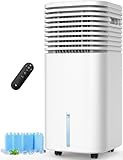
5. CENSTECH Windowless Portable Air Conditioners with 4Modes & 3Speeds, 15H Timer for Smart Auto-off, 2Gal Tank for 20H Cooling, Evaporative Air Cooler 17FT Remote, 120° Swing Swamp Cooler No Hose Needed
Overview:
CENSTECH’s unit is an evaporative cooler (not refrigerant-based), using water evaporation to cool air. It covers 300 sq. ft. with a 2-gallon tank, targeting dry climates where traditional AC is inefficient. Note: It won’t reduce humidity and works best below 50% RH.
What Makes It Stand Out:
The massive 20-hour runtime on one tank and 120° airflow swing are unmatched. Unlike compressor ACs, it requires no exhaust hose, making it truly “windowless.” The 4 cooling modes (including natural wind simulation) and ultra-quiet 45 dB operation suit bedrooms.
Value for Money:
Exceptional value in arid regions—far cheaper to buy and run than refrigerant ACs. However, it’s ineffective in humidity, so value plummets outside dry climates. For desert areas, the low energy use and zero installation justify the cost.
Strengths and Weaknesses:
Strengths: No installation or drainage; 20-hour runtime; silent operation; eco-friendly (uses water, not refrigerants). Weaknesses: Only cools in low humidity; adds moisture to air; ineffective above 60% RH; not true “AC” (no BTU cooling).
Bottom Line:
A niche solution for dry climates seeking affordable, portable cooling. Avoid if you live in humid areas—this isn’t a replacement for refrigerant AC—but ideal for desert homes or garages where traditional units struggle.
6. Humhold 14000 BTU Portable Air Conditioners with Remote Control, 3-in-1 Free Standing Cooling AC Unit with Fan & Dehumidifier, Cools Room up to 700 sq.ft, Smart/Sleep Mode,3 Speed,Auto Swing,24H Timer

Overview: The Humhold 14000 BTU Portable AC delivers robust cooling for spaces up to 700 sq.ft, combining cooling, dehumidifying, and fan functions in one unit. Its self-evaporating system minimizes manual drainage, while smart features like Auto Swing and a 24-hour timer enhance usability for bedrooms, offices, or basements during hot seasons.
What Makes It Stand Out: Its 14,000 BTU (ASHRAE) capacity and 95-pint/day dehumidification tackle large, humid rooms efficiently. The no-drain design for daily use and dual control via an intuitive LED display + remote (with 23-ft range) offer exceptional convenience. Smart Mode auto-adjusts between cooling/fan to maintain 73°F–77°F comfort.
Value for Money: Priced competitively for its high BTU output and 700 sq.ft coverage, it outperforms many mid-range units. While cheaper models cover smaller areas, this justifies its cost for larger spaces needing strong dehumidification—though the remote lacks included batteries.
Strengths and Weaknesses: Strengths: Powerful cooling/dehumidification; user-friendly controls; effective self-evaporation; versatile room compatibility. Weaknesses: Requires manual drainage in very humid areas (e.g., basements); remote battery not included; heavier than compact units.
Bottom Line: Ideal for large rooms or humid climates, this efficient 3-in-1 unit excels in performance and convenience. A top pick for those prioritizing coverage and dehumidification over ultra-quiet operation.
7. BLACK+DECKER Smart Portable Air Conditioner, 12,000 BTU for Rooms up to 550 Sq. Ft., Smart Portable AC with Follow Me Remote and Window Kit, BPACT12WT, White

Overview: This BLACK+DECKER 12,000 BTU portable AC cools rooms up to 550 sq.ft while doubling as a dehumidifier and fan. Wi-Fi connectivity enables app and voice control (Alexa/Google Assistant), and its compact design suits bedrooms or offices without complex installation.
What Makes It Stand Out: True smart integration sets it apart—control via app or voice commands, plus the “Follow Me” remote acts as a thermostat for precise, personalized cooling. The included window kit simplifies setup, and top-mounted controls ensure easy access.
Value for Money: Premium pricing reflects its smart capabilities, which add convenience but may not justify the cost for users wanting basic cooling. Competitors offer similar BTU ratings cheaper, but the tech appeal makes it worthwhile for smart-home enthusiasts.
Strengths and Weaknesses: Strengths: Seamless app/voice control; “Follow Me” remote accuracy; straightforward window installation; quiet operation for sleep. Weaknesses: Limited to 550 sq.ft (smaller than some 12k BTU rivals); app connectivity can be inconsistent; no auto-drain innovation.
Bottom Line: Best for tech-savvy users seeking smart features in a portable AC. While coverage is slightly limited, its connectivity and ease of use deliver solid value for the price-conscious smart-home owner.
8. AKIRES 10000 BTU Portable Air Conditioners,3-IN-1 Portable AC Unit With Fan & Dehumidifier,Remote Control,24H Timer, Sleep Modes,Cools Room Up To 450 sq.ft,Suitable for Bedroom, Room, Office,Apartment

Overview: The AKIRES 10,000 BTU portable AC targets small-to-medium spaces (up to 450 sq.ft) with 3-in-1 cooling, dehumidifying, and fan functions. Its rapid installation, mobility features, and sleep-optimized quiet mode cater to bedrooms or apartments needing budget-friendly relief.
What Makes It Stand Out: Effortless 10-minute setup with a versatile window kit (fits sliding/double-hung windows) and exceptional mobility via 360° casters + ergonomic handle. The self-evaporating system reduces drainage needs, and dehumidification reaches 1.2L/h—ideal for damp climates.
Value for Money: An affordable entry point for reliable cooling, undercutting premium brands while covering typical room sizes. Though BTU is lower than competitors, its focused 450 sq.ft capacity and included accessories offer strong bang for buck for renters or small spaces.
Strengths and Weaknesses: Strengths: Quick, tool-free installation; excellent portability; effective dehumidification; intuitive remote/display. Weaknesses: Limited to smaller rooms; dehumidifier performance lags behind high-BTU models; sleep mode noise reaches 50dB (slightly audible).
Bottom Line: A practical, no-fuss choice for compact living areas. Prioritizes ease of use and mobility over raw power, making it perfect for apartments or offices where frequent relocation is needed.
9. Humhold Inverter 16000BTU Portable Air Conditioners with Remote, Free Stand Cooling Portable AC Unit for Room up to 800 sq.ft, with Dehumidifier & Fan, Dual Hose, Quiet Sleep Mode(45dB), Windows Kit

Overview: The Humhold Inverter 16,000 BTU unit leverages dual-hose technology and inverter efficiency to cool spaces up to 800 sq.ft. It emphasizes energy savings, whisper-quiet operation (45dB), and robust dehumidification—ideal for large living areas or hot, humid environments.
What Makes It Stand Out: Dual-hose design accelerates cooling by 30–40% and prevents hot-air seepage, while inverter tech cuts energy use by 40% versus conventional models. The ultra-quiet 45dB sleep mode and 95-pint/day dehumidification outperform most competitors in comfort and efficiency.
Value for Money: Higher upfront cost is offset by long-term energy savings and expansive coverage. Though pricier than single-hose units, its dual-hose efficiency and inverter reliability justify investment for large rooms where standard models struggle.
Strengths and Weaknesses: Strengths: Industry-leading dual-hose efficiency; exceptional energy savings; near-silent operation; powerful dehumidification. Weaknesses: Bulky footprint; complex dual-hose setup; remote requires separate batteries; SACC rating (12,000 BTU) reduces real-world output.
Bottom Line: The premier choice for large spaces demanding efficiency and quiet performance. Worth the premium for those seeking maximum cooling power with minimal noise and energy waste.
10. Amazon Basics 3-In-1 Portable Air Conditioner, 10000 BTU (ASHRAE), Cools Up to 450 Sqf, Portable AC with Cool/Dry (Dehumidifier)/Fan-Only Functions, Auto Mode, Sleep Mode, Timer, White

Overview: Amazon Basics’ no-frills 10,000 BTU portable AC delivers core cooling, dehumidifying, and fan functions for rooms up to 450 sq.ft. Focused on reliability and mobility, it’s a streamlined solution for bedrooms or offices seeking essential climate control.
What Makes It Stand Out: The “Follow Me” remote (acting as a thermostat) and Auto Mode—seamlessly switching between cooling/fan—provide surprising sophistication for a budget unit. Built-in wheels and handles ensure effortless room-to-room movement, while the 24-hour timer aids energy conservation.
Value for Money: Unbeatable affordability without sacrificing key features. It matches mid-tier models in functionality (dehumidification, sleep mode) at a fraction of the cost, making it the smart pick for budget-conscious buyers needing dependable performance.
Strengths and Weaknesses: Strengths: Exceptional value; intuitive “Follow Me” remote; lightweight and highly portable; reliable Auto Mode. Weaknesses: Basic plastic build; lacks smart features; dehumidification capacity lower than premium units; no advanced drainage solutions.
Bottom Line: The go-to budget portable AC for straightforward cooling needs. If you prioritize cost savings and mobility over bells and whistles, this workhorse delivers consistent, no-nonsense performance.
Understanding Portable Air Conditioner Fundamentals
How Portable Cooling Technology Actually Works
Unlike central systems that recirculate air through ducts, portable units pull in warm room air, pass it over refrigerant-filled coils, and expel heat outside via an exhaust hose. The magic happens through evaporation and condensation cycles within a closed-loop refrigerant system. As warm air contacts cold evaporator coils, moisture condenses (acting as a dehumidifier), while the refrigerant absorbs heat and releases it outdoors through the condenser. This process requires venting—typically through a window kit—but newer models optimize this flow to minimize energy waste.
Single-Hose vs. Dual-Hose System Dynamics
Single-hose units dominate the market due to simplicity, but they create negative room pressure by expelling more air than they intake. This forces hot outdoor air to seep through gaps, reducing efficiency by up to 30% in poorly sealed spaces. Dual-hose systems solve this by using one hose for intake and another for exhaust, maintaining balanced pressure. While bulkier and often pricier, dual-hose models deliver noticeably better cooling in larger rooms or humid climates where precision matters most.
The BTU Room Size Relationship Decoded
British Thermal Units (BTUs) measure cooling capacity, but manufacturers’ room-size charts oversimplify reality. A 10,000 BTU unit might claim to cool 450 sq ft, yet this ignores ceiling height, sunlight exposure, and occupancy. For accurate sizing, calculate: (Room length × width × height × 25) ÷ 1000. Add 4,000 BTUs for kitchens, 1,000 per frequent occupant, and 10% for west-facing windows. Oversized units short-cycle (turning on/off rapidly), wasting energy and failing to dehumidify properly.
Critical Performance and Efficiency Factors
Energy Efficiency Ratings Beyond the Label
While EER (Energy Efficiency Ratio) gets top billing, real-world savings depend on consistent usage patterns. A unit with EER 12 might outperform one rated EER 14 if it runs longer at partial load. Look for inverter-driven compressors—they adjust cooling output like a car’s accelerator versus on/off “clutch” systems, cutting energy use by 20–30% during mild weather. Also, verify if ratings apply to dual-hose mode; some revert to less efficient single-hose operation to boost numbers.
Noise Level Realities and Mitigation Strategies
Portable ACs range from library-quiet 45 dB to disruptive 55+ dB—equivalent to a loud conversation. Compressor placement (top vs. bottom) significantly impacts sound dispersion; bottom-mounted compressors transmit more vibration through floors. Seek models with “sleep mode” that reduces fan speed after target temperature is reached. Pro tip: Units with foam-lined exhaust hoses often muffle rattling better than rigid plastic alternatives.
Dehumidification as a Hidden Performance Indicator
All portable ACs remove moisture, but effectiveness varies wildly. High-end models capture 2–4 pints per hour even on “dry mode,” crucial in humid regions where dampness feels hotter. Check for continuous drainage options—if the internal tank fills too fast, auto-shutoff interrupts cooling. Units with condensate pumps can push water vertically 3+ feet, enabling flexible placement away from drains.
Smart Venting Techniques for Maximum Output
Standard window kits leak air around edges, but DIY solutions boost efficiency: cut rigid foam board to fill gaps, use magnetic window seals, or install temporary acrylic panels. For dual-hose units, ensure intake/exhaust hoses aren’t kinked within 18 inches of the unit—bends here create backpressure that chokes airflow. Never vent into attics; the trapped heat damages roofing materials and reflects back into living spaces.
Portability Nuances Beyond Wheel Size
Swivel casters matter more than total weight—look for 360-degree rubber wheels that glide over thresholds without snagging. Units under 70 lbs with recessed handles stay manageable, but verify hose storage: poorly designed brackets let heavy exhaust kits drag on the floor during moves. Bonus points for models where the exhaust hose detaches in seconds without tools.
Advanced Features Worth Considering
Inverter Technology’s Real-World Payoff
Traditional compressors blast at full power until the thermostat hits, then shut off completely. Inverter-driven units modulate speed continuously, maintaining steady temperatures while using 25% less electricity. Though pricier upfront, they’re ideal for spaces needing 12+ hours of daily cooling—like home offices—where energy savings offset costs within two seasons.
Multi-Stage Filtration for Health-Conscious Cooling
Basic foam filters trap large dust, but HEPA or activated carbon layers capture allergens, odors, and VOCs. Medical-grade units often include UV-C lights to neutralize mold spores in condensation trays. If you have asthma or live in wildfire-prone areas, prioritize washable filters with antimicrobial coatings that prevent musty smells during humid storage.
Climate-Responsive Operation Modes
“Auto mode” isn’t just marketing fluff—it uses dual sensors to adjust fan speed based on real-time humidity. In dry climates, it runs fans slower to maximize dehumidification; in monsoons, it boosts airflow to combat stickiness. Some newer models even integrate with smart thermostats to preemptively cool rooms before peak electricity rates hit.
Remote Control Ecosystem Integration
Physical remotes with backlighting beat phone apps for quick adjustments, but true convenience comes from voice compatibility. Verify if voice commands work without cloud dependence—units requiring constant Wi-Fi drop functionality during outages. For renters, standalone apps that don’t demand new hubs prevent subscription fatigue.
Winter-Ready Functionality Surprises
Many portable ACs double as dehumidifiers or space heaters, but few advertise “heat pump” capability. True heat pump models reverse refrigerant flow to pull outdoor heat indoors, working efficiently down to 40°F. Avoid resistive heaters (marketed as “heating mode”)—they guzzle power like electric blankets and only supplement cooling-focused units.
Practical Buying and Setup Guidance
Room Geometry Assessment Tactics
Measure diagonal corners to catch irregular layouts manufacturers ignore. High ceilings (>9 ft) or vaulted spaces need 20% more BTUs—treat them as two-story rooms. For L-shaped areas, position the unit where airflow naturally circulates toward the “elbow”; placing it in dead zones creates cold spots while wasting capacity.
Climate Zone-Specific Selection Criteria
In arid regions (like the Southwest), prioritize dehumidification over raw BTUs—excess cooling dries air uncomfortably. Coastal zones demand stainless steel condensers to resist salt corrosion. For areas with short, intense summers, single-hose units suffice; humid continental climates (think Midwest) benefit from dual-hose precision to manage moisture swing.
Long-Term Cost Analysis Framework
Calculate true ownership costs: (Unit price ÷ 5 years) + (Annual kWh × electricity rate × 8 hours/day × 120 days). A $400 unit using 1,200 kWh/year at $0.15/kWh costs $216 yearly to run—more than its upfront price. Compare against Energy Star models using 900 kWh; that $50 premium saves $54 annually. Always factor in filter replacement costs ($20–$50/year).
Specification Sheet Red Flags to Spot
Beware of “peak BTU” claims—real cooling capacity is always lower. Verify if EER ratings include hose length; some tests use 3-foot hoses when real kits run 5+ feet. “Up to 40 dB” noise ratings often reflect lowest fan speed; check mid-speed levels for typical use. If dehumidification rates aren’t listed, assume subpar moisture removal.
Warranty Depth Verification Steps
A “5-year warranty” might cover only the compressor. Demand written details: Does it include labor? Are hoses/seals protected? Some brands void coverage if you use third-party window kits. Premium manufacturers offer in-home service for compressors but require mail-in for control boards—a hidden hassle worth investigating.
Frequently Asked Questions
What size portable AC do I need for a 500 sq ft apartment?
Calculate your exact requirement by multiplying square footage by 25 BTU/sq ft, then adding 4,000 for kitchens or heavy sun exposure. For 500 sq ft with standard ceilings, start at 12,500 BTU but increase to 14,000 if multiple windows face west. Always prioritize dual-hose models above 10,000 BTU for balanced airflow.
Can I use a portable AC without venting it outside?
No—venting is non-negotiable for standard units. Without expelling heat, the room temperature rises as the unit acts like a space heater. Evaporative coolers (mist-based) work unvented but only in dry climates and add humidity. Never vent indoors to attics or basements; this creates fire hazards and structural damage.
How often should I clean the filters?
Wash reusable foam filters every 2 weeks during peak use with mild soap and water. Replace carbon or HEPA filters quarterly in dusty environments. Neglecting this reduces airflow by 15% within a month, forcing the compressor to work harder and increasing energy bills.
Why does my portable AC freeze up?
Freezing typically stems from restricted airflow (dirty filters or blocked vents) or low refrigerant levels. Ensure nothing obstructs intake grilles, and verify room temperature stays above 60°F. If coils ice persistently, the unit may be undersized for the space, causing short-cycling that drops evaporator temps too rapidly.
Do portable ACs work in high humidity?
Yes, but effectiveness depends on dehumidification capacity. Units removing 2+ pints/hour perform best in muggy conditions. Run “dry mode” exclusively when humidity exceeds 60%—it prioritizes moisture removal over cooling, preventing that clammy feeling even if temperatures don’t drop dramatically.
Can I leave a portable AC in place year-round?
Only if stored properly. Drain all water, run the fan on “dry” for 30 minutes to evaporate residue, then cover tightly. In freezing climates, bring units indoors to prevent refrigerant contraction damage. Units left assembled develop mold in hidden reservoirs, creating health hazards during next season’s use.
Are dual-hose models significantly more expensive to run?
Not necessarily—though they use slightly more electricity to power two fans, their pressure-balanced design often cuts overall energy use by 15–25% in rooms over 300 sq ft. The efficiency gain typically outweighs the minor fan cost, especially in homes with poor insulation where single-hose units struggle.
What’s the ideal placement for optimal cooling?
Position the unit centrally with at least 20 inches of clearance around intake vents. Avoid corners or behind furniture where airflow recirculates. For multi-room setups, place it in the warmest connected area (like a hallway) to let cool air naturally migrate toward bedrooms. Never block the exhaust hose path.
How do I prevent condensation leaks?
Ensure the unit sits perfectly level—tilting toward the drain plug helps internal water flow. Use continuous drainage kits with gravity-fed hoses sloping downward at 1/4 inch per foot. In high humidity, empty the tank twice daily or install an inline condensate pump to prevent overflow shutdowns.
Can portable ACs cool server rooms or electronics?
Specialized low-decibel models with precise temperature control (±1°F) work well, but standard units risk moisture damage. Server rooms require dedicated HVAC with humidity sensors below 50% RH. Never use consumer portable ACs for critical electronics—they lack the fail-safes to prevent condensation during compressor cycling.
See Also
- We Tested 50 Portable Air Conditioners - Here are the 10 Best for Home Use
- 10 Best Portable Air Conditioners for Overheating Home Offices in 2026
- How to Choose the 10 Best Portable Air Conditioners for Office Use in 2026
- Wheeled Portable Air Conditioners: The Ultimate Mobility Hack for Whole-Home Cooling on a Budget
- 10 Must-Have Smart Portable Air Conditioners for Home Automation in 2026