Table of Contents
Winter’s chill has a way of creeping into even the coziest homes, leaving you reaching for extra blankets and cranking up the thermostat—only to wince at the resulting energy bill. Portable heating solutions promise relief, but not all deliver the perfect blend of warmth, efficiency, and quiet operation you deserve. You need something that heats your space evenly without drying out the air, runs safely while you sleep, and doesn’t sound like a jet engine taking off. The frustration of drafty rooms and uneven temperatures is real, but the solution might be simpler and more elegant than you think.
Enter the oil-filled radiator heater—a timeless heating technology that often gets overlooked in favor of flashier options, yet consistently proves its worth through reliable, comfortable warmth. Unlike forced-air systems that blast hot air and circulate dust, these units use a sealed reservoir of thermal fluid (usually diathermic oil) to radiate consistent, gentle heat long after the element turns off. They’re the quiet workhorses of the heating world, ideal for bedrooms, home offices, or supplemental zone heating. Understanding how to choose the right one for your specific needs in today’s market, however, requires knowing exactly what features matter most for safety, efficiency, and long-term satisfaction. Let’s cut through the marketing noise and focus on what truly makes an oil-filled radiator heater effective for your home.
Top 10 Oil-Filled Radiator Heaters
Detailed Product Reviews
1. PELONIS Radiator Heater for Large Space, Electric Oil Filled Radiator, Dual Knobs, 1500W, Quiet Space Heater, 3 Modes, Tip-over Protection

Overview: The PELONIS Radiator Heater is a straightforward oil-filled electric heater designed for efficient whole-room warming. Targeting large spaces, it leverages 1500W power and oil-based convection for gentle, dry-air-free heat, prioritizing quiet operation and essential safety.
What Makes It Stand Out: Its fanless, whisper-quiet design ensures undisturbed use in bedrooms or offices, while dual knobs for precise temperature and mode control (600W/900W/1500W) offer tailored energy savings. The inclusion of heavy-duty casters and a front handle enhances portability across rooms.
Value for Money: Positioned as a budget-friendly option, it delivers core functionality without frills. Compared to pricier digital models, it sacrifices programmability but excels in reliability and noise-free operation, making it ideal for users prioritizing simplicity and cost efficiency.
Strengths and Weaknesses: Strengths: Exceptionally quiet; robust portability; effective dry-heat prevention; solid tip-over and overheat protection. Weaknesses: Basic analog controls lack timers or smart features; initial heat-up can be slow (typical for oil heaters); no energy-saving ECO mode.
Bottom Line: A reliable, no-nonsense heater perfect for noise-sensitive environments. Best for budget-conscious buyers needing dependable, portable warmth without advanced tech—ideal for bedrooms or small offices where silence is paramount.
2. Pelonis Oil Filled Radiator Heater for Large Space, 2025 Upgraded, Space Heaters with 1500W Quiet Warmth Radiant Heater, 3 Heating Modes, Overheat & Tip-Over Protection, Adjustable Thermostat, Black

Overview: Pelonis’ 2025 Upgraded Oil Heater refines classic radiator functionality with modern efficiency and safety. Engineered for large spaces, it uses thermal oil and 7 fins for rapid, even heat distribution, emphasizing silent operation and seamless home integration.
What Makes It Stand Out: A 32% heat efficiency boost via advanced fins ensures faster warming, while ETL-certified safety covers every component. The minimalist black design blends discreetly into decor, and pure-silence operation post-stabilization is ideal for sleep or focus zones.
Value for Money: Slightly premium-priced, it justifies cost through superior heat distribution and rigorous safety standards. It outperforms basic models in speed and reliability, though lacking a timer, it may not suit those needing scheduling—best for users valuing efficiency and aesthetics.
Strengths and Weaknesses: Strengths: Rapid, even 360° heating; exceptional quietness; robust ETL safety certification; elegant design; energy-saving 3-mode flexibility. Weaknesses: No programmable timer; analog thermostat lacks precision of digital displays; black finish shows dust easily.
Bottom Line: A top-tier choice for those seeking efficient, silent warmth with premium safety. Recommended for living rooms or home offices where design and performance matter, though skip if you require automated scheduling.
3. Pelonis Oil Filled Radiator Heater for Large Space, 2025 Upgraded, Space Heaters with 1500W Quiet Warmth Radiant Heater, 3 Heating Modes, Overheat & Tip-Over Protection, Adjustable Thermostat, White

Overview: This white variant of Pelonis’ 2025 Upgraded Oil Heater offers identical performance to its black counterpart but in a clean, versatile finish. It targets large rooms with oil-based convection heat, focusing on safety, efficiency, and quiet comfort.
What Makes It Stand Out: The 32% efficiency gain from 7 thermal fins ensures swift, uniform warmth, while ETL-certified safety provides comprehensive protection. The bright white hue complements light decor, and post-stabilization silence supports restful environments without compromise.
Value for Money: Matching the black model’s price, it delivers equal value for buyers preferring neutral aesthetics. It competes well against mid-range heaters by balancing speed, safety, and noise control—though the absence of a timer may deter some.
Strengths and Weaknesses: Strengths: Fast, even heating; near-silent operation; rigorous ETL safety; stylish white design; easy-to-use knobs. Weaknesses: No timer functionality; analog controls limit precision; white surface requires frequent cleaning.
Bottom Line: An excellent, decor-friendly heater for efficient, quiet warmth. Choose this if you prioritize a bright, modern look and robust performance—perfect for nurseries or minimalist spaces where safety and subtlety are key.
4. Hykolity Oil Filled Radiator Heater for Large Room, 1500W Electric Oil Space Heater with 7 Extra-Wide M-Shaped Fins, ECO Mode, 24H Timer, Power Memory, Overheat & Tip-Over Protection for Home Office

Overview: Hykolity’s heater combines aggressive efficiency (92.3% boost) with smart features for large rooms. Its M-shaped fins and 7-layer safety system target tech-savvy users seeking precision climate control and peace of mind during extended use.
What Makes It Stand Out: A 39.49% heat dispersion improvement and unique 7-layer safety (including V0 flame-retardant materials) set it apart. The 24H timer, power memory, and ECO mode with 50°F–95°F range enable hands-off, energy-smart operation unmatched in its class.
Value for Money: Priced higher than basic models, it excels for users needing automation. The timer and power memory justify the cost for offices or bedrooms, though overkill for simple spot heating—opt for this if programmability is non-negotiable.
Strengths and Weaknesses: Strengths: Industry-leading heat dispersion; comprehensive 7-layer safety; useful 24H timer and power memory; precise ECO mode; high build quality. Weaknesses: Bulky design; complex controls may overwhelm beginners; premium price.
Bottom Line: A feature-packed powerhouse ideal for automated, efficient heating. Highly recommended for home offices or tech-oriented users, but consider simpler models if budget or simplicity are priorities.
5. DREO Oil Filled Radiator Heater, Electric Radiant Heater with Remote Control, 4 Modes, Overheat & Tip-Over Protection, 24h Timer, Digital Thermostat, Quiet Space Heater for Indoor Use Large Room
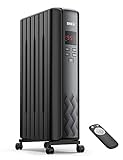
Overview: DREO’s heater merges radiant warmth with smart convenience, featuring a digital thermostat and remote control. Designed for large rooms, it emphasizes rapid heat distribution via unique spindle-shaped vents and dual U-tubes, plus enhanced safety.
What Makes It Stand Out: Remote operation and a digital thermostat offer modern ease, while spindle vents and enlarged fins double heat release speed. The cool-touch exterior (max 80°C) and UL certification prioritize family safety, making it stand out in user-friendliness.
Value for Money: Mid-to-high priced, it’s worth it for remote lovers. The 24H timer and ECO mode save energy, but the premium is steeper than knob-based rivals—best if you value hands-free adjustments and precise temperature control.
Strengths and Weaknesses: Strengths: Remote control convenience; fast heat output; cool-touch safety; UL certification; 4 modes including ECO. Weaknesses: Digital display may be too bright at night; remote easily misplaced; slight fan noise during initial warm-up.
Bottom Line: A compelling pick for tech-friendly households wanting quick, safe warmth. Choose DREO if remote operation and rapid heating are essential—skip if you prefer minimalist analog controls or absolute silence.
6. hykolity Electric Oil Filled Radiator, 1500W Portable Full Room Radiant Space Heater with Adjustable Thermostat, Remote, Led Display, Child Lock, Overheat & Tip-Over Protection, 24H Timer, Grey

Overview:
The hykolity 1500W oil-filled radiator delivers whole-room warmth for spaces up to 150 sq. ft., combining rapid heating with advanced safety and user-friendly controls ideal for bedrooms or offices.
What Makes It Stand Out:
Its 7-finned heat dispersion system ensures uniform 360° warmth without noise, while the eco-mode smart algorithm maintains precise temperatures. The inclusion of a remote, 24-hour timer, LED display, and multi-control options (touchscreen or remote) elevates convenience beyond basic models.
Value for Money:
Priced mid-range, it justifies cost through energy-saving modes (600W/900W/1500W + Eco), versatile scheduling, and durable V-0 flame-retardant construction. Though slightly pricier than entry-level heaters, the remote and precision thermostat offer tangible efficiency gains for long-term bill savings.
Strengths and Weaknesses:
Strengths: Quiet operation, robust safety suite (child lock, tip-over, overheat protection), effortless mobility via 360° wheels, and intuitive controls. Weaknesses: LED display lacks backlighting for nighttime use, and the “eco-mode” algorithm may cause minor temperature lag in drafty rooms.
Bottom Line:
A feature-rich, safety-focused heater that excels in convenience and efficiency. Highly recommended for tech-savvy users seeking customizable, quiet warmth in medium-sized rooms without compromising safety.
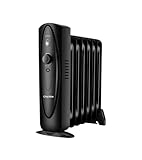
7. Oil Filled Radiator Heater,Oil Heater with Adjustable Thermostat,Electric Radiator Heater with Overheat Safety,Mini Portable Space Heater,700W
Overview:
This compact 700W oil-filled radiator targets small spaces like dorms or home offices, prioritizing portability and essential safety in a minimalist design.
What Makes It Stand Out:
Its ultra-portable, lightweight build (under 10 lbs) and space-saving footprint distinguish it from bulkier competitors. The permanently sealed oil system provides silent, dry-heat comfort without fans—ideal for noise-sensitive environments.
Value for Money:
As a budget-friendly option, it delivers reliable warmth for areas under 100 sq. ft. The absence of timers or digital displays keeps costs low, but the 700W output limits utility for larger rooms. Best for occasional use where portability trumps advanced features.
Strengths and Weaknesses:
Strengths: Exceptionally lightweight, simple thermostat control, effective tip-over/overheat safeguards, and durable sheet-metal casing. Weaknesses: Low wattage restricts heating capacity, lacks timer or multiple heat settings, and offers no remote/display for precise adjustments.
Bottom Line:
A no-frills, dependable choice for warming tiny spaces economically. Ideal for renters or travelers needing basic, safe heat—but skip if you require power for medium rooms or modern conveniences.
8. Amazon Basics Portable Oil Radiator Heater for Indoor Use, 3 Heat Settings, Over-Heat Protection, ETL-certified Safety, 7 Oil-Filled Steel Fins, 1500W, 11"D x 14.8"W x 25.2"H, White

Overview:
Amazon Basics’ 1500W oil radiator heater offers straightforward, ETL-certified heating for rooms up to 144 sq. ft., emphasizing safety and quiet operation in a minimalist white design.
What Makes It Stand Out:
The seven oil-filled steel fins provide extended residual heat after shutdown—a rarity in budget models—while ETL certification guarantees rigorous safety compliance. Its fanless design ensures absolute silence, perfect for bedrooms.
Value for Money:
Competitively priced, it balances affordability with robust features: three heat settings, reliable tip-over/overheat protection, and durable casters. Lacks smart features like remotes or timers but excels as a reliable workhorse heater.
Strengths and Weaknesses:
Strengths: Silent operation, excellent residual heating, sturdy wheels for mobility, and trusted ETL safety standards. Weaknesses: Basic manual dials (no digital display), no timer or eco-mode, and the white finish shows dust easily.
Bottom Line:
A practical, safety-first heater for cost-conscious buyers needing consistent warmth in small-to-medium rooms. Avoid if you want tech integrations, but excellent for essential, worry-free heating.
9. DREO Radiator Heater, Dual Knobs, 8 Safety Protection, 1500W Electric Space Heaters for Indoor Use Large Room, Energy Saving, Quiet Oil Filled Radiator for Bedroom, Adjustable Thermostat

Overview:
DREO’s 1500W radiator heater targets large rooms with powerful, even heating and an industry-leading eight safety protections, all controlled via tactile dual knobs.
What Makes It Stand Out:
The M-shaped fins expand heating area by 39.5% for true wall-to-wall warmth, while dual knobs simplify energy-saving adjustments (600W/900W/1500W). Its “92.3% heating boost” claim and fanless operation prevent air dryness—key for bedroom comfort.
Value for Money:
Mid-priced with premium safety (V-0 flame retardant, auto shut-offs) and ETL listing. The dual-knob energy management reportedly cuts costs by 60%, justifying investment for large-room users seeking efficiency without smart-tech complexity.
Strengths and Weaknesses:
Strengths: Exceptional heat distribution, silent and non-drying warmth, intuitive dual-knob controls, and comprehensive safety suite. Weaknesses: No remote or digital display, and the knobs lack precision for micro-adjustments.
Bottom Line:
A top pick for large bedrooms or living rooms needing powerful, dry-heat comfort with unmatched safety. Choose this over tech-heavy models if simplicity and effective warmth are priorities.
10. PELONIS Champagne Oil Filled Radiator Heater with Remote and Thermostat, 5 Temperature Settings for indoor use Large Room, Energy Efficient Electric Space heater with Safety Features

Overview:
PELONIS’ champagne-finished 1500W radiator combines elegant design with practical features like remote control and five temperature presets, targeting style-conscious users in large rooms.
What Makes It Stand Out:
The 360° hot-air circulation heats spaces rapidly without excessive dryness, while the 10-hour timer and remote enable hands-free scheduling. Five precise temperature settings (65°F–85°F) offer finer control than most competitors’ basic thermostats.
Value for Money:
Priced slightly higher, it delivers through ECO mode’s energy savings, whisper-quiet operation, and versatile mobility (caster wheels + handle). The remote and timer justify the cost for users prioritizing convenience in open layouts.
Strengths and Weaknesses:
Strengths: Stylish finish, accurate temperature presets, effective ECO mode, and excellent portability. Weaknesses: 10-hour timer is less flexible than 24-hour alternatives, and ECO mode responsiveness varies in extreme cold.
Bottom Line:
An attractive, user-friendly heater ideal for living rooms or studios where aesthetics and ease of use matter. Worth the premium for remote lovers—but consider DREO if safety features outweigh style.
Understanding How Oil-Filled Radiator Heaters Work
Oil-filled radiators operate on a beautifully simple principle of thermal convection and radiation, making them remarkably efficient for sustained warmth. The core component is a sealed system containing a special heat-transfer oil. An electric heating element immersed in this oil warms it up. As the oil heats, it expands and circulates naturally through the radiator’s fins via convection currents—no fan required. This circulation gradually heats the entire metal body of the unit.
The Science Behind Silent, Even Heat Distribution
The heated metal fins then radiate warmth outward into the room, gently warming objects and people directly, rather than just the air. This radiant heat feels more natural and consistent than the blasts of dry air from fan heaters. Crucially, the oil itself acts as a thermal reservoir. Even after the thermostat signals the heating element to cycle off, the hot oil continues to release stored heat for a significant period. This thermal inertia prevents the rapid temperature swings common with other electric heaters, leading to more stable room temperatures and potentially lower energy consumption as the unit cycles on less frequently.
Why Thermal Fluid Matters More Than You Think
The specific oil used isn’t regular motor oil; it’s a high-boiling-point, non-toxic diathermic fluid designed for maximum heat retention and stability over thousands of heating cycles. This fluid never needs refilling under normal conditions—it’s permanently sealed within the unit. Its high specific heat capacity is the secret sauce, allowing the radiator to store a large amount of thermal energy relative to its volume. This stored energy is what enables the prolonged after-heat effect, making the heater feel consistently warm and reducing the “on/off” cycling that can be inefficient and disruptive.
Key Features to Prioritize When Shopping
Selecting the right oil-filled radiator involves looking beyond just wattage. Prioritizing the right features ensures safety, convenience, and optimal performance tailored to your living space and habits. Don’t get swayed by gimmicks; focus on the fundamentals that deliver real-world benefits day after day.
Safety Mechanisms: Non-Negotiable Essentials
Safety should be your absolute top priority, especially in homes with children, pets, or where the heater might be placed near furniture or curtains. Look for units equipped with multiple, redundant safety features. A tip-over switch is mandatory—it instantly cuts power if the heater is accidentally knocked over. An overheat protection sensor is equally critical; it shuts down the unit if internal temperatures rise abnormally high, such as if vents are blocked. Ensure these features are certified by recognized testing laboratories (like ETL or UL). Also, consider the surface temperature—while the casing gets warm, quality units are designed to stay below levels that cause serious burns on brief contact, though caution is always needed.
Thermostat Precision and Control Options
A basic on/off switch is insufficient for efficient heating. A precise, adjustable thermostat is vital. Look for models offering a wide, clearly marked temperature range (e.g., 5°C to 35°C or 41°F to 95°F) and the ability to maintain your desired setting consistently. Digital thermostats generally offer more accuracy and easier readability than dial types. Bonus points go to units with programmable timers or multiple heat settings (e.g., 600W/900W/1500W), allowing you to tailor energy use—using lower settings for maintenance heat or scheduling the heater to warm a room before you wake up.
Portability and Space-Saving Design Factors
Consider where and how you’ll use the heater. Integrated carrying handles are essential for moving it between rooms. Smooth-gliding casters (preferably locking) make relocation effortless, even on carpets. Evaluate the unit’s footprint—is it narrow enough to fit against a wall in a tight space, or under a window? Some models feature clever folding designs or very slim profiles for corner placement. Also, assess the weight; while the oil makes them denser than fan heaters, some are significantly lighter and easier to maneuver than others, especially important for upstairs use.
Matching Heater Capacity to Your Room Size
Choosing a heater with insufficient power leaves you cold, while an oversized unit wastes energy and money. Getting the capacity right is fundamental to comfort and efficiency. Wattage is the primary indicator of heating capability, but room characteristics dramatically influence what you actually need.
Calculating the Right Wattage for Your Space
A general rule of thumb is 10 watts of heating power per square foot of floor space for reasonably insulated rooms with standard 8-foot ceilings. So, a 150 sq ft bedroom would typically need a 1500W heater. However, this is just a starting point. You must adjust for real-world conditions: add 10-20% more wattage for rooms with high ceilings (over 9 feet), large windows (especially single-pane), poor insulation, or significant drafts. Conversely, a well-insulated sunroom might require slightly less. For primary heating in a drafty space, you might need up to 12-15 watts per sq ft.
Considering Insulation and Room Layout Realities
Don’t just measure square footage. Think about heat loss. A room over an unheated garage or with exterior walls on multiple sides will lose heat faster and need a more powerful heater. Open-plan areas are trickier; you might need multiple smaller units placed strategically rather than one massive heater struggling to circulate warmth. Also, consider the room’s primary use: a bedroom might need less sustained heat than a home office where you’re stationary for hours. Err slightly on the side of adequate power—you can always run a slightly larger heater on a lower setting more efficiently than maxing out an undersized unit.
Energy Efficiency and Operating Costs Demystified
While all electric resistance heaters (including oil-filled radiators) convert 100% of the electricity they consume into heat, how they deliver that heat impacts your comfort and, crucially, how often the thermostat cycles on and off—which affects your bill. Understanding the nuances helps manage expectations and costs.
The Role of Thermal Mass in Reducing Cycling
This is where the oil-filled radiator’s thermal mass shines. The large volume of heated oil acts like a thermal battery. Once the room reaches the set temperature, the thermostat turns off the element, but the hot oil continues radiating heat for 20-60 minutes. Only when the room temperature drops significantly below the set point does the element need to kick back on. In contrast, fan heaters or ceramic heaters with little thermal mass stop producing noticeable heat the moment the element cycles off, causing the room temp to drop faster and triggering more frequent, energy-intensive on-cycles. This reduced cycling frequency is the key efficiency advantage of oil radiators for maintaining steady temperatures.
Smart Usage Habits to Minimize Your Bill
No heater is “cheap to run” in absolute terms if used carelessly, but smart habits maximize efficiency. Always use the thermostat—never leave it on “high” constantly. Only heat occupied rooms; close doors to concentrate warmth. Utilize lower wattage settings for maintenance heat (e.g., 900W instead of 1500W) once the room is warm. Ensure the heater has ample clearance (usually 3 feet) on all sides for proper air circulation—blocking vents drastically reduces effectiveness and can be a fire hazard. Consider supplemental insulation like draft stoppers for doors; reducing heat loss is always cheaper than generating more heat.
Noise Levels and Discreet Operation
One of the standout benefits of oil-filled radiators is their near-silent operation, making them ideal for bedrooms, nurseries, or quiet workspaces. Understanding the minimal sounds they do produce helps set realistic expectations.
Why They’re Exceptionally Quiet Compared to Alternatives
The absence of a fan is the primary reason. Fan heaters inherently produce airflow noise, which can be disruptive. Oil radiators rely solely on natural convection, generating no forced-air sound. The only potential noises are subtle: a gentle “ticking” or “pinging” as the metal housing expands and contracts with temperature changes (similar to a house settling), or a very faint gurgling as the oil circulates internally. These sounds are usually only noticeable in absolute silence and are generally considered non-intrusive, often fading into the background quickly.
Managing Expectations for Sensitive Environments
If you’re an extremely light sleeper or work in a sound studio, test the heater in a quiet room before committing. Placement matters—putting it directly against a wall stud might slightly amplify expansion sounds. Higher-quality units often use materials and construction techniques that minimize these minor noises. Remember, any sound from an oil radiator is orders of magnitude quieter than the constant hum or blast of a fan heater, contributing significantly to a peaceful environment.
Durability, Build Quality, and Longevity
Oil-filled radiators are renowned for their long service lives, often lasting 10-15 years or more with basic care. This longevity hinges on robust construction, as there are few moving parts to fail—the heating element and thermostat are the primary wear components.
Identifying Quality Construction Markers
Feel the weight—while not the only factor, a heavier unit often indicates thicker gauge steel for the fins and housing, which improves heat distribution and durability. Examine the welds; they should be smooth, consistent, and free of large gaps or spatter. Check the stability; it shouldn’t feel wobbly on its feet or casters. Look for powder-coated finishes that resist chipping better than basic paint. Reputable brands typically use higher-grade internal components and subject units to more rigorous safety testing, even if the brand name isn’t featured here.
The Reality of Maintenance and Lifespan
The beauty of these heaters is their near-zero maintenance. There are no filters to clean (a major plus for allergy sufferers compared to fan heaters) and the oil is sealed for life. Simply wipe the exterior with a damp cloth when dusty—never use abrasive cleaners. Avoid spraying liquids directly onto the unit. The main factor affecting lifespan is the duty cycle; running a heater constantly on max in a very large, poorly insulated space will wear the element faster than using it appropriately in a well-matched room. With sensible use, expect many seasons of reliable service.
Placement Strategies for Optimal Performance
Where you put your oil-filled radiator significantly impacts how effectively and efficiently it heats your room. Strategic placement leverages natural heat flow and avoids common pitfalls.
Ideal Locations for Maximum Warmth Distribution
Position the heater against an interior wall, if possible, as exterior walls are colder and can cause more heat loss from the unit itself. Placing it under a window is often excellent; the rising warm air counteracts the cold downdraft from the glass, creating a more even temperature. Ensure there’s at least 12-18 inches of clearance above the heater and 3 feet on all sides for unobstructed air circulation—this is critical for both safety and performance. Avoid cramming it into tight corners or behind furniture.
Avoiding Common Placement Mistakes
Never place the heater directly against curtains, furniture, bedding, or any flammable material—this is a major fire hazard and blocks heat output. Don’t put it in high-traffic areas where it could be tripped over. Avoid bathrooms unless the unit is explicitly rated for bathroom use (look for an IPX4 splash-proof rating); standard models are not safe near water sources. Don’t place it in doorways where drafts will constantly cool it down, forcing it to work harder. Remember, heat rises, so the unit will warm the air near the ceiling first, which then circulates down—placement shouldn’t be solely based on where you are sitting.
Special Features Worth Considering (Beyond the Basics)
While core functionality is paramount, certain advanced features can enhance convenience, safety, and integration into modern homes. Evaluate these based on your specific lifestyle needs, not just because they’re listed.
Remote Control and Smart Capabilities
Some higher-end models include basic remote controls, allowing you to adjust the thermostat or timer without getting up—a nice touch for bedtime adjustments. True smart features (Wi-Fi/app control, voice assistant compatibility) are becoming more common but add cost. Consider if the convenience justifies the price and potential complexity (setting up apps, relying on home Wi-Fi). For most users, a simple remote or a good programmable timer offers the best value.
Additional Comfort and Convenience Elements
Look for features that address specific pain points: a cool-touch exterior is vital for safety around kids and pets. A 24-hour programmable timer lets you schedule heating for comfort without wasting energy when you’re out. An eco-mode might optimize the thermostat algorithm for slightly lower average temperatures to save energy. A night mode could dim bright LED displays. A clothes drying rack is a common accessory, but ensure it’s designed for your specific model and used with extreme caution—never drape thick, wet items directly over the heater, as this blocks vents and is a fire risk.
Environmental Considerations and Air Quality
Choosing how you heat your home has implications beyond your energy bill. Oil-filled radiators offer distinct advantages for indoor air quality and have a specific environmental footprint worth understanding.
Why They’re Ideal for Sensitive Respiratory Systems
Unlike forced-air systems (central heating or fan heaters), oil-filled radiators don’t blow air around the room. This means they don’t circulate dust, pet dander, pollen, or other allergens trapped in your living space. They also don’t burn oxygen or produce combustion byproducts (like gas heaters can). Furthermore, they don’t significantly reduce relative humidity like fan-forced electric heat can, helping to prevent that uncomfortably dry, scratchy throat feeling in winter. This makes them a top choice for asthmatics and allergy sufferers.
Understanding the Carbon Footprint Reality
It’s important to be clear: any electric heater’s environmental impact is directly tied to how your local electricity is generated. If your grid relies heavily on coal or gas, the carbon footprint is significant. If your power comes from renewables, it’s much lower. Oil-filled radiators themselves don’t produce emissions in your home, but the power plant might. Their efficiency advantage lies in reducing the total kWh needed to maintain comfort compared to less efficient electric heaters (due to reduced cycling), thereby lowering your relative electricity consumption and associated emissions for the same level of warmth.
Integrating with Your Overall Home Heating Strategy
An oil-filled radiator isn’t usually a whole-home solution (unless you have a very small space), but it excels as part of a smart, layered heating approach. Using it strategically can lower your overall heating costs.
Targeted Zone Heating for Maximum Savings
This is the golden rule for efficiency. Instead of cranking up the central thermostat to keep the entire house at 21°C (70°F), lower the main thermostat to a modest 16-18°C (60-65°F) and use the oil-filled radiator to heat only the room you’re actively using (e.g., living room in the evening, bedroom at night). Heating just one or two zones to a comfortable temperature uses far less total energy than heating unused rooms. Oil radiators are perfect for this due to their quiet, comfortable heat in occupied spaces.
Complementing Primary Heating Systems Effectively
In rooms that are always colder than the rest of the house (like a basement office or a sunroom), an oil radiator can take the chill off without overburdening your main furnace. During mild cold snaps, you might avoid turning on your central system altogether by using supplemental heaters in key areas. Remember to turn off the supplemental heater when you leave the room! The goal is precision heating—using the right tool, in the right place, at the right time.
Future-Proofing Your Purchase for 2026 and Beyond
Heating technology evolves, but the core principles of oil-filled radiators remain solid. Choosing a unit with an eye toward longevity and potential future needs ensures your investment stays relevant.
Looking for Timeless Design and Repairability
Focus on fundamental build quality over fleeting tech trends. A heater with robust construction, standard replaceable parts (like a thermostat or element—check if the brand offers spares), and a simple design is more likely to last a decade than one packed with proprietary smart features that might become obsolete. Avoid units where the thermostat or controls seem flimsy. Timeless functionality trumps gimmicks for long-term value.
Adapting to Potential Energy Shifts
As home energy management becomes smarter, consider if basic programmability (a timer) meets your needs, or if you genuinely require app control for integration with a broader smart home system. Units with standard plug-in designs (not hardwired) offer maximum flexibility if you move or rearrange. While renewable energy adoption grows, an efficient electric heater like a quality oil radiator remains a viable option, especially when paired with time-of-use electricity rates—use the timer to run it during off-peak, potentially greener/cheaper hours.
Frequently Asked Questions
Frequently Asked Questions
Can oil-filled radiator heaters effectively heat a whole house?
No, they are primarily designed for zone heating specific rooms. While multiple units could heat several rooms, they lack the capacity and ductwork of central heating systems for efficiently warming an entire large or poorly insulated home as the primary heat source.
Do I ever need to add oil to the radiator?
Absolutely not. The oil is sealed within the unit for life under normal operating conditions. It is not a consumable and requires no maintenance or refilling. If a unit develops a leak (very rare), it should be replaced.
Are oil-filled radiators a fire hazard?
When used correctly and equipped with modern safety features (tip-over switch, overheat protection), they are among the safest portable electric heaters. The key is maintaining proper clearance from combustibles and never covering the unit or blocking vents.
Will an oil heater dry out the air in my room?
No, significantly less than fan-forced heaters. Since they don’t blow air, they don’t reduce relative humidity as dramatically. You might still benefit from a humidifier in very dry winter climates, but the effect is much milder than with forced-air systems.
How long does it take for an oil radiator to heat up a room?
Initial warm-up is slower than fan heaters (15-30 minutes to feel noticeable warmth), as the oil and metal need to heat first. However, once warmed, they provide very consistent, sustained heat. The slow ramp-up is part of their efficient, even heating profile.
Can I leave an oil-filled radiator heater on overnight?
Yes, this is one of their major advantages if it has certified safety features (tip-over, overheat) and is placed correctly with ample clearance from all flammable materials. Their cool-touch exteriors and lack of open elements make them suitable for bedrooms when used responsibly.
Why does my oil heater make ticking noises?
This is normal thermal expansion. As the metal housing heats up and cools down, it expands and contracts slightly, causing gentle ticking or pinging sounds. It’s harmless and common in all metal radiators, similar to sounds in a house’s structure.
Are oil-filled radiators more energy-efficient than other electric heaters?
In terms of converting electricity to heat, all resistive heaters are 100% efficient. However, oil radiators’ thermal mass reduces on/off cycling, leading to more stable temperatures and potentially lower overall energy use for maintaining comfort compared to fan or ceramic heaters in the same application.
Can I use an oil-filled radiator in a bathroom?
Only if the specific model is explicitly rated for bathroom use (look for an IPX4 splash-proof rating). Standard oil radiators are not safe for bathroom use due to the risk of water contact with electrical components.
What’s the typical lifespan of a quality oil-filled radiator heater?
With proper use (correct sizing, no obstruction, sensible thermostat use), a well-built unit can easily last 10-15 years or more. The lack of moving parts (besides the thermostat switch) contributes significantly to their longevity compared to fan heaters.
See Also
- 10 Best Oil-Filled Radiator Heaters for Seniors (Safe & Easy to Use) in 2026
- 10 Must-Have Oil-Filled Radiator Heaters for Silent Warmth in 2026
- Solving Overheating Worries with Smart Safety Features in Modern Oil-Filled Radiator Heaters
- 10 Best Budget Oil-Filled Radiator Heaters Under $80 for Students in 2026
- 2026’s Top 10 Oil-Filled Radiator Heaters for Quiet Heating