Table of Contents
Staring down the barrel of another sweltering summer in your cozy studio apartment or compact home office, you’ve probably felt the frustration of ineffective cooling. Window units rattle like angry ghosts, portable ACs guzzle energy while barely making a dent in the humidity, and central systems feel like overkill for such intimate spaces. That familiar cycle of sweating through the night or shivering under a blast of overpowered cold air leaves you wondering if there’s truly a comfortable, efficient solution tailored for smaller footprints. The good news? There absolutely is, and it’s not as complicated as you might think.
Mini split air conditioners have quietly revolutionized how we approach temperature control in confined areas, moving far beyond their industrial origins to become the gold standard for targeted comfort. Forget the one-size-fits-all approach of traditional ducted systems; these sleek, modern marvels deliver precise cooling exactly where you need it, without wasting energy on unused corners or battling the limitations of single-room solutions. Understanding how to navigate the nuances of choosing the right mini split for your specific small space—whether it’s a sun-drenched attic bedroom, a basement apartment, or a minimalist loft—is the key to unlocking silent, efficient, and remarkably effective climate control that finally makes your personal sanctuary feel just right.
Top 10 Mini Split Air Conditioners
Detailed Product Reviews
1. Nexaro 12000BTU Mini Split Air Conditioner Heat Pump, 19 SEER2 Inverter Compressor AC Unit Cools Rooms up to 750 Sq. Ft, 115V Ductless Split AC with Pre-Charged Condenser & Installation Kit

Overview: The Nexaro 12000BTU Mini Split offers year-round climate control for spaces up to 750 sq. ft., combining cooling and heating via an inverter-driven heat pump. It uses eco-friendly R32 refrigerant and includes a pre-charged condenser with installation kit for simplified setup.
What Makes It Stand Out: Its standout features include versatile 5-mode operation (Cool, Heat, Auto, Fan, Dry), whisper-quiet performance (as low as 35dB), and robust all-season functionality with self-defrosting and mildew protection. The R32 refrigerant significantly lowers environmental impact compared to older alternatives.
Value for Money: Priced competitively, it delivers strong value through energy-efficient 19 SEER2 operation, reducing long-term electricity costs. The inclusion of a comprehensive installation kit and eco-conscious refrigerant offsets the initial investment better than basic non-inverter models.
Strengths and Weaknesses: Strengths: Excellent energy savings, quiet operation, reliable heating in cold climates, and easy customization via timer/sleep modes. Weaknesses: Professional installation is mandatory, and refrigerant servicing requires a local dealer, potentially adding long-term costs.
Bottom Line: Ideal for homeowners seeking an eco-friendly, quiet, and efficient year-round solution for medium-sized rooms. Its balanced features and strong energy performance make it a top contender in the 12k BTU class.
2. Senville LETO Series Mini Split Air Conditioner Heat Pump, 12000 BTU 110/120V, Inverter, Works with Alexa, SEER2 20.8, 1 Ton, White
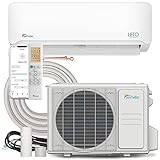
Overview: Senville’s LETO Series is a high-efficiency 12,000 BTU mini-split heat pump with Alexa integration, SEER2 20.8 rating, and operation down to 5°F. It targets users wanting smart control and robust performance for spaces up to 750 sq. ft.
What Makes It Stand Out: Alexa compatibility enables voice/app control and scheduling, while the exceptional 20.8 SEER2 rating leads the market in energy efficiency. The 5-year compressor warranty and UL/AHRI certifications provide strong reliability assurance.
Value for Money: Though pricier upfront, its elite energy efficiency minimizes operating costs over time. The included installation kit and comprehensive warranty justify the cost, especially compared to non-smart models with shorter coverage.
Strengths and Weaknesses: Strengths: Industry-leading SEER2 rating, seamless smart-home integration, strong cold-weather heating, and professional-grade certifications. Weaknesses: Installation complexity demands expert help, and the warranty excludes labor costs.
Bottom Line: Highly recommended for tech-savvy buyers prioritizing energy savings and smart features. Its premium efficiency and warranty support make it worth the investment for long-term comfort.
3. COSTWAY 11500 BTU Mini Split Air Conditioner, 115V 17 SEER2 Wifi Enabled Inverter Air Conditioner & Heater Pump System Cools Up to 750 Sq. Ft, Compatible with Alexa, w/Installation Kit

Overview: COSTWAY’s 11,500 BTU unit delivers Wi-Fi/Alexa-enabled climate control for 750 sq. ft. spaces, featuring R32 refrigerant, 7 operating modes, and a 17 SEER2 rating. It emphasizes smart convenience and eco-friendly operation.
What Makes It Stand Out: Dual smart compatibility (Alexa/Google Assistant), ultra-quiet sleep mode (23dB), and self-cleaning (133°F) with washable filters set it apart. The broad temperature range (cooling to 122°F, heating to 5°F) ensures all-weather reliability.
Value for Money: Excellent value for budget-conscious buyers seeking smart features. The included installation kit and ETL/AHRI compliance offer reliability at a lower price point than premium brands, though SEER2 is slightly below competitors.
Strengths and Weaknesses: Strengths: Affordable smart control, exceptional quietness, versatile 7 modes/fan speeds, and easy filter maintenance. Weaknesses: Lower 17 SEER2 efficiency than rivals, and professional installation remains essential.
Bottom Line: A smart, budget-friendly choice for those wanting app control and quiet operation without top-tier efficiency. Best for smaller homes prioritizing convenience over maximum energy savings.
4. MEPTY 12000BTU Mini Split AC/Heating System, 19 SEER2 Energy Efficient Mini Split Air Conditioner with Heat Pump, Cools Up to 750sq.ft, Ductless Inverter AC Unit with Pre-Charged Condenser

Overview: MEPTY’s 12,000 BTU system boasts 19 SEER2 efficiency, rapid cooling/heating claims (30s/60s), and R32 refrigerant. It targets users needing quick, quiet comfort for rooms up to 750 sq. ft. with a focus on energy savings.
What Makes It Stand Out: Aggressive “30-second cooling” marketing, 4-in-1 functionality (cool/heat/fan/dehumidify), and 35dB whisper-quiet operation differentiate it. The 36% energy-saving claim via inverter tech and eco-friendly refrigerant enhance its appeal.
Value for Money: Solid mid-range value with strong energy savings potential. The pre-charged refrigerant and included remote justify the cost, though Alexa/Wi-Fi is absent—a drawback versus similarly priced smart models.
Strengths and Weaknesses: Strengths: Fast temperature adjustment, quiet performance, intuitive remote controls, and effective dehumidifying. Weaknesses: Lacks smart connectivity, and “rapid cooldown” claims may not reflect real-world conditions.
Bottom Line: Recommended for buyers prioritizing speed and quietness over smart features. Its energy efficiency and ease of use make it practical for bedrooms or offices.
5. 9000 BTU Mini Split AC w/Remote Control19 SEER2 Cools Up to 450 Sq. Ft,Ductless Inverter Mini Split System w/0.75 Ton Heat Pump Pre-Charged & Installation Kit, Ultra-Quiet

Overview: This compact 9,000 BTU unit cools spaces up to 450 sq. ft. with 19 SEER2 efficiency, Wi-Fi compatibility, and heating down to -4°F. It’s designed for smaller rooms like bedrooms or garages.
What Makes It Stand Out: Ultra-quiet operation (23dB), extensive “6 modes” including health-focused features (negative ions, PM2.5 removal), and exceptional cold-weather resilience (-4°F startup) are key highlights. The comprehensive installation kit ships in two boxes.
Value for Money: Great value for small-space efficiency. The inclusion of Wi-Fi (via adapter), health modes, and a robust feature set at this BTU tier outperforms budget alternatives, though the split shipment may delay setup.
Strengths and Weaknesses: Strengths: Near-silent operation, health-conscious air filtration, versatile modes, and strong cold-weather performance. Weaknesses: Lower capacity limits room size suitability, and Wi-Fi requires a separate hub.
Bottom Line: Perfect for compact areas needing whisper-quiet, health-focused climate control. Its feature density for small rooms makes it a standout budget-efficient option.
6. YITAHOME 12000 BTU Mini Split Air Conditioner Heat Pump System, Wifi Enabled 20 SEER2 115V Inverter Ductless AC Cool Up to 750 Sq. Ft, Compatible with Alexa, Complete Installation Kit, White

Overview:
The YITAHOME 12000 BTU mini-split system delivers versatile year-round climate control for spaces up to 750 sq. ft. Featuring inverter technology, WiFi/Alexa compatibility, and ETL/AHRI certification, it targets homeowners seeking efficient cooling and heating with modern smart features.
What Makes It Stand Out:
Its standout elements include 20 SEER2 efficiency (25% energy savings), five operational modes (including health-focused air purification), and robust all-weather performance down to 5°F. The whisper-quiet 41 dB operation and comprehensive installation kit—plus negative ion filtration for PM2.5 removal—elevate it beyond basic units.
Value for Money:
Priced competitively for its class, the YITAHOME offers exceptional value with included smart controls and certified efficiency. While professional installation is mandatory (adding cost), its energy savings and dual cooling/heating functionality justify the investment over cheaper single-mode alternatives.
Strengths and Weaknesses:
Strengths: Excellent energy efficiency; Alexa/WiFi integration; advanced air purification; quiet operation; wide temperature range (-5°F to 118°F). Weaknesses: Installation complexity requires licensed HVAC pros; ships in two packages (potential delays); lacks detailed noise specs for heating mode.
Bottom Line:
A top-tier choice for tech-savvy homeowners prioritizing air quality and smart features. Its efficiency and versatility make it worthwhile despite installation hurdles, especially for 750 sq. ft. living spaces needing reliable year-round comfort.
7. Oylus Mini Split Ac/Heating System - 12000 BTU Ductless Mini Split Air Conditioner with Heat Pump, 19 SEER2 115V Energy Efficient Ac Unit Up to 750 Sq.Ft with Installation Kit

Overview:
The Oylus 12000 BTU mini-split provides balanced cooling (12,000 BTU) and heating (12,500 BTU) for spaces up to 750 sq. ft. With 19 SEER2 efficiency and straightforward operation, it caters to budget-conscious buyers seeking reliable ductless climate control.
What Makes It Stand Out:
Its standout feature is 36% energy savings via ECO mode and inverter tech, coupled with practical flexibility: four fan speeds, dehumidification, and an adjustable temperature range (61°F–88°F). The simple remote with night-mode LED display enhances user convenience without app dependency.
Value for Money:
Offering solid performance at a mid-range price, the Oylus excels in value for those avoiding smart features. The included installation kit reduces setup costs, though professional installation remains recommended. It outperforms non-inverter units in long-term savings despite a slightly lower SEER2 than competitors.
Strengths and Weaknesses:
Strengths: Strong heating capability (down to 19.4°F); intuitive remote; effective dehumidifier; 36% energy reduction. Weaknesses: No WiFi/smart controls; repetitive marketing claims in specs; limited heating range in extreme cold; basic air filtration.
Bottom Line:
Ideal for users prioritizing affordability and simplicity over smart tech. Its dependable heating/cooling and energy savings make it a pragmatic pick for garages or bedrooms, though tech enthusiasts may find it lacking.
8. Nexaro 12000BTU Mini Split Air Conditioner& Heater, 17 SEER2 𝟏𝟏𝟓𝐕 Wall-Mounted AC Unit Cools Rooms up to 750 Sq. Ft, Energy Efficient Inverter AC with Heat Pump

Overview:
Nexaro’s 12000 BTU inverter mini-split promises efficient climate control for spaces up to 750 sq. ft., though marketing cites 450 sq. ft.—a notable inconsistency. Its 17 SEER2 rating targets cost-effective cooling/heating with AHRI certification.
What Makes It Stand Out:
Ultra-quiet operation (26 dB in mute mode) and self-cleaning functionality (135°F+ drying) distinguish it. The auto-defrost feature ensures reliable heating in cold weather, while washable filters simplify maintenance—ideal for allergy sufferers.
Value for Money:
Priced accessibly, it delivers good value for noise-sensitive environments like bedrooms. The 35% energy savings claim holds merit, but its lower SEER2 (17 vs. competitors’ 19–21) means slightly higher long-term costs. Professional installation is essential but not included.
Strengths and Weaknesses:
Strengths: Exceptionally quiet; effective self-cleaning; robust cold-weather performance; washable filters. Weaknesses: Inconsistent coverage claims (750 vs. 450 sq. ft.); lower SEER2 efficiency; no smart controls; ships in two packages.
Bottom Line:
A strong contender for quiet operation and maintenance ease, but verify room size compatibility. Best for smaller spaces prioritizing tranquility over cutting-edge efficiency or smart features.
9. ROVSUN 9000 BTU Wifi Enabled Mini Split Air Conditioner & Heater with Inverter, 19 SEER2 Energy Saving 115V Ductless Split AC Unit with Pre-Charged Condenser, Heat Pump & Installation Kit

Overview:
The ROVSUN 9000 BTU unit targets smaller spaces (up to 400 sq. ft.) with smart-enabled climate control. Its 19 SEER2 rating, pre-charged lines, and Alexa/Google integration suit tech-oriented users in bedrooms or offices.
What Makes It Stand Out:
Seamless app and voice control (Alexa/Google) stand out, alongside rapid cooling and ultra-quiet 28 dB operation. The pre-charged line set simplifies installation, while the 35% energy savings claim aligns with its inverter efficiency for compact areas.
Value for Money:
Excellent value for small-space efficiency seekers. The smart features typically cost extra in competitors, but note the missing power cord and 24-hour upright wait pre-installation. Ideal for renters or supplemental cooling where 9000 BTU suffices.
Strengths and Weaknesses:
Strengths: Full smart-home integration; pre-charged lines; very quiet; compact 400 sq. ft. optimization. Weaknesses: Limited coverage area; no heating specs below 19.4°F; requires extra power cord; ships in two packages.
Bottom Line:
Perfect for small rooms needing smart, quiet operation. Avoid for larger areas, but a stellar pick for tech-savvy users prioritizing app control in bedrooms or studies.
10. IDEALHOUSE 24,000 BTU Mini Split Air Conditioner and Heat Pump, 21 SEER2 Ultra Quiet 208-230V Ductless AC with WiFi & Alexa Control, Cools/Heats up to 1500 Sq.Ft, Easy Installation Kit

Overview:
The IDEALHOUSE 24,000 BTU unit dominates large spaces (up to 1500 sq. ft.) with 21 SEER2 efficiency and smart controls. Designed for open-plan homes or commercial use, it balances power with energy savings via advanced inverter tech.
What Makes It Stand Out:
Its 40% energy reduction claim, 28 dB ultra-quiet operation, and dual-voltage (208-230V) support set it apart. Comprehensive smart features—WiFi, Alexa, 24-hour timer—and robust coverage for expansive areas make it a premium solution.
Value for Money:
Justifies its higher price with unmatched capacity and efficiency. The 21 SEER2 rating outperforms most competitors, translating to significant long-term savings in large spaces. Professional installation is non-negotiable but ensures optimal ROI.
Strengths and Weaknesses:
Strengths: Exceptional coverage; industry-leading quietness; smart versatility; high SEER2 efficiency. Weaknesses: Requires 208-230V (not standard 115V); professional installation mandatory; ships in two packages; overkill for small rooms.
Bottom Line:
The definitive choice for large-area climate control. Invest for open-concept homes or workshops where power, silence, and efficiency are critical—despite voltage and installation constraints.
Understanding Mini Split Technology for Compact Spaces
Mini split systems operate on a fundamentally different principle than the window units or portable ACs many turn to for small rooms. At their core, they consist of two primary components: an outdoor compressor/condenser unit and one or more indoor air-handling units, connected solely by refrigerant lines and electrical wiring. This split design eliminates the need for bulky, energy-leaking ductwork that plagues traditional central systems, making them inherently more efficient, especially in spaces where duct installation is impractical or impossible. The absence of ducts alone can translate to significant energy savings, as duct systems in forced-air setups can lose up to 30% of conditioned air through leaks and poor insulation.
The Core Components Demystified
The outdoor unit houses the compressor and condenser coil, responsible for expelling heat absorbed from your indoor space. The indoor unit, mounted high on a wall or ceiling, contains the evaporator coil and a powerful yet quiet fan that circulates cooled air directly into the room. Crucially, these components communicate electronically, allowing the system to modulate its output precisely based on the actual cooling demand. This isn’t just an on/off switch like older technologies; it’s a finely tuned dance that maintains your desired temperature without constant, energy-intensive cycling.
Why Ductless is Essential for Small Rooms
Ductwork requires significant space for installation—space that simply doesn’t exist in most small rooms, converted closets, or efficiency apartments. Attempting to retrofit ducts can be prohibitively expensive, structurally invasive, and ultimately inefficient due to the short runs and potential for excessive leakage. Mini splits bypass this entirely. Their direct delivery method ensures cooled air goes precisely where intended, maximizing comfort in the limited cubic footage you’re trying to manage, without the energy penalties associated with duct losses.
Inverter Technology: The Efficiency Game-Changer
The true magic behind modern mini split efficiency, particularly relevant for smaller spaces that heat up or cool down quickly, lies in inverter-driven compressors. Unlike traditional systems that run at full blast until the temperature is reached (then shut off completely), inverter technology allows the compressor to continuously adjust its speed. When the room is far from the set temperature, it runs harder; as it approaches the target, it slows down, maintaining the temperature with minimal energy use. This translates to quieter operation (no loud startup/shutdown cycles), more consistent comfort without temperature swings, and substantially lower electricity bills—critical factors for rooms where you spend long hours.
Calculating the Perfect Size for Your Small Room
Choosing the right capacity, measured in British Thermal Units (BTUs), is arguably the most critical decision you’ll make. An oversized unit will cool too rapidly, failing to adequately dehumidify the air, leading to a clammy, uncomfortable environment and excessive wear from frequent short cycling. An undersized unit will run constantly, struggling to reach the desired temperature, driving up energy costs and potentially failing on the hottest days. Small rooms present unique sizing challenges because standard BTU-per-square-foot calculations can be misleading without considering specific room dynamics.
Beyond Square Footage: The Critical Variables
While square footage provides a starting point (e.g., 150-300 sq ft often suggests 6,000-9,000 BTU), numerous factors dramatically influence the required capacity for a small space. High ceilings significantly increase the air volume needing conditioning. Large windows, especially south or west-facing ones, introduce massive solar heat gain. Poor insulation in walls, ceilings, or floors allows heat infiltration. The number of occupants and heat-generating appliances (computers, TVs, kitchenettes) also add substantial load. A room above an unconditioned garage or in direct afternoon sun might need 20-30% more capacity than a similarly sized room with minimal exposure.
The Danger of “Rule of Thumb” Sizing
Relying solely on generalized charts found online is a recipe for disappointment in small, unique spaces. A 200 sq ft room with cathedral ceilings, three large windows, and constant occupancy is fundamentally different from a 200 sq ft windowless basement room. Skipping a detailed assessment often leads to the very comfort and efficiency problems you’re trying to solve. Professional load calculations (like Manual J) consider all these variables, but even as a homeowner, meticulously evaluating your room’s specific characteristics is essential for an informed choice.
When to Seriously Consider Professional Assessment
While DIY sizing is possible with careful research, the complexity increases significantly in small rooms where minor changes have outsized impacts. If your space has unusual architecture, multiple heat sources, significant exposure issues, or is part of a larger multi-zone system, investing in a professional HVAC assessment is highly advisable. The cost of a slightly oversized or undersized unit pales in comparison to years of inefficient operation, discomfort, and potential premature failure due to improper sizing.
Essential Features to Prioritize for Small Room Comfort
Not all mini split features are created equal, and for compact living areas, certain capabilities become non-negotiable for achieving true comfort and efficiency. The goal is to find a balance between necessary functionality and avoiding unnecessary complexity or cost. Prioritizing the right features ensures your system operates silently, maintains precise comfort, and integrates seamlessly into your living space without becoming an eyesore or nuisance.
Whisper-Quiet Operation: A Non-Negotiable
Noise levels, measured in decibels (dB), are paramount in small rooms where you’re in close proximity to the indoor unit. Look for units boasting very low sound ratings, particularly in their “quiet” or “sleep” modes (often 19-22 dB or lower). This is quieter than a whisper and ensures the unit won’t disrupt sleep, concentration during work, or the tranquility of your personal space. Fan speed settings and advanced sound-dampening technologies within the indoor unit are key differentiators here.
Advanced Airflow Management for Even Cooling
Small rooms can suffer from uncomfortable drafts or cold spots if airflow isn’t managed well. Features like multi-directional louvers (auto-swinging horizontally and vertically), wide-angle airflow patterns, and adjustable fan speeds allow you to direct cool air where it’s needed without it blasting directly on you. Some units offer “comfort” or “gentle” modes that reduce initial airflow intensity, preventing that jarring cold blast when the system starts.
Smart Controls and Connectivity for Effortless Management
Integrating your mini split with your daily life is easier than ever. Look for robust Wi-Fi connectivity that enables control via smartphone apps, allowing you to adjust the temperature before you get home, set schedules, monitor energy usage, and receive maintenance alerts. Voice control compatibility (with Alexa, Google Assistant) adds another layer of convenience. Smart features also enable geofencing (automatically adjusting when you leave/return) and integration with broader smart home systems for ultimate efficiency.
Precision Temperature and Humidity Control
Basic thermostats often lead to temperature swings. Mini splits with advanced sensors and algorithms provide much tighter temperature control, maintaining your set point within a fraction of a degree. Crucially, look for models with dedicated dehumidification modes that run the fan and compressor at optimal speeds to remove moisture effectively without overcooling the space – a vital feature for preventing that sticky, uncomfortable feeling in humid climates, even when the temperature seems acceptable.
Energy-Saving Modes and High SEER Ratings
The Seasonal Energy Efficiency Ratio (SEER) is the primary indicator of cooling efficiency. For small rooms where the unit might run frequently, prioritize the highest SEER rating your budget allows (look for 20+ SEER for top efficiency). Complementing this, specific modes like “Econo” or “Energy Save” intelligently modulate compressor speed and fan operation to minimize power consumption during mild weather or when maximum cooling isn’t required, directly impacting your utility bills.
Navigating the Installation Process Smoothly
While mini splits are ductless, installation is not a simple DIY plug-and-play project, especially for optimal performance and safety in small rooms. Proper installation is critical for efficiency, longevity, and avoiding costly mistakes. Understanding the process helps you vet contractors and set realistic expectations.
Site Assessment: The Crucial First Step
A professional installer will conduct a thorough assessment before any equipment is ordered. This involves verifying the precise room dimensions, evaluating insulation quality, identifying potential heat sources, checking electrical capacity at the proposed outdoor unit location, and determining the optimal placement for both indoor and outdoor units. In small rooms, indoor unit placement is particularly critical for airflow and aesthetics; it needs to be high on a wall (typically), away from obstructions, and positioned to distribute air effectively without causing drafts on seating/sleeping areas.
Refrigerant Line and Electrical Requirements
The installer will run the refrigerant lines (usually two copper tubes), a drain line for condensation, and electrical wiring through a small hole (typically 3 inches) drilled through an exterior wall. The location of this hole significantly impacts aesthetics and installation complexity in a small room. Electrical requirements vary by unit size but often necessitate a dedicated circuit. Ensuring the outdoor unit has adequate clearance for airflow (as specified by the manufacturer) is vital, even in tight backyard or balcony spaces.
Why Professional Installation is Strongly Advised
Refrigerant handling requires EPA 608 certification. Improper charging (too much or too little refrigerant) drastically reduces efficiency, cooling capacity, and can damage the compressor. Leaks in poorly brazed lines are costly to fix and harmful to the environment. Incorrect electrical work poses fire and safety hazards. The precision required for brazing lines, vacuuming the system, and charging it correctly makes professional installation, despite the added cost, the only sensible choice for reliable, efficient, and safe operation.
Managing Costs and Long-Term Value
The upfront investment in a mini split for a small room is higher than a basic window unit, but the long-term value proposition is compelling when viewed through the lens of efficiency, comfort, and durability. Understanding the full cost picture helps justify the expenditure and avoid unpleasant surprises.
Breaking Down the Initial Investment
Costs typically include the equipment itself (indoor and outdoor units), installation labor, necessary materials (refrigerant lines, wiring, mounting hardware), and permits. For a single-zone system for a small room, expect the total installed cost to be significantly higher than a window AC but potentially competitive with the long-term cost of running multiple inefficient units. Factors influencing price include unit capacity (BTU), SEER rating (higher efficiency costs more upfront), brand, and installation complexity (e.g., difficult outdoor access, long line sets).
The Compelling Efficiency Payback
This is where mini splits shine, especially in small rooms used frequently. Their high SEER ratings and inverter technology mean they consume far less electricity than comparable window units or portable ACs to achieve the same cooling effect. Over a typical 5-10 year ownership period, the energy savings can easily offset the higher initial purchase and installation cost. Think of it as paying more upfront for a system that works smarter and costs far less to operate month after month.
Longevity and Reduced Maintenance Costs
Well-installed and properly maintained mini splits often last 15-20 years, substantially longer than the typical 8-10 year lifespan of a window unit. They also require less frequent professional maintenance than central systems (primarily annual filter cleaning and occasional outdoor coil cleaning). Avoiding the constant replacement of cheaper, less durable alternatives adds significant long-term value. The durability translates to fewer headaches and replacement costs down the line.
Considering Total Cost of Ownership
When evaluating cost, move beyond the sticker price. Calculate the estimated annual operating cost based on the unit’s SEER rating, your local electricity rates, and expected usage hours. Factor in potential lifespan and maintenance. A slightly more expensive, higher-SEER unit might have a lower total cost of ownership over 10 years than a cheaper, less efficient model. For a small room you use daily during summer, this calculation is particularly impactful.
Optimizing Performance and Longevity Through Maintenance
Mini splits are relatively low-maintenance, but neglecting simple upkeep can lead to reduced efficiency, poor air quality, increased noise, and shortened lifespan. The good news is that most essential maintenance tasks for the indoor unit in your small room are quick and easy for homeowners to perform.
The Critical Role of Filter Cleaning
The air filter is your first line of defense against dust, pollen, and pet dander. In a small room, where the same air circulates constantly, a clogged filter restricts airflow dramatically. This forces the system to work harder, reducing cooling capacity, increasing energy consumption, and potentially causing icing on the evaporator coil. Cleaning or replacing the filter every 2-4 weeks during peak season (or more often with pets) is the single most important maintenance task. Most filters slide out easily for vacuuming or rinsing.
Keeping the Outdoor Unit Clear and Clean
While not inside your small room, the outdoor unit’s performance directly impacts your indoor comfort. Ensure it has at least 12-24 inches of clearance on all sides for proper airflow. Gently hose off the condenser coils (when the unit is off) to remove leaves, grass clippings, or debris that block airflow. Avoid high-pressure washing, which can bend fins. Good airflow here is essential for efficient heat rejection.
Scheduling Professional Check-Ups
While DIY covers basics, an annual professional tune-up is wise. A technician will check refrigerant levels (critical for efficiency), inspect electrical components, clean the indoor evaporator coil if needed (beyond just the filter), verify drainage, and ensure all settings are optimal. This proactive approach catches minor issues before they become major, expensive repairs and ensures your system operates at peak efficiency year after year.
Addressing Common Small Room Challenges
Every small space presents unique hurdles. Understanding how mini splits can be tailored to overcome specific obstacles ensures you get the most out of your investment and enjoy consistent comfort.
Managing Humidity in Tight Spaces
Small rooms, especially bathrooms, basements, or those with poor ventilation, can become excessively humid. While standard cooling mode removes some moisture, dedicated dehumidification modes are far more effective. These modes run the compressor and fan at speeds optimized for moisture removal without dropping the temperature excessively, preventing that uncomfortable “cold and clammy” feeling. Ensure your chosen model offers this specific functionality.
Overcoming Limited Wall Space for Installation
Finding the perfect spot for the indoor unit in a tiny room can be tricky. Creative solutions include mounting the unit higher on the wall than typical, utilizing corners with units designed for corner installation, or opting for a slim, low-profile indoor unit that minimizes visual impact. Some manufacturers offer specialized mounting kits or slightly different unit shapes to fit constrained spaces. Discuss placement limitations thoroughly with your installer during the assessment.
Integrating Aesthetics into Your Decor
Mini splits have evolved significantly in design. Many indoor units now feature sleek, low-profile housings with minimalist grilles that blend into modern decor. Some offer customizable faceplates in different colors. Choosing a unit with a discreet design and strategic placement (e.g., above a door or in a less focal area of the room) helps it become a subtle part of the room rather than a dominant feature. The shift away from bulky, industrial-looking units makes integration into stylish small spaces much more feasible.
Frequently Asked Questions
Frequently Asked Questions
How do I know if a mini split is truly the right choice for my very small room (under 150 sq ft)? Mini splits excel in very small rooms where window units are impractical or inefficient. Their precise sizing (down to 6,000 BTU or lower), ductless design, and ability to provide even, quiet cooling without drafts make them ideal. Ensure you get an accurate capacity calculation to avoid oversizing.
Will a mini split make my small bedroom too noisy for sleeping? Modern mini splits designed for residential use feature ultra-quiet operation, especially in sleep mode. Look for indoor units with sound ratings of 22 dB or lower (quieter than a whisper). Proper installation and placement (not directly above the bed) are also key to ensuring silent nighttime operation.
Can a mini split effectively cool a room with large windows or a lot of sun exposure? Yes, but accurate sizing is critical. Rooms with significant solar gain require higher capacity (BTU) than standard square footage calculations suggest. Prioritize units with high SEER ratings and inverter technology to handle the extra load efficiently without excessive energy use.
Is professional installation absolutely necessary, or can I save money by installing it myself? Professional installation is strongly recommended and often required for warranty validity. Handling refrigerant requires certification, and improper installation (leaks, incorrect charging, electrical issues) severely impacts performance, efficiency, safety, and longevity. The risks outweigh potential DIY savings.
How much does it typically cost to install a single mini split for a small room? Total installed costs for a single-zone system in a small room typically range significantly based on location, complexity, and equipment. Expect costs substantially higher than a window unit but consider the long-term energy savings and durability. Get multiple detailed quotes from licensed contractors.
Do I need a separate mini split for each small room, or can one system cool multiple rooms? Single-zone mini splits cool one room. For multiple small rooms, you need a multi-zone system: one outdoor unit connected to multiple indoor units (each in a different room). This is more efficient and cost-effective than installing several single-zone systems, allowing independent temperature control per room.
How often do I need to clean the air filter in my mini split for a small room? Clean or replace the air filter every 2-4 weeks during peak cooling season. Small rooms recirculate the same air constantly, so filters clog faster, especially with pets or allergies. Neglecting this drastically reduces airflow, efficiency, and air quality.
Will a mini split help reduce humidity in my damp basement apartment? Yes, particularly if the unit has a dedicated dehumidification mode. Standard cooling removes some moisture, but a dehumidify mode runs the system at optimal speeds to extract moisture without overcooling, making the space feel significantly more comfortable and less clammy.
Are mini splits expensive to run compared to a window AC in a small room? Generally, no. High-efficiency mini splits (20+ SEER) typically cost significantly less to operate than standard window units (often 10-14 SEER) for the same cooling output in a small room, due to inverter technology and the absence of duct losses. The higher upfront cost is often offset by lower monthly bills.
Can I control my mini split with my smartphone if I’m not home? Yes, most modern mini splits offer Wi-Fi connectivity. This allows you to control temperature, set schedules, monitor energy usage, and receive alerts via a smartphone app, whether you’re across the room or across the country, enhancing convenience and efficiency.
See Also
- 10 Best Mini Split Air Conditioners for Small Homes This Year
- 10 Best Mini Split Air Conditioners for Small Spaces This Year
- The 10 Best Mini Split Air Conditioners Every Contractor Needs This Year
- 10 Best Mini Split Air Conditioners for Hot Climates This Year
- 10 Best Single Hose Portable Air Conditioners for Small Rooms This Year