Table of Contents
Winter mornings in sub-zero temperatures test the limits of any heating system. You know the drill: waking to a house that feels like a walk-in freezer, cranking the thermostat only to hear the furnace laboring desperately against the cold. For years, homeowners in frigid regions resigned themselves to sky-high heating bills or the constant anxiety of system failure during brutal cold snaps. But the landscape of home heating is undergoing a quiet revolution, with modern technology finally making efficient, reliable warmth possible even when thermometers plunge far below freezing.
Gone are the days when heat pumps were dismissed as “only for mild climates.” Today’s cold-climate mini-split systems represent a quantum leap in engineering, harnessing advanced refrigerants, sophisticated inverter technology, and intelligent defrost cycles to deliver remarkable performance where older models faltered. Choosing the right system isn’t about chasing the latest branded model of the moment; it’s about understanding the core technologies and features that genuinely conquer extreme cold. This guide cuts through the marketing noise to focus on the essential criteria that determine real-world success when the mercury drops, empowering you to make a confident, future-proof investment in your home’s comfort and efficiency.
Top 10 Heat Pump Mini Splits
Detailed Product Reviews
1. Nexaro 12000BTU Mini Split Air Conditioner Heat Pump, 19 SEER2 Inverter Compressor AC Unit Cools Rooms up to 750 Sq. Ft, 115V Ductless Split AC with Pre-Charged Condenser & Installation Kit

Overview: The Nexaro 12000BTU Mini Split offers year-round climate control for spaces up to 750 sq. ft. Using a 19 SEER2 inverter compressor and R32 refrigerant, it functions as both an air conditioner and heat pump, targeting energy-conscious homeowners seeking efficient heating and cooling in a single unit. Professional installation is required.
What Makes It Stand Out: Its standout features include the eco-friendly R32 refrigerant (lower global warming potential), versatile five operating modes (Cool, Heat, Auto, Fan, Dry), and specialized functions like Turbo Boost and self-defrosting for cold-weather operation. The built-in mildew protection and whisper-quiet operation (ideal for bedrooms) further enhance its practicality.
Value for Money: Priced competitively for a 19 SEER2-rated 12k BTU system, it includes a pre-charged condenser and installation kit, reducing setup costs. While similar units may offer WiFi, the focus on energy efficiency (R32) and robust heating/cooling performance provides solid long-term savings on utility bills compared to non-inverter models.
Strengths and Weaknesses: Strengths: Excellent year-round performance, high energy efficiency with inverter tech, quiet operation, eco-conscious refrigerant, and useful comfort modes. Weaknesses: Lacks smart connectivity (WiFi/app control), refrigerant refill requires a dealer, and installation complexity necessitates professional help, adding to initial cost.
Bottom Line: A reliable, efficient choice for quiet, year-round comfort in medium-sized rooms. Ideal for buyers prioritizing eco-friendliness and straightforward operation over smart features, offering strong value for the price point with essential heating and cooling capabilities.
2. YITAHOME 22 SEER2 12000 BTU Mini Split Air Conditioner Heat Pump System, WiFi Enabled 115V Inverter Ductless AC Cool Up to 750 Sq. Ft with Installation Kit, Pre-Charged Condenser, 1 Ton

Overview: The YITAHOME 12k BTU Mini Split delivers highly efficient cooling and heating for 750 sq. ft. spaces. Boasting a 22 SEER2 rating and inverter technology, this WiFi-enabled ductless system provides precise climate control, certified for reliability (ETL/AHRI), and includes a comprehensive installation kit for DIY-inclined professionals.
What Makes It Stand Out: Its exceptional 22 SEER2 rating and integrated WiFi/app control are major highlights, enabling remote management and smart home integration. The ultra-quiet operation (below 26 dB), wide operating range (-5°F to 125°F), 4D air circulation, and extensive feature set (self-cleaning, anti-cold air, temperature compensation) offer superior convenience and performance.
Value for Money: Justifying its premium price, the outstanding energy efficiency promises significant long-term savings, especially in extreme climates. The included installation kit and robust feature set (like WiFi) eliminate the need for costly add-ons, making it a compelling investment compared to less efficient or non-smart alternatives.
Strengths and Weaknesses: Strengths: Top-tier energy efficiency (22 SEER2), comprehensive smart control via app, exceptional quietness, broad temperature tolerance, and rich feature suite. Weaknesses: Installation complexity remains high (professional strongly recommended), ships in two packages which may delay setup, and the remote lacks backlighting for low-light use.
Bottom Line: A premium, future-proof solution for tech-savvy users demanding maximum efficiency, smart control, and whisper-quiet operation. Highly recommended for those prioritizing long-term energy savings and seamless integration into a connected home ecosystem.
3. Senville LETO Series Mini Split Air Conditioner Heat Pump, 12000 BTU 110/120V, Inverter, Works with Alexa, SEER2 20.8, 1 Ton, White
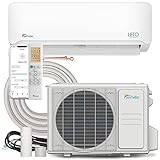
Overview: Senville’s LETO 12k BTU Mini Split provides efficient 110/120V cooling and heating for 750 sq. ft. spaces. Featuring a 20.8 SEER2 rating, Alexa compatibility, and a DC inverter compressor, this system emphasizes smart integration and reliable year-round comfort for residential or light commercial use, backed by a 5-year warranty.
What Makes It Stand Out: Seamless Alexa voice control and app integration stand out, allowing hands-free adjustments and scheduling. The versatile 4-in-1 functionality (cooling, heating down to 5°F, dehumidifying, fan) combined with UL/AHRI certification and a sleek design caters to users wanting aesthetics with performance in living spaces or small businesses.
Value for Money: Its strong 20.8 SEER2 efficiency balances upfront cost with operational savings. The included pre-charged line set and comprehensive warranty provide peace of mind. While slightly pricier than non-smart models, the Alexa integration and solid efficiency make it a worthwhile investment for smart home users over basic units.
Strengths and Weaknesses: Strengths: Easy Alexa/app integration, excellent all-season performance (heat pump to 5°F), strong energy efficiency, attractive design, and robust 5-year warranty covering parts/compressor. Weaknesses: Requires professional installation (no true DIY), 110V limits circuit options in some older homes, and lacks advanced features like WiFi scheduling granularity found in some competitors.
Bottom Line: An excellent smart home-ready choice for efficient cooling and heating in standard-sized rooms. Highly recommended for Alexa users seeking reliable, aesthetically pleasing climate control with strong warranty support and good energy savings.
4. Senville LETO Series Mini Split Air Conditioner Heat Pump, 18000 BTU 208/230V, Inverter, Works with Alexa, SEER2 19, 1.5 Ton, White
Overview: Designed for larger spaces up to 1,000 sq. ft., the Senville LETO 18k BTU Mini Split operates on 208/230V. This 1.5-ton inverter system delivers efficient heating and cooling (SEER2 19) with Alexa compatibility, targeting medium-sized homes, offices, or commercial areas needing robust, smart climate control and backed by a 5-year warranty.
What Makes It Stand Out: Its capacity for larger areas (18k BTU) combined with Alexa/app control and reliable 208/230V operation for higher power demands is key. The versatile 4-in-1 functionality (cooling, heating to 5°F, dehumidifying, fan) and UL/AHRI certification ensure dependable performance in diverse settings, from living rooms to small retail spaces.
Value for Money: The price reflects its higher capacity and commercial-grade 208/230V requirement. The strong SEER2 19 efficiency, included installation kit, and 5-year warranty justify the cost for appropriately sized rooms, offering better long-term value than oversizing a smaller unit or underpowering a larger space with multiple systems.
Strengths and Weaknesses: Strengths: Powerful 1.5-ton capacity for medium spaces, Alexa/app convenience, effective all-season heating/cooling, professional-grade 208/230V compatibility, and comprehensive warranty. Weaknesses: Requires specific 208/230V circuit (not standard 110V), professional installation is mandatory, and SEER2 rating (19) is slightly lower than the 12k model’s 20.8.
Bottom Line: A top pick for medium-sized areas needing substantial, smart climate control. Recommended for users with access to 208/230V power seeking Alexa integration, reliable year-round performance, and the capacity to efficiently handle spaces up to 1,000 sq. ft.
5. Senville LETO Series Mini Split Air Conditioner Heat Pump, 24000 BTU 208/230V, Inverter, Works with Alexa, SEER2 18, 2 Ton, White
Overview: The Senville LETO 24k BTU Mini Split is a high-capacity 2-ton solution for spaces up to 1,500 sq. ft., running on 208/230V. With SEER2 18 efficiency, Alexa compatibility, and inverter technology, it’s engineered for large rooms, open-plan areas, or light commercial use, offering year-round climate control backed by a 5-year warranty.
What Makes It Stand Out: Its significant 24k BTU cooling/heating power for large spaces (1,500 sq. ft.) paired with smart Alexa/app control is the primary differentiator. The robust 4-in-1 functionality (cooling, heating to 5°F, dehumidifying, fan) and suitability for demanding environments like warehouses or large living areas set it apart from smaller residential models.
Value for Money: Justified by its substantial capacity, the unit provides efficient climate control for large areas where multiple smaller units would be costlier and less efficient. While the SEER2 18 rating is the lowest in the LETO series, the energy savings from proper sizing and inverter tech still offer good value compared to non-inverter commercial systems.
Strengths and Weaknesses: Strengths: High 2-ton capacity for large spaces, Alexa/app integration for convenience, reliable all-season performance (heat pump to 5°F), professional 208/230V operation, and strong 5-year warranty. Weaknesses: Highest upfront cost in the series, requires dedicated 208/230V circuit and professional installation, SEER2 18 is less efficient than smaller LETO models, and overkill for typical bedrooms.
Bottom Line: The ideal solution for spacious environments needing powerful, smart climate control. Highly recommended for large residential zones, offices, or commercial settings where capacity is paramount, offering efficient performance and smart features at a competitive value for its class.
6. 9000 BTU Mini Split AC w/Remote Control19 SEER2 Cools Up to 450 Sq. Ft,Ductless Inverter Mini Split System w/0.75 Ton Heat Pump Pre-Charged & Installation Kit, Ultra-Quiet

Overview: This 9000 BTU ductless mini-split system delivers efficient cooling and heating for spaces up to 450 sq. ft., featuring inverter technology, ETL/AHRI certification, and a comprehensive installation kit. Ideal for bedrooms, garages, or small offices, it operates as a year-round climate solution with heat pump functionality.
What Makes It Stand Out: Its standout features include six operational modes (Cool, Heat, Dry, Eco, Auto, Fan), ultra-quiet 23dB operation, and exceptional all-weather performance down to -4°F. The pre-charged refrigerant, 4D air circulation, and health-focused “HEALTH” mode with PM2.5 removal add unique value for indoor air quality and comfort.
Value for Money: Priced competitively for its certification and included installation kit, it offers strong value for small-space owners seeking energy savings (35% claimed) and dual heating/cooling. While professional installation is required, the kit reduces labor costs compared to systems needing field charging.
Strengths and Weaknesses: Strengths: Exceptional quietness, robust cold-weather operation (-4°F startup), and integrated air purification. Weaknesses: Limited to 450 sq. ft. (unsuitable for larger areas), and the remote’s auto-shutoff may inconvenience some users. Installation complexity remains a barrier for DIYers despite included components.
Bottom Line: A top choice for compact spaces needing whisper-quiet, energy-efficient year-round comfort with air quality benefits. Recommended for homeowners prioritizing certified reliability and low noise, though professional installation is non-negotiable for warranty validity.
7. 12,000 BTU Mini Split AC & Heat Pump | 115v, Inverter, Smart WiFi, DIY Install, Remote | Ultra-Quiet, Energy Efficient for 750 Sq.Ft Space

Overview: This 12,000 BTU mini-split system targets medium-sized spaces up to 750 sq. ft. with 115V compatibility, smart WiFi controls, and a SEER 22 rating for high efficiency. It emphasizes user-friendly installation and eco-conscious operation using R32 refrigerant.
What Makes It Stand Out: Its standout attributes are the SEER 22 efficiency (30% energy savings claimed), true DIY-friendly pre-charged line sets, and seamless smart integration via WiFi/Alexa. The ultra-quiet 32dB operation and anti-corrosion outdoor unit enhance durability in diverse environments.
Value for Money: Excellent value for tech-savvy users seeking premium efficiency without professional installation costs. The 5-year compressor warranty and R32 refrigerant (lower environmental impact) justify a modest price premium over basic models, outperforming competitors in long-term savings.
Strengths and Weaknesses: Strengths: Best-in-class SEER 22 efficiency, genuine DIY potential, and robust warranty. Weaknesses: 115V limitation may require dedicated circuitry, and noise level (32dB) is slightly higher than ultra-premium rivals. Not ideal for spaces exceeding 750 sq. ft.
Bottom Line: Highly recommended for DIY enthusiasts wanting smart, efficient climate control in living rooms or offices. Its balance of ease, efficiency, and warranty makes it a standout mid-range option, though verify electrical requirements before purchase.
8. BACOENG 3.6CFM AC Vacuum Pump and Gauge Set - Home Mini Split Vacuum Pump Kit for R410A Refrigerants - w/ R410a Mini Split Adapter & 3x5FT Hoses

Overview: This specialized vacuum pump kit caters to HVAC technicians and advanced DIYers servicing R410A mini-split systems. It combines a 3.6CFM vacuum pump, manifold gauge set, and R410A-specific adapters for precise refrigerant handling and evacuation.
What Makes It Stand Out: The 3.6CFM flow rate (faster than entry-level 2.5CFM pumps) and 0.8Pa ultimate vacuum ensure efficient moisture removal critical for mini-split reliability. Oversized sight-glass gauges, SAE-J2196 hoses, and included R410A adapters streamline R410A-specific workflows without extra purchases.
Value for Money: A cost-effective professional-grade solution under $200, outperforming cheaper kits with superior vacuum depth and durability. While not for automotive R134a systems (requires separate adapters), it delivers exceptional ROI for mini-split installers through time savings and reduced refrigerant waste.
Strengths and Weaknesses: Strengths: High vacuum performance, rugged anodized manifold, and complete R410A compatibility. Weaknesses: Limited to R410A (no automotive support), and the compact pump may require oil top-ups during extended use. Not beginner-friendly without HVAC knowledge.
Bottom Line: Essential for technicians servicing home mini-splits, offering pro-level efficiency at a DIY-adjacent price. Avoid if working with automotive systems, but for R410A mini-splits, it’s a reliable, time-saving investment that prevents costly moisture-related failures.
9. IDEALHOUSE 24,000 BTU Mini Split Air Conditioner and Heat Pump, 21 SEER2 Ultra Quiet 208-230V Ductless AC with WiFi & Alexa Control, Cools/Heats up to 1500 Sq.Ft, Easy Installation Kit

Overview: This heavy-duty 24,000 BTU mini-split system cools/heats spaces up to 1,500 sq. ft., featuring 21 SEER2 efficiency, WiFi/Alexa control, and whisper-quiet 28dB operation. Designed for large rooms or open layouts, it includes a complete installation kit for professional setup.
What Makes It Stand Out: Its 40% energy savings claim (vs. conventional units) via advanced inverter tech and industry-leading 21 SEER2 rating stand out. The ultra-quiet 28dB operation, 4D air circulation, and comprehensive smart controls (app + voice) cater to large-space comfort without noise disruption.
Value for Money: Premium-priced but justified for large areas where standard units struggle. The energy savings offset costs over time, and included pre-charged lines simplify installation. Competes well against pricier commercial units while offering smart features rare in this capacity class.
Strengths and Weaknesses: Strengths: Powerful coverage for 1,500 sq. ft., exceptional quietness, and robust energy savings. Weaknesses: Requires 208-230V (not 115V), and professional installation is mandatory (no true DIY path). Sleep mode customization is less detailed than some rivals.
Bottom Line: Ideal for large living areas or workshops needing potent, silent climate control. A smart buy for energy-conscious users with professional HVAC access, though voltage requirements and installation costs must be factored into the investment.
10. YITAHOME 12000 BTU Mini Split Air Conditioner Heat Pump System, Wifi Enabled 20 SEER2 115V Inverter Ductless AC Cool Up to 750 Sq. Ft, Compatible with Alexa, Complete Installation Kit, White

Overview: This 12,000 BTU mini-split delivers 750 sq. ft. coverage with 20 SEER2 efficiency, 115V compatibility, and smart WiFi/Alexa controls. It emphasizes air purification and quiet operation, targeting bedrooms or offices requiring year-round heating/cooling.
What Makes It Stand Out: The “HEALTH” mode with negative ions and PM2.5 removal is a rare differentiator for indoor air quality. Combined with 5°F low-temperature heating capability, 41dB quiet operation, and ETL/AHRI certification, it balances eco-friendliness (25% energy savings) with wellness features.
Value for Money: Solid mid-tier value with a focus on air purification—uncommon at this price point. While SEER 20 lags behind Product 7’s SEER 22, the health features and Alexa integration appeal to wellness-focused buyers, making it worthwhile for those prioritizing air quality over max efficiency.
Strengths and Weaknesses: Strengths: PM2.5 removal, strong cold-weather performance (5°F startup), and user-friendly app control. Weaknesses: Higher noise floor (41dB vs. rivals’ 30s), and missing components like shut-off valves increase install complexity/cost. Five modes trail Product 6’s six.
Bottom Line: Recommended for health-conscious users in moderate climates needing reliable 750 sq. ft. coverage. The air purification shines, but choose Product 7 if maximum efficiency or quieter operation is critical—this excels where air quality is non-negotiable.
Understanding the Challenges of Heating in Extreme Cold
Why Standard Heat Pumps Struggle Below Freezing
Traditional air-source heat pumps face significant hurdles as temperatures plummet. Their efficiency, measured by the Coefficient of Performance (COP), typically declines sharply below 25°F. At very low temperatures, the refrigerant struggles to absorb sufficient heat energy from the frigid outdoor air. This forces the system to rely heavily on inefficient supplemental electric resistance heat (often called “emergency heat”), drastically increasing energy consumption and negating the primary cost-saving benefit of a heat pump. Frost accumulation on the outdoor coil also becomes a major issue, requiring frequent defrost cycles that temporarily blow cold air indoors.
The Critical Role of Refrigerant Chemistry
The type of refrigerant used is fundamental to cold-weather performance. Older systems often used R-410A, which has limitations below freezing due to its thermodynamic properties. Modern cold-climate units increasingly utilize next-generation refrigerants like R-32 or specialized blends. These newer options have lower boiling points, allowing them to absorb heat more effectively from much colder outdoor air. They also often operate at higher pressures, enabling the compressor to function efficiently even in deep freezes, directly translating to higher COP ratings and sustained heating capacity at lower outdoor temperatures.
Defrost Cycle Efficiency: Minimizing Comfort Disruption
All air-source heat pumps require defrost cycles to melt ice buildup on the outdoor coil during heating mode. However, poorly designed defrost cycles in standard units can be overly frequent or prolonged in cold, damp conditions, causing noticeable dips in indoor temperature and wasting energy. Advanced cold-climate models employ intelligent defrost logic. They use precise sensors and algorithms to determine exactly when defrost is necessary, minimizing unnecessary cycles. They also optimize the duration and method (e.g., using hot gas bypass more effectively), significantly reducing the uncomfortable cold blasts and energy waste associated with defrosting in freezing weather.
Essential Features for True Cold-Climate Performance
Variable-Speed Inverter Compressors: The Heart of Reliability
The compressor is the engine of any heat pump. Cold-climate models rely heavily on sophisticated variable-speed inverter compressors. Unlike older single-speed compressors that simply turn on and off, inverters continuously adjust their speed and output to precisely match the heating demand. This is crucial in cold weather: instead of short-cycling inefficiently or running constantly at full blast, the inverter compressor modulates smoothly. It can operate effectively at very low speeds to maintain comfort during milder cold spells and ramp up power as needed during extreme cold, maximizing efficiency and ensuring consistent, draft-free warmth without temperature swings.
Low-Temperature Heating Capacity Ratings
Don’t just look at the nominal BTU rating; scrutinize the heating capacity at specific low temperatures. Reputable manufacturers provide detailed performance data sheets showing capacity (in BTUs) at various outdoor temperatures, such as 47°F, 17°F, and crucially, 5°F or even -13°F. A true cold-climate unit will retain a high percentage (e.g., 70-100%) of its rated heating capacity at 5°F and still deliver usable heat (e.g., 50-70% capacity) at -13°F or lower. This metric is far more important for cold regions than the standard 47°F rating, as it directly indicates how much heat the system can actually produce when you need it most.
High Coefficient of Performance (COP) in Cold Conditions
COP measures heating efficiency (heat output divided by electrical energy input). While a COP of 3.0+ at 47°F is standard, cold-climate performance is judged at lower temps. Look for units boasting a COP of 2.5 or higher at 5°F, and ideally 1.8-2.0+ at -13°F. A higher COP in these conditions means significantly lower operating costs compared to systems with lower COPs or reliance on backup heat. This number is your best indicator of true winter efficiency and cost savings potential in freezing environments.
Sizing and System Design Considerations
The Critical Importance of Proper Load Calculation
Oversizing is a common and costly mistake, especially tempting in cold climates where homeowners fear inadequate heating. However, an oversized unit will short-cycle excessively, even with an inverter compressor, leading to poor humidity control, uneven temperatures, increased wear and tear, and reduced efficiency. Undersizing risks the system not meeting the heating demand during the coldest days. A Manual J load calculation, performed by a qualified HVAC professional considering your home’s specific insulation, windows, air leakage, and local climate, is non-negotiable for optimal performance, comfort, and efficiency in extreme cold.
Multi-Zone vs. Single-Zone Configurations for Whole-Home Comfort
Mini-split systems offer flexible zoning. For whole-home heating in cold climates, a multi-zone system (one outdoor unit connected to multiple indoor heads) is often ideal, allowing tailored comfort in different living areas. However, ensure the combined heating capacity of all indoor units at your design temperature (e.g., the coldest expected day) meets or exceeds your home’s calculated heating load. Single-zone systems are simpler but may require supplemental heat for very large or poorly insulated spaces during extreme cold. Consider your home’s layout and primary living areas when planning zones.
Ducted vs. Ductless Indoor Units: Evaluating Your Home
While ductless wall-mounted or ceiling cassettes are common mini-split choices, cold-climate homes with existing ductwork (or where central air distribution is preferred) can utilize ducted indoor air handlers paired with a cold-climate outdoor condenser. Ducted systems provide more uniform whole-home heating but require well-sealed, insulated ducts (often in unconditioned spaces like attics – a major efficiency risk if not properly addressed). Ductless systems avoid duct losses entirely but may require multiple indoor units for even coverage. Assess your home’s duct condition and layout carefully.
Installation: Where Cold-Climate Success is Won or Lost
Refrigerant Line Set Specifications for Low Temperatures
The lines connecting the indoor and outdoor units must be sized and installed correctly for cold-climate operation. This often involves using larger diameter lines than standard installations to handle the higher pressures and refrigerant volumes needed for low-temperature heating. Proper insulation of both lines (suction and liquid) with high-quality, thick foam insulation is absolutely critical to prevent heat gain/loss and refrigerant flashing, especially over longer runs common in larger homes. Undersized or poorly insulated lines cripple performance in freezing weather.
Outdoor Unit Placement and Environmental Factors
Location matters immensely. The outdoor condenser needs adequate airflow year-round but faces unique challenges in snow country. Mount it on a sturdy pad elevated sufficiently above ground level to avoid deep snow burial (consider potential snowdrifts). Ensure at least 24-36 inches of clear space on all sides, especially above, for airflow. Avoid placing it directly under roof eaves where heavy icicles or snow slides could damage it. In areas with heavy snow, consider a protective roof overhang only if it doesn’t obstruct airflow. Shielding from prevailing winter winds can be beneficial but must not impede intake/exhaust.
Electrical Requirements and Backup Heat Integration
Cold-climate mini-splits often have higher electrical demands, especially during startup in extreme cold. Verify your electrical panel has sufficient capacity and dedicated circuit(s) meeting the manufacturer’s specifications (voltage, amperage, wire gauge). Proper integration of any supplemental electric resistance heat (if required by code or for extreme backup) is vital. The system should be wired so the backup heat engages only when absolutely necessary (e.g., during defrost if indoor temps drop too low, or if outdoor temps fall below the unit’s operational limit), controlled by the thermostat logic to minimize its use and associated high costs.
Long-Term Reliability and Maintenance in Harsh Conditions
Robust Component Selection for Extreme Durability
Components face significant stress in freezing temperatures. Look for systems built with features like crankcase heaters (to warm compressor oil before startup, preventing damage), robust coil designs with wide fin spacing to resist icing and snow buildup, and weather-resistant electrical components. Compressors specifically designed and tested for extended low-temperature operation are essential. The outdoor unit’s cabinet should be corrosion-resistant (e.g., galvanized steel, powder-coated) to withstand road salt, moisture, and freeze-thaw cycles common in northern climates.
Proactive Winter Maintenance Routines
Routine maintenance is non-optional for cold-climate reliability. Before winter, ensure the outdoor unit is clear of leaves, debris, and at least 12-18 inches of snow. Gently remove any ice buildup only with a soft brush or warm water spray – never use sharp tools or boiling water. Keep the area around the unit clear of snow piles. Schedule professional maintenance annually, focusing on refrigerant charge verification, electrical component inspection, coil cleaning, and checking defrost cycle operation. A well-maintained system is far less likely to fail when temperatures plummet.
Warranty Coverage Specifics for Cold Regions
Warranties matter, but read the fine print. Some manufacturers may have reduced coverage or exclusions for installations in regions with extended periods below certain temperatures (e.g., below -15°F). Ensure the warranty explicitly covers operation within the temperature range you expect in your location. Pay attention to whether parts and labor are covered, the duration of the compressor vs. parts warranty, and any requirements for professional installation and registration to maintain validity. A strong warranty tailored for cold climates provides crucial peace of mind.
Maximizing Efficiency and Cost Savings Year-Round
Leveraging Heating Seasonal Performance Factor (HSPF2)
While COP is a snapshot at a specific temperature, HSPF2 (Heating Seasonal Performance Factor 2) is the standardized US metric for seasonal heating efficiency, reflecting performance across a range of outdoor temperatures typical of a heating season. For cold-climate buyers, prioritize units with the highest possible HSPF2 rating (look for 10.0+). This single number best predicts your actual annual heating energy consumption and cost savings compared to older units or standard heat pumps. Higher HSPF2 directly correlates with lower winter electricity bills.
Smart Thermostat Synergy for Optimized Operation
Pairing your cold-climate mini-split with a compatible smart thermostat unlocks significant efficiency gains. Features like adaptive recovery (learning how long the system takes to reach setpoints), geofencing (adjusting temps based on your location), and detailed energy usage reports help minimize runtime without sacrificing comfort. Smart thermostats can also optimize defrost cycles and manage supplemental heat usage more intelligently than basic models, ensuring the heat pump operates in its most efficient mode as much as possible throughout the winter.
Understanding Realistic Operating Cost Expectations
While cold-climate mini-splits are vastly more efficient than electric resistance heating, operating costs in deep freezes will naturally be higher than during milder shoulder seasons. Set realistic expectations: efficiency (COP) decreases as outdoor temperature drops, so your coldest weeks will have the highest kWh usage. However, compared to relying solely on oil, propane, or electric baseboards, the savings are typically substantial even in extreme cold. Use the HSPF2 rating and your local electricity cost to estimate potential annual savings versus your current heating system for a clearer financial picture.
Frequently Asked Questions
Frequently Asked Questions
Can modern mini-splits truly heat a home when it’s -20°F outside? While performance diminishes as temperatures drop, advanced cold-climate models are specifically engineered to provide usable heating output even at -15°F, -22°F, or lower, depending on the specific unit. They may not deliver 100% of their rated capacity at these extremes, but they significantly reduce or eliminate the need for inefficient backup heat compared to older models. Proper sizing based on your home’s load at that design temperature is critical.
Do I still need backup heating with a cold-climate mini-split? In most well-sized modern cold-climate installations within their specified operating range (e.g., down to -15°F or -22°F), dedicated backup heating like electric resistance strips is often unnecessary for primary heating. However, supplemental heat might still be required by local building codes, for extremely rare “design day” temperatures below the unit’s limit, or during defrost cycles in some systems. Consult your HVAC professional based on your specific climate zone.
How much more do cold-climate mini-splits cost upfront? Expect a premium of 15-30% compared to standard mini-split systems designed for milder climates. This reflects the advanced components (inverter compressors, specialized refrigerants, enhanced controls). However, this higher initial investment is typically offset by significantly lower operating costs over the system’s lifespan, especially in regions with long, cold winters and high costs for fossil fuels.
Will a mini-split work efficiently during heavy snowfall? Yes, but placement is key. The outdoor unit must be installed where it won’t be buried by snowdrifts (elevated pad, clear space maintained). Heavy, wet snow can temporarily insulate the coil, slightly reducing efficiency until it melts or is cleared. Ensure the area around the unit is kept clear of deep snow accumulation for optimal airflow. The system’s defrost cycle handles normal frost and light ice buildup.
Are cold-climate mini-splits noisy when it’s very cold? Noise levels can sometimes increase slightly during extreme cold starts or defrost cycles as the compressor works harder. However, quality units are designed with sound-reducing features. Proper installation (secure mounting, vibration isolation) is crucial. Overall noise should remain within acceptable levels; significant or unusual noise during cold weather warrants a service call.
How does extreme cold affect the lifespan of a mini-split? Properly sized and installed cold-climate units are engineered to handle the stresses of freezing temperatures. While any mechanical system experiences more wear in extreme conditions, the advanced components in these units (like inverter compressors that avoid hard starts) are designed for longevity in harsh climates. Regular maintenance is the single biggest factor in ensuring a long service life, potentially 15-20 years.
Can I install a cold-climate mini-split myself to save money? Installation is complex and critical for performance and safety, especially in cold climates. Refrigerant handling requires EPA certification. Electrical work must meet code. Incorrect sizing, poor vacuuming, improper line set installation, or faulty refrigerant charge will severely compromise efficiency and reliability, particularly in freezing conditions. Professional installation by a contractor experienced with cold-climate systems is strongly recommended and often required for warranty validity.
Do I need a special thermostat for a cold-climate mini-split? While a basic thermostat will work, a compatible smart thermostat is highly recommended. It unlocks features crucial for maximizing cold-weather efficiency: precise temperature control, optimized defrost management, better supplemental heat integration, usage monitoring, and remote adjustments. Ensure the thermostat is explicitly listed as compatible with your specific mini-split model and its inverter technology.
How often should I schedule maintenance for a mini-split in a snowy region? Annual professional maintenance is essential. Schedule it in the fall, before the heating season begins. This check-up should include cleaning coils, verifying refrigerant charge, inspecting electrical components, checking defrost operation, and ensuring drainage lines are clear. Additionally, clear snow and ice buildup from around the outdoor unit promptly after heavy storms to maintain airflow.
Will a mini-split dehumidify as effectively in winter as in summer? Dehumidification is primarily a summer function when the system is in cooling mode. During winter heating mode, the primary goal is adding heat, not removing moisture. Cold air holds less moisture, so relative humidity indoors naturally drops in winter, often requiring a humidifier. The mini-split’s operation won’t significantly dehumidify in heating mode; its role is thermal comfort, not moisture control during cold months.
See Also
- 10 Top-Rated Heat Pump Mini Splits According to HVAC Experts in 2026
- The 10 Ultimate Best Heat Pump Mini Splits for Year-Round Comfort in 2026
- 10 Most Durable Heat Pump Mini Splits Based on Real User Reviews in 2026
- 10 Best Heat Pump Wall Mounted Air Conditioners for Cold Climates in 2026
- 10 Best Value Heat Pump Mini Splits for Whole-Home Climate Control in 2026