Table of Contents
When winter’s chill settles into your home’s bones, temporary space heaters and patchwork solutions simply won’t cut it for the long haul. Permanent, hardwired baseboard heaters offer a sophisticated answer to consistent, whole-room warmth that integrates seamlessly into your living space. Unlike their portable cousins that clutter floors and pose tip-over risks, these fixed installations become part of your home’s infrastructure, delivering reliable heat exactly where you need it most.
As we look toward 2026, advancements in heating technology, smart home integration, and energy efficiency standards are reshaping what homeowners should expect from permanent heating solutions. Whether you’re renovating an older property, finishing a basement, or simply tired of skyrocketing utility bills from inefficient systems, understanding the landscape of hardwired baseboard heaters will empower you to make a confident, informed decision that serves your home for decades to come.
Top 10 Hardwired Baseboard Heaters
Detailed Product Reviews
1. Cadet F Series 48" Electric Baseboard Heater (Model: 4F1000W, Part: 09954 ), 3415/2560 BTU, 240/208 Volt, 1000/750 Watt, White
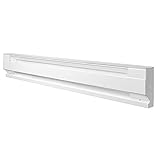
Overview: The Cadet F Series 48" electric baseboard heater delivers flexible heating power for small to medium rooms, offering dual voltage operation at 1000W (240V) or 750W (208V). This hardwired unit produces 3415/2560 BTU respectively, making it suitable for spaces around 150-200 square feet. As a permanent installation solution, it requires professional wiring but provides consistent, draft-free convection heat without fans or moving parts.
What Makes It Stand Out: This heater’s dual voltage compatibility sets it apart, allowing installation in either standard 240V residential systems or 208V commercial applications. The unit features a high-temperature safety shutoff that prevents overheating, while universal wiring compartments and pre-punched knockouts at 1-inch intervals simplify installation. The limited lifetime warranty demonstrates Cadet’s confidence in durability, covering the element and chassis for the product’s service life.
Value for Money: Priced competitively for a dual-voltage unit with lifetime warranty coverage, this Cadet model represents solid mid-range value. However, the required separate thermostat purchase adds $30-60 to the total cost. Compared to budget heaters with only 1-year warranties, the extended coverage justifies the premium. Professional installation costs should be factored in, as 240V wiring demands licensed electrician work.
Strengths and Weaknesses:
Strengths: Dual voltage flexibility; robust safety shutoff; lifetime warranty; universal wiring compartments; quiet convection heating.
Weaknesses: Thermostat not included; requires professional 240V installation; higher initial cost than portable heaters; white finish shows dust.
Bottom Line: The Cadet F Series 48" is an excellent choice for homeowners seeking a permanent, reliable heating solution with exceptional warranty protection. Its dual-voltage capability provides installation flexibility, but budget for a thermostat and professional wiring. Ideal for supplemental or primary heat in bedrooms, offices, or similar-sized spaces.
2. Cadet Baseboard Heater Ul 120 V/4.17 A White 30 " 500 W

Overview: This 30-inch Cadet baseboard heater provides 500W of convection heat for small spaces, operating on standard 120V circuits. The kit includes two units, making it suitable for dual-room applications or larger single rooms requiring balanced heat distribution. At 4.17 amps, it can often work on existing circuits without dedicated electrical runs, simplifying installation compared to 240V models.
What Makes It Stand Out: The dual-unit packaging offers immediate value for heating two spaces, while the 120V design eliminates complex wiring requirements. The listed remote control feature provides convenient temperature adjustment without wall-mounted thermostats, though this appears inconsistent with standard baseboard heater design. Its compact 30-inch length and modest 500W output make it ideal for bathrooms, small bedrooms, or offices under 150 square feet.
Value for Money: As a two-unit package at approximately the price of single competitive heaters, the value proposition seems strong initially. However, the product listing contains concerning inconsistencies: the 1,710 sq ft coverage claim is physically impossible for 500W, and the 0.34 lb weight is clearly erroneous. These inaccuracies suggest potential quality control issues in product documentation that warrant caution before purchase.
Strengths and Weaknesses:
Strengths: 120V compatibility; two units included; compact size; lower installation complexity; UL listed for safety.
Weaknesses: Spec sheet contains major errors; questionable remote control claim; 500W limited heating capacity; no thermostat included; coverage rating unrealistic.
Bottom Line: Approach this product with skepticism due to significant specification inaccuracies. While the 120V dual-unit concept is appealing, verify actual performance and features directly with the manufacturer before purchasing. If specs prove correct, it’s a decent value for small-space supplemental heating, but the documentation errors raise red flags about product support.
3. Cadet F Series 72 in. Electric Baseboard Heater (Model: 6F1500-1W, Part: 05536), 120 Volt, 1500 Watt, White

Overview: The Cadet F Series 72-inch heater brings substantial 1500W heating power to standard 120V circuits, a notable engineering achievement that avoids 240V wiring requirements. Covering approximately 200-250 square feet, this unit delivers continuous convection heat through its extended aluminum element. The 72-inch length provides more uniform heat distribution than shorter models, reducing cold spots in medium-sized rooms like master bedrooms or larger offices.
What Makes It Stand Out: Operating 1500W on 120V distinguishes this model, as most high-wattage heaters require 240V circuits. This simplifies installation in older homes lacking upgraded electrical panels. The extended 72-inch chassis maximizes element surface area for efficient natural convection. Cadet’s typical F Series construction includes over-temperature protection and durable steel construction, though the sparse product description requires inference from the model line’s standard features.
Value for Money: This heater offers good value for spaces where 240V installation is impractical, delivering maximum 120V heating capacity. However, it will require a dedicated 20-amp circuit, potentially adding electrical work costs. The lack of detailed warranty information in the listing is concerning compared to other Cadet models with lifetime coverage. Pricing is mid-range, but the minimal product details make value assessment difficult.
Strengths and Weaknesses:
Strengths: High wattage on 120V; extended length for even heating; no 240V wiring needed; continuous operation; reputable brand heritage.
Weaknesses: Requires dedicated circuit; no thermostat included; sparse product documentation; warranty details unclear; may overload older electrical systems.
Bottom Line: Ideal for homeowners needing maximum heat from 120V circuits, this Cadet model fills a specific niche. Ensure your electrical panel can handle the 12.5-amp continuous load and budget for a separate thermostat. While product information is frustratingly limited, the F Series pedigree suggests reliable performance for targeted heating applications.
4. KING 2K1205BW K Series Baseboard Heater, 27" / 500W / 120V, White

Overview: The KING 2K1205BW K Series delivers 500W of natural convection heat in a compact 27-inch design, operating on standard 120V circuits. This hardwired unit is engineered for permanent installation in small spaces up to 150 square feet. Unlike portable heaters, it must be directly connected to household wiring, providing clean, cord-free operation. The aluminum ribbon fin element optimizes heat transfer while maintaining low surface temperatures for improved safety.
What Makes It Stand Out: KING’s aluminum ribbon fin element technology increases surface area for more efficient heat distribution than standard elements. The crushproof element design withstands installation impacts and thermal cycling, enhancing longevity. A full-length safety cutout runs the entire element, providing comprehensive over-temperature protection rather than just end-point sensors. At 27 inches, it’s one of the most compact hardwired options available, fitting easily under windows or in tight spaces.
Value for Money: Positioned as a premium small-capacity heater, the KING model commands a slightly higher price than generic alternatives but justifies it through superior element construction and safety features. The lack of included thermostat adds $25-50 to the total cost. For those prioritizing durability and safety in a compact 120V unit, the investment pays off through extended service life and reliable operation.
Strengths and Weaknesses:
Strengths: Crushproof aluminum fin element; full-length safety cutout; compact 27-inch size; 120V compatibility; professional-grade construction.
Weaknesses: No thermostat included; 500W limited to small spaces; professional installation recommended; white only option; higher cost than economy models.
Bottom Line: The KING K Series excels as a durable, safety-focused heating solution for small rooms or supplemental heat. Its advanced element design and comprehensive thermal protection make it worth the modest premium over budget competitors. Perfect for bathrooms, small bedrooms, or office nooks where reliable, permanent heat is needed without 240V wiring.
5. Stelpro Brava Electric Baseboard Heater – 500W / 120V – 27 7/8″ L × 5 7/8″ H – Rounded Corners – Durable Steel Convection Heater for Quiet, Even Heat (AB0501W) – White
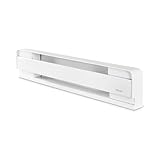
Overview: The Stelpro Brava AB0501W combines elegant design with reliable 500W convection heating in a compact 27 7/8-inch profile. Operating on 120V circuits, this hardwired unit delivers silent, fanless warmth to spaces up to 50 square feet. Its standout feature is the seamless, no-end-cap design with rounded corners, creating a modern aesthetic that eliminates the sharp edges typical of baseboard heaters. The durable steel cabinet is engineered for optimal airflow and thermal distribution.
What Makes It Stand Out: The one-piece, end-cap-free construction not only enhances aesthetics but also eliminates expansion and contraction noises that plague traditional designs. Rounded corners improve safety and create a furniture-like appearance. Stelpro’s engineering focuses on silent operation, making it ideal for bedrooms and offices. The heater offers multiple thermostat options: wall-mounted or built-in kits (electronic or mechanical), though sold separately. Full-length thermal protection with automatic reset ensures reliable, safe operation.
Value for Money: This premium-priced heater justifies its cost through superior design, noise elimination technology, and exceptional warranty coverage. The 5-year limited warranty with lifetime heating element protection exceeds industry standards. While the initial investment is higher and thermostats add cost, the build quality and quiet operation deliver long-term value. For design-conscious buyers, the aesthetic upgrade is worth the premium.
Strengths and Weaknesses:
Strengths: Rounded corner safety design; silent no-end-cap construction; excellent warranty coverage; flexible thermostat options; optimized airflow cabinet.
Weaknesses: Highest cost in 500W category; thermostats sold separately; limited to small spaces; installation complexity; white finish only.
Bottom Line: The Stelpro Brava is the premium choice for those prioritizing quiet operation, safety, and modern aesthetics. Its innovative design eliminates common noise issues while providing reliable heat. Ideal for bedrooms, nurseries, or high-visibility spaces where both performance and appearance matter. Budget for a compatible thermostat to complete the system.
6. KING 3K2407BW K Series Baseboard Heater, 3’ / 750-563W / 240-208V, Bright White

Overview: The KING 3K2407BW is a compact, hardwired baseboard heater designed for permanent residential installation. Operating at 750W (240V) or 563W (208V), this 3-foot unit delivers natural convection heat through its aluminum ribbon fin element. Unlike portable models, this heater requires direct wiring into your electrical system, making it ideal for targeted heating in small rooms, bathrooms, or supplemental zone heating. The bright white finish blends seamlessly with standard trim and baseboards.
What Makes It Stand Out: The crushproof element design and full-length safety cutout set this unit apart from budget alternatives. KING’s aluminum ribbon fin technology maximizes heat transfer efficiency while maintaining whisper-quiet operation—no fans or moving parts means silent comfort. The safety cutout runs the entire element length, providing superior protection against overheating compared to spot sensors found in lesser models. Its compact 3-foot profile fits where longer units cannot.
Value for Money: Priced in the mid-range for hardwired baseboard heaters, the KING 3K2407BW offers solid value through durability and safety engineering. While cheaper units may save $20-30 upfront, they lack the crushproof construction and comprehensive safety cutout. Professional installation costs should be factored in, but the heater’s longevity and KING’s reputation justify the investment over disposable portable units.
Strengths and Weaknesses: Pros: Durable crushproof element, comprehensive safety cutout, silent operation, compact size fits small spaces, efficient aluminum fin design. Cons: Requires professional hardwired installation, no built-in thermostat, lower wattage limits heating to ~100 sq ft, thermostat sold separately.
Bottom Line: An excellent choice for homeowners seeking a permanent, safe heating solution for small spaces. The robust safety features and quiet operation make it worth the installation effort, though you’ll need to budget for a separate thermostat and electrician.
7. Stelpro Brava Electric Baseboard Heater – 1000W / 120V – 48″ L × 5 7/8″ H – Rounded Corners – Durable Steel Convection Heater for Quiet, Even Heat NOT A PLUG-IN (AB41001W) – White
Overview: The Stelpro Brava AB41001W is a premium hardwired baseboard heater delivering 1000W of silent convection heat at 120V. Its 48-inch steel cabinet features unique rounded corners and a no-end-cap design for sleek aesthetics and durability. Engineered for permanent installation, this unit eliminates expansion noise common in lesser models. It’s designed to heat approximately 100 square feet, making it suitable for medium-sized bedrooms or living spaces requiring consistent, draft-free warmth.
What Makes It Stand Out: The one-piece, no-end-cap construction provides exceptional durability and a clean aesthetic that won’t warp or separate over time. Stelpro’s full-length thermal protection with automatic reset offers superior safety. The flexible control options accommodate either wall thermostats or optional built-in kits (mechanical or electronic). Most impressive is the 5-year limited warranty with a lifetime guarantee on the heating element—unmatched in this category.
Value for Money: Positioned at the premium end of the market, the Brava costs 30-40% more than basic hardwired units. However, the investment pays dividends through the lifetime element warranty, noise-free operation, and robust construction. For homeowners prioritizing longevity and aesthetic integration, this heater outperforms cheaper alternatives that may fail within 5-7 years.
Strengths and Weaknesses: Pros: Lifetime element warranty, silent no-expansion-noise design, superior safety features, elegant rounded-corner aesthetic, flexible thermostat options, durable one-piece construction. Cons: High upfront cost, thermostat kits sold separately, requires professional installation, 120V limits placement flexibility.
Bottom Line: The Stelpro Brava is the premium choice for discerning homeowners who value durability, quiet operation, and long-term reliability. If you’re installing permanent heat and want the best warranty in the business, this heater justifies its higher price.
8. Comfort Zone 1500W Convection Baseboard Heater with Built-In Thermostat, Overheat & Tip-Over Protection, Dent-Proof Ends, Plug-In Portable, Ideal for Home, Bedroom & Office, White

Overview: The Comfort Zone CZ650B is a versatile plug-in baseboard heater offering 1500W of portable convection warmth. With its built-in adjustable thermostat and two heat settings, this unit provides immediate heating solutions without installation costs. measuring approximately 45 inches long, it features dent-proof end panels and advanced safety protections including tip-over shutoff and overheat sensors. The ETL-listed design ensures safe operation in bedrooms, offices, or dorms where permanent installation isn’t possible.
What Makes It Stand Out: Unlike hardwired competitors, this heater delivers true portability with powerful 1500W output. The combination of tip-over protection, overheat sensors, and stay-cool body provides comprehensive safety rarely found in portable baseboard styles. Dent-proof end panels maintain appearance despite regular movement. The whisper-quiet convection technology operates without fans, making it ideal for noise-sensitive environments like bedrooms or home offices.
Value for Money: Priced competitively within the $60-80 range, this Comfort Zone model offers exceptional value for renters or those needing supplemental heat. Comparable portable heaters with similar safety features cost $20-30 more. While hardwired units offer permanent solutions, this plug-in alternative eliminates installation expenses, making it economical for temporary or seasonal use.
Strengths and Weaknesses: Pros: True plug-and-play portability, comprehensive safety features, quiet operation, built-in thermostat, dent-proof construction, no installation costs. Cons: Takes up floor space, less efficient for whole-room heating than permanent units, cord length may limit placement, not suitable as primary heat source.
Bottom Line: An outstanding portable heating solution that balances power, safety, and convenience. Perfect for renters, dorm rooms, or supplemental heating where permanent installation isn’t feasible. The robust safety features make it a top choice for families with children or pets.
9. BEYOND HEAT Electric Baseboard Heater, 1500W Convection Heater with Adjustable thermostat and Overheat Protection, Slient Operation for indoor use, White

Overview: The BEYOND HEAT portable baseboard heater delivers 1500W of convection heat in a compact 29.25-inch footprint. This plug-in unit features dual heat settings and an adjustable thermostat for customizable comfort in small to medium spaces. Designed for indoor use, it includes essential safety features like tip-over protection and overheat sensors. The ETL-approved construction ensures reliable operation, while its smaller size makes it ideal for apartments, offices, or targeted heating without dominating wall space.
What Makes It Stand Out: Its notably compact dimensions distinguish it from standard 45-48 inch portable baseboards, fitting where space is premium. The convection heating technology maintains silent operation, while dent-proof end panels preserve aesthetics during moves. The stay-cool body enhances safety, particularly in tight quarters. This unit prioritizes simplicity—offering straightforward controls without complex digital interfaces that can confuse users or fail prematurely.
Value for Money: Positioned in the $50-70 range, BEYOND HEAT undercuts many competitors while delivering comparable power and safety. The compact size offers unique value for small apartments or offices where larger heaters are impractical. While build quality doesn’t match premium brands, the price-to-performance ratio favors budget-conscious consumers needing reliable supplemental heat.
Strengths and Weaknesses: Pros: Ultra-compact size fits small spaces, silent convection heating, essential safety protections, ETL certified, affordable pricing, lightweight portability. Cons: Shorter length may produce less even heat distribution, basic mechanical thermostat lacks precision, plastic components feel less durable, limited to 150 sq ft effectively.
Bottom Line: A solid budget-friendly option for those prioritizing compact size and portability over premium features. Best suited for personal spaces, small offices, or supplemental heating where floor space is limited. Consider larger models for whole-room heating in bigger areas.
10. Comfort Zone Baseboard Space Heater with Digital Thermostat, Electric, Dent-Proof End Panels, Overheat Protection, Tip-Over Switch, & Stay-Cool Body, Ideal for Home, Bedroom, & Office, 1,500W, CZ650B

Overview: The Comfort Zone CZ650B elevates portable baseboard heating with a digital thermostat and precise temperature display. This 1500W convection heater offers two heat settings and advanced safety features in a low-profile design. The plug-in unit provides immediate warmth for medium-sized rooms without installation requirements. Measuring approximately 45 inches, it combines the convenience of portability with digital accuracy typically found in permanent systems. Dent-proof end panels and a stay-cool body ensure durability and safe operation around children and pets.
What Makes It Stand Out: The digital thermostat sets this apart from mechanical competitors, allowing exact temperature settings and clear display monitoring. This precision enhances energy efficiency by preventing overheating and unnecessary cycling. The comprehensive safety suite includes tip-over switch, overheat protection sensor, and stay-cool housing—exceeding basic portable heater standards. Whisper-quiet operation ensures zero disruption to sleep, work, or entertainment.
Value for Money: At $80-100, this digital model commands a $20-30 premium over mechanical thermostat versions. The investment pays off through improved energy management and user convenience. Compared to hardwired units with digital controls costing $200+, this portable alternative delivers similar precision without installation expenses, offering strong value for tech-savvy users wanting programmable comfort.
Strengths and Weaknesses: Pros: Digital thermostat with display, precise temperature control, robust safety features, quiet operation, dent-proof construction, energy-efficient targeting. Cons: Digital components may have shorter lifespan than mechanical parts, still limited by cord length, takes up floor space, not a permanent whole-home solution.
Bottom Line: The best portable baseboard heater for those wanting digital precision and modern features. Ideal for bedrooms and offices where exact temperature control matters. The digital interface justifies the modest price premium, making it a smart choice for supplemental heating with contemporary convenience.
Understanding Hardwired Baseboard Heaters
What Defines a Hardwired Unit?
Hardwired baseboard heaters connect directly to your home’s electrical system through dedicated circuits, eliminating the need for plugs and cords. This permanent installation means they’re controlled by wall thermostats rather than onboard dials, offering more precise temperature management. The direct wiring also allows for higher voltage operation—typically 240V—which translates to more efficient heating and lower amperage draw compared to 120V plug-in models.
Anatomy of Quality Construction
Premium hardwired baseboard heaters feature heavy-gauge steel housings that resist dents and corrosion while efficiently transferring heat through convection. The internal heating element should be a finned, sheathed design that maximizes surface area for optimal heat distribution. Look for units with aluminized steel or stainless steel elements rather than cheaper copper alternatives, as these materials withstand continuous high temperatures without degrading over time.
Benefits of Permanent Installation
Performance and Reliability
Once professionally installed, hardwired baseboard heaters deliver consistent, maintenance-free operation for 20+ years. They don’t suffer from loose plug connections, voltage drops from overloaded outlets, or the intermittent failures common with portable units. The fixed positioning ensures optimal airflow patterns that you can fine-tune once and trust indefinitely.
Clean Aesthetic Appeal
Permanently installed heaters eliminate the visual clutter of power cords snaking across floors and the need to store units during warmer months. Modern designs offer low-profile silhouettes that tuck neatly against baseboards, with paintable covers that blend into any décor scheme. The result is a streamlined look that professional builders and real estate agents consistently prefer.
Property Value Impact
Hardwired heating systems count as permanent improvements to your property, potentially increasing resale value and appealing to buyers seeking move-in-ready homes. Unlike portable heaters that leave with you, these installations remain as functional assets, demonstrating thoughtful, code-compliant upgrades to the home’s infrastructure.
Sizing and Capacity Planning
BTU and Wattage Calculations
The fundamental formula for electric heat is 10 watts per square foot of living space for standard 8-foot ceilings. A 150-square-foot bedroom requires approximately 1,500 watts of heating capacity. However, this baseline shifts dramatically based on insulation quality, window efficiency, and climate zone. Always perform a heat loss calculation or consult with an HVAC professional rather than guessing.
Accounting for Room Variables
Ceiling height over 8 feet demands a 25% wattage increase for every additional foot. Poorly insulated exterior walls, large windows, or rooms above unheated garages need significant upsizing—sometimes 50% more capacity. Conversely, well-insulated modern construction or interior rooms might need 20% less wattage than standard calculations suggest.
Essential Features to Compare
Heating Element Types
Sheathed steel elements with aluminum fins represent the gold standard for durability and even heat distribution. Some manufacturers offer ceramic or liquid-filled elements that retain heat longer, reducing cycling frequency. Avoid exposed wire elements common in budget models, as these burn out faster and pose greater fire risks if dust accumulates.
Safety Protections
Automatic thermal cutoff switches prevent overheating if airflow becomes blocked, shutting the unit down before temperatures reach dangerous levels. Look for units with high-limit switches that reset automatically and tip-over protection—even in hardwired models—as added safeguards during installation or maintenance.
Control Mechanisms
While the heater itself should be simple, the control system determines your daily experience. Units compatible with both line-voltage and low-voltage thermostats offer flexibility. Some advanced models include built-in relays that allow smart thermostat integration without additional wiring complexity.
Electrical and Wiring Needs
Voltage Configurations
Most permanent installations use 240V circuits, which draw half the amperage of 120V systems for the same wattage, allowing smaller gauge wire and reducing electrical losses. A 2,000-watt heater at 240V uses only 8.3 amps versus 16.7 amps at 120V. However, 120V units exist for smaller spaces or where 240V circuits aren’t feasible.
Circuit and Breaker Specifications
Each hardwired heater requires a dedicated circuit with appropriately sized breakers—typically 15-amp for units up to 1,500 watts and 20-amp for 2,000+ watt models. Multi-unit installations on the same circuit are possible but require careful load calculations and compliance with National Electrical Code (NEC) requirements for continuous loads.
Thermostat Options
Integrated vs Wall-Mounted
Built-in thermostats offer simplicity but sacrifice accuracy due to heat exposure from the unit itself. Wall-mounted thermostats placed on adjacent walls provide precise temperature sensing and easier access for programming. For whole-home installations, a central thermostat with zone control capabilities delivers superior energy management.
Smart and Programmable Features
Modern line-voltage thermostats include Wi-Fi connectivity, learning algorithms, and geofencing capabilities that adjust temperatures based on occupancy. These features can reduce heating costs by 10-15% annually. Ensure compatibility between the thermostat’s voltage requirements and your heater’s specifications before purchasing.
Professional Installation
Placement Strategy
Install heaters on exterior walls beneath windows when possible to counteract cold downdrafts and create natural convection loops. Maintain at least 12 inches of clearance from furniture, curtains, and other combustibles. In bathrooms, position units away from direct water spray while maximizing coverage of cold tile floors.
Clearance and Safety Zones
NEC requires minimum 1-inch clearance from combustible materials, but 12 inches is recommended for optimal performance and safety. Keep the area above heaters clear for at least 6 feet to prevent heat buildup. Never install carpet or flammable baseboard trim that could obstruct airflow.
Hiring Qualified Contractors
Always use licensed electricians familiar with local codes for hardwired installations. They’ll ensure proper wire gauge, secure connections, and correct breaker sizing. Professional installation typically costs $200-$400 per unit but prevents costly code violations, insurance issues, and fire hazards from DIY electrical work.
Certifications and Safety Standards
UL and ETL Ratings
Underwriters Laboratories (UL) and Intertek (ETL) listings verify that heaters meet stringent safety standards for fire, shock, and overheating risks. These aren’t just stickers—certified units undergo rigorous testing of materials, construction, and fail-safe mechanisms. Avoid uncertified imports that may look similar but lack verified safety protections.
Overheat Prevention Systems
Multi-stage protection includes thermal fuses that permanently disconnect power if temperatures exceed safe limits, plus resettable limit switches for temporary overheat events. The best units feature redundant systems that operate independently, ensuring protection even if one mechanism fails.
Efficiency and Operating Costs
Energy Consumption Metrics
All electric heaters are 100% efficient at converting electricity to heat, but operational efficiency varies based on cycling frequency, thermostat accuracy, and heat retention. Look for units with better insulation between the element and housing exterior, which reduces heat loss into the wall cavity and directs more warmth into the room.
Monthly Cost Estimates
Calculate operating costs by multiplying wattage by hours of operation, then dividing by 1,000 to get kilowatt-hours (kWh). Multiply kWh by your local electricity rate. A 1,500-watt heater running 8 hours daily at $0.12/kWh costs about $43 per month. Smart thermostats can cut this by reducing runtime during sleep or away periods.
Design Considerations
Physical Profiles
Standard baseboard heaters stand 7-9 inches tall and extend 3-4 inches from the wall. Low-profile models reduce height to 5-6 inches for modern aesthetics but may sacrifice some heating capacity. For historic homes, some manufacturers offer taller, decorative profiles that mimic traditional radiator styling.
Finish Options
Most units come in neutral white or almond powder-coated finishes that resist yellowing and scratches. Premium options include paintable steel covers that accept latex paint to match your trim perfectly. Some brands offer custom colors or woodgrain finishes for high-end installations where aesthetics are paramount.
Maintenance Requirements
Cleaning Protocols
Dust accumulation reduces efficiency by insulating the heating element and creating burning odors. Vacuum the unit’s interior through the top vent slots every 2-3 months using a brush attachment. For deeper cleaning, disconnect power at the breaker and remove the front cover to access the element and fins—annual cleaning suffices for most homes.
Lifespan and Durability
Quality hardwired baseboard heaters last 20-30 years with minimal maintenance. The heating element itself often outlives the housing. Signs of replacement needs include persistent burning smells after cleaning, visible element damage, or failure to reach set temperatures. Most issues stem from thermostat failure rather than the heater unit.
Budgeting Your Investment
Initial Purchase Factors
Expect to pay $50-$150 per linear foot for quality hardwired baseboard heaters, with most residential units falling in the $100-$300 range. Larger-capacity commercial-grade units cost more but offer superior durability. Factor in $200-$400 per unit for professional installation, plus potential electrical panel upgrades if circuits are unavailable.
Long-Term Value
While upfront costs exceed portable heaters, hardwired units eliminate replacement expenses and reduce energy waste through precise control. Over a 20-year lifespan, a $500 installed unit costs less than $25 annually—a fraction of what you’d spend replacing portable heaters every few years. The added property value and insurance compliance provide additional financial benefits.
Installation Mistakes to Avoid
Common Sizing Errors
Oversizing causes short-cycling, temperature swings, and wasted energy as the heater constantly turns on and off. Undersizing results in continuous operation, inadequate heating, and premature element failure. Always round up to the next standard size if calculations fall between wattages, but don’t exceed 150% of the calculated requirement.
Electrical Code Violations
Sharing circuits with other appliances, using undersized wire gauge, or installing without proper grounding violates NEC and creates fire hazards. Bedrooms require AFCI breakers; bathrooms need GFCI protection. Local codes may demand permits and inspections—skipping these steps can void insurance coverage and create liability issues.
Room-Specific Applications
Primary Living Spaces
In living rooms and bedrooms, position heaters to create comfortable convection currents without blowing hot air directly onto seating areas. Multiple smaller units often outperform a single large heater by providing more even temperature distribution and zone control flexibility.
Moisture-Prone Areas
Bathrooms require heaters with powder-coated or stainless steel construction to resist corrosion. While not true outdoor ratings, these units withstand humidity and occasional splashes. Never install standard hardwired units where direct water contact is possible—instead, consider specialized bathroom-rated models or supplemental radiant floor heating.
Future-Ready Features
Smart Home Compatibility
Even if you don’t need Wi-Fi control today, choosing heaters compatible with smart thermostats ensures easy upgrades later. Look for units with standard wiring configurations that work with both legacy and modern control systems. Some manufacturers offer retrofit kits that add wireless control to existing installations.
Upgradeability
Modular designs allow element replacement without removing the entire unit from the wall—a major advantage if heating needs change or if you want to upgrade to a more efficient element type. Consider whether the manufacturer offers compatible accessories like occupancy sensors or remote temperature probes that can enhance functionality over time.
Frequently Asked Questions
1. Can I install a hardwired baseboard heater myself?
While technically possible for homeowners with electrical experience, most jurisdictions require licensed electricians for hardwired installations to meet code and insurance requirements. The risks of improper wiring—including fire hazards and electrocution—far outweigh the cost savings. Professional installation ensures proper circuit sizing, secure connections, and necessary permits.
2. How do I know what wattage I need for my room?
Start with 10 watts per square foot for rooms with 8-foot ceilings and standard insulation. Adjust upward for poor insulation, large windows, or high ceilings; adjust downward for well-insulated modern construction. Online heat loss calculators provide more precise estimates, but consulting an HVAC professional yields the most accurate sizing for your specific conditions.
3. What’s the difference between 120V and 240V baseboard heaters?
240V heaters are more efficient for permanent installations, drawing half the amperage for the same wattage, which reduces wire size requirements and electrical losses. Most hardwired units are 240V, while 120V options exist for smaller spaces or where 240V circuits aren’t available. Your home’s electrical panel configuration often dictates the best choice.
4. Are hardwired baseboard heaters expensive to operate?
Operating costs depend entirely on your local electricity rates and how efficiently you control the temperature. While electric resistance heating isn’t cheap, zone control and smart thermostats minimize waste by heating only occupied rooms. In moderate climates, they can be cost-effective for supplemental heating; in cold climates, they work best for targeted zone heating rather than whole-house primary heat.
5. How long do hardwired baseboard heaters typically last?
Quality units last 20-30 years with minimal maintenance. The heating elements themselves often outlast the outer housing. Lifespan depends on usage intensity, proper sizing, and regular cleaning. Units that cycle on and off frequently due to oversizing experience more wear than properly sized heaters that run steady cycles.
6. Can I paint my baseboard heater to match my trim?
Yes, but only if the unit features a paintable steel cover. Use high-quality latex paint and ensure the heater is completely cool and clean before painting. Never paint the heating element itself or block vent openings. Some manufacturers void warranties if non-approved paints are used, so check your manual first.
7. Do hardwired baseboard heaters require special thermostats?
They require line-voltage thermostats rated for your heater’s voltage (typically 240V). Standard low-voltage HVAC thermostats won’t work unless you install a relay. Modern smart line-voltage thermostats offer Wi-Fi control, scheduling, and energy reporting—features once reserved for central HVAC systems.
8. Are these heaters safe for homes with children and pets?
When installed correctly with proper clearances, they’re safer than portable heaters because they can’t be tipped over and have no exposed hot elements. The housing surface reaches 150-200°F—hot enough to cause brief contact discomfort but cooler than many radiators. Teach children not to touch and keep furniture away to maintain safe airflow.
9. What maintenance is required for hardwired baseboard heaters?
Vacuum dust from vents every 2-3 months and perform a deep clean annually by removing the cover (with power disconnected). No lubrication or part replacement is needed under normal conditions. Check that airflow isn’t blocked by furniture or drapes, and test the thermostat periodically to ensure accurate temperature control.
10. Can hardwired baseboard heaters be my primary heat source?
In mild climates or well-insulated homes, they can serve as primary heat when properly sized and zoned. In cold climates, they work best as supplemental heat or in conjunction with other systems. The key is accurate heat loss calculations and ensuring your electrical panel can handle the total load of all units operating simultaneously.
See Also
- The 10 Most Revolutionary Hardwired Baseboard Heaters of 2026
- Plug In vs Hardwired Baseboard Heaters: Pros, Cons, and Safety Tips for 2026
- 10 Must-Have Natural Gas Garage Heaters for Permanent Installations in 2026
- 10 Essential Hardwired Baseboard Heaters Every Homeowner Needs in 2026
- 10 Game-Changing Hardwired Baseboard Heaters for Modern Homes in 2026