Table of Contents
Transforming your garage into a year-round workspace is one of the smartest investments any DIY enthusiast can make. When winter temperatures drop, that concrete floor turns into an icebox, metal tools become painfully cold to touch, and paint or adhesives refuse to cooperate. The right heating solution doesn’t just make your garage comfortable—it extends your project season, protects your materials, and turns a seasonal storage area into a true workshop where creativity thrives regardless of the weather outside.
Choosing a garage heater involves more than just picking the most powerful unit you can afford. As someone who spends weekends building, repairing, and creating in your garage, you need equipment that matches your specific workflow, safety requirements, and energy considerations. Whether you’re restoring a classic car, crafting custom furniture, or tackling home improvement projects, understanding the nuances of garage heating technology will help you make an informed decision that serves you well for years to come.
Top 10 Garage Heaters for DIY Enthusiasts
Detailed Product Reviews
1. Comfort Zone Hard-Wired Ceiling Mount Garage Space Heater with Remote, 7,500 Watt, 240 Volt, Fan-Forced, Overheat Protection, Digital Thermostat, 12-Hour Timer, Ideal for Garage & Workshop, CZ230ERBK

Overview: The Comfort Zone CZ230ERBK is a 7,500-watt fan-forced heater designed for ceiling mounting in garages and workshops. This hard-wired, 240-volt unit heats up to 1,250 square feet with digital precision. Heavy-gauge steel construction ensures durability in poorly insulated spaces, while the included remote control and 12-hour timer offer modern convenience for demanding environments.
What Makes It Stand Out: This model excels with its comprehensive control package. The digital thermostat provides accurate temperature management, while remote operation eliminates the hassle of adjusting a ceiling-mounted unit manually. Adjustable louvers with variable mounting angles direct heat precisely where needed. The 12-hour timer enables automated scheduling, and the power indicator light confirms operational status at a glance. Its robust safety features include automatic overheat shutdown.
Value for Money: The CZ230ERBK delivers premium features at a competitive mid-range price. Comparable heaters with digital controls and remote functionality often cost significantly more. The 7,500W output and 1,250 sq ft coverage provide excellent heating capacity for the investment. Professional installation adds upfront cost, but the durable construction and energy efficiency create long-term savings.
Strengths and Weaknesses: Strengths include powerful heating output, remote accessibility, programmable timer, adjustable airflow, comprehensive safety systems, and rugged steel build. Weaknesses involve mandatory professional hard-wired installation, 240V power requirement, permanent ceiling placement limiting flexibility, and no portability.
Bottom Line: Ideal for property owners seeking a permanent, high-performance heating solution. The CZ230ERBK suits medium to large garages where floor space is valuable and consistent climate control matters. Professional installation is required but worthwhile for the convenience and coverage provided.
2. Comfort Zone Hard-Wired Ceiling Mount Garage Electric Space Heater, Fan-Forced, 5,000 watt, 240 volt, Overheat Protection, Thermal Cut-Out Switch, Ideal for Workshop & Garage, ETL Compliant, CZ220BK

Overview: The Comfort Zone CZ220BK is a 5,000-watt ceiling-mount garage heater offering reliable fan-forced heating for workshops and storage areas. This 240-volt, hard-wired unit features a straightforward dual-knob thermostat for simple temperature control. Built with heavy-gauge steel, it withstands harsh conditions in poorly insulated spaces while keeping floor areas clear through overhead installation.
What Makes It Stand Out: This model prioritizes simplicity and durability over digital complexity. The dual-knob thermostat provides intuitive, no-fuss operation without batteries or electronic components that can fail in cold environments. Adjustable louvers and mounting angles allow targeted heat distribution. Its robust steel construction and ETL compliance ensure safe, reliable performance. The unit delivers consistent heating without complicated programming.
Value for Money: As a budget-friendly alternative to digital models, the CZ220BK offers excellent value for those wanting basic, dependable heating. The lower 5,000W output reduces electrical requirements while still warming substantial areas. Installation costs remain similar to higher-wattage units, but the purchase price is significantly lower. For users who don’t need remote control or timers, this represents smart economy.
Strengths and Weaknesses: Strengths include simple, reliable manual controls, durable steel construction, effective safety features (overheat protection, thermal cut-out), adjustable airflow direction, and ETL compliance. Weaknesses are lack of remote control, no digital display, no programmable timer, mandatory professional installation, and lower heating capacity than premium models.
Bottom Line: Perfect for users wanting straightforward, reliable garage heating without technological frills. The CZ220BK suits smaller workshops or occasional-use spaces where simple operation trumps advanced features. If you prefer manual controls and want to minimize upfront costs, this heater delivers dependable performance.
3. Comfort Zone Hard-Wired Ceiling Mount Garage Electric Space Heater, Fan-Forced, 5,000 watt, 240 volt, Overheat Protection, Thermal Cut-Out Switch, Ideal for Workshop & Garage, ETL Compliant, CZ220

Overview: The Comfort Zone CZ220 is a 5,000-watt ceiling-mount electric heater engineered for garages and workshops. This hard-wired, 240-volt unit provides fan-forced heating through heavy-gauge steel construction designed for poorly insulated areas. The dual-knob thermostat offers straightforward temperature control without digital complexity, making it a practical choice for demanding work environments.
What Makes It Stand Out: This model emphasizes reliability through mechanical simplicity. Unlike digital units vulnerable to cold-weather electronic failures, the analog thermostat and manual controls ensure operation in any conditions. The adjustable louvers and mounting angle provide flexible heat direction, while the fan-forced design distributes warmth evenly. Its ETL certification and robust safety features demonstrate commercial-grade reliability for everyday use.
Value for Money: The CZ220 positions itself as a cost-effective workhorse for budget-conscious buyers. While lacking remote features, it delivers core heating performance at a lower price point than digital alternatives. The durable steel construction minimizes maintenance costs, and the 5,000W output balances adequate heating with reasonable energy consumption. Professional installation is still required, but the lower purchase price improves overall value.
Strengths and Weaknesses: Strengths include proven mechanical controls, rugged steel durability, effective safety systems (overheat protection, thermal cut-out), adjustable airflow, and commercial-grade certification. Weaknesses involve no remote operation, absence of programmable features, mandatory hard-wired installation, fixed ceiling position, and modest heating capacity for larger spaces.
Bottom Line: An excellent choice for practical users prioritizing durability and simplicity over convenience features. The CZ220 serves smaller garages and workshops reliably, particularly in environments where electronic controls might struggle. If you want a “set it and forget it” heater that just works, this model deserves consideration.
4. CTSC 8500W Garage Heater Electric, 240v Hardwired Fan-Forced Electric Garage Heater with Digital Thermostat, Remote Control and Timer, ECO Function, Ideal for Workshop, ETL Listed Garage Heater

Overview: The CTSC 8500W Garage Heater is a high-output fan-forced unit delivering 8,500 watts of heating power for workshops and garages. This 240-volt, hard-wired heater features a unique voltage display screen for troubleshooting installation issues. Built from SPCC cold-rolled steel, it includes a digital thermostat, remote control, timer, and ECO function for energy-conscious operation.
What Makes It Stand Out: The innovative voltage display screen addresses the most common installation failure point, allowing users to verify proper 208V+ supply visually. This diagnostic feature saves time and service calls. The ECO function optimizes energy consumption, while three heat settings (8500W, 5600W, fan-only) provide versatility. The unit’s timer (1-10 hours) and remote control offer modern convenience, and the steel construction ensures durability.
Value for Money: Despite premium features, this heater remains competitively priced. The voltage display alone prevents potential electrician callbacks, saving money. Three power settings allow customized energy use, while the ECO mode reduces operating costs. The 8,500W output heats 850 square feet effectively. While brand recognition is lower than established competitors, the feature set and diagnostic capability justify the investment.
Strengths and Weaknesses: Strengths include innovative voltage troubleshooting display, high power output, multiple heat settings, ECO energy-saving mode, remote control and timer, durable steel construction, and ETL certification. Weaknesses are slightly lower coverage area (850 sq ft) than some 7,500W competitors, mandatory professional installation, and lesser-known brand reputation.
Bottom Line: Ideal for tech-savvy users wanting diagnostic capabilities and flexible power settings. The CTSC heater suits those who appreciate troubleshooting tools and energy-saving features. If you value innovation and want maximum heating power with modern controls, this unit delivers unique value despite the installation requirements.
5. DR. INFRARED HEATER Portable Infrared Indoor and Outdoor Space Heater for Patio, Garage, Commercial & Residential With Remote Control, Without Thermostat, Black

Overview: The Dr. Infrared Heater is a versatile 120-volt portable unit offering 1,500 watts of clean infrared heat for indoor and outdoor spaces. IP55-rated for weather resistance, this heater suits patios, garages, and open-air restaurants. Unlike forced-air models, it provides instant, odorless heat through reflective technology and includes wall/ceiling mounting brackets for flexible placement.
What Makes It Stand Out: This heater’s dual indoor/outdoor certification sets it apart from garage-only units. The IP55 rating ensures rain and dust resistance, while the high-efficiency aluminum reflector directs 90% of infrared energy outward. Three power settings (900W, 1200W, 1500W) allow customized heating, and standard 120V plug-and-go operation eliminates complex installation. The included mounting hardware provides versatile positioning options.
Value for Money: For those needing portable, multi-location heating, this unit offers exceptional flexibility at a reasonable price. No professional installation costs and 120V compatibility create immediate savings. While 1,500W limits large-space heating, the infrared technology efficiently warms people and objects directly. It’s ideal for spot heating rather than whole-garage warming, making it economical for targeted use.
Strengths and Weaknesses: Strengths include IP55 weatherproof rating, true portability, simple 120V plug-in operation, versatile mounting options, clean infrared heat, and no installation costs. Weaknesses are lower heating capacity unsuitable for large garages, no built-in thermostat mentioned, limited coverage area, and infrared heat doesn’t warm air (only objects).
Bottom Line: Perfect for users needing flexible indoor/outdoor spot heating rather than permanent garage warming. The Dr. Infrared Heater excels on patios, in small garages, or for targeted workshop heating. If you prioritize portability and weather resistance over maximum power, this versatile unit is an excellent choice.
6. 1500W Electric Space Heater with 90 Adjustable Angle, Overheat Protection, Heater for Garage, Office, Indoor Use (Yellow)

Overview: This portable 1500W electric heater delivers three modes—high heat, low heat, and natural wind—making it adaptable for year-round comfort in garages, offices, or indoor spaces. Its distinctive yellow housing and 90° adjustable angle allow targeted heat direction, while operating below 45 dB ensures quiet performance suitable for bedrooms. The unit features a 5-foot cord and requires simple base assembly before use.
What Makes It Stand Out: The adjustable angle distinguishes this from fixed-direction competitors, enabling precise heat placement where you need it most. The natural wind mode is rare in this price class, providing ventilation during warmer months. Built-in overheat protection automatically shuts down the unit when temperatures exceed safe limits, while upgraded ABS flame-retardant material enhances safety beyond basic models.
Value for Money: Positioned in the budget segment, this heater punches above its weight with features typically found in pricier units. The three-mode versatility and safety protections offer strong ROI for cost-conscious buyers. While construction is basic, it competes favorably against entry-level heaters lacking angle adjustment or multiple heat settings, making it a smart value purchase.
Strengths and Weaknesses: Strengths include whisper-quiet operation, adjustable heating angle, comprehensive overheat protection, versatile three-mode functionality, and portable design. The 5-foot cord provides adequate reach. Weaknesses include required base assembly that may frustrate some users, plastic housing that may not withstand heavy garage abuse, and absence of tip-over protection.
Bottom Line: An excellent budget-friendly choice for targeted heating in smaller garages or offices. The adjustable angle and quiet operation make it ideal for personal workspaces where flexibility matters more than brute heating power.
7. Comfort Zone Utility Space Heater, 1500W Electric Garage Heater with Adjustable Thermostat, Fan/Low/High Heat Settings, Tip-Over & Overheat Protection, Milkhouse Style, ETL Listed

Overview: The Comfort Zone Utility Heater delivers 1500W of robust heating in a classic milkhouse-style design engineered for demanding workshop and garage environments. It features an adjustable thermostat for precise temperature control and offers three settings: fan-only, low heat (750W), and high heat (1500W). The durable metal housing and ETL listing ensure reliable, safe operation in rough conditions.
What Makes It Stand Out: Dual safety protection—tip-over switch and overheat auto-shutoff—provides exceptional peace of mind in busy garages where accidents occur. The milkhouse style represents decades of proven durability, while ETL certification confirms rigorous safety standards. The fan-only mode adds year-round utility, effectively giving you a circulation fan and heater in one unit.
Value for Money: Comfort Zone prices this competitively for a brand-name utility heater. The robust safety features and adjustable thermostat justify the modest premium over bargain models. While not the cheapest option, its durability and three-function operation deliver strong long-term value, potentially outlasting multiple budget heaters.
Strengths and Weaknesses: Strengths include dual safety mechanisms, adjustable thermostat control, durable metal construction, ETL certification, and versatile three-function operation. The proven milkhouse design withstands rough handling. Weaknesses include lack of remote control, potentially louder operation than quartz models, and no oscillation or angle adjustment for directing heat flow.
Bottom Line: A reliable, safety-focused workhorse ideal for garage and workshop environments. The tip-over protection and proven durability make it worth the investment for users prioritizing safety and longevity over advanced features.
8. Shinic Electric Garage Heaters with Remote Control, 1500W/750W Ceiling Mounted Radiant Quartz Heater with Work Light, 90° Rotation, 5 Mode Settings, Electric Heater for Garage, Shop, Patio Large Room

Overview: The Shinic ceiling-mounted heater combines radiant quartz technology with an integrated halogen work light, delivering 1500W/750W of targeted warmth while saving floor space. Its dual quartz tubes provide instant radiant heat, warming objects and people directly rather than heating air. The unit includes a remote control, 90° rotation, and five mode settings for versatile operation in garages, shops, and large rooms.
What Makes It Stand Out: Ceiling-mounted configuration with 90° rotation provides directional heating exactly where needed without workspace clutter. Radiant quartz technology delivers immediate warmth upon activation, unlike convection heaters that warm slowly. The integrated halogen work light eliminates separate lighting needs, while remote control operation adds convenience for hard-to-reach installations.
Value for Money: While priced higher than portable models, this unit justifies its cost through dual functionality and space-saving design. Radiant heating is more energy-efficient for spot heating than convection alternatives, potentially reducing electricity costs. The included remote and work light add value compared to purchasing separate components.
Strengths and Weaknesses: Strengths include space-saving ceiling mount, instant radiant heat, integrated work light, remote control convenience, five mode settings, and durable metal housing. ETL listing ensures safety compliance. Weaknesses include installation requirements that may challenge DIYers, limited heating range requiring line-of-sight, and higher upfront cost than floor units.
Bottom Line: An excellent solution for workshop enthusiasts needing both heat and lighting. The ceiling-mounted, remote-controlled design makes it perfect for dedicated workspaces where floor space is at a premium and targeted heating is preferred.
9. Shinic 2 Packs Electric Garage Heaters, 1500W/750W Ceiling Mounted Heater Radiant Heaters with Halogen Light, 90 Degree Rotation, 5 Mode Settings, Space Heater for Garage, Shop, Large Room and Patio
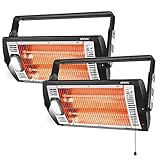
Overview: This Shinic 2-pack bundle provides dual ceiling-mounted radiant quartz heaters, each delivering 1500W/750W heating with integrated halogen work lights. Designed for larger garages, shops, or patios, the pair offers comprehensive coverage while maintaining space-saving ceiling installation. Each unit features 90° rotation and five mode settings controlled by pull-string switches for independent operation.
What Makes It Stand Out: The bundled pricing offers significant savings compared to purchasing two heaters separately, making it economical for heating larger or multi-zone spaces. Each unit operates independently via pull-string controls, eliminating remote control confusion. The dual installation allows customized heating zones, directing warmth to different work areas as needed.
Value for Money: The 2-pack pricing represents excellent value for those requiring multiple heating zones. You receive two heaters with work lights for less than many single premium units cost. This makes professional-grade heating accessible for larger residential garages or small commercial spaces, delivering superior ROI compared to buying individual units.
Strengths and Weaknesses: Strengths include comprehensive coverage for larger areas, cost-effective bundle pricing, space-saving ceiling mount, integrated work lights, independent zone control, and instant radiant heating. The metal housing ensures durability. Weaknesses include lack of remote control (pull-string only), double the installation complexity, and potential overkill for smaller single-car garages.
Bottom Line: Ideal for larger garages, workshops, or commercial spaces needing multiple heating zones. The bundle offers compelling value if you have the space and electrical capacity to support two units, providing flexibility that single heaters cannot match.
10. InoKraft 7,500W Electric Garage Heater, Wire: 8 AWG, Plug: NEMA 14-50P, Remote, Ceiling Mount, Digital Thermostat, 240 Volt, 24-Hour Timer, Overheat Protection, ECO Mode, Ideal for Garage

Overview: The InoKraft 7,500W heater is a professional-grade powerhouse designed for serious heating demands. Operating on 240V, this ceiling-mount unit heats up to 750 square feet, making it suitable for large garages, workshops, and commercial spaces. It features a digital thermostat (40-99°F), 24-hour timer, ECO mode, remote control, and five angle adjustments for precise heat distribution.
What Makes It Stand Out: The 7,500W output delivers commercial-grade performance far exceeding standard 1500W models. Intelligent ECO mode automatically adjusts output based on ambient temperature, optimizing energy consumption. The digital thermostat provides precise control, while five angle adjustments ensure even heat distribution throughout large spaces. The included remote and timer add convenience for daily scheduling.
Value for Money: While the highest-priced option reviewed, it delivers commensurate performance for large spaces. The energy-saving ECO mode and timer offset electricity costs over time. Professional installation is required but ensures safe operation. For heating 750 sq ft, it’s more economical and effective than running multiple smaller heaters simultaneously.
Strengths and Weaknesses: Strengths include exceptional heating power, precise digital controls, ECO energy-saving mode, remote operation, flexible mounting options, and 24-hour timer. The 8 AWG wiring and NEMA 14-50P plug indicate professional build quality. Weaknesses include requiring 240V outlet and professional installation, higher upfront cost, and 65 dB operation that’s louder than smaller units.
Bottom Line: The ultimate solution for large garage and workshop heating. If you have the electrical infrastructure and need serious warming power, this professional-grade heater justifies its premium price through unmatched performance and intelligent energy management.
Understanding Garage Heating Needs for DIY Projects
Before diving into heater types and specifications, it’s essential to assess how you actually use your garage space. The heating requirements for occasional weekend woodworking differ dramatically from those needed for daily automotive work or year-round metal fabrication.
Workshop Layout and Heat Distribution
Consider your garage’s physical layout when planning heating. Open floor plans heat more evenly than spaces divided by shelving units or workbenches. High ceilings create challenges since heat naturally rises, leaving your work zone cold while the rafters stay toasty. Think about where you spend most of your time—if your primary workbench is in a corner, you might benefit from targeted heating rather than warming the entire space.
Project-Specific Temperature Requirements
Different DIY activities demand different temperature ranges. Woodworking glues and finishes typically need 60-70°F for optimal curing, while automotive paint spraying requires 65-75°F with controlled humidity. Electronics work demands stable temperatures around 70°F, whereas welding and metal fabrication can tolerate cooler ambient temperatures. Understanding your primary projects helps determine how warm you need to keep your space.
Frequency and Duration of Use
How often you work in your garage significantly impacts your heater choice. Daily users benefit from permanent, efficient installations with programmable thermostats. Weekend warriors might prefer powerful portable units that heat quickly but don’t require complex installation. Seasonal hobbyists could opt for budget-friendly solutions that provide comfort during peak winter months without year-round energy costs.
Types of Garage Heaters Explained
The market offers several distinct heating technologies, each with unique advantages for DIY applications. Understanding these differences helps narrow your options to those best suited for your specific situation.
Forced Air Propane and Gas Models
These units function like miniature furnaces, burning fuel to heat air that a fan then circulates throughout your garage. They excel at raising ambient temperatures quickly and can heat large spaces efficiently. Propane models offer portability since they don’t require electrical connections beyond a standard outlet for the fan. Natural gas versions provide lower operating costs but need permanent gas line installation. Both require proper ventilation to manage combustion byproducts safely.
Electric Fan-Forced Heaters
Electric forced-air heaters use heating elements and powerful fans to distribute warmth. They’re incredibly simple to operate—just plug in and turn on—with no fuel storage or ventilation concerns. These units work exceptionally well in insulated garages and come in both portable and wall/ceiling-mounted configurations. Their main limitation is energy consumption, which can be substantial in poorly insulated spaces or extremely cold climates.
Infrared Radiant Heaters
Unlike forced-air systems that heat the air, infrared heaters warm objects and people directly through electromagnetic radiation. This technology shines for DIYers who work in specific zones, as you can feel warmth immediately without waiting for the entire garage to heat up. They’re ideal for spot heating workbenches, vehicle repair bays, or assembly areas. Infrared units operate silently and don’t stir up dust, a significant advantage for finishing work.
Portable vs. Permanent Installation
Portable heaters offer flexibility—move them between projects, store them during summer, or take them to job sites. They typically require minimal installation but may lack the power and efficiency of permanent units. Fixed installations, whether wall-mounted or ceiling-hung, provide consistent coverage and free up valuable floor space. They often include advanced features like built-in thermostats, timers, and remote controls that enhance convenience.
Ductless Mini-Split Heat Pump Systems
These versatile systems provide both heating and cooling, making them perfect for year-round climate control. They operate incredibly efficiently by transferring heat rather than generating it. While installation requires professional help for the refrigerant lines, the result is a quiet, energy-efficient solution that maintains precise temperatures. The higher upfront cost often pays for itself through energy savings over time.
Key Factors to Consider When Choosing a Garage Heater
Beyond heater type, several critical specifications determine whether a unit will meet your needs effectively and safely.
Heating Capacity and BTU Rating
British Thermal Units (BTUs) measure heating power—one BTU raises one pound of water by one degree Fahrenheit. Garage heaters typically range from 10,000 to 80,000 BTUs. Undersized units run constantly without reaching comfortable temperatures, while oversized models cycle on and off frequently, creating temperature swings and wasting energy. Calculating your specific needs based on garage size and climate prevents both problems.
Power Source Availability
Your garage’s existing infrastructure limits your options. Electric heaters need adequate circuit capacity—many powerful models require 240V outlets and dedicated 30-50 amp breakers. Gas heaters need access to natural gas lines or space for propane tanks. Assess your electrical panel’s capacity and proximity to gas lines before falling in love with a particular heater type.
Garage Insulation Assessment
Insulation dramatically impacts heater effectiveness and operating costs. A well-insulated two-car garage might need only 25,000 BTUs to maintain 65°F, while an uninsulated space of the same size could require 60,000 BTUs for the same result. Check your walls, ceiling, and especially the garage door for adequate insulation. Adding insulation often costs less than buying a more powerful heater and pays dividends every month.
Ventilation Requirements
Combustion heaters (propane, natural gas, kerosene) consume oxygen and produce carbon monoxide, requiring fresh air intake and exhaust systems. Even electric heaters benefit from some ventilation to control humidity and fumes from paints, solvents, and welding. Evaluate your garage’s ventilation before selecting a heater type—adding vents or windows might be necessary for safe operation.
Safety Features That Matter Most
Garage environments present unique hazards that home spaces don’t. The right safety features protect you, your projects, and your property.
Tip-Over Protection
Essential for portable units, this feature automatically shuts off the heater if it gets knocked over. In a busy workshop where you’re moving materials and equipment constantly, this prevents fires and burns. Look for models with robust sensors that activate reliably without being overly sensitive to normal vibrations.
Overheat Shutoff Systems
These sensors monitor internal temperatures and cut power if the unit exceeds safe operating limits. This protects against malfunction and prevents fires if airflow gets blocked by debris, sawdust, or stored materials. Quality heaters include redundant sensors for added protection.
Cool-Touch Exteriors
Garage heaters often sit near flammable materials like wood scraps, cardboard, and chemical containers. Cool-touch housings remain safe to touch even during extended operation, reducing burn risks and fire hazards. This feature proves especially valuable in compact workshops where clearance space is limited.
Certified Safety Ratings
Look for heaters tested and certified by recognized organizations like UL (Underwriters Laboratories), CSA (Canadian Standards Association), or ETL (Intertek). These certifications verify the unit meets rigorous safety standards for electrical components, temperature controls, and structural integrity. Don’t compromise on certified safety in a space where you’ll be distracted by projects.
Energy Efficiency and Operating Costs
The purchase price tells only part of the story—operating costs over years of use often exceed the initial investment significantly.
Comparing Fuel Types by Cost
Natural gas typically offers the lowest per-BTU cost in areas with existing infrastructure. Propane costs more but provides portability. Electricity rates vary dramatically by region and time-of-use pricing. Calculate estimated annual operating costs based on your local fuel prices and expected usage hours before deciding.
Efficiency Ratings and What They Mean
AFUE (Annual Fuel Utilization Efficiency) measures how effectively gas heaters convert fuel to heat, with modern units reaching 80-95%. Electric heaters are theoretically 100% efficient but are evaluated by COP (Coefficient of Performance) for heat pumps, which can exceed 3.0—meaning three units of heat for every unit of electricity consumed. Higher efficiency ratings directly translate to lower monthly bills.
Thermostat Precision and Programmability
Accurate thermostats prevent energy waste by maintaining consistent temperatures rather than overshooting. Programmable models let you schedule heating around your workshop hours, warming the space before you arrive and reducing temperatures when you’re away. Smart thermostats offer remote control via smartphone apps, perfect for pre-heating your garage on your commute home.
Installation Considerations for DIYers
Your comfort level with electrical and gas work influences which heaters make practical sense for your situation.
DIY-Friendly Electric Installations
Many electric heaters simply plug into existing outlets, requiring no installation beyond mounting brackets. Hardwired 240V units need basic electrical skills—running conduit, connecting wires, and installing breakers. If you’re comfortable with home electrical projects, these installations are manageable DIY tasks that save significant money.
Professional Installation Scenarios
Gas line connections, venting systems, and heat pump refrigerant lines demand licensed professionals for safety and code compliance. While this adds $500-2,000 to your total cost, it ensures safe operation and maintains warranties. Factor professional installation into your budget for these heater types.
Electrical Service Upgrades
Older garages often have insufficient electrical service for powerful heaters. A 60-amp subpanel might support a 7,500-watt heater plus lights and tools, but adding a 10,000-watt unit could overload the system. Have an electrician assess your panel capacity before purchasing high-powered electric models.
Sizing Your Heater Correctly
Proper sizing ensures comfort without wasted energy or excessive equipment costs.
Calculating Garage Volume
Measure length, width, and ceiling height to calculate cubic footage. A standard two-car garage (20x24 feet) with 8-foot ceilings contains 3,840 cubic feet. High ceilings or lofts dramatically increase volume and heating requirements. Always base calculations on actual measurements rather than garage door count.
Climate Zone Considerations
Your geographic location significantly impacts heating needs. Northern zones with sub-zero winters require 50-60 BTUs per square foot, while southern regions might need only 20-30 BTUs per square foot. Check climate zone maps and adjust calculations accordingly—what works in Minnesota won’t suffice in Maine.
Temperature Rise Goals
Determine how much warmer you want your garage compared to outside temperatures. Maintaining 65°F when it’s 30°F outside requires a 35-degree temperature rise. More extreme differentials demand proportionally more heating power. Be realistic about your comfort needs versus energy costs.
Thermostat and Control Options
Modern controls offer convenience and efficiency that old-fashioned on/off switches can’t match.
Built-In vs. Wall-Mounted Thermostats
Built-in thermostats offer simplicity but measure temperature near the heater, which may not reflect conditions at your workbench. Wall-mounted units placed centrally provide more accurate space temperature readings. Some systems allow multiple sensors for averaging temperatures across large garages.
Remote Control Functionality
Wireless remotes let you adjust settings without crossing the garage to reach the heater. This proves invaluable when you’re covered in sawdust or grease. Look for remotes with clear displays and intuitive controls that work reliably from anywhere in your workspace.
Smart Home Integration
Wi-Fi enabled heaters integrate with Alexa, Google Home, or Apple HomeKit for voice control and automation. Create routines that warm your garage when you arrive home or shut off automatically at bedtime. These features add convenience and prevent accidentally leaving the heater running overnight.
Maintenance Requirements for Longevity
Regular maintenance keeps your heater running safely and efficiently while extending its lifespan.
Cleaning and Dust Management
Garages generate enormous amounts of dust that clogs heater intakes and coats heating elements. Monthly vacuuming of intake grilles and annual deep cleaning of internal components prevent efficiency loss and fire hazards. Some heaters include filter systems that require periodic replacement.
Annual Inspection Checklist
Before each heating season, inspect power cords for damage, test safety shutoffs, verify thermostat accuracy, and check gas connections for leaks (using soapy water). Clean combustion chambers on gas models and verify proper venting. This 30-minute inspection prevents mid-winter breakdowns when you need heat most.
Component Replacement Schedules
Heating elements in electric models typically last 5-10 years. Igniters and flame sensors on gas heaters may need replacement every 3-5 years. Budget for these consumable parts and keep spares on hand for critical components. Quality manufacturers offer replacement parts and service manuals for DIY repairs.
Budget Planning for Your Garage Heating Solution
Total cost includes more than the heater’s sticker price.
Initial Investment vs. Operating Costs
A $200 portable propane heater might seem cheap until you factor in fuel costs and cylinder refills. A $1,500 mini-split system costs more upfront but operates for pennies per hour. Calculate total cost of ownership over 5-10 years, factoring in fuel, maintenance, and expected lifespan.
Hidden Expenses to Anticipate
Installation materials (venting, gas lines, electrical wire), permits, professional labor, thermostat upgrades, and insulation improvements all add to the bottom line. A $500 heater can easily become a $2,000 project once all necessary components and services are included.
Financing and Incentive Programs
Some utility companies offer rebates for installing energy-efficient heat pumps or upgrading electrical service. Check for federal tax credits for high-efficiency equipment. Many HVAC contractors provide financing options that spread costs over time, making premium systems more accessible.
Environmental and Health Considerations
Your heater choice impacts air quality and your carbon footprint.
Emissions and Air Quality Impact
Combustion heaters release nitrogen oxides, carbon monoxide, and water vapor that affect indoor air quality. Electric heaters produce zero direct emissions. If you use paints, solvents, or weld in your garage, minimizing additional pollutants becomes even more critical for respiratory health.
Noise Levels and Workshop Comfort
Forced-air heaters produce fan noise that can interfere with concentration or phone calls. Infrared heaters operate silently. Consider decibel ratings—units under 50 dB are whisper-quiet, while those over 70 dB rival vacuum cleaners. Your hearing protection habits should influence this decision.
Carbon Footprint Comparison
Natural gas produces fewer CO2 emissions per BTU than propane or grid electricity in most regions. However, if your local grid uses renewable energy, electric heat pumps offer the lowest carbon footprint. Consider your environmental priorities when selecting fuel types.
Frequently Asked Questions
How do I calculate the right BTU rating for my garage?
Measure your garage’s cubic footage (length × width × height), then multiply by a climate factor: 15-20 for mild climates, 25-35 for moderate winters, or 40-50 for severe cold. Subtract 20% if your garage is well-insulated, and add 10% for each large window or poorly sealed door.
Can I use a residential space heater in my garage?
Standard indoor space heaters lack the power and durability for garage environments. They’re not designed for dust, temperature extremes, or the larger volume of garage spaces. Always choose heaters specifically rated for garage or industrial use with appropriate safety certifications.
What’s the safest heater type for a garage with flammable materials?
Electric infrared heaters with cool-touch exteriors and tip-over protection offer the safest option. They don’t have open flames, don’t stir up dust, and keep hot surfaces away from combustibles. Always maintain at least 3 feet of clearance from flammable materials regardless of heater type.
How much does it cost to run a garage heater monthly?
Operating costs vary widely based on fuel type, local rates, and usage. A 5,000-watt electric heater running 40 hours weekly costs $80-150 monthly at average rates. A propane heater might cost $60-100 monthly, while natural gas often runs $40-80. Insulation quality dramatically affects these figures.
Do I need to insulate my garage before installing a heater?
While not strictly required, insulation delivers the best return on investment of any garage improvement. It reduces heater size requirements by 30-50%, cuts operating costs by 50-70%, and makes the space genuinely comfortable rather than just “less cold.” Insulate the garage door first, then walls and ceiling.
Can I install a gas heater myself?
Connecting gas lines requires a licensed professional in most jurisdictions for safety and insurance reasons. You can handle mounting and venting installation yourself, but the gas connection and initial testing should be performed by a certified technician to prevent leaks and carbon monoxide hazards.
What’s the difference between a garage heater and a workshop heater?
The terms are often interchangeable, but workshop heaters typically emphasize dust resistance, precise temperature control, and quiet operation for detailed work. Garage heaters may prioritize rapid heating and durability. Choose based on your primary activities and comfort requirements.
How long do garage heaters typically last?
Quality electric heaters last 10-20 years with minimal maintenance. Gas heaters average 15-25 years but need more frequent component replacement. Heat pumps can operate 15-20 years when properly maintained. Cheap portable units may fail within 3-5 years under heavy use.
Are infrared heaters better than forced-air for DIY work?
Infrared excels for spot heating specific work areas, operates silently, and doesn’t circulate dust. Forced-air better heats entire garages and maintains consistent ambient temperatures for finishing work. Many DIY enthusiasts use infrared for task heating supplemented by forced-air for overall comfort.
What maintenance can I perform myself vs. needing a professional?
DIY maintenance includes cleaning, filter changes, visual inspections, and testing safety features. Professional servicing should cover gas line pressure tests, heat pump refrigerant checks, electrical connection tightening, and combustion analysis on gas units. Schedule professional service annually for gas heaters and every 2-3 years for electric models.
See Also
- 10 Best Wall Mounted Garage Heaters for DIY Enthusiasts in 2026
- Best Garage Heaters for Cold Starts: 10 Expert Picks for 2026
- Best Room Heaters Oil-Filled for Pet Owners: 10 Expert Picks for 2026
- Best Baseboard Heaters for Modern Homes: 10 Expert Picks for 2026
- 10 Expert-Recommended Electric Garage Heaters for Home Mechanics in 2026