Table of Contents
Working in a detached garage during winter can feel like trying to fix an engine inside a walk-in freezer. Whether you’re a weekend warrior tackling DIY projects, a car enthusiast who refuses to let cold weather stop your passion, or someone who simply needs functional space year-round, finding the right heating solution transforms your garage from seasonal storage into a true extension of your home. The challenge isn’t just about cranking up the temperature—it’s about choosing a system that respects your garage’s unique vulnerabilities while keeping operating costs reasonable.
Detached garages present specific heating hurdles that attached structures simply don’t face. Without shared walls benefiting from your home’s climate control, these standalone buildings battle the elements directly through every exterior surface. The right heater must overcome poor insulation, combat drafts, and do so efficiently enough that you’re not burning money just to keep the space tolerable. This guide walks you through everything that matters when evaluating garage heaters, from understanding different heating technologies to matching power sources with your specific situation, ensuring you make an informed decision that keeps you warm without the guesswork.
Top 10 Garage Heaters
Detailed Product Reviews
1. Shinic 2 Packs Electric Garage Heaters, 1500W/750W Ceiling Mounted Heater Radiant Heaters with Halogen Light, 90 Degree Rotation, 5 Mode Settings, Space Heater for Garage, Shop, Large Room and Patio
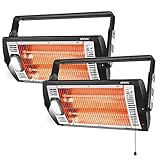
Overview: This twin-pack radiant heater set delivers targeted warmth for workshops and garages. Each unit features dual quartz tubes that provide instant infrared heat, warming objects and people directly rather than the entire air volume. The integrated halogen work light illuminates your workspace, making it practical for detailed tasks. Designed for ceiling mounting, these heaters save floor space while offering 90-degree rotation to direct heat precisely where needed.
What Makes It Stand Out: The two-pack configuration offers exceptional value for multi-zone heating. The pull-string operation provides five distinct modes, including low (750W), high (1500W), and combined heat-with-light settings. Unlike fan-forced alternatives, radiant heat eliminates dust circulation, beneficial in woodworking shops. The halogen light integration means fewer fixtures cluttering your ceiling, streamlining your workspace setup.
Value for Money: Getting two heaters for the price of one premium unit makes this budget-friendly. Each 1500W heater independently serves separate work areas, eliminating the need for costly central heating in intermittently used spaces. Installation is straightforward with included brackets, and the 120V operation avoids expensive electrical upgrades.
Strengths and Weaknesses: Pros: Instant radiant heat; built-in work light; space-saving ceiling mount; simple pull-string controls; dual-pack value. Cons: No thermostat for temperature maintenance; pull strings may be inconvenient in high ceilings; limited to line-of-sight heating; not suitable for whole-room warming.
Bottom Line: Ideal for DIY enthusiasts and small workshop owners needing targeted heating at multiple stations. The Shinic twin-pack delivers practical functionality and solid value for spot-heating applications.
2. Comfort Zone Hard-Wired Ceiling Mount Garage Electric Space Heater, Fan-Forced, 5,000 watt, 240 volt, Overheat Protection, Thermal Cut-Out Switch, Ideal for Workshop & Garage, ETL Compliant, CZ220

Overview: This heavy-duty fan-forced heater brings industrial-grade performance to residential garages and workshops. The 5,000-watt, 240-volt system delivers consistent, widespread warmth through powerful air circulation. Constructed from heavy-gauge steel, it withstands temperature fluctuations in poorly insulated spaces. The ceiling-mount design maximizes floor space while the adjustable louvers and mounting angle direct heat precisely where needed.
What Makes It Stand Out: The robust steel construction ensures longevity in harsh environments where lesser heaters fail. Its dual-knob thermostat offers intuitive temperature control without complicated digital interfaces. The ETL compliance and comprehensive safety features—including overheat protection and thermal cut-out switch—provide peace of mind for unattended operation. The fan-forced design circulates heat evenly, eliminating cold spots in larger spaces.
Value for Money: Priced in the mid-range for hard-wired heaters, it balances performance and durability. While installation requires professional 240V wiring, the long-term reliability and energy efficiency offset initial costs. Comparable commercial units cost significantly more, making this a smart investment for serious hobbyists.
Strengths and Weaknesses: Pros: Durable steel construction; excellent heat distribution; reliable safety features; simple thermostat controls; space-saving design. Cons: Requires professional installation; no remote control; fan noise may be noticeable; 240V limits placement flexibility.
Bottom Line: Perfect for mechanics and woodworkers needing reliable, whole-room heating. The CZ220 delivers professional-grade warmth and safety for demanding workshop environments.
3. Comfort Zone 7500W Hard-Wired Garage Heater – Industrial & Commercial Ceiling Mount, 240V Fan-Forced with Remote, Digital Thermostat, Timer, 2 Heat Settings, Overheat Protection, Grey

Overview: This high-capacity 7,500-watt heater elevates garage comfort with modern digital controls. The fan-forced system rapidly warms large commercial and residential spaces up to 1,000 square feet. A fully enclosed motor protects against dust and debris, extending lifespan in dirty environments. The included remote control and digital thermostat enable precise temperature management from across the room, while the 12-hour timer adds scheduling convenience.
What Makes It Stand Out: The sealed motor design is a game-changer for dusty workshops, preventing premature failure common in open-motor units. Digital controls offer exact temperature settings rather than approximate dial positions. The remote functionality eliminates the need to climb ladders for adjustments. Adjustable louvers combined with variable mounting angles provide unprecedented directional control for targeted heating zones.
Value for Money: Positioned as a premium option, its advanced features justify the higher price point. The durable construction and protected motor reduce maintenance costs over time. For professionals spending hours in the garage, the convenience of remote operation and precise climate control translates to tangible productivity gains.
Strengths and Weaknesses: Pros: Sealed motor for dusty conditions; remote and digital controls; programmable timer; robust steel body; precise heat direction. Cons: Requires 240V hard-wiring; overkill for spaces under 500 sq ft; highest power consumption in its class; installation costs add to overall investment.
Bottom Line: The ultimate choice for commercial workshops and large garages where dust protection and precise control are paramount. Worth the premium for professionals demanding reliability and convenience.
4. Comfort Zone 10,000W Hard-Wired Garage Heater – Industrial & Commercial Ceiling Mount, 240V Fan-Forced Heater with Remote, Digital Thermostat, Timer, 2 Heat Settings, Overheat Protection, Grey

Overview: This powerhouse 10,000-watt heater tackles the most demanding heating challenges in expansive workshops and industrial spaces. Capable of warming areas exceeding 1,200 square feet, it combines brute force heating with sophisticated digital controls. The heavy-gauge steel body withstands extreme temperature swings, while the fan-forced design ensures no corner stays cold. Like its smaller siblings, it includes remote operation, digital thermostat, and programmable timer for effortless climate management.
What Makes It Stand Out: Unmatched heating capacity in the residential/commercial crossover category. The 10,000-watt output handles poorly insulated warehouses and three-car garages with ease. Despite its power, it maintains the same user-friendly digital interface as lower-wattage models. The adjustable mounting bracket and louvers provide professional-grade directional control, allowing users to create distinct heating zones in massive spaces.
Value for Money: While the most expensive option, it eliminates the need for multiple smaller heaters in large areas. The single-unit approach reduces installation complexity and long-term maintenance. For commercial operations, the rapid heat-up time translates to operational efficiency that quickly recoups the initial investment.
Strengths and Weaknesses: Pros: Maximum heating power; durable construction; advanced digital controls; remote operation; safety features. Cons: Requires substantial 240V electrical service; significant energy consumption; likely excessive for typical residential garages; premium price point.
Bottom Line: Best suited for industrial facilities, massive workshops, and commercial garages where maximum heating power is non-negotiable. Overkill for standard residential use but unbeatable for large-scale applications.
5. DR. INFRARED HEATER Portable Infrared Indoor and Outdoor Space Heater for Patio, Garage, Commercial & Residential With Remote Control, Without Thermostat, Black

Overview: This versatile infrared heater breaks free from installation constraints with its portable, plug-and-go design. Rated IP55 for indoor and outdoor use, it delivers clean, instant heat wherever needed. The 120-volt system offers three power settings (900W, 1200W, 1500W) and uses a high-efficiency aluminum reflector to maximize heat projection. Included mounting brackets provide optional wall or ceiling placement, though its portability remains the primary advantage.
What Makes It Stand Out: True versatility sets this apart—use it in the garage today, on the patio tomorrow. The IP55 weather resistance handles rain and dust, rare in heaters this affordable. The mirror aluminum reflector achieves 90% reflectivity, directing more usable heat forward than competitors. Remote control operation adds convenience despite the lack of a thermostat, and standard 120V power eliminates electrical upgrades.
Value for Money: Extremely competitive pricing for a dual-purpose heater. Avoiding installation costs and electrical work makes it the most budget-friendly option overall. While less powerful than hard-wired alternatives, its flexibility provides value that stationary units cannot match.
Strengths and Weaknesses: Pros: Portable indoor/outdoor use; weather-resistant; no installation required; efficient reflector; remote included; affordable. Cons: No thermostat limits temperature precision; 1500W maximum restricts large space heating; infrared heat is directional; outdoor use requires proximity to GFCI outlet.
Bottom Line: Perfect for homeowners needing flexible, occasional heating across multiple locations. The DR. INFRARED heater excels where portability and weather resistance matter more than raw power.
6. CTSC 8500W Garage Heater Electric, 240v Hardwired Fan-Forced Electric Garage Heater with Digital Thermostat, Remote Control and Timer, ECO Function, Ideal for Workshop, ETL Listed Garage Heater

Overview: This high-powered commercial-grade garage heater delivers 8,500W (29,010 BTU) of fan-forced heat for spaces up to 850 square feet. Designed for 240V hardwired installation, it features a digital thermostat, remote control, and programmable timer. The unit’s SPCC cold-rolled steel construction ensures durability, while comprehensive safety features provide peace of mind in demanding workshop environments.
What Makes It Stand Out: The innovative voltage display screen directly addresses the most common installation failure point, instantly diagnosing voltage issues when fans underperform. The ECO function intelligently maintains temperature while reducing energy consumption, and the 1-10 hour timer offers flexible scheduling. Wall or ceiling mounting options save floor space and enable optimal heat distribution in cluttered workshops.
Value for Money: Positioned competitively in the commercial heater market, this unit justifies its price through robust construction and intelligent diagnostics. The triple safety system (overheat protection, ETL certification, voltage monitoring) prevents costly failures. While requiring professional installation, its long-term reliability and energy-saving features deliver superior ROI compared to basic models lacking diagnostic capabilities.
Strengths and Weaknesses: Strengths include exceptional heating power, unique voltage troubleshooting display, dual control methods, energy-efficient ECO mode, sturdy steel housing, and versatile mounting. Weaknesses: mandatory 240V hardwired installation requires electrician, overkill for small single-car garages, and fan-only mode offers limited summer utility. The unit’s size may challenge compact spaces.
Bottom Line: Perfect for large workshops, poorly insulated garages, or commercial spaces requiring consistent winter heating. The diagnostic voltage display eliminates guesswork and justifies the investment alone. If you have adequate electrical infrastructure and need serious heating performance, this heater delivers professional-grade warmth with unmatched troubleshooting convenience.
7. Dura Heat EUH1465 Electric Forced Air Heater with Pivoting Base 5,120 BTU, Yellow

Overview: This compact 1500W forced air heater produces 5,120 BTUs using efficient PTC ceramic technology, ideal for heating small to medium workspaces. Its rugged steel body and distinctive yellow finish ensure durability and visibility in busy garages and workshops. The unit offers simple thermostat control and essential safety features for reliable spot heating.
What Makes It Stand Out: The pivoting base provides directional heat control—a rare feature in this price category—allowing users to target specific work areas. PTC ceramic elements self-regulate for improved efficiency and safety over traditional coils. The high-visibility yellow housing reduces tripping hazards in cluttered commercial environments, combining practicality with robust performance.
Value for Money: Extremely affordable for commercial-grade construction, this heater delivers essential features without premium pricing. While limited to 1500W output, it provides reliable spot heating for spaces around 150 square feet. The overheat protection and adjustable thermostat offer peace of mind at a fraction of high-powered models’ cost, making it ideal for budget-conscious buyers.
Strengths and Weaknesses: Strengths include portable design, directional pivoting base, durable steel construction, overheat shut-off protection, and simple operation. Weaknesses: limited power output restricts coverage area, lacks remote control, offers basic thermostat precision, and operates louder than premium units. Not suitable for large garage heating or poorly insulated spaces requiring sustained warmth.
Bottom Line: An excellent workhorse for small workshops, personal garages, or supplemental heating needs. If you require portable, reliable spot warmth without complex installation or high costs, this delivers dependable performance. Don’t expect whole-garage heating, but for targeted warmth in tight spaces, the pivoting feature and rugged build make it a smart purchase.
8. Shinic Electric Garage Heaters with Remote Control, 1500W/750W Ceiling Mounted Radiant Quartz Heater with Work Light, 90° Rotation, 5 Mode Settings, Electric Heater for Garage, Shop, Patio Large Room

Overview: This ceiling-mounted radiant heater uses dual quartz tubes to deliver instant infrared warmth directly to people and objects below. The 1500W/750W dual-power design serves small workshops and garage workbenches efficiently. An integrated halogen work light provides task illumination, while 90° rotation directs heat precisely where needed most.
What Makes It Stand Out: The unique combination of radiant heating and built-in work light eliminates the need for separate fixtures, saving space and money. Infrared technology excels in poorly insulated areas by warming objects rather than air. The ceiling mount design keeps floors clear while overhead positioning provides optimal heat distribution for stationary work zones.
Value for Money: Moderately priced for a dual-function device, this heater offers solid value for targeted heating applications. The dual power settings enable energy conservation, while the included remote adds convenience. Though insufficient for large garages, it’s cost-effective for small workshop zones or supplemental bench heating, essentially bundling two tools in one.
Strengths and Weaknesses: Strengths include space-saving ceiling mount, instant radiant heat, integrated work light, remote control operation, ETL listing, overheat protection, and adjustable heating angle. Weaknesses: limited coverage (optimal for ~200 sq ft), 120V only, quartz elements require eventual replacement, and radiant heat doesn’t provide even room-wide warmth. Best for stationary tasks.
Bottom Line: Perfect for DIY enthusiasts needing focused workbench heating and task lighting. The work light integration proves genuinely useful for late-night projects. If you want immediate, targeted warmth without floor clutter and require overhead illumination, this innovative heater deserves consideration. Choose this for spot heating, not whole-garage solutions.
9. InoKraft 7,500W Electric Garage Heater, Wire: 8 AWG, Plug: NEMA 14-50P, Remote, Ceiling Mount, Digital Thermostat, 240 Volt, 24-Hour Timer, Overheat Protection, ECO Mode, Ideal for Garage

Overview: This 7,500W fan-forced heater efficiently warms areas up to 750 square feet with 240V power. It features a digital thermostat adjustable from 40-99°F, a 24-hour timer, and intelligent ECO mode. The unit includes an 8.2-foot cord with NEMA 14-50P plug, enabling flexible wall or ceiling mounting with five angle adjustments for precise heat direction.
What Makes It Stand Out: The 24-hour timer provides superior scheduling flexibility compared to competitors’ limited timers. Five installation angles with adjustable louvers ensure even heat distribution and prevent ceiling stratification. The automatic fan delay function continues circulating residual heat after shutdown, maximizing efficiency. Operating at 65 dB, it maintains quieter operation than many commercial units.
Value for Money: Strong value in the mid-high power segment, this heater includes premium features at a competitive price. The included heavy-gauge cord and plug reduce installation expenses, while ECO mode delivers measurable energy savings. Requiring professional installation, the comprehensive feature set and smart controls justify the investment over basic models.
Strengths and Weaknesses: Strengths include powerful heating, precise digital thermostat, extended timer, adaptive ECO mode, adjustable mounting angles, quiet operation, and complete safety systems. Weaknesses: requires 240V outlet and professional installation, 750 sq ft coverage trails some 8500W competitors, and the NEMA 14-50P plug may necessitate electrical upgrades. Not portable once installed.
Bottom Line: An excellent mid-range solution for two-car garages or medium workshops. The 24-hour timer and intelligent ECO mode provide convenience and energy savings that quickly offset costs. If you can install a 240V outlet, this heater offers professional-grade performance with user-friendly controls that make it a worthwhile long-term investment.
10. 8KW 110V/12V/24V Diesel Air Heater, All-in-One 5L Auto Thermostat Portable Car Diesel Heater with APP Control, 5500m Adaptive Altitude and No Tick for RV Camper vehicle Garage

Overview: This portable 8kW diesel heater features an all-in-one toolbox design with integrated 5L fuel tank, delivering versatile heating for RVs, vehicles, and remote locations. Operating on 110V, 12V, or 24V, it’s controlled via Bluetooth app and automatically adapts to altitudes up to 5,500 meters. The unit consumes just 0.16-0.45L/hour, providing up to 20 hours of heat per tank.
What Makes It Stand Out: Revolutionary altitude compensation technology maintains full efficiency at 5,500 meters, making it ideal for mountain camping and high-elevation worksites. The silent fuel pump eliminates traditional diesel heater ticking noises. App control enables temperature adjustment, timer setting, and mode selection from your smartphone, while the compact toolbox design with handle ensures true portability.
Value for Money: Premium-priced but justified through unmatched versatility and technology. Multi-voltage compatibility works across vehicles and buildings, while exceptional fuel efficiency reduces operating costs significantly. For RV owners and remote workers, the altitude adaptation prevents performance loss that would require thousands in alternative heating solutions, delivering outstanding long-term value.
Strengths and Weaknesses: Strengths include altitude adaptation to 5500m, silent 35 dB operation, app control, multi-voltage compatibility, rapid 3-5 minute heating, excellent fuel efficiency, and true portability. Weaknesses: requires diesel fuel and regular maintenance, not designed for permanent hardwired garage installation, higher initial cost than electric models, and combustion requires ventilation.
Bottom Line: Perfect for mobile applications, RVs, and off-grid locations where electricity is unavailable. If you need reliable heat at high altitudes or portable workshop heating, this technology is unmatched. For fixed garage use, electric models offer simplicity, but for versatility, remote capability, and mountain performance, this diesel heater is exceptional.
Understanding Detached Garage Heating Challenges
Detached garages operate as thermal islands, completely exposed to weather on all sides. Unlike attached garages that leech some warmth from adjacent living spaces, standalone structures lose heat rapidly through walls, ceilings, and especially poorly sealed doors. This fundamental difference means standard space heaters designed for insulated rooms often fail miserably in this environment.
Why Detached Garages Are Harder to Heat
The standalone nature creates a perfect storm of heat loss factors. Air infiltration around garage doors, windows, and framing members introduces cold air faster than most heaters can compensate. Additionally, the concrete slab floor acts as a massive heat sink, drawing warmth downward into the frozen earth below. Without proper vapor barriers or insulation beneath the slab, you’re essentially heating the ground.
The Impact of Poor Insulation
Most detached garages feature minimal insulation—if any at all. Standard 2x4 walls might contain R-13 batts at best, while ceilings often lack any insulation entirely. This means heat escapes almost as quickly as it’s generated, forcing heaters to run continuously just to maintain marginal temperatures. Before investing in any heating system, honestly assess your insulation situation. A well-insulated garage requires roughly half the heating capacity of an uninsulated one, dramatically affecting both equipment costs and monthly utility bills.
Size and Volume Considerations
Remember that garages are voluminous spaces, often with 9-12 foot ceilings creating far more cubic footage than a similarly sized room inside your home. A 400 square foot garage with 10-foot ceilings contains 4,000 cubic feet of air to heat—nearly double what a standard 8-foot ceiling room would require. Always calculate BTU needs based on total volume, not just floor area, and factor in a buffer for extreme cold snaps.
Types of Garage Heaters Explained
Different heating technologies suit different garage layouts and usage patterns. Understanding how each system works helps you match the technology to your specific needs rather than simply buying the most powerful option available.
Forced Air Heaters
These units use a fan to push air across heated elements or through a combustion chamber, rapidly distributing warmth throughout the space. They excel at raising ambient air temperature quickly, making them ideal for workshops where you need immediate comfort. However, they can stir up dust and create uneven heat zones if the space lacks proper air circulation. Mounting height and fan direction significantly impact their effectiveness.
Infrared Radiant Heaters
Rather than heating the air, infrared units warm objects and people directly through electromagnetic waves. Think of standing in sunlight versus shade on a cool day. These heaters shine in poorly insulated garages because they don’t waste energy heating air that immediately escapes. They provide instant warmth when you’re working directly in their path but won’t raise the overall room temperature significantly, making them better for spot heating specific work areas.
Convection Heaters
These passive systems rely on natural air movement—warm air rises, cool air gets drawn in from below. They’re silent operators with no moving parts, making them extremely reliable. Oil-filled radiators and baseboard units fall into this category. While they provide even, consistent heat, they’re slower to warm a cold garage and struggle in drafty environments where air movement disrupts the convection cycle.
Ductless Mini-Split Systems
These heat pump units offer both heating and cooling capabilities with impressive efficiency. They mount high on walls, keeping the floor clear while delivering conditioned air quietly. The inverter technology maintains steady temperatures without the cycling on and off that plagues traditional heaters. The downside? Higher upfront costs and the need for professional installation, plus reduced efficiency when temperatures drop below freezing unless you opt for a cold-climate model.
Underfloor Heating Options
Electric radiant mats or hydronic tubing installed beneath the concrete slab provide luxurious, even heat from the ground up. This solution eliminates the cold floor problem entirely and creates consistent temperatures throughout the space. The major drawback lies in installation complexity—you’re essentially tearing up and replacing the entire floor. It’s a permanent solution best considered during new construction or major renovations.
Power Source Options
Your available utilities and budget constraints heavily influence which heating systems make sense. Each power source carries distinct advantages and limitations that extend beyond simple fuel costs.
Electric Heaters: Pros and Cons
Electric units offer plug-and-play simplicity with no combustion byproducts or ventilation concerns. They convert nearly 100% of incoming electricity to heat, making them efficient at the point of use. However, electricity typically costs more per BTU than natural gas or propane, and high-output units may require 240-volt circuits that demand electrical panel upgrades. For occasional use, the convenience often outweighs the higher operating costs.
Natural Gas and Propane Solutions
Combustion heaters deliver serious BTU output at lower fuel costs, making them economical for frequent use or large spaces. Natural gas requires a permanent gas line installation but offers the lowest ongoing costs. Propane provides portability and works where gas lines don’t reach, though you’ll need to manage tank refills. Both require proper ventilation to prevent carbon monoxide buildup and must maintain clearance from combustible materials.
Dual-Fuel Flexibility
Some advanced heaters can switch between fuel sources, typically natural gas and propane. This flexibility proves valuable if you might relocate or if natural gas becomes available in your area later. While these units cost more initially, they future-proof your investment and provide backup options during fuel shortages or price spikes.
Key Features to Evaluate
Beyond basic heating technology, specific features separate adequate heaters from excellent ones. Pay attention to these details during your evaluation process.
BTU Output and Garage Size Matching
Oversizing a heater wastes money and creates temperature swings as the unit cycles on and off. Undersizing leaves you cold and forces the heater to run constantly, shortening its lifespan. A general rule suggests 20-30 BTU per square foot for insulated garages in moderate climates, scaling up to 45-60 BTU per square foot for uninsulated spaces in cold regions. Always include a 10-15% buffer for extreme weather, but resist the temptation to double the recommended capacity.
Thermostat Controls and Programmability
Basic thermostats maintain a set temperature, but programmable models let you pre-warm the garage before you arrive home. Smart thermostats with Wi-Fi connectivity enable remote control via smartphone apps, ensuring you never walk into a freezing workspace. Look for units with accurate temperature sensors rather than crude dial settings that leave you guessing.
Safety Features That Matter
Essential safety elements include overheat protection that automatically shuts the unit down if internal temperatures exceed safe limits. Tip-over switches immediately cut power if the heater gets knocked over—a critical feature for portable units. For combustion heaters, oxygen depletion sensors shut off fuel if room oxygen levels drop dangerously low. Never compromise on these non-negotiable safety mechanisms.
Portability vs. Permanent Installation
Portable heaters offer flexibility to move heat where you need it or store it during summer months. They typically plug into standard outlets and require no installation. Permanent wall or ceiling-mounted units free up valuable floor space and often provide more even heat distribution, but they commit you to a single heating strategy. Consider how you use your garage—if your work areas shift seasonally, portability might outweigh the benefits of fixed installation.
Noise Levels and Operating Sound
Fan-forced heaters can produce significant noise, measuring 50-70 decibels—roughly equivalent to normal conversation to vacuum cleaner levels. Infrared and convection heaters operate silently. If you enjoy listening to music or podcasts while working, or if neighbors live close to your garage, prioritize quieter options or look for forced-air units with variable-speed fans that run quieter once the space reaches temperature.
Installation Considerations
Proper installation determines both safety and performance. Cutting corners during setup creates hazards and reduces efficiency, negating any savings from a DIY approach.
DIY-Friendly Options
Electric infrared panels and portable oil-filled radiators require nothing more than plugging into an appropriate outlet. Some wall-mounted electric units need basic bracket installation and hardwiring, manageable for homeowners comfortable with electrical work. Always follow manufacturer specifications for mounting height and clearance distances. When in doubt about electrical loads or wiring, consult a professional.
When to Call a Professional
Any gas line installation demands licensed professionals for safety and code compliance. Electrical work requiring new 240-volt circuits or panel upgrades needs an electrician. Ductless mini-split systems require specialized tools and EPA certification for refrigerant handling. The money spent on professional installation protects your warranty and ensures safe operation.
Ventilation Requirements
Combustion heaters must vent exhaust gases outside through proper flue systems. Even “vent-free” models require adequate fresh air intake to prevent oxygen depletion. Electric heaters need no ventilation, making them simpler to install but potentially more expensive to operate. Calculate required air exchange rates based on heater BTU output and garage volume to maintain safe breathing conditions.
Electrical Requirements and Circuit Capacity
High-output electric heaters can draw 20-30 amps on a 240-volt circuit, potentially overloading existing garage subpanels. Before purchasing, verify your electrical service can handle the additional load. Consider whether you’ll run other high-draw tools simultaneously—a table saw and heater on the same circuit will trip breakers. Plan dedicated circuits for heaters exceeding 1500 watts to avoid nuisance trips.
Safety First
Garage environments introduce unique hazards that residential space heaters aren’t designed to handle. Flammable materials, dust, and poor ventilation create a risk profile demanding serious safety considerations.
Carbon Monoxide Risks
Any fuel-burning heater produces carbon monoxide, an odorless, invisible killer. Never use propane or natural gas heaters designed for outdoor use inside an enclosed garage. Install CO detectors at breathing height, not near the ceiling, and test them monthly. Even with proper ventilation, CO can accumulate in dead air spaces or if wind conditions create backdrafts through the flue.
Overheat Protection
Quality heaters include thermal cutoffs that trigger if internal components exceed safe temperatures, typically caused by blocked air intakes or fan failures. This feature prevents fires and protects the heater from damage. Test this function annually by temporarily blocking the intake (briefly and carefully) to verify the unit shuts off as designed.
Tip-Over Switches
Portable heaters must include mechanisms that immediately cut power if the unit tilts or falls. Garages are active spaces where heaters get bumped by vehicles, tools, or projects. A heater continuing to operate while lying on a pile of sawdust creates an immediate fire hazard. Verify this feature works by carefully tilting the unit while it’s running during initial setup.
Clearance and Combustible Materials
Maintain manufacturer-specified distances from walls, ceilings, and any flammable materials. This typically means 3 feet of clearance in all directions. In a garage filled with lumber, cardboard boxes, and chemical containers, finding safe placement challenges even spacious layouts. Wall-mounted units often provide better clearance management than floor-standing models in cluttered environments.
Energy Efficiency and Operating Costs
The cheapest heater to buy often becomes the most expensive to run. Understanding true operating costs helps you make a financially sound decision that won’t shock you when utility bills arrive.
Understanding Efficiency Ratings
Electric heaters are 100% efficient at converting electricity to heat, but that doesn’t account for power plant inefficiencies or transmission losses. Gas heaters might achieve 80-95% combustion efficiency, with the rest lost through the flue. Heat pumps can deliver 300% efficiency by moving heat rather than generating it, but their performance drops in extreme cold. Compare annual operating costs, not just unit efficiency numbers.
Calculating Monthly Operating Costs
Estimate costs by multiplying the heater’s wattage or BTU rating by your local utility rates and expected daily run time. A 5,000-watt electric heater running 4 hours daily at $0.12 per kWh costs $2.40 per day or $72 monthly. A 50,000 BTU gas heater running the same duration might cost half as much depending on local gas rates. Factor in that heaters rarely run continuously once the space reaches temperature.
Insulation Improvements to Maximize Heat
The best heater can’t overcome poor insulation. Seal garage door gaps with weatherstripping and install a threshold seal. Add R-19 or higher insulation to walls and ceilings if accessible. Insulate the garage door itself with foam board kits. These improvements often pay for themselves within one heating season through reduced energy consumption and allow you to purchase a smaller, less expensive heater.
Climate-Specific Recommendations
Your local climate dictates heating requirements more than any other factor. A solution perfect for Seattle’s mild winters fails miserably in Minnesota’s sub-zero temperatures.
Extreme Cold Regions
In zones where temperatures regularly drop below zero, you need serious BTU output and heating systems that don’t lose efficiency in extreme cold. High-output gas heaters or cold-climate rated mini-splits with auxiliary heat strips provide reliable performance. Avoid standard heat pumps and undersized electric units that run constantly without achieving comfortable temperatures. Consider supplemental infrared heaters for instant warmth while the main system brings the ambient temperature up.
Moderate Winter Climates
Mild climates offer more flexibility. Smaller electric heaters or standard mini-splits handle the occasional cold snap without breaking the bank. Since extreme cold is rare, you can prioritize comfort features and quieter operation over maximum output. Propane torpedo heaters work well for occasional use, quickly warming the space when needed without permanent installation costs.
Humid Environments
Coastal or lakeside garages face moisture challenges alongside cold. Unvented combustion heaters add humidity to already damp air, potentially causing rust on tools and vehicles. Electric heaters or vented gas units prevent moisture buildup. Consider adding a dehumidifier to protect equipment, especially if you heat the space regularly. Infrared heaters excel here since they don’t affect air moisture content.
Maintenance and Longevity
A quality garage heater represents a significant investment. Proper maintenance extends its lifespan and ensures safe, efficient operation year after year.
Routine Cleaning
Dust and garage debris clog air intakes, reduce efficiency, and create fire hazards. Monthly cleaning with compressed air or a vacuum keeps forced-air units running smoothly. Infrared panels need periodic wiping to remove dust that blocks radiant output. Never use flammable solvents for cleaning near any heating element.
Filter Replacement
Forced-air units with filters require regular replacement, especially in dusty garage environments. Check filters monthly during heating season and replace when visibly dirty. Clogged filters strain motors, reduce heat output, and increase electrical consumption. Keep spare filters on hand to avoid the temptation of running the unit without filtration.
Annual Inspection Checklist
Before each heating season, inspect power cords for damage, verify mounting brackets remain secure, and test all safety features. For gas heaters, check vent pipes for corrosion or blockages and confirm gas connections remain leak-free. Listen for unusual noises indicating bearing wear or loose components. This 30-minute inspection prevents mid-winter failures when you need heat most.
Frequently Asked Questions
What size heater do I need for a 24x24 detached garage?
A 576 square foot garage typically needs 23,000-35,000 BTU for insulated spaces or 35,000-45,000 BTU if uninsulated, depending on your climate zone. Calculate based on cubic feet (multiply by ceiling height) and add a 15% buffer for extreme cold. Electric equivalents would be 7,000-10,000 watts for insulated or 10,000-13,000 watts for uninsulated garages.
Can I use a regular space heater in my detached garage?
Standard residential space heaters lack the output for garage volumes and often pose safety risks in dusty environments. They’re designed for insulated indoor rooms, not drafty, uninsulated garages. While they provide minimal spot warmth, they’ll run continuously without achieving comfortable ambient temperatures and may overload circuits. Garage-specific heaters include safety features and durability for these harsh conditions.
How much does it cost to run a garage heater per month?
Costs vary dramatically based on fuel type, local rates, insulation, and usage patterns. An electric heater might cost $50-150 monthly, while natural gas could run $30-80 for similar heating. Propane typically falls between these ranges. Well-insulated garages cut costs by 40-60%. Calculate your specific costs by multiplying the heater’s wattage or BTU rating by your utility rates and expected daily usage.
Is it safe to leave a garage heater on overnight?
Only if the heater includes tip-over protection, overheat shutoff, and is designed for unattended operation. Electric oil-filled radiators and permanently mounted units with safety certifications are generally safe. Never leave portable propane torpedo heaters or any unvented combustion heater running overnight. Install smoke and CO detectors, maintain clearances, and follow manufacturer guidelines for continuous operation.
Do I need to insulate my garage before installing a heater?
While not strictly required, insulation dramatically improves performance and reduces operating costs. Heating an uninsulated garage is like filling a bucket with holes—wasteful and expensive. At minimum, seal major air leaks around doors and windows. For permanent heating solutions, insulating walls, ceiling, and garage door typically pays for itself within 1-3 heating seasons through energy savings and allows a smaller, less expensive heater.
What’s better for a garage: gas or electric heat?
Gas offers lower operating costs and higher BTU output, ideal for large, frequently used garages in cold climates. Electric provides simpler installation, no ventilation concerns, and better safety for occasional use or smaller spaces. Choose gas if you have access to natural gas and use the garage daily. Choose electric if you heat sporadically, lack gas lines, or prioritize installation simplicity over long-term fuel costs.
Can I install a garage heater myself?
Electric plug-in heaters and some wall-mounted units are DIY-friendly if you’re comfortable with basic electrical work. Any gas line installation, new 240-volt circuits, or ductless mini-split systems require licensed professionals for safety and warranty compliance. When in doubt, hire experts—the risks of gas leaks, electrical fires, or improper venting far exceed installation savings.
How long do garage heaters typically last?
Quality garage heaters last 10-20 years with proper maintenance. Electric units often outlast gas heaters due to fewer moving parts and no combustion-related wear. Factors affecting lifespan include usage frequency, maintenance diligence, environmental conditions, and build quality. Units running constantly in dusty, humid conditions need more frequent replacement than occasionally used heaters in clean environments.
What’s the quietest type of garage heater?
Infrared radiant panels and oil-filled convection heaters operate silently since they have no fans. Ductless mini-splits are exceptionally quiet, typically under 30 decibels on low settings. Forced-air heaters are inherently louder due to fans, though variable-speed models run quieter once the space reaches temperature. If noise is a priority, avoid torpedo-style propane heaters and high-velocity fan units.
Should I heat my garage to prevent car starting problems?
Heating your garage to 40-45°F is sufficient to protect batteries and fluids without wasting energy. You don’t need to maintain living-space temperatures. Engine block heaters or battery warmers use far less energy than heating the entire garage and directly target starting components. If vehicle protection is your primary goal, consider these targeted solutions rather than whole-garage heating.
See Also
- 10 Best Compact Garage Heaters for Small Garages in 2026
- 10 Best Ceiling Mounted Garage Heaters for High Clearance Garages in 2026
- 10 Best Electric Garage Heaters for Small DIY Garages This Year
- 10 Best Garage Heaters for Two-Car Garages That Actually Work in 2026
- The 10 Best Propane Garage Heaters for Uninsulated Garages in 2026