Table of Contents
When winter’s icy grip tightens and temperatures plummet below freezing, your garage workshop shouldn’t become a no-go zone. Whether you’re restoring a classic car, crafting custom furniture, or simply need a functional space for year-round projects, maintaining a comfortable working temperature in extreme cold is essential for both productivity and safety. Cold climate workshops present unique heating challenges that go beyond simple comfort—frozen tools, brittle materials, and hazardous working conditions can bring your passion projects to a grinding halt.
The good news is that modern heating technology has evolved dramatically to meet these exact demands. Today’s garage heaters offer unprecedented efficiency, safety features, and climate-specific designs that weren’t available even five years ago. Understanding what separates a truly effective cold-climate solution from a mediocre space heater is crucial before you invest in warming your workspace. This comprehensive guide walks you through everything you need to know about selecting the perfect heating system for your frigid garage workshop, ensuring you can work comfortably and safely no matter how far the mercury drops outside.
Top 10 Garage Heaters
Detailed Product Reviews
1. Shinic 2 Packs Electric Garage Heaters, 1500W/750W Ceiling Mounted Heater Radiant Heaters with Halogen Light, 90 Degree Rotation, 5 Mode Settings, Space Heater for Garage, Shop, Large Room and Patio
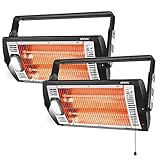
Overview: The Shinic 2 Packs Electric Garage Heaters deliver targeted radiant warmth with a unique dual-unit package. Each 1500W ceiling-mounted unit features quartz tube heating elements that provide instant heat to people and objects in their path. Designed for garages, workshops, and patios, these heaters include integrated halogen work lights and offer five operating modes controlled by a pull-string switch. The 90-degree rotation capability allows precise heat direction, while the ceiling-mount design preserves valuable floor space.
What Makes It Stand Out: This package includes two complete heater units, making it exceptional value for multi-zone heating. The built-in halogen light is a standout feature, illuminating workspaces while providing warmth—eliminating the need for separate lighting. The five-mode system offers flexibility from 750W low heat to full 1500W output, with or without light activation. The adjustable bracket and 90-degree rotation provide targeted heating exactly where needed, and the radiant design heats instantly without waiting for air circulation.
Value for Money: Getting two heaters for roughly the price of one premium unit represents excellent value. While each heater maxes at 1500W, the dual-unit approach lets you heat separate work areas simultaneously. Compared to single high-wattage units costing $200+, this two-pack undercuts competitors while providing more coverage flexibility. It’s ideal for budget-conscious buyers needing heat in multiple spots rather than one large space.
Strengths and Weaknesses: Pros include dual-unit convenience, integrated lighting, space-saving ceiling mount, adjustable angle, and instant radiant heat. Cons are the 1500W-per-unit limitation for large spaces, pull-string operation can be inconvenient when mounted high, requires multiple electrical connections, and lacks remote control or thermostat precision.
Bottom Line: Perfect for small to medium garages or workshops where targeted heating in multiple zones is preferred over whole-room warming. The dual-unit approach and built-in lighting make it a practical, cost-effective choice for DIY enthusiasts.
2. Comfort Zone 7500W Hard-Wired Garage Heater – Industrial & Commercial Ceiling Mount, 240V Fan-Forced with Remote, Digital Thermostat, Timer, 2 Heat Settings, Overheat Protection, Grey

Overview: The Comfort Zone 7500W Hard-Wired Garage Heater is a commercial-grade powerhouse designed for serious heating demands. This 240V fan-forced unit delivers exceptional warmth for large garages, workshops, and industrial spaces. Constructed from heavy-gauge steel with a fully enclosed motor, it’s built to withstand harsh, dusty environments. The integrated digital thermostat, remote control, and 12-hour timer provide sophisticated temperature management that professional users demand.
What Makes It Stand Out: The massive 7500W output sets this apart from residential-grade heaters, capable of warming spaces up to 750 square feet. The remote control and digital thermostat combination offers unparalleled convenience for ceiling-mounted units. Its fully enclosed motor protection is critical for dusty workshops, while adjustable louvers and mounting angles direct heat precisely. The heavy-duty steel body ensures longevity in demanding commercial applications where lesser heaters would fail.
Value for Money: Positioned in the premium segment, this heater justifies its higher price through robust construction and advanced features. While costing significantly more than 5000W models, the extra 2500W capacity translates to faster warmup times and coverage of larger spaces. For commercial users, the durability features prevent costly replacements. DIY enthusiasts with large shops will find the remote thermostat control worth the investment over basic models.
Strengths and Weaknesses: Pros include massive heating power, remote operation, digital precision, durable construction, enclosed motor, and adjustable airflow. Cons are the requirement for 240V hard-wiring (professional installation recommended), premium pricing, potential overkill for standard two-car garages, and no integrated lighting feature.
Bottom Line: Ideal for commercial workshops, large garages, and industrial spaces where maximum heat output and durability are priorities. The advanced controls and robust build quality make it a long-term investment for serious users.
3. Comfort Zone Hard-Wired Ceiling Mount Garage Electric Space Heater, Fan-Forced, 5,000 watt, 240 volt, Overheat Protection, Thermal Cut-Out Switch, Ideal for Workshop & Garage, ETL Compliant, CZ220

Overview: The Comfort Zone CZ220 delivers robust 5000W heating performance in a ceiling-mounted, fan-forced design. This 240V hard-wired heater strikes an excellent balance between power and practicality for medium to large garages, workshops, and warehouses. Constructed from heavy-gauge steel, it withstands temperature fluctuations and harsh conditions typical of poorly insulated spaces. The ETL-compliant unit features essential safety mechanisms and adjustable components for targeted heating.
What Makes It Stand Out: The 5000W output hits a sweet spot for residential garages and commercial workshops, providing substantial warmth without the electrical demands of 7500W units. The adjustable louvers and mounting angle allow precise airflow direction, while the fan-forced design ensures even heat distribution throughout the space. The dual-knob thermostat offers straightforward, reliable temperature control without complicated digital interfaces. Overheat protection with thermal cut-out switch provides peace of mind during extended operation.
Value for Money: This heater represents strong mid-range value, typically priced 30-40% less than 7500W models while delivering sufficient power for most 500-600 square foot garages. The heavy-duty steel construction ensures longevity that cheaper alternatives lack. For homeowners and small business owners, it avoids the premium cost of advanced digital features while providing core heating performance. Installation costs remain similar to other hard-wired units.
Strengths and Weaknesses: Pros include robust steel build, 5000W power for medium-large spaces, ETL compliance, effective safety features, adjustable heat direction, and simple reliable controls. Cons include the lack of remote control, basic dual-knob thermostat lacks precision, requires professional 240V installation, no integrated lighting, and fan noise may be noticeable in quiet environments.
Bottom Line: An excellent choice for standard-sized garages and workshops needing reliable, powerful heating without premium features. The durable construction and safety certifications make it a dependable workhorse for demanding environments.
4. DR. INFRARED HEATER Portable Infrared Indoor and Outdoor Space Heater for Patio, Garage, Commercial & Residential With Remote Control, Without Thermostat, Black

Overview: The Dr. Infrared Portable Space Heater offers versatile heating solution for both indoor and outdoor applications. This 1500W infrared heater features IP55 weatherproof rating, making it suitable for patios, garages, and open-air restaurants. Operating on standard 120V power, it eliminates complex installation requirements. The unit includes wall and ceiling mounting brackets for flexible placement, while the high-efficiency aluminum reflector maximizes heat distribution. With three power settings, it adapts to varying comfort needs.
What Makes It Stand Out: The IP55 certification for outdoor use distinguishes this from most garage heaters limited to indoor operation. Its portable design and 120V plug-and-go capability provide unmatched flexibility—move it between garage, patio, and workshop as needed. The infrared technology delivers clean, odorless heat instantly. The included mounting hardware offers both temporary and permanent installation options. The mirror aluminum reflector’s 90% reflectivity ensures efficient heat direction, maximizing the 1500W output’s effectiveness.
Value for Money: This heater excels in versatility per dollar. While its 1500W output won’t heat large garages alone, the ability to use it anywhere justifies its mid-range price. It avoids costly 240V electrical work, and the portable design means one heater serves multiple locations. Compared to fixed units, it’s ideal for renters or those needing seasonal outdoor heating. The build quality matches permanent fixtures despite its portability.
Strengths and Weaknesses: Pros include indoor/outdoor IP55 rating, portable 120V operation, multiple mounting options, instant infrared heat, and flexible placement. Cons are limited 1500W power for large spaces, no built-in thermostat for temperature maintenance, less effective in extreme cold, and requires manual adjustment versus programmable controls.
Bottom Line: Perfect for users needing flexible heating across indoor and outdoor spaces. While not a primary heat source for large garages, its portability and weather resistance make it invaluable for multi-purpose use and supplemental warmth.
5. Comfort Zone Hard-Wired Ceiling Mount Garage Electric Space Heater, Fan-Forced, 5,000 watt, 240 volt, Overheat Protection, Thermal Cut-Out Switch, Ideal for Workshop & Garage, ETL Compliant, CZ220BK

Overview: The Comfort Zone CZ220BK is the black finish variant of the proven CZ220 5000W ceiling-mounted heater. This fan-forced, 240V hard-wired unit delivers identical performance to its standard counterpart, targeting medium to large garages, workshops, and warehouses. The heavy-gauge steel construction ensures durability in harsh environments, while ETL compliance guarantees safety standards. Designed for spaces where floor space is limited, it provides powerful heating from an overhead position.
What Makes It Stand Out: The primary distinction is the sleek black finish, offering aesthetic flexibility for modern garages and workshops where appearance matters. Beyond color, it retains all the CZ220’s proven features: adjustable louvers for precise airflow direction, dual-knob thermostat for straightforward temperature control, and comprehensive overheat protection. The fan-forced design ensures even heat distribution across 500-600 square feet. The thermal cut-out switch and power indicator light provide operational safety and status awareness.
Value for Money: Priced identically to the standard CZ220, the black finish option provides choice without premium. The value proposition remains exceptional for mid-range power delivery—substantially less expensive than 7500W units while offering 70% of the heating capacity. The durable steel construction prevents replacement costs, and ETL certification may reduce insurance concerns for commercial installations. It’s a no-compromise alternative for those preferring black aesthetics.
Strengths and Weaknesses: Pros include identical CZ220 performance, attractive black finish option, robust steel construction, ETL safety compliance, adjustable heat direction, and reliable 5000W output. Cons mirror the CZ220: no remote control, basic thermostat interface, requires 240V professional installation, no integrated work light, and produces fan noise during operation.
Bottom Line: Choose the CZ220BK if you prefer black aesthetics; otherwise, it’s functionally identical to the standard CZ220. It remains an excellent mid-power, durable heating solution for serious garages and workshops.
6. 1500W Electric Space Heater with 90 Adjustable Angle, Overheat Protection, Heater for Garage, Office, Indoor Use (Yellow)

Overview:
The 1500W Electric Space Heater delivers versatile heating for garages, offices, and indoor spaces with its three-mode operation. This portable unit offers high heat (1500W), low heat (750W), and natural wind settings, controlled via a simple switch. Safety is prioritized with built-in overheat protection that automatically shuts down the unit to prevent fire hazards. Operating below 45 dB, it’s quiet enough for bedroom use, while the 90° adjustable angle and convenient handle enhance its flexibility. The 5-foot cord provides decent reach, though base assembly is required upon setup.
What Makes It Stand Out:
This heater distinguishes itself through its adjustable angle functionality, allowing users to direct warmth precisely where needed. The sub-45 dB noise level is exceptional for a garage heater, making it suitable for sleeping areas. Its portable design with integrated handle and lightweight ABS construction offers genuine mobility. The flame-retardant upgrade to standard ABS material adds a crucial safety layer often missing in budget alternatives.
Value for Money:
Positioned in the affordable range, this heater punches above its weight with features typically found in pricier models. The three-mode versatility and quiet operation justify the investment compared to basic single-setting heaters lacking safety certifications. For users needing occasional supplemental heat rather than primary heating, it offers excellent return on investment.
Strengths and Weaknesses:
Strengths include versatile heating modes, robust safety features, whisper-quiet operation, and portable design. The adjustable angle provides targeted heating flexibility. Weaknesses involve limited power for large garages, required base assembly, and plastic construction that may not withstand harsh workshop conditions. The 1500W maximum output struggles in spaces over 200 square feet.
Bottom Line:
This heater excels as a portable, quiet solution for small to medium indoor spaces. While not suitable for large garage heating demands, its safety features and adjustable design make it ideal for offices, bedrooms, or supplemental workshop heating where flexibility matters more than raw power.
7. Shinic Electric Garage Heaters with Remote Control, 1500W/750W Ceiling Mounted Radiant Quartz Heater with Work Light, 90° Rotation, 5 Mode Settings, Electric Heater for Garage, Shop, Patio Large Room

Overview:
The Shinic Electric Garage Heater combines radiant quartz heating with practical workshop functionality. This ceiling-mounted unit delivers 1500W/750W heating through dual quartz tubes that provide instant, directional warmth to people and objects in its path. The integrated halogen work light illuminates workspaces effectively, while the 90° rotation ensures targeted heat distribution. Controlled via included remote, it offers five mode settings and mounts overhead to preserve valuable floor space. ETL listing and metal housing provide professional-grade safety assurance.
What Makes It Stand Out:
The fusion of radiant heating and task lighting in one ceiling-mounted unit creates a unique value proposition for workshop environments. Unlike forced-air alternatives, quartz tubes deliver immediate warmth without preheating. The remote control operation from ceiling height eliminates the need for constant manual adjustment. Overheat auto-off protection combined with grounded three-prong plug and metal housing addresses multiple safety concerns simultaneously.
Value for Money:
This mid-priced heater justifies its cost through dual-functionality, eliminating separate work light purchases. Ceiling installation saves space in crowded garages, while radiant efficiency means less energy waste heating empty air. Compared to standalone heaters and lights, the integrated design offers measurable cost and space savings for serious DIYers and professionals.
Strengths and Weaknesses:
Strengths include instant radiant heat, space-saving ceiling mount, integrated work light, remote convenience, and robust metal construction. The 90° adjustability provides good coverage. Weaknesses involve line-of-sight heating limitations—objects block radiant warmth—and mandatory ceiling installation requiring hardware and electrical access. The 1500W output may prove insufficient for poorly insulated large garages.
Bottom Line:
Perfect for workshop enthusiasts seeking targeted, instant heat combined with task lighting. The ceiling-mounted design maximizes space efficiency while the remote control adds convenience. Choose this for spot heating in work areas rather than whole-garage warming.
8. Dura Heat EUH1465 Electric Forced Air Heater with Pivoting Base 5,120 BTU, Yellow

Overview:
The Dura Heat EUH1465 Forced Air Heater delivers robust 1500W performance through advanced PTC ceramic technology. Engineered with a rugged steel body, this yellow workhorse suits garages, workshops, and commercial environments. The pivoting base allows directional airflow control while the built-in thermostat enables precise temperature regulation. Users can select between heat and fan-only modes, providing year-round utility. Overheat shut-off protection ensures safe operation in demanding settings.
What Makes It Stand Out:
The industrial-grade steel construction sets this apart from plastic-bodied competitors, offering superior durability in harsh workshop conditions. PTC ceramic heating elements provide efficient, self-regulating warmth without the extreme surface temperatures of traditional coil heaters. The pivoting base mechanism allows 360-degree directional control, enabling users to target specific work areas. The integrated thermostat automatically maintains desired temperatures, reducing manual intervention.
Value for Money:
This heater occupies the budget-friendly end of the commercial-grade spectrum. The steel housing and PTC ceramic technology typically command premium prices, yet this unit remains accessible for homeowners and small shop operators. Compared to disposable plastic heaters, the durable construction ensures years of reliable service, delivering superior long-term value despite minimal smart features.
Strengths and Weaknesses:
Strengths include virtually indestructible steel construction, efficient PTC ceramic heating, adjustable thermostat, pivoting base versatility, and overheat protection. The fan-only mode extends usability across seasons. Weaknesses involve lack of remote control, no oscillation feature, and basic manual controls that require physical adjustment. The 1500W output limits effectiveness in spaces larger than 300 square feet, and the yellow industrial aesthetic may not suit home interiors.
Bottom Line:
A no-nonsense, durable heater built for demanding environments. The Dura Heat excels in workshops where toughness trumps technology. While lacking modern conveniences like remote operation, its steel construction and reliable performance make it a smart investment for users prioritizing longevity over features.
9. CTSC 8500W Garage Heater Electric, 240v Hardwired Fan-Forced Electric Garage Heater with Digital Thermostat, Remote Control and Timer, ECO Function, Ideal for Workshop, ETL Listed Garage Heater

Overview:
The CTSC 8500W Garage Heater represents a serious heating solution for large workshops and commercial spaces. This 240V hardwired unit delivers a massive 29,010 BTUs, capable of warming areas up to 850 square feet. The fan-forced design ensures rapid, even heat distribution while the digital thermostat maintains precise temperatures. Unique voltage display screen assists troubleshooting installation issues. Wall-mounted or hanging options save floor space, and the ECO function optimizes energy consumption. ETL certification guarantees safety compliance.
What Makes It Stand Out:
The innovative voltage display screen addresses the most common installation failure point, providing immediate diagnostic feedback. This user-focused feature prevents costly electrician callbacks. The 8500W output dwarfs standard portable heaters, making it suitable for poorly insulated spaces. Three heat settings (8500W, 5600W, fan-only) offer flexibility, while the 1-10 hour timer and remote control provide modern convenience. SPCC cold-rolled steel construction ensures industrial durability.
Value for Money:
While commanding a premium price, this heater delivers professional-grade performance unmatched by consumer models. Heating 850 sq ft justifies the investment for serious workshops, garages, or small commercial spaces. The voltage troubleshooting feature alone saves potential installation headaches and expenses. Compared to multiple smaller heaters, this single unit offers better efficiency and lower operational costs.
Strengths and Weaknesses:
Strengths include massive heating power, large coverage area, voltage diagnostic display, multiple control methods, ECO efficiency, and sturdy steel construction. Remote operation and timer add convenience. Weaknesses involve mandatory 240V hardwiring requiring professional installation, higher initial cost, and potential overkill for smaller residential garages. The wall-mount requirement limits portability.
Bottom Line:
The ultimate solution for heating large workshop or garage spaces. The CTSC’s raw power and intelligent features make it ideal for professionals and serious hobbyists. Accept the installation complexity and higher price for unparalleled performance in demanding environments.
10. Wall-Mounted Space Heater with ECO Thermostat and Remote Control, LED Display, 60°/90°/120° Oscillation Modes, 24-Hour Timer, Indoor Electric Space Heater

Overview:
This Wall-Mounted Space Heater combines modern aesthetics with intelligent heating technology for residential spaces. The unit features ECO energy-saving thermostat mode that automatically adjusts power output based on ambient temperature, maintaining comfort between 41-95°F. Remote control operation and a clear LED display provide effortless adjustments to temperature, timer, fan speed, and oscillation. The heater offers three oscillation angles—60°, 90°, and 120°—for customizable heat distribution across rooms up to 400 square feet.
What Makes It Stand Out:
The multiple oscillation angle options create superior heat distribution compared to fixed or single-angle heaters. The 24-hour timer exceeds standard 12-hour limitations, enabling overnight programming. Child lock functionality addresses family safety concerns often overlooked in heater design. The ECO mode’s intelligent power modulation saves energy without sacrificing comfort, while the slim wall-mounted profile eliminates floor clutter and tip-over risks entirely.
Value for Money:
Positioned in the mid-range residential category, this heater offers premium features at a competitive price point. The combination of extended timer, multiple oscillation settings, child lock, and remote control matches or exceeds higher-priced competitors. For households seeking safe, efficient whole-room heating, the feature set delivers strong value compared to basic portable units.
Strengths and Weaknesses:
Strengths include versatile oscillation angles, 24-hour timer, child lock safety, remote control convenience, ECO efficiency, and space-saving design. The LED display provides clear status information. Weaknesses involve lower heating output unsuitable for large garages or poorly insulated spaces, mandatory wall installation limiting placement flexibility, and potential remote battery replacement needs. Residential focus means less rugged construction than commercial alternatives.
Bottom Line:
An excellent choice for home heating where safety, convenience, and even heat distribution matter most. The wall-mounted design and child lock make it particularly suitable for families with children. While underpowered for serious workshop use, it excels in living rooms, bedrooms, and offices requiring consistent, safe warmth.
Understanding Cold Climate Garage Heating Challenges
The Reality of Extreme Temperature Differentials
Cold climate garages face temperature swings that can exceed 80 degrees between the outdoor air and your desired indoor working temperature. This massive differential puts enormous strain on heating equipment and creates unique problems like condensation on tools, frozen pipes along walls, and heat loss through concrete floors that remain perpetually cold. Your heater must work harder and smarter to overcome these obstacles, which is why standard residential heating solutions often fail in these demanding environments.
Insulation: The Foundation of Effective Heating
Before considering any heater purchase, evaluate your garage’s insulation status. Even the most powerful heating system will struggle against poorly insulated walls, unsealed garage doors, and drafty windows. Cold climate workshops require minimum R-13 wall insulation and R-30 ceiling insulation to maintain efficiency. Without proper insulation, you’re essentially trying to heat the outdoors, and your energy costs will reflect that futility. Consider air sealing and insulation upgrades as prerequisites to any heating investment.
Types of Garage Heaters for Severe Cold
Forced-Air Torpedo Heaters
These powerful, portable units excel at rapid heat delivery in large, drafty spaces. They work by forcing air across extremely hot heat exchangers, creating a concentrated stream of warm air that can raise temperatures by 20 degrees within minutes. For uninsulated or semi-insulated workshops in climates that regularly drop below zero, these units provide the brute force heating necessary to make the space usable. However, they require proper ventilation and produce significant noise during operation.
Radiant Tube Heaters
Mounted overhead, radiant tube heaters work like the sun, warming objects and people directly rather than heating the air. This makes them exceptionally efficient in cold climate workshops where opening garage doors is necessary or where ceiling heights exceed 12 feet. The infrared heat penetrates cold air without losing energy, keeping your workbench and tools warm even when the ambient air temperature remains lower. They’re ideal for spot heating specific work zones in extremely large spaces.
Convection Cabinet Heaters
These stationary units heat air that naturally rises and circulates through your garage. While slower to warm a space than forced-air options, they create more consistent, even temperatures once operating temperature is reached. For well-insulated workshops in cold climates, convection heaters provide steady, quiet operation without the drafts associated with forced-air systems. They work best in spaces where you maintain a consistent temperature rather than heating from cold starts.
Ductless Mini-Split Heat Pumps
Modern cold-climate heat pumps have revolutionized garage heating with efficiency ratings that defy traditional electric resistance heating. These systems can extract heat from outdoor air even when temperatures drop to -15°F, making them viable for most northern climates. The dual functionality provides both heating and cooling, essentially giving you year-round climate control. While installation costs are higher, operational savings often justify the investment within 2-3 heating seasons.
Key Features That Define Superior Performance
BTU Output and Cold Climate Ratings
Don’t rely on standard BTU ratings when shopping for extreme cold applications. Look for units specifically rated for “cold climate performance” or “low-temperature operation.” These heaters maintain their rated output even when intake air is below freezing, whereas standard units can lose 30-50% of their heating capacity in severe cold. Check for BTU ratings at 0°F and -20°F rather than the standard 70°F rating used for indoor spaces.
Automatic Altitude Adjustment
For workshops located above 4,000 feet elevation, altitude significantly affects combustion efficiency. Premium garage heaters include automatic altitude compensation that adjusts fuel-to-air ratios as atmospheric pressure changes. This feature prevents incomplete combustion, carbon monoxide production, and maintains consistent heat output in mountain regions where thin air challenges standard heating equipment.
Thermal Cutoff and Overheat Protection
Cold climate heaters run longer cycles than temperate climate units, increasing wear on components. Advanced thermal protection systems with multiple safety sensors prevent dangerous overheating while allowing the unit to operate at maximum safe capacity. Look for heaters with independent high-limit switches and thermocouples that provide redundant safety layers for extended operation in demanding conditions.
Sizing Your Heater for Extreme Cold
The 25% Cold Climate Multiplier Rule
Standard heating calculators underestimate needs for severe winter regions. Apply a 25% multiplier to standard calculations for workshops in USDA Hardiness Zones 6 and below. If calculations suggest 30,000 BTUs for your space, cold climate applications require 37,500 BTUs minimum. This accounts for rapid heat loss when doors open, wind chill factors on exterior walls, and the thermal mass of frozen concrete slabs that continuously absorb heat.
Calculating Cubic Feet vs Square Feet
Garage workshops with ceilings over 10 feet tall must be sized by cubic volume, not floor area. A 20x24 foot garage with 12-foot ceilings contains 5,760 cubic feet, requiring substantially more heating power than the same footprint with 8-foot ceilings. Cold air pools near the floor while heat rises, creating stratification that powerful heaters must overcome. Factor in ceiling height plus an additional 20% for workshops with vehicle lifts or mezzanine storage.
Power Source Considerations for Remote Workshops
Natural Gas: The Cold Climate Champion
Natural gas provides consistent, economical heating even during power outages when paired with millivolt thermostats that don’t require electricity. In extreme cold, gas pressure remains stable while propane systems struggle with vaporization issues. For workshops located near municipal gas lines, this is almost always the most cost-effective long-term solution. However, installation requires professional gas line work and proper venting to prevent condensation and carbon monoxide risks.
Propane: Off-Grid Flexibility
Propane excels in remote locations but faces challenges in extreme cold. Below -20°F, liquid propane doesn’t vaporize efficiently, reducing system pressure and heat output. Premium propane heaters include heated regulators and vaporization chambers that maintain performance in severe cold. Always size propane tanks generously—500-gallon tanks provide enough surface area for adequate vaporization, while 20-pound barbecue cylinders freeze up quickly in subzero temperatures.
Electric: Simplified Installation
Electric heaters eliminate combustion concerns and venting requirements, making them attractive for attached garages. However, standard 120-volt units rarely provide sufficient BTUs for cold climate workshops. 240-volt, 30-amp circuits are minimum requirements, with many high-capacity units requiring 50-amp dedicated service. Calculate your actual electricity costs per BTU—while electric heat is 100% efficient, utility rates often make it 3-4 times more expensive than gas in severe cold regions.
Safety Features That Matter in Cold Climates
Oxygen Depletion Sensors for Combustion Heaters
Sealed garages in winter create oxygen-depletion risks when combustion heaters run continuously. Oxygen depletion sensors (ODS) automatically shut down the heater if oxygen levels drop below 18%, preventing dangerous conditions before they become life-threatening. This feature is non-negotiable for any unvented combustion heater used in a workshop where doors remain closed for extended periods during subzero weather.
Tip-Over and Vibration Shutoffs
Portable heaters in busy workshops face constant bumping and potential knock-over hazards. Advanced units include dual-axis tip sensors that shut off fuel or power within milliseconds of the unit tilting beyond 15 degrees. Vibration sensors provide additional protection in earthquake-prone regions or when heavy equipment operation could shake a heater from its position. These features prevent fuel spills and fire hazards in cluttered workshop environments.
Cool-Touch Exteriors and Overheat Alarms
Extended operation makes heater surfaces dangerously hot. Premium units feature triple-wall construction that keeps external surfaces below 140°F even at maximum output, preventing accidental burns when working in tight spaces. Audible overheat alarms provide early warning before safety shutoffs engage, alerting you to blocked vents or airflow restrictions that could lead to component failure during critical heating periods.
Installation Requirements for Maximum Efficiency
Ceiling-Mount vs Wall-Mount vs Portable
Ceiling-mounted heaters preserve valuable floor space and distribute heat more evenly in tall workshops, but require robust mounting hardware rated for seismic loads and vibration. Wall-mounted units position heat sources closer to the work area but can create uncomfortable radiant heat zones. Portable units offer flexibility but sacrifice efficiency and safety. For cold climates, permanent mounting is almost always superior for maintaining consistent temperatures and reducing heat stratification.
Ventilation and Combustion Air Supply
Combustion heaters require dedicated fresh air intake, not just room air, for safe operation in cold climates. In tightly sealed winter workshops, exhaust fans and air leaks don’t provide sufficient combustion air. Install direct-vent units that draw outside air for combustion, preventing negative pressure that can backdraft furnaces or pull carbon monoxide into living spaces. This is particularly critical in attached garages where air exchange with the home occurs.
Thermostat Placement Strategies
Never mount thermostats on exterior walls or near garage doors where cold drafts cause false readings. Position thermostats on interior walls at workbench height, away from direct heater discharge. For zoned heating, install multiple thermostats controlling different heaters to maintain precise temperatures in work areas while allowing storage zones to remain cooler. Smart thermostats with remote sensors let you monitor conditions from your home, ensuring the workshop is warm before you venture out into the cold.
Energy Efficiency Strategies for Subzero Conditions
Programmable Pre-Heating Cycles
The most efficient approach for intermittent workshop use is programming heaters to warm the space before you arrive. Starting from 20°F, a properly sized heater needs 45-60 minutes to reach comfortable working temperatures. Smart thermostats can begin this cycle based on your typical schedule, preventing energy waste from heating an empty shop while ensuring it’s warm when needed. This strategy saves 30-40% compared to maintaining constant temperature 24/7.
Thermal Mass Utilization
Concrete floors in cold climate workshops act as giant heat sinks, absorbing enormous energy before the space feels warm. Combat this by using thermal mass strategically: place rubber anti-fatigue mats over work areas to insulate your feet from cold concrete, and consider installing radiant floor heating in small zones where you stand most frequently. Once concrete reaches operating temperature, it actually helps maintain stable conditions by releasing stored heat during brief door openings.
Zoned Heating for Large Spaces
Heating a 1,200-square-foot workshop to 65°F when you’re only using a 200-square-foot workbench area wastes tremendous energy. Install multiple smaller heaters with independent controls, allowing you to heat only the zones in use. Overhead radiant heaters excel at this, creating warm islands of comfort without wasting energy on unused corners. This approach can reduce heating costs by 60% in oversized garages.
Operating Cost Analysis for 2026
Fuel Price Volatility Planning
With energy markets increasingly unpredictable, calculate operating costs across multiple fuel types before committing. As of early 2026, natural gas averages $0.95 per therm, propane $2.80 per gallon, and electricity $0.14 per kWh in most northern regions. However, regional variations are extreme—rural propane can reach $4.00 per gallon while municipal electric rates in hydroelectric regions may be half the national average. Always base decisions on your local utility rates, not national averages.
BTU Cost Comparison Methodology
Calculate true cost per 100,000 BTUs (a typical workshop’s hourly need in subzero weather). Natural gas: approximately $0.95. Propane: around $3.05. Electric resistance: roughly $4.10. Heat pumps in moderate cold: about $1.40. These figures explain why dual-fuel systems combining a primary gas heater with electric backup are gaining popularity—they optimize costs based on temperature and fuel price fluctuations.
Maintenance Cost Projections
Cold climate heaters require more frequent maintenance than temperate units. Budget $150-300 annually for professional inspection and cleaning of combustion heaters, plus filter replacements for forced-air units every 30 days during heavy use. Electric heaters have minimal maintenance but higher energy costs. Factor these ongoing expenses into your total cost of ownership calculations for a realistic 10-year operating projection.
Climate-Specific Considerations by Region
Northern Plains and Upper Midwest
Workshops in North Dakota, Minnesota, and Wisconsin face weeks of -20°F to -30°F temperatures. Here, redundancy is crucial—many professionals install primary natural gas heaters with propane backup that automatically engages if gas service fails. Wind chill factors on poorly sealed garage doors can create infiltration rates double those of calmer regions, making air sealing as important as heating capacity. Consider heated garages for vehicles parked inside, as engine block heat contributes to overall space warming.
Mountain West and High Altitude
Colorado, Wyoming, and Montana workshops above 6,000 feet face altitude derating of combustion equipment plus extreme cold. At 8,000 feet, heaters lose 25-30% of their sea-level BTU output. Look for units specifically certified for high-altitude operation with pressure-compensating gas valves. Solar gain is significant in these regions—south-facing windows can provide 10-15°F of passive heating on sunny days, reducing heater runtime substantially.
Northeast and Coastal Cold
Maine, Vermont, and upstate New York experience damp, penetrating cold that feels worse than the thermometer reading. Humidity control becomes as important as temperature—propane heaters add moisture to the air while electric heaters dry it out. For coastal workshops, corrosion-resistant construction is essential; salt air destroys standard steel heaters within 2-3 seasons. Stainless steel or powder-coated aluminum housings are mandatory for longevity.
Smart Features Worth Considering in 2026
Wi-Fi Connectivity and Remote Monitoring
Modern garage heaters include Wi-Fi-enabled controllers that send temperature alerts, maintenance reminders, and energy usage reports to your smartphone. This proves invaluable for cold climate workshops where pipes can freeze if heaters fail while you’re away. Some systems automatically notify your HVAC contractor of fault codes, enabling proactive repairs before complete failure occurs during the coldest week of winter.
Learning Algorithms and Occupancy Sensors
Advanced thermostats now use machine learning to recognize your usage patterns, pre-heating the shop precisely when needed while maximizing setback temperatures during absences. Occupancy sensors detect when you’ve actually entered the space, adjusting temperature from “maintenance level” (45°F) to “working level” (65°F) automatically. These features can reduce energy consumption by 35% compared to programmable thermostats alone.
Integration with Home Automation Systems
For attached garages, heaters that integrate with smart home platforms provide seamless control alongside your primary heating system. They can coordinate with whole-house generators during power outages, automatically switch to battery backup for control systems, and even use weather forecast data to begin pre-heating earlier when severe cold snaps are predicted. This level of integration transforms your garage from an afterthought into a fully managed climate zone.
Warranty and Support Considerations
True Cold Climate Warranties
Standard heater warranties often exclude “commercial use” or “continuous operation,” both common in workshop settings. Look for warranties specifically covering cold climate applications, with terms of 5-10 years on heat exchangers and 2-3 years on electrical components. Read the fine print—some warranties are void if the heater is installed in spaces that regularly drop below freezing, precisely where you need it most.
Manufacturer Cold Climate Testing
Reputable manufacturers test their equipment in environmental chambers that simulate -40°F conditions with rapid door cycling. Ask for testing documentation before purchasing. Companies that subject their heaters to 1,000-hour continuous run tests at extreme temperatures stand behind their cold climate claims. Generic heaters without this testing will fail prematurely when pushed beyond their design limits during polar vortex events.
Local Service Network Importance
Even the best heater requires occasional service. Choose brands with authorized service centers within 50 miles of your workshop. In remote areas, consider units with modular design that allows you to swap components yourself. Some manufacturers offer overnight shipping for critical parts during winter months, while others have multi-week lead times that could leave you without heat during the coldest period of the year.
Common Mistakes That Lead to Inadequate Heating
Undersizing to Save Money
The most frequent error is purchasing a heater based on standard climate calculations. Cold climate applications require oversizing by 25-40% to account for infiltration, thermal mass, and rapid recovery needs. A marginally sized heater runs continuously, never reaching setpoint, while consuming maximum energy and wearing out prematurely. The modest upfront savings are dwarfed by years of excessive operating costs and early replacement.
Ignoring Ventilation Requirements
Installing powerful combustion heaters without adequate fresh air supply creates dangerous negative pressure. This can pull flue gases from water heaters or furnaces back into the workspace, introducing carbon monoxide and moisture. Many cold climate workshops require dedicated make-up air units that run intermittently to refresh air without defeating the heating system. This adds cost but is essential for safety.
Poor Thermostat Location
Mounting thermostats near heat sources or cold infiltration points creates short cycling and temperature imbalances. The heater shuts off before the far corners warm up, or runs continuously because the thermostat is in a cold draft. Proper sensor placement requires careful consideration of airflow patterns, work zones, and thermal stratification in tall garage spaces.
Making Your Final Decision
Prioritizing Your Specific Workshop Needs
Assess your actual usage patterns honestly. Do you need 65°F for delicate finishing work, or is 50°F sufficient for mechanical projects? Will you heat daily or just weekends? Do you open the garage door frequently? Your answers determine whether you need rapid recovery, steady-state efficiency, or zoning capabilities. Create a prioritized feature list before shopping to avoid being swayed by impressive but irrelevant specifications.
Budgeting for the Total System
The heater itself represents only 50-70% of total project cost. Include electrical work, gas line installation, venting materials, thermostats, insulation upgrades, and permits in your budget. A $800 heater can easily become a $3,000 installed system. Get quotes for turnkey installation rather than just equipment costs to avoid budget surprises that force compromises on capacity or features.
Future-Proofing Your Investment
Consider your long-term workshop plans. Will you add square footage? Insulate later? Install a vehicle lift that changes airflow? Choose a heater with 20-30% excess capacity to accommodate future improvements without requiring replacement. Modular systems that allow adding zones or upgrading controls protect your investment as technology evolves. The best choice balances current needs with tomorrow’s possibilities.
Frequently Asked Questions
What size heater do I need for a 24x24 garage in a cold climate?
For a well-insulated 24x24 garage (576 sq ft) in USDA Zone 6 or colder, you’ll need approximately 45,000-60,000 BTUs. This accounts for the 25% cold climate multiplier, 10-12 foot ceilings, and recovery from 20°F to 65°F within one hour. Poorly insulated spaces may require 75,000+ BTUs. Always calculate based on cubic feet and your specific insulation values rather than using rule-of-thumb estimates.
Can I use a residential furnace in my garage workshop?
Standard residential furnaces aren’t designed for garage environments or continuous operation at extreme temperature differentials. They lack the corrosion resistance, heavy-duty components, and safety features required for workshop use. Additionally, building codes often prohibit residential furnace installation in garages due to fire and carbon monoxide risks. Choose equipment specifically rated for garage or commercial use with proper certifications.
How much does it cost to run a garage heater in subzero weather?
During polar vortex conditions (-20°F outside, maintaining 65°F inside), a 50,000 BTU natural gas heater costs approximately $1.50-2.00 per hour to operate. Propane runs $4.50-6.00 per hour, while electric resistance heating costs $6.00-8.00 per hour. Actual costs depend on local fuel prices, insulation quality, and how frequently you open doors. Expect monthly heating bills of $200-400 during the coldest months for a typical two-car garage workshop.
Is it safe to leave a garage heater running unattended?
Modern garage heaters with UL certification, tip-over protection, oxygen depletion sensors, and automatic shutoff features are designed for unattended operation. However, combustion heaters should never run overnight in tightly sealed garages without ventilation. Electric heaters are safer for extended unattended use. Install smoke and carbon monoxide detectors, and use smart thermostats that send alerts for abnormal operation. Always follow manufacturer guidelines and local codes.
What’s the difference between a garage heater and a shop heater?
Garage heaters typically assume occasional residential use with standard temperature demands. Shop heaters feature heavy-duty construction, higher BTU outputs, better dust filtration, and components rated for continuous operation. For cold climate workshops where you’ll heat daily for 4+ hours, shop-rated equipment lasts 2-3 times longer and maintains performance under demanding conditions. The price difference is justified through longevity and reliability.
Should I heat my garage floor or the air?
For workshops where you stand in one place (workbench, tool area), radiant floor heating provides unparalleled comfort by warming your feet and legs directly. However, it heats slowly and is expensive to install. For general heating of the entire space, warm air systems are more practical and affordable. The optimal solution combines both: in-floor heat in your primary work zone supplemented by a forced-air heater for overall space temperature.
How do I prevent condensation when heating a cold garage?
Condensation occurs when warm, moist air contacts cold surfaces. Combat this by heating gradually (5°F per hour) to allow surfaces to warm evenly, using dehumidifiers set to 40-45% relative humidity, and ensuring adequate ventilation when first heating a frozen garage. Insulate all surfaces including garage doors, and consider vapor barriers on interior walls. Propane heaters add moisture; electric heaters remove it—factor this into your equipment choice.
Can solar panels power an electric garage heater?
While technically possible, solar panels rarely produce enough consistent power for electric resistance heating in cold climates. A 50,000 BTU electric heater requires 15kW of continuous power—requiring 50+ panels and substantial battery storage for cloudy days. However, solar can effectively power a cold-climate heat pump (5kW) or supplement grid power to reduce operating costs. Grid-tied systems with net metering make more economic sense than off-grid solar for heating applications.
What’s the lifespan of a garage heater in extreme cold?
Cold climate operation reduces heater lifespan by 20-30% compared to temperate climate use. Quality natural gas or propane garage heaters last 15-20 years in moderate cold, but expect 10-15 years in regions with frequent subzero temperatures. Electric heaters typically last 20+ years since they have fewer moving parts. Extend lifespan through annual professional maintenance, proper sizing to prevent short cycling, and maintaining moderate setback temperatures rather than full shutdown between uses.
Are infrared heaters better than forced-air in cold climates?
Each excels in different scenarios. Infrared heaters provide immediate warmth to objects and people without heating the entire air volume, making them ideal for spot heating in large, poorly insulated spaces or when doors open frequently. Forced-air heaters warm the entire space evenly and support consistent temperatures for finishing work or precision tasks. Many cold climate workshops benefit from hybrid systems: infrared for quick comfort when first entering, and forced-air to maintain stable ambient temperature during extended work sessions.
See Also
- 10 Best Garage Fan Heaters for Cold Workshops in 2026
- 10 Premium Heavy Duty Garage Heaters for Workshops (Worth the Investment)
- How to Choose the 10 Best Garage Heaters for Winter Workshops in 2026
- 10 Best Ceiling Mounted Garage Heaters for High-Ceiling Workshops in 2026
- The 10 Ultimate Best Radiant Garage Heaters for Workshops in 2026