Table of Contents
Imagine stepping into your home on a blistering summer afternoon, greeted not by the stale, recycled air of a traditional air conditioner but by a gentle, naturally refreshing breeze that carries the crisp essence of a mountain spring. This isn’t a fantasy—it’s the everyday reality for homeowners who’ve embraced evaporative cooling. Unlike energy-guzzling systems that trap heat indoors, evaporative coolers harness a simple, ancient principle: as water evaporates, it absorbs heat from the air, providing a cooling effect that’s both immediate and invigorating. Perfect for dry climates where humidity stays low, these units transform sweltering spaces into comfortable sanctuaries without the sky-high electricity bills or environmental guilt. In an era where sustainability and smart energy use are non-negotiable, evaporative coolers offer a breath of fresh air—literally and figuratively—making them a compelling choice for eco-conscious households seeking relief from the heat.
But let’s clear the air right away: evaporative coolers aren’t a one-size-fits-all solution, and diving in without understanding their nuances can lead to frustration. Many buyers assume these units work like conventional air conditioners, only to discover they’re ineffective in humid regions or poorly sized for their living spaces. The truth is, choosing the right evaporative cooler requires thoughtful consideration of your local climate, home layout, and lifestyle needs. This guide cuts through the confusion, equipping you with the knowledge to navigate features, sizing, and setup like a pro. Whether you’re cooling a sun-drenched apartment, a sprawling ranch, or a cozy workshop, we’ll help you unlock the full potential of this efficient, wallet-friendly technology—so you can spend less time sweating the details and more time enjoying cool comfort.
Top 10 Evaporative Coolers
Detailed Product Reviews
1. Uthfy Evaporative Air Cooler, 3-IN-1 Swamp Cooler with 5.3 Gallon Water Tank, 6 Ice Packs, Remote, 12H Timer, 120°Oscillation, Portable Cooling Fan with 3 Speeds for Bedroom Home Office Garage

Overview: The Uthfy Evaporative Air Cooler delivers versatile cooling for indoor spaces up to medium-sized rooms, combining swamp cooling, fan, and humidifier functions in a portable unit. Its 5.3-gallon tank and ice-pack compatibility target extended, energy-efficient relief without traditional AC costs.
What Makes It Stand Out: With 1800CFM airflow, whisper-quiet 25dB operation, and a unique 3-in-1 design (cooling/fan/humidifier), it excels in adaptability. The included 6 ice packs, 120° oscillation, 12-hour timer, and remote control offer precise climate management, while lockable 360° wheels ensure effortless mobility between rooms.
Value for Money: Priced competitively for its feature set, it undercuts AC units while saving ~50% on energy bills. The large tank reduces refill frequency, and multi-scene usability (bedroom, office, garage) justifies its cost versus single-function fans or smaller coolers lacking ice-pack integration.
Strengths and Weaknesses: Strengths: Exceptional portability (13 lbs), quiet operation, versatile modes, generous tank capacity, and effective ice-pack synergy. Weaknesses: Requires manual refills in high heat, evaporative cooling loses efficacy in humid climates, and the plastic build may lack long-term durability versus premium brands.
Bottom Line: Ideal for dry-climate households needing flexible, quiet cooling across multiple rooms. Its feature density and energy savings make it a top-tier value for bedrooms or offices, despite humidity limitations.
2. Portable Swamp Coolers - 1300 CFM MC18M Evaporative Air Cooler with 2-Speed Fan, 53.4 dB - 500 sq. ft. Coverage Evaporative Air Cooler Portable High Velocity Outdoor Cooling Fan by Hessaire - White
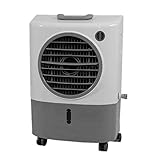
Overview: The Hessaire MC18M is a rugged, outdoor-optimized evaporative cooler engineered for patios, garages, or workshops up to 500 sq. ft. Leveraging Hessaire’s expertise, it prioritizes simplicity and energy efficiency over smart features.
What Makes It Stand Out: Its patented axial propeller and XeL50 cooling media propel cool air farther than rivals, while the 4.8-gallon tank and ABS resin construction ensure lightweight durability. The focus on core functionality—fill, power, cool—makes it ideal for dusty or high-traffic outdoor areas where complexity fails.
Value for Money: At its price point, it’s a cost-effective solution for large outdoor zones, cutting electricity use by up to 50% versus portable ACs. The absence of timers or remotes keeps costs low, but this limits convenience for indoor residential use compared to feature-rich alternatives.
Strengths and Weaknesses: Strengths: Excellent outdoor coverage, robust ABS build, quiet operation (53.4 dB), and effortless maintenance. Weaknesses: Only two fan speeds, no timer/remote, higher noise than indoor models, and less effective in humid conditions.
Bottom Line: A reliable workhorse for dry, open-air spaces like workshops or patios. Choose it for no-nonsense, energy-efficient outdoor cooling; skip it if you need indoor finesse or smart controls.
3. Hessaire MC37M 3100CFM Evaporative Cooler

Overview: The Hessaire MC37M is a high-capacity evaporative cooler built for large rooms or commercial spaces up to 2,000 sq. ft., boasting industrial-grade airflow and a massive 10.3-gallon tank for sustained operation.
What Makes It Stand Out: With 3,100 CFM output and a triple-panel intake system, it cools expansive areas faster than most consumer models. The 80% larger evaporation surface minimizes refills, while polypropylene resin construction ensures quiet, vibration-free performance—critical for workshops or event spaces.
Value for Money: Justifiable for large-area cooling where portable ACs would be costly to run. The energy efficiency (saves ~50% vs. AC) and reduced refill frequency offset its higher upfront cost, though overkill for small rooms.
Strengths and Weaknesses: Strengths: Unmatched coverage for its class, durable build, extended runtime, and quiet operation. Weaknesses: Bulky design limits portability, basic controls (no timer/remote), and ineffective in high humidity.
Bottom Line: The premier choice for warehouses, garages, or large living areas in arid climates. Avoid for apartments; select for sheer cooling power and operational economy in spacious, dry environments.
4. BLACK+DECKER Desktop Air Cooler, Personal Portable Fan with 3-Speeds, Evaporative Air Cooler with 0.5L Water Tank, Air Cooler Fan for Desk, Home, Office, Bedroom, and more, BDMC10, White/Gray

Overview: This ultra-compact BLACK+DECKER cooler targets personal use at desks or bedside, leveraging evaporative cooling in a micro-USB-powered device with a 0.5L tank and ambient lighting.
What Makes It Stand Out: Its diminutive size (fits on any desk), USB power compatibility (laptop/PC), and dual-function LED nightlight (6 colors + rotation) cater to minimalist, on-the-go cooling. The 8-hour runtime per refill suits focused work or sleep without cords cluttering workspaces.
Value for Money: Exceptional for personal zones where larger coolers are impractical. At its low price, it outperforms basic desk fans with evaporative cooling, though the tiny tank requires frequent refills in intense heat.
Strengths and Weaknesses: Strengths: True portability, silent operation, USB convenience, and attractive nightlight feature. Weaknesses: Very limited cooling radius (1-2 ft), small tank needs refilling, and no oscillation reduces air distribution.
Bottom Line: Perfect for students or office workers needing localized relief. Not a room cooler—but an affordable, stylish solution for personal comfort where space is tight.
5. SereneLife Evaporative Air Cooler Tower with Remote, 5L Tank, 4 Ice Boxes, 3 Speeds, Quiet Standing Cooler with Oscillation for Home, Office or Bedroom, Portable & Energy Efficient, 10” x 13” x 39”

Overview: The SereneLife Tower cooler merges space-saving vertical design with robust evaporative cooling for bedrooms or offices, featuring a 5L tank, ice-box support, and quiet operation under 60 dB.
What Makes It Stand Out: Its slim tower profile fits tight spaces while delivering 1000 m³/h airflow. Dual water-filling ports, 60° oscillation, and a washable dust filter enhance usability, and the 80W energy draw makes it vastly cheaper to run than AC units.
Value for Money: Strikes a balance between premium features (remote, 3 modes, ice boxes) and affordability. The energy savings and multi-room portability justify its cost versus boxier coolers, though tank capacity lags behind Uthfy’s model.
Strengths and Weaknesses: Strengths: Space-efficient design, excellent air purification via filter, versatile speed/mode options, and quiet sleep mode. Weaknesses: Oscillation range narrower than Uthfy’s (60° vs. 120°), and 5L tank requires refills in prolonged use.
Bottom Line: A top pick for compact living spaces craving efficient, clean cooling. Ideal for eco-conscious users prioritizing design and air quality over maximum tank size.
6. Swamp Cooler,1800 CFM Air Cooler with 5.3 Gal Water Tank,120° Swing,Remote Control,12H Timer,6 Ice Packs,2 Modes,3 Speeds,Evaporative Cooler for Bedroom,Home,Office,Cool Grey

Overview: This versatile evaporative cooler delivers robust cooling for spaces up to 550 sq. ft., featuring a 5.3-gallon tank, 6 ice packs, and 1800 CFM airflow. Designed for bedrooms, offices, or garages, it operates without complex installation and emphasizes energy efficiency over traditional AC units.
What Makes It Stand Out: Its 120° automatic swing ensures even cooling distribution, while dual control (remote + touch panel) and a 1–12-hour timer enhance convenience. The inclusion of 6 ice packs significantly boosts cooling intensity, and the UL/FCC-certified copper motor promises durability and lower energy use compared to aluminum alternatives.
Value for Money: Priced competitively for its capacity, it outperforms budget coolers with its large tank (15+ hours runtime) and portability (caster wheels). While cheaper models lack ice packs or swing features, this unit justifies its cost for medium-sized rooms seeking substantial cooling without high electricity bills.
Strengths and Weaknesses: Strengths: Excellent runtime, effective ice-pack integration, quiet copper motor, and effortless mobility. Weaknesses: No explicit noise rating, and the natural wind mode may feel inconsistent for users preferring steady airflow. Maintenance requires manual pad cleaning.
Bottom Line: An ideal pick for energy-conscious users needing reliable cooling in bedrooms or offices. Its thoughtful design balances power, convenience, and efficiency, making it a top-value evaporative cooler under $150.
7. DREO Evaporative Air Cooler, 40” Standing Bladeless Cooling Fan for Bedroom, 80° Oscillating Fans that Blow Cold Air, Swamp Cooler, Removable Water Tank, Ice Pack, 3 Mode 4-Speed, White and Black
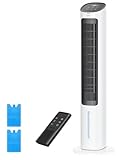
Overview: This 40-inch bladeless tower cooler targets bedrooms with whisper-quiet operation (35dB) and a focus on healthy airflow. It uses evaporative cooling pads to produce a moist breeze, covering spaces with its 80° oscillation and 1,500 RPM motor.
What Makes It Stand Out: The standout feature is its near-silent operation, quieter than rainfall, ideal for sleep or focus. The turbo-charged airflow (13,000 CFH) refreshes dry rooms effectively, while tool-free removable parts (tank, pad, filter) simplify maintenance—uncommon in tower designs.
Value for Money: It commands a slight premium for its noise performance and sleek tower form but competes well against pricier AC units. Budget coolers often sacrifice quietness or ease of cleaning, making this a smart investment for noise-sensitive environments like bedrooms.
Strengths and Weaknesses: Strengths: Exceptionally quiet, easy maintenance, strong moisture output, and oscillation covers wide areas. Weaknesses: Smaller water tank than competitors limits runtime, and the lack of ice packs reduces peak cooling power in extreme heat.
Bottom Line: Highly recommended for light sleepers or home offices prioritizing tranquility. Though not for large or arid spaces, its health-focused design and user-friendly upkeep deliver unmatched comfort for personal use.
8. Uthfy 41" Swamp Cooler, 4800 CFM Evaporative Air Cooler with 10.6 Gallon Water Tank, Portable Outdoor Air Conditioner with 3 Ice Pack, 110° Oscillation, 3 Speed for Garage, Yard, Commercial Use

Overview: Built for large or commercial spaces (up to 1,200 sq. ft.), this heavy-duty cooler boasts 4800 CFM airflow, a massive 10.6-gallon tank, and rugged construction. Ideal for garages, patios, or workshops, it prioritizes durability and rapid cooling in demanding environments.
What Makes It Stand Out: The industrial-grade sheet metal body with powder coating resists corrosion and impacts, while the garden hose auto-fill adapter is a rare convenience for continuous outdoor use. Triple ice packs and 3-side cooling pads deliver intense cooling unmatched by residential models.
Value for Money: Priced higher due to commercial specs, it’s cost-effective for its class. Cheaper coolers can’t match its coverage or tank size, and its copper motor lowers long-term energy costs versus portable ACs—justifying the investment for frequent outdoor or workshop use.
Strengths and Weaknesses: Strengths: Exceptional capacity, auto-fill capability, industrial durability, and strong oscillation (110°). Weaknesses: Bulky size limits indoor mobility, mechanical controls feel dated versus touchscreens, and noise levels aren’t specified for quiet settings.
Bottom Line: The go-to choice for garages, warehouses, or large patios. Skip if you need subtle indoor aesthetics, but for raw cooling power in tough spaces, it’s unbeatable.
9. POWIFY 10.6 Gal Evaporative Air Cooler, 3000 CFM Swamp Cooler with 4 Ice Packs, 12H Timer, 3 Speeds & 3 Modes, 35" Portable Fast Cooling Fan for Patio, Bedroom, Garage, Backyard

Overview: This adaptable 35-inch cooler merges portability with high capacity, featuring a 10.6-gallon tank, 4 ice packs, and 3000 CFM airflow. Suitable for patios, bedrooms, or garages, it emphasizes eco-friendly cooling and user-centric convenience.
What Makes It Stand Out: Dual remotes (one spare) with child-proof battery locks and a 30-ft range offer unmatched control flexibility. The stackable design saves storage space, while the detachable tank and lockable wheels enhance practicality—key differentiators in its class.
Value for Money: Mid-priced but rich in features, it outshines similarly sized units with its dual remotes and modular build. Though slightly pricier than basic models, the energy-efficient copper motor and 7-day runtime claim (with auto-fill) ensure long-term savings.
Strengths and Weaknesses: Strengths: Innovative remote system, space-saving design, versatile oscillation (120° 4-way), and auto-shutoff safety. Weaknesses: “7-day runtime” is misleading (requires refills), and the pump mechanism may need frequent descaling in hard water areas.
Bottom Line: Perfect for families wanting hassle-free operation across multiple rooms. Its thoughtful extras make it a standout value, though verify water hardness compatibility first.
10. MEPTY 3-IN-1 Evaporative Air Cooler, Cooling Fans that Blow Cold Air with 120° Oscillation, 12H Timer,3 Speeds, Portable Swamp Cooler for Indoor Use, Windowless Portable Air Conditioners

Overview: This compact tower cooler markets itself as a 3-in-1 solution (cooler, humidifier, and “windowless AC”) for indoor use. With 120° oscillation and a focus on year-round climate control, it targets small to medium rooms seeking multi-season versatility.
What Makes It Stand Out: The triple-mode system (Normal/Natural/Sleep) tailors airflow to activities, while the auto-screen-off and low-water shutoff add smart touches. ETL certification and an 80W copper motor prioritize safety and efficiency, appealing to eco-conscious buyers.
Value for Money: Affordable for its feature set, it undercuts pricier hybrids without sacrificing core functions. The humidifier aspect is inherent to evaporative tech, but the Sleep mode’s quiet operation justifies its cost versus single-function fans.
Strengths and Weaknesses: Strengths: True multi-season use, excellent energy efficiency (80W), intuitive display, and strong safety credentials. Weaknesses: Limited to small spaces (under 300 sq. ft.), and “3-in-1” claims overhype standard evaporative functionality.
Bottom Line: Best for apartments or bedrooms needing quiet, efficient cooling and humidity control. Manage expectations on “AC” performance, but as a focused indoor cooler, it delivers exceptional value under $100.
Understanding Evaporative Cooling Technology
The Science Behind Natural Cooling
Evaporative cooling relies on a fundamental physical process: when dry air passes over water, evaporation occurs, absorbing heat energy from the air and lowering its temperature. This mimics how sweat cools your skin, making it a completely natural method that requires no chemical refrigerants. The simplicity of this principle translates to reliable, low-maintenance operation, with the core components being a water reservoir, absorbent cooling pads, and a fan to circulate the cooled air. Unlike compressor-based systems, there’s no complex machinery to fail, reducing long-term repair risks while delivering that signature crisp, fresh airflow.
How Evaporative Coolers Differ from Air Conditioners
While traditional air conditioners recirculate and dehumidify indoor air using refrigerants, evaporative coolers continuously introduce fresh, filtered outdoor air into your space. This means they don’t just cool—they actively improve indoor air quality by flushing out pollutants, odors, and stale air. Crucially, evaporative units thrive in low-humidity environments (below 60% relative humidity), whereas standard ACs perform consistently regardless of moisture levels. This distinction is vital: in arid regions, evaporative coolers can cut cooling costs by up to 80%, but they become ineffective in humid coastal areas where the air can’t absorb additional moisture.
Ideal Climate Conditions for Maximum Effectiveness
Your local weather patterns are the ultimate deciding factor in whether evaporative cooling will work for you. These systems excel in hot, dry climates like deserts or semi-arid regions, where daytime temperatures soar but overnight humidity remains low. If your area regularly experiences humidity above 50%, especially during peak summer, evaporative cooling will struggle to lower temperatures significantly. Before investing, check historical weather data for your location—consistent dry heat means dramatic results, while frequent moisture in the air calls for alternative solutions. This isn’t just about comfort; it’s about ensuring your investment delivers real value.
Key Benefits of Evaporative Coolers for Home Use
Energy Efficiency Compared to Traditional AC
One of the most compelling advantages is the drastic reduction in energy consumption. Evaporative coolers use only a fraction of the electricity required by conventional air conditioners—typically 15-35% less—because they power a single fan and water pump instead of a heavy-duty compressor. This efficiency shines on your utility bill, especially during prolonged heatwaves when AC costs can cripple household budgets. Over a single summer, savvy users report savings of hundreds of dollars, making evaporative cooling not just eco-friendly but financially intelligent for dry-climate dwellers.
Healthier Air Quality with Natural Ventilation
Since these units constantly pull in fresh outdoor air, they prevent the buildup of indoor pollutants like dust, VOCs, and allergens that recirculating AC systems can trap. The water-saturated cooling pads also act as natural air filters, capturing larger particles before the air enters your living space. This continuous exchange reduces the risk of “sick building syndrome” and creates a healthier breathing environment, particularly beneficial for households with allergy sufferers or asthmatics. Just remember: optimal air quality depends on regular pad maintenance to prevent mold or mineral buildup.
Eco-Friendly Operation with Lower Carbon Footprint
With no synthetic refrigerants (which contribute to ozone depletion and global warming), evaporative coolers are inherently greener than standard AC units. Their minimal electricity use further shrinks your carbon footprint, aligning with sustainable living goals without sacrificing comfort. Water consumption is modest—typically 3-8 gallons per hour—and often sourced from household taps, but in drought-prone areas, pairing your unit with a greywater system can enhance its eco-credentials. For environmentally aware homeowners, this technology offers a tangible way to reduce ecological impact while staying cool.
Critical Factors to Consider When Buying
Assessing Your Local Climate and Humidity Levels
Don’t skip this step: evaporative coolers are climate-dependent by design. Use a hygrometer to measure your home’s typical humidity, or consult regional climate maps showing average summer dew points. In areas where humidity frequently exceeds 60%, even high-capacity units will underperform, leaving you with damp, lukewarm air instead of refreshing coolness. If you live in a mixed-humidity zone, look for models with adjustable settings that can adapt to changing conditions, but be realistic—this isn’t a magic fix for consistently muggy environments.
Evaluating Your Home’s Layout and Ventilation
These systems require cross-ventilation to function properly, meaning you need open windows or exhaust vents to allow hot air to escape as cool air enters. Homes with tightly sealed rooms, poor airflow, or limited window access (like basements) are poor candidates. Measure your space’s square footage and ceiling height, and note window placements—units work best in open floor plans where air can circulate freely. If your layout is compartmentalized, you might need multiple smaller units rather than one large system, so factor this into your planning.
Noise Levels and Their Impact on Comfort
While generally quieter than window ACs, evaporative coolers still produce fan noise that can disrupt sleep or quiet activities. Pay attention to decibel (dB) ratings in product specs: units below 50 dB are whisper-quiet for bedrooms, while those above 60 dB suit garages or workshops. Consider where you’ll place the unit—bedrooms demand lower noise output, whereas living areas tolerate slightly higher levels. Some models offer variable speed settings, letting you reduce fan intensity (and noise) during nighttime use without sacrificing all cooling benefits.
How to Determine the Right Size for Your Space
Calculating Room Volume for Proper Cooling Capacity
Sizing isn’t just about square footage—it’s about the total air volume your unit must cool. Multiply your room’s length, width, and ceiling height (in feet) to get cubic feet. Then, aim for an evaporative cooler with a CFM (cubic feet per minute) rating that can exchange the entire room’s air 20-40 times per hour. For example, a 12x15 ft room with 8-ft ceilings (1,440 cubic feet) needs a unit delivering 480-960 CFM. Oversizing wastes water and energy; undersizing leaves you sweltering. Always round up slightly for sun-exposed rooms or high ceilings.
The Importance of Airflow Rate (CFM) Matching
CFM is the heartbeat of evaporative cooling performance. A unit’s CFM must align with your space’s ventilation capacity—too high, and it creates uncomfortable drafts while exhausting water too quickly; too low, and cooling becomes negligible. Check manufacturer guidelines for CFM recommendations per square foot, but adjust for real-world factors like open doorways or high ceilings. Portable models often list CFM ranges (e.g., 2,000–3,500 CFM), so choose the upper end if your room has poor airflow. This precision ensures efficient cooling without constant refills or weak airflow.
Avoiding Common Sizing Mistakes
Many buyers err by selecting units based solely on room area, ignoring critical variables like occupancy, sun exposure, or insulation quality. A west-facing room with large windows needs 20% higher CFM than a shaded space of identical size. Similarly, workshops with heat-generating equipment (like ovens or machinery) require robust cooling capacity beyond standard calculations. To avoid guesswork, consult sizing charts that account for these factors—or better yet, use an online calculator from a reputable HVAC resource. Getting this wrong means ineffective cooling and wasted money.
Essential Features to Look For
Adjustable Fan Speeds and Cooling Settings
Versatility is key for adapting to changing temperatures and personal comfort preferences. Look for units offering at least three fan speeds: low for gentle nighttime cooling, medium for mild days, and high for extreme heat. Advanced models include “cooling boost” modes that temporarily increase airflow during sudden temperature spikes. Digital controls with programmable timers add convenience, letting you automate operation to match your schedule—no more manually adjusting settings as the day warms up.
Water Tank Capacity and Refill Convenience
Tank size directly impacts how often you’ll need to top up water—critical during long workdays or vacations. Small personal coolers may hold 5–10 gallons (requiring refills every 4–8 hours), while whole-house units can manage 20+ gallons for 12–24 hours of runtime. Prioritize features like transparent water level indicators and easy-access fill ports; some premium designs even include automatic shut-off to prevent overflow. If you hate interruptions, opt for models compatible with garden hose attachments for continuous water supply during peak usage.
Portability and Design Flexibility
Whether you need to cool a single room or move between spaces, portability matters. Check for sturdy caster wheels (preferably lockable), ergonomic handles, and compact footprints that fit through doorways. For fixed installations, consider wall-mounted or rooftop units that free up floor space. Modern designs blend functionality with aesthetics—sleek finishes and slim profiles that complement contemporary decor rather than clashing with it. Don’t overlook weight: larger units can exceed 50 lbs when full, so verify ease of movement before purchasing.
Installation and Setup Considerations
Window, Wall, or Portable Unit Configurations
Your home’s structure dictates the best installation type. Portable units offer plug-and-play simplicity for renters or temporary use but require proximity to windows for exhaust. Window-mounted models integrate neatly into sashes but need precise sizing for secure fitting. Whole-house systems involve professional installation of ductwork and rooftop vents but deliver centralized cooling. Assess your commitment level: DIY-friendly portables suit most households, while permanent setups demand upfront investment for long-term efficiency.
Electrical Requirements and Safety Precautions
Most portable evaporative coolers run on standard 110–120V household outlets, avoiding complex wiring. However, verify amperage needs—high-CFM units may require dedicated circuits to prevent tripping breakers. Always plug into GFCI outlets near water sources to mitigate shock risks, and ensure cords are undamaged and away from standing water. For hardwired installations, hire a licensed electrician to handle connections safely. Never modify plugs or use extension cords, as this violates safety codes and voids warranties.
Optimizing Placement for Best Results
Strategic positioning maximizes cooling while minimizing issues. Place units near windows or doors to facilitate cross-ventilation, but avoid direct sunlight that heats the water tank prematurely. Keep at least 2–3 feet of clearance around the unit for unobstructed airflow, and elevate it off the floor to prevent water damage to surfaces. In multi-room setups, position coolers to draw air from shaded areas (like north-facing windows) rather than hot zones. Test placements on mild days before heatwaves hit to fine-tune your setup.
Maintenance Requirements for Longevity
Daily and Weekly Cleaning Routines
Prevent mineral buildup and mold by rinsing cooling pads and tanks daily with fresh water—especially in hard-water areas. Weekly, scrub the reservoir with a vinegar solution (1 part vinegar to 3 parts water) to dissolve scale, and inspect pads for clogs. Wipe down exterior surfaces to remove dust that impedes airflow. Consistent light maintenance keeps your unit running efficiently and extends pad life, avoiding the musty odors that plague neglected systems.
Seasonal Storage Best Practices
At summer’s end, prepare your cooler for off-season storage to prevent damage. Drain all water, then run the fan for 30 minutes to dry internal components thoroughly. Store pads separately in a ventilated container to avoid mildew, and cover the unit with a breathable cloth (never plastic). If storing outdoors, elevate it off concrete to deter pests. Before next season, replace pads and check for cracks or corrosion—this routine preserves performance and avoids costly repairs.
Replacing Pads and Filters: What You Need to Know
Cooling pads typically last one season but degrade faster in hard water or high-use scenarios. Signs they need replacing include reduced cooling output, visible mineral crust, or persistent odors after cleaning. Most units use cellulose or aspen fiber pads; cellulose offers better efficiency but costs slightly more. Always buy manufacturer-recommended replacements—generic pads may not fit properly or could leach chemicals. Budget for annual pad replacements as part of your ownership costs.
Comparing Evaporative Coolers to Other Cooling Systems
Evaporative Cooling vs. Central Air Conditioning
Central AC provides consistent cooling in any humidity but consumes 3–5 times more electricity and relies on ozone-depleting refrigerants. Evaporative coolers cost far less to operate and install (no ductwork needed), yet they only shine in dry climates and require open windows. For whole-home cooling in arid zones, evaporative systems offer superior value; in humid regions, central AC remains the practical choice despite higher costs. Hybrid setups—using evaporative cooling for mild days and AC for extreme heat—are gaining traction for balanced efficiency.
Portable AC Units: Key Differences
Portable ACs (which vent hot air via a hose) work in all climates but are noisy, energy-intensive, and dehumidify air excessively, causing dry skin and static. Evaporative coolers use less power, add humidity (ideal for dry skin), and improve air quality—but fail in humidity. Portables suit renters in mixed climates; evaporative models excel for dry-area homeowners prioritizing eco-friendliness. Cost-wise, evaporative units often have lower upfront and operational expenses, making them a smarter investment where climate allows.
When a Swamp Cooler Might Not Be the Best Choice
Despite their advantages, evaporative coolers aren’t universal solutions. Avoid them if you live in consistently humid regions (e.g., the southeastern U.S.), have respiratory conditions worsened by damp air, or lack ventilation options for cross-flow. They also struggle in tightly insulated “smart homes” designed for AC efficiency. In these cases, heat pumps or ductless mini-splits deliver better results. Honesty about limitations ensures you choose a system that truly fits your reality.
Maximizing Efficiency and Performance
Strategic Use During Optimal Weather Conditions
Timing is everything: run your evaporative cooler during the hottest part of the day (typically 11 a.m. to 4 p.m.) when dry heat maximizes evaporation. Avoid using it during high-humidity evenings or rainy spells—it won’t cool effectively and wastes water. On moderate days, pair it with ceiling fans to enhance airflow without full operation. Smart usage patterns leverage natural climate rhythms, squeezing maximum comfort from minimal resource use.
Integrating with Fans for Enhanced Air Circulation
Supplement your cooler with oscillating fans to distribute cooled air deeper into rooms, preventing “cold spots” near the unit. Position fans to draw air toward uncooled areas, creating a gentle breeze that amplifies the cooling sensation. In open layouts, ceiling fans set to rotate counterclockwise (in summer) pull cool air upward, promoting even temperature distribution. This synergy reduces reliance on high fan speeds, saving energy while boosting comfort.
Humidity Management Tips for Better Cooling
If humidity creeps up, counteract it by opening additional windows to increase airflow or using exhaust fans in kitchens/bathrooms to vent moist air. In borderline conditions (50–60% humidity), lower the cooler’s fan speed to extend water contact time with pads, improving evaporation efficiency. For recurring humidity issues, install a hygrometer to monitor levels in real-time and adjust usage accordingly—knowledge empowers smarter operation.
Environmental and Cost-Saving Advantages
Reduced Electricity Bills Over Time
The energy savings compound significantly: while a 5,000-BTU portable AC might cost $0.25/hour to run, an equivalent evaporative cooler uses just $0.05–$0.10/hour. Over a 120-day cooling season with 8 hours of daily use, that’s $120–$240 saved annually per unit. For whole-house systems, savings can exceed $500 yearly. These figures make evaporative cooling a standout for budget-conscious households, with most units paying for themselves within 2–3 seasons through reduced utility costs.
Water Usage: Understanding the Balance
Water consumption is modest but not negligible—expect 3–8 gallons per hour depending on unit size and climate. In drought-prone areas, this warrants mindfulness: use rainwater collection barrels to refill tanks, or opt for units with recirculation pumps that minimize waste. Compare it to shower usage (15–30 gallons per session), and the trade-off feels reasonable for whole-home cooling. Responsible sourcing and efficient models keep this eco-asset from becoming a liability.
Long-Term Sustainability Benefits
Beyond immediate savings, evaporative coolers support broader environmental goals. Their lack of greenhouse gases aligns with global decarbonization efforts, and lower grid demand reduces strain during peak heat events—a growing concern as climate change intensifies. By choosing this technology, you contribute to cleaner air and energy resilience while future-proofing your home against rising electricity costs. It’s cooling with conscience, proving comfort and sustainability can coexist.
Frequently Asked Questions
How much can I save on energy bills with an evaporative cooler compared to AC?
Most users see 50–80% lower electricity costs during summer months, as evaporative coolers avoid energy-intensive compressors. Savings vary by climate and usage but often offset the unit’s cost within a few seasons.
Can evaporative coolers work in humid climates?
They’re ineffective where humidity consistently exceeds 60%, as the air can’t absorb additional moisture for cooling. In mixed-humidity zones, they may offer limited relief during drier periods but aren’t a reliable primary solution.
Do I need to keep windows open when using one?
Yes—cross-ventilation is essential. Open 1–2 windows or doors slightly (2–6 inches) opposite the unit to allow hot air to escape, creating the airflow needed for evaporation.
How often should I replace the cooling pads?
Typically once per cooling season, though hard water or heavy use may require mid-season changes. Inspect pads monthly for mineral buildup or reduced cooling performance as indicators.
Are evaporative coolers noisy?
They produce fan noise (40–65 dB), quieter than most portable ACs. Look for models under 50 dB for bedrooms, and use lower speed settings at night to minimize disruption.
Can I use tap water, or do I need distilled water?
Tap water works but causes faster mineral scaling in hard-water areas. Use a 50/50 mix of tap and distilled water, or add a water softener cartridge to extend pad life and reduce maintenance.
Will an evaporative cooler make my home too humid?
In dry climates, they add beneficial humidity (ideal for 20–50% relative humidity), preventing dry skin and static. But in already humid regions, they worsen discomfort—always match the unit to your local conditions.
How do I prevent mold or algae growth?
Drain and rinse the water tank daily, clean with vinegar weekly, and ensure pads dry completely between uses. Some models include antimicrobial pads or UV filters for added protection.
Are evaporative coolers suitable for allergy sufferers?
Yes—they introduce fresh, filtered outdoor air and avoid recirculating allergens. However, regularly clean pads to prevent mold, which could trigger symptoms if neglected.
Can I leave an evaporative cooler running unattended?
It’s safe for short periods, but avoid extended unattended use. Automatic shut-offs (when water is low) are standard, but manual checks prevent leaks or overflow, especially during initial setup.
See Also
- Stop High AC Costs with the 10 Best Home Evaporative Coolers This Year
- 10 Best Value Ducted Evaporative Coolers for Even Cooling in 2026
- How to Master Cooling Efficiency with Evaporative Coolers and Portable AC Combos in Dry Climates
- Top 10 Best Evaporative Coolers for Home Use in 2026
- Stop High Energy Bills with the 10 Best Home Evaporative Coolers This Year