Table of Contents
Imagine stepping outside on a blistering summer afternoon in the desert Southwest. The air shimmers with heat, the sun feels like a physical weight, and the promise of cool, comfortable air inside is your only refuge. But what if that refuge came without the staggering electricity bills or the dry, stuffy air often associated with traditional air conditioning? For residents in arid regions, there’s a breath of fresh, naturally cooled air waiting – evaporative cooling. This centuries-old principle, harnessing the simple power of water evaporation, offers a remarkably efficient and eco-friendly path to comfort when the mercury soars, perfectly suited to the unique atmospheric conditions found in dry climates.
Unlike refrigerant-based air conditioners that work by removing heat from indoor air, evaporative coolers thrive on the very condition that makes dry heat so intense: low humidity. They pull in the hot, dry outside air, pass it through water-saturated pads, and leverage the natural process of evaporation to lower the air temperature significantly before circulating that cooled, slightly more humidified air indoors. It’s a brilliant synergy with nature, offering substantial cooling power with a fraction of the energy consumption. If you’re living where the air is parched and the sun shines relentlessly, understanding how to choose and use an evaporative cooler effectively isn’t just smart – it’s your ticket to affordable, refreshing comfort all season long.
Top 10 Evaporative Coolers
Detailed Product Reviews
1. Uthfy Evaporative Air Cooler, 3-IN-1 Swamp Cooler with 5.3 Gallon Water Tank, 6 Ice Packs, Remote, 12H Timer, 120°Oscillation, Portable Cooling Fan with 3 Speeds for Bedroom Home Office Garage

Overview: The Uthfy Evaporative Air Cooler is a versatile 3-in-1 unit combining swamp cooling, fan, and humidifier functions. With a robust 5.3-gallon tank, 6 included ice packs, and an 1800 CFM airflow capacity, it targets medium to large indoor spaces like bedrooms, offices, or garages, leveraging evaporative technology for energy-efficient cooling without traditional AC complexity.
What Makes It Stand Out: Its standout features include exceptional quiet operation (under 25dB), 120° oscillation for wide coverage, and dual fan modes (Normal/Natural) with three speeds. The large tank paired with ice packs extends cooling duration significantly, while the remote control and 12-hour timer enhance user convenience for undisturbed sleep or work.
Value for Money: Priced competitively for its capacity, it offers substantial savings over portable AC units in energy costs (using minimal electricity) and eliminates expensive installation. The inclusion of ice packs and a drainage port adds tangible value compared to basic coolers lacking these extras.
Strengths and Weaknesses: Strengths: Powerful airflow; ultra-quiet; versatile 3-in-1 functionality; easy mobility via lockable wheels; large tank reduces refills. Weaknesses: Limited effectiveness in high humidity; heavy when filled; remote lacks backlighting.
Bottom Line: Ideal for dry-climate users seeking quiet, adaptable cooling for larger rooms, this cooler delivers exceptional value through smart features and energy efficiency, though humidity limitations apply. Highly recommended for cost-conscious buyers.
2. Portable Swamp Coolers - 1300 CFM MC18M Evaporative Air Cooler with 2-Speed Fan, 53.4 dB - 500 sq. ft. Coverage Evaporative Air Cooler Portable High Velocity Outdoor Cooling Fan by Hessaire - White
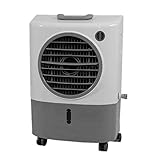
Overview: The Hessaire MC18M is a compact, portable evaporative cooler designed for outdoor or well-ventilated indoor use, covering up to 500 sq. ft. With 1300 CFM airflow, a 4.8-gallon tank, and a patented axial propeller, it prioritizes simple, energy-efficient cooling for patios, workshops, or garages, leveraging Hessaire’s decades of cooling expertise.
What Makes It Stand Out: Its hi-density XeL50 cooling media and axial propeller maximize air intake and throw distance, outperforming basic fans. The lightweight ABS resin construction ensures durability while keeping weight manageable, and the focus on ultra-simple operation (fill, plug, switch) makes it accessible for all users.
Value for Money: At a mid-range price, it justifies cost through robust build quality, 50% lower energy use versus AC, and reliable performance in dry environments. While lacking advanced features like remotes, its no-frills efficiency offers long-term savings for targeted cooling needs.
Strengths and Weaknesses: Strengths: Effective outdoor cooling; energy-efficient; easy maintenance; durable lightweight build; strong airflow projection. Weaknesses: Only two speed settings; no timer or oscillation; louder (53.4 dB) than some competitors; limited indoor usability in humidity.
Bottom Line: A dependable, no-nonsense solution for outdoor or dry indoor spaces up to 500 sq. ft., this cooler excels in simplicity and durability. Best for users prioritizing core cooling performance over smart features.
3. Hessaire MC37M 3100CFM Evaporative Cooler

Overview: The Hessaire MC37M is a high-capacity evaporative cooler engineered for large spaces, delivering 3100 CFM airflow with a substantial 10.3-gallon tank. Featuring a unique 3-panel intake system and continuous water flow for 3-4 hours, it targets garages, workshops, or expansive living areas needing potent, energy-efficient cooling without AC costs.
What Makes It Stand Out: Its standout attribute is the massive 80% larger evaporation surface area compared to smaller models, significantly boosting cooling efficiency and runtime. The polypropylene resin build minimizes noise/vibrations, while the 3-panel system ensures broad, even air distribution across wide zones.
Value for Money: Positioned as a premium investment, it offers exceptional value for large-area cooling through reduced energy consumption (vs. AC) and minimized refills due to the huge tank. The durable construction promises longevity, offsetting the higher initial cost for commercial or heavy residential use.
Strengths and Weaknesses: Strengths: Industry-leading airflow for large spaces; extended runtime; quiet operation; robust build; effortless maintenance. Weaknesses: Bulky and heavy (difficult to move when full); lacks advanced controls like timers; ineffective in humid conditions; higher price point.
Bottom Line: Unmatched for cooling expansive dry-area environments, this powerhouse justifies its cost with superior performance and durability. Essential for workshops or large rooms, though overkill for small spaces.
4. BLACK+DECKER Desktop Air Cooler, Personal Portable Fan with 3-Speeds, Evaporative Air Cooler with 0.5L Water Tank, Air Cooler Fan for Desk, Home, Office, Bedroom, and more, BDMC10, White/Gray

Overview: The BLACK+DECKER BDMC10 is a compact, USB-powered desktop evaporative cooler designed for personal cooling at desks or bedside tables. With a 0.5L tank, 3-speed settings, and micro-USB operation, it delivers targeted relief for individuals in home offices, dorms, or small bedrooms without complex setup.
What Makes It Stand Out: Its ultra-portable design and USB power source (works with laptops or power banks) enable cooling anywhere, while the 8-hour runtime per fill and integrated LED nightlight (with color options) add unique versatility. The water-level indicator simplifies maintenance for a device of this size.
Value for Money: Extremely affordable, it offers excellent value for personal use cases where larger coolers are impractical. The micro-USB cable inclusion and low energy draw make it a budget-friendly, eco-conscious choice compared to mini fans lacking evaporative cooling.
Strengths and Weaknesses: Strengths: Highly portable; USB-powered convenience; LED nightlight feature; quiet for personal use; simple operation. Weaknesses: Very limited cooling radius (1-2 people); tiny tank requires frequent refills; ineffective in humidity; minimal airflow for room cooling.
Bottom Line: A niche but effective solution for personal spot cooling, ideal for desk-bound users in dry climates. Not a room cooler, but perfect for affordable, portable personal relief where AC isn’t feasible.
5. SereneLife Evaporative Air Cooler Tower with Remote, 5L Tank, 4 Ice Boxes, 3 Speeds, Quiet Standing Cooler with Oscillation for Home, Office or Bedroom, Portable & Energy Efficient, 10” x 13” x 39”

Overview: The SereneLife Tower Air Cooler merges sleek vertical design with evaporative cooling, featuring a 5L tank, 4 ice boxes, and 1000 m³/h airflow. Targeting bedrooms, offices, or living rooms, it combines quiet operation (under 60 dB), oscillation, and a dust filter to deliver clean, cool air as an energy-efficient AC alternative.
What Makes It Stand Out: The tower form factor saves floor space while the dual water-filling system (top/bottom ports) and washable dust filter enhance usability and air quality. The remote, 60° oscillation, and 3 modes (including Sleep) provide refined control uncommon in tower coolers at this price.
Value for Money: Priced moderately, it delivers strong value through space-saving design, included ice boxes, and energy efficiency (80W power use). It outperforms basic tower fans with true evaporative cooling and air filtration, making it a cost-effective upgrade for dry climates.
Strengths and Weaknesses: Strengths: Space-efficient tower design; dust filtration; quiet operation; versatile ice box integration; easy tank refills. Weaknesses: Limited to dry environments; oscillation range narrower than box coolers; remote lacks backlight; 5L tank needs daily refills in heavy use.
Bottom Line: An elegant, functional choice for quiet, clean cooling in personal or small rooms, this tower cooler excels as a stylish, efficient AC alternative where humidity is low. Highly recommended for space-conscious buyers.
6. DREO Evaporative Air Cooler, 40” Standing Bladeless Cooling Fan for Bedroom, 80° Oscillating Fans that Blow Cold Air, Swamp Cooler, Removable Water Tank, Ice Pack, 3 Mode 4-Speed, White and Black
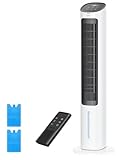
Overview: The DREO Evaporative Air Cooler is a 40-inch bladeless tower fan designed for bedrooms, leveraging evaporative cooling to deliver moisture-rich, cool air. Its whisper-quiet operation and oscillating airflow target deep rest and focused workspaces without disruptive noise.
What Makes It Stand Out: Engineered for silence (35dB), it surpasses typical rainfall noise levels via specialized airflow design. The 80° oscillation and 1,500 RPM motor push air at 22 ft/s, refreshing spaces up to 13,000 cubic feet hourly. Removable water tank, cooling pads, and filters simplify maintenance while ensuring healthy, consistent airflow.
Value for Money: Priced mid-range, it justifies cost through premium quietness and robust airflow for bedrooms. While lacking remote control, its efficient moisture-based cooling offers significant savings over energy-hungry AC units in dry climates, outperforming basic fans.
Strengths and Weaknesses: Strengths: Exceptionally quiet; easy maintenance; effective moisture-based cooling; strong oscillation coverage. Weaknesses: No remote/timer; less effective in high humidity; smaller tank requires frequent refills vs. competitors.
Bottom Line: Ideal for light-sleepers in dry climates seeking quiet, eco-friendly cooling. Recommended for bedrooms under 300 sq. ft., though humid regions may see diminished results.
7. Swamp Cooler,1800 CFM Air Cooler with 5.3 Gal Water Tank,120° Swing,Remote Control,12H Timer,6 Ice Packs,2 Modes,3 Speeds,Evaporative Cooler for Bedroom,Home,Office,Cool Grey

Overview: This 1800 CFM evaporative cooler combines portability with powerful cooling for spaces up to 550 sq. ft. Featuring a 5.3-gallon tank, 6 ice packs, and dual controls, it targets homes, offices, and garages needing rapid, energy-efficient temperature relief.
What Makes It Stand Out: FCC/UL-certified with a copper motor for durability and efficiency, it offers 120° swing coverage and 15+ hours of runtime. Dual control (remote + touch panel), 1–12H timer, and natural wind mode mimic breezes, enhancing customization without complex setup.
Value for Money: Competitive pricing for its certifications, copper motor, and dual controls. Saves energy versus AC and avoids installation costs. The large tank and ice packs justify cost for medium-sized rooms, though humid climates reduce efficacy.
Strengths and Weaknesses: Strengths: Long runtime; versatile controls; copper motor reliability; easy maintenance; effective in dry areas. Weaknesses: Heavy for portability; natural mode lacks precision; ineffective above 50% humidity.
Bottom Line: A top pick for dry-climate households wanting customizable, low-energy cooling in living rooms or offices. Avoid in humid zones; otherwise, excellent value for consistent, quiet operation.
8. Uthfy 41" Swamp Cooler, 4800 CFM Evaporative Air Cooler with 10.6 Gallon Water Tank, Portable Outdoor Air Conditioner with 3 Ice Pack, 110° Oscillation, 3 Speed for Garage, Yard, Commercial Use

Overview: The Uthfy 41" cooler delivers industrial-scale cooling (4800 CFM) for large areas up to 1200 sq. ft., targeting garages, patios, and commercial spaces. Its 10.6-gallon tank, 3 ice packs, and rugged build prioritize durability and high-volume airflow.
What Makes It Stand Out: Massive coverage via 110° oscillation and triple-sided cooling pads, plus auto-fill hose compatibility for uninterrupted outdoor use. Electrostatic-coated metal body resists corrosion, while a copper motor ensures efficiency. Mechanical controls and lockable wheels enhance mobility in rugged settings.
Value for Money: Higher upfront cost is offset by commercial-grade capacity and energy efficiency versus portable ACs. Ideal for large, dry spaces where AC is impractical—saves long-term on energy but overkill for small rooms.
Strengths and Weaknesses: Strengths: Unmatched coverage; auto-fill convenience; robust outdoor build; energy-efficient; strong ice-enhanced cooling. Weaknesses: Bulky design; no remote/timer; manual oscillation adjustment; ineffective in humidity.
Bottom Line: Essential for workshops or patios in arid regions. Not suited for bedrooms—choose for expansive, well-ventilated areas needing heavy-duty cooling.
9. POWIFY 10.6 Gal Evaporative Air Cooler, 3000 CFM Swamp Cooler with 4 Ice Packs, 12H Timer, 3 Speeds & 3 Modes, 35" Portable Fast Cooling Fan for Patio, Bedroom, Garage, Backyard

Overview: The POWIFY cooler merges eco-friendly evaporative tech with versatile operation for patios, bedrooms, and garages. Its 10.6-gallon tank, 4 ice packs, and triple controls (touch + dual remotes) emphasize user convenience and sustained cooling.
What Makes It Stand Out: Unique stackable design saves storage space, while dual remotes (30-ft range) and 120° oscillation offer unmatched flexibility. Copper motor ensures quiet, efficient performance, and eco-cooling restores moisture—ideal for dry indoor air.
Value for Money: Premium pricing justified by space-saving design, dual remotes, and 7-day runtime potential. Outperforms budget coolers in features but competes closely with rivals; best value for those prioritizing storage and control options.
Strengths and Weaknesses: Strengths: Innovative stackable build; dual remotes; long runtime; eco-friendly; quiet copper motor. Weaknesses: Slightly noisy on high speed; oscillation less wide than competitors; humid climates limit cooling.
Bottom Line: Highly recommended for multi-room use where storage is tight. Its thoughtful design and controls make it a standout for eco-conscious buyers in dry areas.
10. Uthfy Swamp Cooler Air Conditioner, Evaporative Air Cooler with 5.3 Gallon Water Tank, 4 Ice Box, Remote, 12H Timer, 120°Oscillation, Portable Cooling Fan with 3 Speeds for Bedroom Home Office

Overview: This lightweight (13 lbs) 3-in-1 cooler humidifies, cools, and fans spaces up to 300 sq. ft., targeting bedrooms and offices. With a 5.3-gallon tank, remote, and whisper-quiet operation (25 dB), it prioritizes portability and serene comfort.
What Makes It Stand Out: Ultra-portable design with 360° casters and built-in handle, plus a copper motor for longevity. Sleep mode and 12H timer enable undisturbed rest, while 4 ice packs boost cooling in dry air—using 90% less energy than AC.
Value for Money: Excellent value for small spaces; low operational cost and no installation fees offset moderate pricing. Lighter and quieter than most, though smaller tank suits compact rooms better than large areas.
Strengths and Weaknesses: Strengths: Extremely lightweight; near-silent operation; energy-efficient; easy mobility; effective humidification. Weaknesses: Limited coverage area; tank refill frequency; weak cooling in humidity.
Bottom Line: Perfect for apartment dwellers or light sleepers in dry climates. A budget-friendly, portable solution for bedrooms—avoid in humid or large spaces.
Understanding Evaporative Cooling Mechanics
The Science Behind the Chill
Evaporative cooling relies on a fundamental physical principle: when water evaporates, it absorbs heat from its surroundings. Inside the cooler, a pump circulates water onto specialized absorbent pads. A powerful fan then draws in hot, dry ambient air through these wet pads. As the air passes through, water evaporates into it, directly absorbing heat energy from the air stream. This process lowers the air temperature dramatically before the cooled, moisture-enriched air is pushed into your living space. It’s pure physics working in your favor.
Humidity: The Critical Factor
This cooling method is exceptionally effective only when the relative humidity of the incoming air is low – typically below 60%, and ideally much lower. In high humidity, the air is already saturated with moisture, leaving little capacity for additional evaporation to occur, drastically reducing the cooling effect. This is why evaporative coolers are the undisputed champions for desert climates, mountain regions, and other arid zones, while being largely ineffective in humid coastal or tropical areas. Knowing your local average humidity is paramount before considering this technology.
Energy Efficiency Compared to Traditional AC
The energy savings are where evaporative coolers truly shine. They consume significantly less electricity because they primarily run a water pump and a fan, avoiding the energy-intensive compressor found in standard air conditioners. Operating costs can be a fraction – often 1/4 to 1/2 – of a similarly sized refrigerant-based AC unit. This translates to noticeably lower utility bills during peak cooling season, making them an economically and environmentally sound choice for dry regions.
Why Dry Climates Are Ideal Territory
Maximizing the Cooling Potential
In low-humidity environments, the evaporation process within the cooler happens rapidly and efficiently. The drier the incoming air, the more water can evaporate, and the greater the temperature drop achieved (often 15-40°F lower than the outside temperature). This direct relationship means the hottest, driest days often yield the most significant cooling performance from your unit, perfectly matching demand with capability.
Avoiding the Humidity Trap
Unlike in humid areas where adding moisture worsens discomfort, the slight increase in indoor humidity provided by an evaporative cooler in a dry climate is usually perceived as pleasant and refreshing. It counteracts the extreme dryness that can cause skin irritation, sore throats, and static electricity, creating a more natural and comfortable indoor environment without ever feeling “muggy.” The air feels clean and moving, not stagnant.
Natural Ventilation Synergy
Effective evaporative cooling requires some level of air exchange – keeping windows or vents partially open to allow the cooled, slightly humidified air to circulate and push warmer indoor air out. Dry climates naturally support this need; opening vents doesn’t invite uncomfortable humidity or excessive heat gain like it might in more humid regions. This constant flow of fresh, filtered air is a significant health and comfort benefit over the sealed environment of conventional AC.
Decoding Key Features for Smart Selection
Sizing: Matching Capacity to Your Space
Choosing the right cooling capacity, measured in cubic feet per minute (CFM), is non-negotiable for effectiveness. An undersized unit won’t provide adequate cooling, while an oversized one can make the space feel damp and uncomfortable. Calculate the volume of the area you need to cool (length x width x height) and multiply by the desired air changes per hour (typically 20-40 for comfort cooling). This CFM requirement is the baseline for selecting a unit. Always factor in ceiling height and room layout.
Water Reservoir Capacity and Refill Needs
Consider how often you’re willing to manually refill the water tank. Larger reservoirs mean less frequent refills, crucial for unattended operation or larger spaces, but they also increase the unit’s footprint and weight. Models with continuous drain or direct hose hook-up options offer the ultimate convenience, allowing the unit to run indefinitely as long as water is supplied, ideal for whole-house or primary cooling applications.
Fan Speed Options and Control Systems
Multiple fan speeds provide flexibility to adjust cooling intensity and noise levels based on the outside temperature and your comfort needs. Modern units often feature digital thermostats, timers, remote controls, and even smart home integration, allowing for precise temperature management and scheduling. Simpler models with basic dials are more affordable but offer less convenience. Prioritize controls that match your desired level of automation.
Installation Types and Practical Setup
Portable Units: Flexibility for Targeted Cooling
Portable evaporative coolers are self-contained units on wheels, requiring no permanent installation. They’re ideal for cooling single rooms, garages, workshops, or patios. Simply roll them into position, fill the water tank, plug them in, and direct the airflow. Their main limitation is the need for a nearby window or vent to exhaust warm air and maintain airflow, and they typically cool smaller areas than fixed systems. Perfect for renters or supplemental cooling.
Window-Mounted Models: Semi-Permanent Room Solutions
These units install directly into a window frame, similar to a traditional window AC unit, but vent warm air out the back (requiring an open window or vent elsewhere for air exchange). They often offer higher cooling capacities than portables for a single room and can be more stable. Installation is generally simpler than central systems but requires a suitable window. They provide dedicated cooling for specific rooms without taking up valuable floor space.
Central Evaporative Coolers: Whole-Home Comfort
For comprehensive cooling throughout a residence, central (or “whole-house”) evaporative coolers are mounted on the roof or next to the house. They connect to the existing ductwork (often requiring modification) and cool air is distributed to multiple rooms via vents. These systems offer the highest cooling capacity and the most integrated solution but involve professional installation, higher upfront costs, and require careful duct design to ensure even cooling. They represent the pinnacle of evaporative comfort for dry climate homes.
Essential Maintenance for Peak Performance
Pad Replacement: The Heart of the System
The evaporative media pads are consumable components and the core of the cooling process. Over time, mineral deposits from water and airborne dust clog the pads, drastically reducing efficiency and cooling power. Most pads need replacement every 1-3 cooling seasons, depending on water hardness and usage. Some pads are designed for seasonal cleaning, but eventually, replacement is necessary. Keeping spares on hand ensures you’re never caught with a clogged, ineffective unit.
Water System Cleaning: Preventing Scale and Odors
Stagnant water is a breeding ground for algae and mineral scale buildup inside the reservoir, pump, and water distribution channels. Regular cleaning – typically weekly during heavy use – with a mild vinegar solution or manufacturer-recommended cleaner prevents odors, maintains water flow, and protects the pump. Draining the unit completely at the end of the season and cleaning thoroughly prevents residue from hardening, making startup next year much easier.
Fan and Motor Care: Ensuring Quiet Operation
Dust accumulation on the fan blades and motor housing reduces airflow efficiency and can cause noise or overheating. Periodically wiping down the fan blades and checking the motor area for obstructions is important. Most motors are sealed and require no lubrication, but listening for unusual noises can signal potential issues. Ensuring the unit is level during operation prevents unnecessary strain on the fan assembly.
Operational Tips for Optimal Comfort
Strategic Ventilation Management
Achieving the perfect balance of cooled air intake and warm air exhaust is key. Experiment with opening windows or vents on the leeward (downwind) side of the house, typically 1-2 inches for every 1,000 CFM of cooler output. This creates positive pressure, pushing cooled air through the house and allowing warmer air to escape. Avoid opening windows on the windward side, as this can pull hot air back inside. Adjust based on wind direction and desired airflow.
Timing Your Cooling: Leveraging Natural Cycles
Evaporative coolers work best when the outside air is hottest and driest – typically mid-afternoon. Unlike AC, which cools the indoor air mass, evaporative coolers cool the air as it enters. Run the unit during peak heat for maximum temperature drop. You can often turn it off earlier in the evening as temperatures drop, relying on the residual coolness and natural ventilation. Using timers automates this strategy perfectly.
Water Quality Considerations
Hard water significantly accelerates mineral scale buildup on pads and in the reservoir. Using softened water, reverse osmosis water, or adding a water treatment additive specifically designed for evaporative coolers can extend pad life and reduce maintenance frequency. While tap water works, investing in better water quality pays off in less frequent cleanings and pad replacements, especially in areas with very hard water.
Evaluating Cost and Long-Term Value
Upfront Investment Spectrum
Prices vary widely based on type, size, and features. Basic portable units offer the lowest entry point, suitable for single-room use. Window-mounted models sit in the mid-range. Central evaporative cooler systems represent the highest initial investment due to the unit cost and professional installation, but they deliver whole-house comfort. Compare the total cost of ownership, not just the sticker price.
Calculating True Operating Savings
The significant reduction in electricity consumption compared to traditional AC is the major long-term financial benefit. Calculate potential savings by comparing the wattage of a suitable evaporative cooler model to the wattage of an equivalently sized AC unit, multiplied by your local electricity rate and estimated hours of use per season. These savings often offset the higher initial cost of a central evaporative system over several years in a primary dry climate residence.
Durability and Lifespan Factors
Well-maintained evaporative coolers, especially central systems built with corrosion-resistant materials (like galvanized steel or fiberglass), can last 10-15 years or more. Portable units may have shorter lifespans (5-10 years) due to less robust construction and mobility stresses. Investing in a unit with quality components, particularly the pump and fan motor, and committing to regular maintenance are the best predictors of longevity and sustained performance.
Environmental and Health Benefits
Reduced Carbon Footprint
The substantially lower energy consumption directly translates to reduced greenhouse gas emissions from power plants, especially when compared to compressor-based air conditioning. Choosing evaporative cooling is a tangible step towards reducing your household’s environmental impact during peak summer demand periods, aligning with sustainability goals in regions where renewable energy might also be prevalent.
Healthier Indoor Air Quality
Unlike sealed AC systems that recirculate the same indoor air, evaporative coolers constantly introduce filtered fresh air from outside. The pads act as a basic air filter, trapping dust, pollen, and other larger airborne particles. This continuous exchange significantly improves indoor air quality, reducing stuffiness and the buildup of indoor pollutants, which is particularly beneficial for allergy sufferers in dry, dusty environments.
Avoiding Overly Dry Air
Traditional air conditioners notoriously dry out indoor air, leading to irritated sinuses, dry skin, and respiratory discomfort. Evaporative coolers add beneficial moisture to the air, counteracting the extreme dryness common in arid climates. This results in a more natural humidity level that feels comfortable and is gentler on your body, mimicking the pleasant feel of a desert evening breeze.
Frequently Asked Questions
How low does the humidity need to be for evaporative coolers to work well?
Evaporative coolers perform best when the relative humidity is below 60%, with optimal performance typically seen under 40-50%. The drier the air, the greater the potential temperature drop (wet-bulb depression). They become significantly less effective as humidity rises above 70%.
Can I use an evaporative cooler in a room with no windows?
Effective operation requires a path for warm indoor air to exhaust. You need some form of controlled ventilation – typically opening a door slightly or installing a dedicated exhaust vent – to allow the cooled air to circulate and push warmer air out. Running it in a completely sealed room defeats the system.
Do evaporative coolers add a lot of moisture to my house?
In very dry climates, the added moisture is usually welcome and barely noticeable, bringing indoor humidity to a comfortable 40-60% range. It will feel refreshing, not damp. However, in already humid conditions (which they shouldn’t be used in), or if oversized for the space with poor ventilation, excess moisture can become an issue.
How much electricity do evaporative coolers really save?
They typically consume 1/4 to 1/2 the electricity of a comparable-sized traditional air conditioner. A large portable unit might use 100-250 watts, while a central system might use 700-1500 watts, compared to 2000-5000+ watts for central AC. This translates to substantial savings on monthly utility bills during cooling season.
How often do I need to clean or replace the pads?
Pad replacement frequency depends heavily on water hardness and usage. In areas with hard water, pads may need replacing every season or even mid-season. With soft water and regular maintenance, they might last 2-3 seasons. Cleaning pads weekly during operation helps extend their life. Reduced cooling performance is the main sign pads need attention.
Are evaporative coolers noisy?
They produce fan noise, similar to a large box fan or window AC unit on low/medium settings. Noise levels vary by model and fan speed; higher CFM units or higher speeds are louder. Look for decibel (dB) ratings if noise is a major concern, and place the unit away from immediate seating/sleeping areas.
Can I leave an evaporative cooler running 24/7?
Portable units with manual fill tanks require regular refilling, making continuous unattended operation impractical. Models with continuous drain or direct hose hook-up can run indefinitely as long as water is supplied, which is common for central systems designed as primary cooling. Always follow the manufacturer’s guidelines regarding continuous operation.
Do evaporative coolers work well in garages or workshops?
They are often excellent for these spaces, especially in dry climates. The open nature of many garages aids ventilation, and the constant fresh air helps remove fumes or dust. Ensure the unit is appropriately sized for the space and that there’s adequate airflow (open doors/windows) for exhaust.
Why does my evaporative cooler sometimes have an odor?
Odors usually stem from stagnant water allowing algae or bacteria growth, or from mineral deposits breaking down. Prevent this by draining and cleaning the reservoir regularly (weekly during use), using water treatments, and ensuring the unit dries out completely at the end of the season. Replacing old pads also eliminates trapped odors.
Can I use an evaporative cooler during monsoon season in the desert?
Performance will be severely diminished during the high-humidity periods of monsoon season (when humidity regularly exceeds 60-70%). You’ll get minimal cooling, and the unit may add unwanted moisture. It’s generally better to switch to traditional air conditioning during these brief, humid periods if available.
See Also
- How to Master Cooling Efficiency with Evaporative Coolers and Portable AC Combos in Dry Climates
- The Ultimate Guide to Evaporative Coolers: How They Work and Why They’re Perfect for Dry Climates in 2026
- The 10 Most Revolutionary Evaporative Coolers for Dry Climates of 2026
- 10 Game-Changing Evaporative Coolers for Dry Climates in 2026
- Stop High AC Costs with the 10 Best Home Evaporative Coolers This Year