Table of Contents
Staring at your electricity bill after a sweltering summer month can feel like a gut punch. Those soaring numbers, driven largely by cranking up the air conditioning, aren’t just inconvenient – they’re a significant strain on your budget and the environment. But what if you could stay cool without sacrificing financial peace of mind? The good news is, you absolutely can, and it starts with understanding a powerful tool designed specifically for this challenge: the ENERGY STAR certification for window air conditioners. This isn’t just another marketing buzzword; it’s a rigorous government-backed standard that cuts through the noise, identifying units that deliver real cooling comfort while using significantly less energy.
Choosing the right window AC unit is one of the most impactful decisions you can make for your home’s energy efficiency. While it might seem like a simple box in the window, the differences between models, especially those bearing the ENERGY STAR label, translate directly into dollars saved and reduced environmental impact. Forget fleeting trends or vague promises – ENERGY STAR provides a clear, measurable benchmark. By focusing on these certified units, you’re not just buying cooling power; you’re investing in smarter energy use, lower operational costs over the unit’s lifetime, and contributing to a cleaner energy grid. Let’s dive deep into why ENERGY STAR matters and how to select the perfect certified unit for your specific needs, ensuring every dollar spent on cooling works harder for you.
Top 10 Energy Star Window Air Conditioners
Detailed Product Reviews
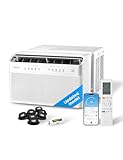
1. Midea 10,000 BTU U Shaped Smart Inverter Window Air Conditioner - Cools 450 Sq Ft, Ultra Quiet with Open Window Flexibility - Alexa/Google Assistant Compatible - 35% Energy Savings, Remote (Updated)
Overview:
This ENERGY STAR-certified inverter AC cools spaces up to 450 sq. ft. with ultra-quiet operation (32 dBA) and innovative U-shaped design. It integrates smart controls, significant energy savings, and flexible window compatibility for modern cooling needs.
What Makes It Stand Out:
The U-shape allows windows to remain partially open for fresh air and unobstructed views while operating—unlike traditional units. Its DC inverter technology enables 35%+ energy savings, Wi-Fi/app/voice control (Alexa/Google), and anti-theft window locking. The 10x quieter operation and R32 refrigerant further distinguish it.
Value for Money:
Priced higher than basic units, its long-term savings justify the cost: reduced energy bills (35%+ efficiency), elimination of separate smart hubs, and durability from robust installation. Competitors rarely offer this blend of quietness, smart features, and open-window flexibility at this performance tier.
Strengths and Weaknesses:
Strengths: Exceptional quietness; seamless smart integration; energy-efficient; theft-resistant window locking; easy installation bracket. Weaknesses: Premium price; requires compatible app/signal; limited to specific window sizes (22"-36" width).
Bottom Line:
Ideal for tech-savvy users prioritizing quiet, efficient cooling in medium rooms. The smart features and open-window design offer unmatched convenience, making it a top-tier investment despite the higher upfront cost.
2. Midea 8,000 BTU U Shaped Smart Inverter Window Air Conditioner - Cools 350 Sq Ft, Ultra Quiet with Open Window Flexibility - Alexa/Google Assistant Compatible - 37% Energy Savings, Remote (Updated)
Overview:
Designed for spaces up to 350 sq. ft., this ENERGY STAR-certified inverter AC delivers whisper-quiet cooling (32 dBA) via its U-shaped frame. It emphasizes energy efficiency, smart connectivity, and flexible window use in compact installations.
What Makes It Stand Out:
Its U-design uniquely permits window opening for ventilation and views without uninstalling the unit. Achieving 37%+ energy savings through DC inverter tech, it also offers app/voice control (Alexa/Google), anti-theft locking, and industry-leading quiet operation—features rare in sub-10K BTU models.
Value for Money:
While costlier than non-inverter ACs, the 37% energy reduction and smart capabilities ensure long-term savings. It outperforms budget units in noise reduction and convenience, especially for small apartments where window access and silence are critical.
Strengths and Weaknesses:
Strengths: Near-silent operation; superior energy efficiency; flexible window use; intuitive app control; secure anti-theft mechanism. Weaknesses: Higher initial cost; app dependency; narrow window height requirement (13.75" min).
Bottom Line:
A premier choice for small to medium rooms where quietness, smart features, and window flexibility matter most. The efficiency gains offset the price premium, making it highly recommended for eco-conscious buyers.
3. Amazon Basics 5000-BTU Small Window Air Conditioner, Up to 150 Sqf, Window AC Units with Cool and Fan Functions, Washable Filter, Adjustable Window Kit, Intuitive Mechanical Controls, White

Overview:
A no-frills, budget-friendly AC for rooms up to 150 sq. ft., featuring mechanical controls, basic cooling/fan modes, and straightforward installation. Ideal for renters or minimal cooling needs in compact spaces like dorms or offices.
What Makes It Stand Out:
Its simplicity stands out: intuitive rotary dials eliminate app dependencies, while the washable filter and adjustable side panels ensure hassle-free maintenance. The 56 dB noise level is reasonable for the price, and it fits standard windows with minimal tools.
Value for Money:
Exceptional affordability for essential cooling. Though lacking smart features, it delivers reliable performance for small spaces at a fraction of premium models’ cost. Perfect for temporary use or buyers prioritizing function over tech.
Strengths and Weaknesses:
Strengths: Very low cost; easy mechanical controls; washable filter; simple installation; compact size. Weaknesses: Limited to tiny rooms; no smart features; higher noise (56 dB) vs. inverters; basic thermostat precision.
Bottom Line:
The go-to solution for economical, no-nonsense cooling in very small spaces. Skip if you need quietness or smart controls, but excellent for budget-focused buyers with minimal requirements.
4. Amazon Basics 6000-BTU Window Air Conditioner, Up to 250 Sqf, Window AC Units with Cool and Fan Functions, Washable Filter, Adjustable Window Kit, Digital Temperature Display, Remote Control, White

Overview:
Targeting rooms up to 250 sq. ft., this model upgrades the Basics line with a remote, digital display, and slightly higher capacity. It retains core simplicity while adding minor conveniences for small-to-medium bedrooms or offices.
What Makes It Stand Out:
The inclusion of a remote and digital thermostat elevates it above purely mechanical budget units. Combined with a washable filter, dual-speed cooling, and standard 56 dB operation, it balances affordability with user-friendly tweaks for everyday comfort.
Value for Money:
Offers the best value in Amazon’s Basics range: more cooling power than the 5K BTU model, remote convenience, and identical low maintenance costs. Beats pricier brands for basic needs but can’t match inverter efficiency or quietness.
Strengths and Weaknesses:
Strengths: Affordable; remote control; digital display; washable filter; fits standard windows. Weaknesses: Still noisy (56 dB); no smart features; limited energy efficiency; basic build quality.
Bottom Line:
A sensible upgrade from the 5K BTU model for medium rooms, ideal if you want minor luxuries like a remote without smart-tech complexity. Best for cost-conscious buyers needing reliable, no-fuss cooling.
5. Midea 12,000 BTU U Shaped Smart Inverter Window Air Conditioner - Cools 550 Sq Ft, Ultra Quiet with Open Window Flexibility - Alexa/Google Assistant Compatible - 35% Energy Savings, Remote (Updated)
Overview:
This high-capacity (550 sq. ft.) inverter AC combines Midea’s signature U-shape design with robust 12K BTU cooling. It delivers whisper-quiet operation (32 dBA), 35%+ energy savings, and smart features for larger living areas or open-plan spaces.
What Makes It Stand Out:
Engineered for larger rooms without sacrificing its unique open-window flexibility or ENERGY STAR efficiency. The U-frame maintains views and airflow, while app/voice control, anti-theft locking, and industry-leading quietness set it apart from conventional high-BTU units.
Value for Money:
Premium-priced but justified by long-term energy savings and durability. Outperforms similarly sized non-inverter ACs in noise reduction and efficiency, making it cost-effective for frequent use in spacious areas where comfort is paramount.
Strengths and Weaknesses:
Strengths: Powerful yet silent cooling; exceptional energy efficiency; smart home integration; flexible window access; secure installation. Weaknesses: Highest price point; app reliance; requires precise window dimensions (22"-36" width).
Bottom Line:
The top recommendation for large rooms demanding quiet, efficient, and flexible cooling. Its premium features deliver tangible benefits that offset the cost, especially for energy-conscious households.
6. LG 5000 BTU Window Air Conditioner with Remote, Easy Mechanical Control Ultra-Quiet Compact-size Cools 150 Sq.Ft. for Small Room, Washable Filter AC Unit Easy Installation White LW5025R

Overview:
This compact LG unit targets small spaces up to 150 sq. ft., like dorms or tiny bedrooms. It delivers basic cooling with mechanical controls, a remote, and a focus on straightforward installation and maintenance for budget-conscious buyers.
What Makes It Stand Out:
Its ultra-compact size and fixed chassis simplify installation in narrow windows (21"-35" wide), while the slide-out washable filter ensures low maintenance. The mechanical control panel paired with a full remote offers reliable, no-frills operation without smartphone dependencies, appealing to users seeking simplicity.
Value for Money:
Priced accessibly, it excels as an entry-level solution for very small rooms where larger units would be overkill. While lacking smart features or high energy savings of inverter models, its durability, included EZ Mount kit, and R32 refrigerant justify the cost for minimal cooling needs.
Strengths and Weaknesses:
Strengths: Effortless setup, genuinely quiet operation for its class, practical washable filter, and reliable mechanical controls. Weaknesses: Limited to very small spaces (150 sq. ft.), no energy-saving inverter tech, and basic single-speed compressor increases long-term running costs.
Bottom Line:
Ideal for cooling cramped spaces affordably and reliably; skip if you need smart features, larger coverage, or maximum energy efficiency. A solid no-nonsense choice for minimal cooling demands.
7. Hisense 6,000 BTU Smart Inverter Window Air Conditioner, 3 modes (Cooling, Fan, Dehumidifier), Easy Installation,Ultra Quiet, 24.5% more Energy Saving, 2 Years Warranty

Overview:
Hisense’s 6,000 BTU inverter AC cools rooms up to 250 sq. ft. with a focus on energy efficiency and quiet comfort. It combines inverter technology, three operational modes, and user-friendly setup for cost-conscious consumers in standard-sized bedrooms.
What Makes It Stand Out:
The inverter compressor drives a standout 24.5% energy reduction versus conventional units, validated by ENERGY STAR certification. This translates to quieter operation (no compressor cycling) and precise temperature control, while the dehumidifier mode adds versatility beyond basic cooling.
Value for Money:
Competitively priced for an inverter model, it offers long-term savings through lower electricity bills. The 2-year warranty and effortless installation kit enhance its value, outperforming non-inverter rivals in efficiency despite a slightly higher upfront cost.
Strengths and Weaknesses:
Strengths: Significant energy savings, whisper-quiet performance, ENERGY STAR certified, simple installation, and versatile 3-mode operation. Weaknesses: No smart/app control, limited to 250 sq. ft., and lacks advanced features like voice compatibility.
Bottom Line:
A top pick for efficient, quiet cooling in medium rooms; choose this over basic models if prioritizing long-term energy savings and reliability without smart tech.
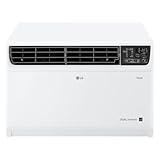
8. LG 14,000 BTU DUAL Inverter Smart Window Air Conditioner, 115V, Cools 800 Sq. Ft. for Bedroom, Living Room, Apartment, Quiet Operation, ENERGY STAR®, works with LG ThinQ, Amazon Alexa and Hey Google
Overview:
LG’s premium 14,000 BTU DUAL Inverter AC tackles large spaces up to 800 sq. ft. (e.g., living rooms) with smart connectivity, exceptional quietness, and high-efficiency cooling, targeting tech-savvy users needing robust climate control.
What Makes It Stand Out:
DUAL Inverter technology enables 35%+ energy savings over ENERGY STAR standards and ultra-quiet operation (as low as 44dB). Seamless integration with LG ThinQ, Alexa, and Google Assistant allows remote scheduling and voice control, setting it apart from competitors in its class.
Value for Money:
Priced higher than standard units, it justifies cost through massive energy savings in large spaces, smart convenience, and superior build quality. The R32 refrigerant and quiet operation add long-term value, though budget buyers may find it steep.
Strengths and Weaknesses:
Strengths: Exceptional cooling power for large areas, industry-leading quietness, significant energy efficiency, comprehensive smart-home integration, and washable filter. Weaknesses: High initial cost, complex for non-tech users, and bulky size may challenge window installations.
Bottom Line:
Worth the investment for large-room comfort with smart features and efficiency; opt for this if space, noise sensitivity, and remote control are critical priorities.
9. 8,000 BTU Window Air Conditioner,Cool Rooms Up to 350 Sq.Ft.,Smart Window AC Unit with Smartphone App or Remote Control,3 Fan Mode,Sleep&ECO Mode,Washable Filter,for Bedroom Apartment Office,New R32

Overview:
This mid-sized 8,000 BTU smart AC cools rooms up to 350 sq. ft. with app control, multiple modes, and eco-friendly R32 refrigerant, balancing tech convenience and efficiency for apartments or offices.
What Makes It Stand Out:
Dual control via smartphone app and remote offers unmatched flexibility, while ECO and Sleep modes optimize energy use. The R32 refrigerant delivers better cooling efficiency and a lower environmental impact than older alternatives, a key differentiator at this price point.
Value for Money:
Offers smart features typically found in pricier models, making it a strong mid-range value. The ECO mode reduces running costs, and the washable filter minimizes maintenance expenses, though it lacks the energy savings of true inverter tech.
Strengths and Weaknesses:
Strengths: Affordable smart control, effective ECO/Sleep modes, R32 refrigerant benefits, easy filter maintenance, and suitable for medium rooms. Weaknesses: Non-inverter compressor limits energy savings, app reliability may vary, and noise levels aren’t class-leading.
Bottom Line:
An excellent budget-smart option for medium rooms; ideal if app control matters more than maximum efficiency, but consider inverter models for lower bills.
10. Frigidaire 6,000 BTU Window Air Conditioner with Remote Control, Cools Up to 250 Sq. Ft., Quiet Operation, Eco Mode, 3 Fan Speeds, Auto Restart, White

Overview:
Frigidaire’s 6,000 BTU unit cools spaces up to 250 sq. ft. with emphasis on quiet operation (52 dBA), user-friendly features like Eco Mode, and reliable performance for bedrooms or small offices.
What Makes It Stand Out:
The 6-way directional airflow ensures even cooling distribution, while Auto Restart after power outages and Clean Filter alerts enhance convenience. Eco Mode intelligently adjusts cooling to save energy without manual input, a subtle but practical advantage.
Value for Money:
Priced fairly for its features, it delivers solid value with thoughtful touches like the 24-hour timer and Dry Mode (dehumidification). It’s more feature-rich than basic models but avoids the premium cost of smart/inverter units, hitting a sweet spot for simplicity seekers.
Strengths and Weaknesses:
Strengths: Very quiet (52 dBA), intuitive Eco/Sleep modes, useful Auto Restart, excellent airflow control, and helpful maintenance alerts. Weaknesses: No smart capabilities, non-inverter compressor, and R290 refrigerant (less eco-friendly than R32).
Bottom Line:
A dependable, quiet workhorse for small rooms; choose this over budget models for superior comfort features and reliability, but skip if you need smart tech or maximum efficiency.
Understanding the ENERGY STAR Advantage for Window ACs
What ENERGY STAR Certification Actually Means
ENERGY STAR isn’t a casual endorsement; it’s a stringent performance standard set by the U.S. Environmental Protection Agency (EPA). For a window air conditioner to earn this label, it must undergo rigorous independent testing and meet significantly higher energy efficiency requirements than the federal minimum standard. This means certified units use less electricity to deliver the same amount of cooling, directly translating to lower energy consumption and reduced greenhouse gas emissions. It’s a clear signal that the manufacturer has prioritized efficiency without compromising on core cooling performance.
How ENERGY STAR Saves You Real Money
The primary benefit is straightforward: lower electricity bills. ENERGY STAR certified window air conditioners typically use about 8% less energy than conventional models meeting the federal minimum efficiency standard. While this percentage might seem modest, it compounds significantly over the lifespan of the unit, especially during peak cooling seasons. Consider the hours your AC runs on hot days – that incremental savings adds up to tangible dollars returned to your wallet year after year, often offsetting the potential slight premium of the efficient model within a few cooling seasons.
The Environmental Impact of Your Cooling Choice
Your air conditioner’s energy consumption directly correlates with power plant emissions. By choosing an ENERGY STAR certified model, you’re actively reducing the demand for fossil fuel-based electricity generation. This translates to fewer harmful pollutants like carbon dioxide, sulfur dioxide, and nitrogen oxides entering the atmosphere. Opting for efficiency isn’t just a personal financial win; it’s a concrete step towards cleaner air and a more stable climate, making your summer comfort more sustainable.
Key Features to Prioritize in ENERGY STAR Certified Units
Decoding Cooling Capacity (BTUs) Correctly
Choosing the right size, measured in British Thermal Units (BTUs), is paramount for efficiency and comfort. An undersized unit will run constantly, struggling to cool the space and wasting energy. An oversized unit will cycle on and off too frequently, failing to properly dehumidify the air and also consuming excess energy. ENERGY STAR units are available across various BTU ranges; carefully calculate your room’s square footage, ceiling height, sun exposure, and occupancy to select the precisely sized ENERGY STAR model. The certification ensures that whatever size you need, the most efficient option is readily identifiable.
The Critical Role of SEER Ratings
Seasonal Energy Efficiency Ratio (SEER) is the gold standard metric for measuring an air conditioner’s cooling efficiency over a typical season. A higher SEER rating indicates greater efficiency. ENERGY STAR certified window units must meet or exceed a specific minimum SEER threshold, which is significantly higher than the federal baseline. Always compare the SEER ratings of ENERGY STAR models within your required BTU range – a higher SEER within the certified group means even greater potential savings, though it may come with a slightly higher initial cost.
Advanced Features That Boost Efficiency
Beyond the core SEER rating, look for ENERGY STAR models incorporating smart features designed to minimize energy use. Programmable timers allow you to set the unit to turn on just before you arrive home or turn off when you leave, avoiding unnecessary runtime. Energy-saving modes (often labeled “Eco” or similar) automatically adjust fan speed and temperature settings to maintain comfort with less power. Some certified units also feature sleep modes that gradually raise the temperature overnight for comfort and savings. These intelligent functions work synergistically with the high SEER rating to maximize your energy reduction.
The Importance of Proper Installation for Peak Efficiency
Even the most efficient ENERGY STAR unit cannot perform optimally if installed incorrectly. A poor seal around the unit allows hot, humid outdoor air to infiltrate, forcing the AC to work much harder. Ensure the installation kit is complete and used correctly, creating an airtight barrier between the indoor and outdoor environments. Proper positioning (away from direct sun if possible, with unrestricted airflow on both sides) is also crucial. Many efficiency gains promised by the ENERGY STAR label are only fully realized with a meticulous, professional-grade installation.
Maximizing Savings and Performance Beyond the Purchase
Strategic Placement and Room Preparation
Where you install your window AC significantly impacts its workload. Avoid placing it on the sunniest side of your house if feasible, as direct solar radiation heats the unit itself. Close curtains, blinds, or shades on windows receiving direct sunlight during the hottest parts of the day to reduce heat gain inside the room. Ensure furniture or objects aren’t blocking the airflow from the unit’s vents indoors or the condenser exhaust outdoors. Pre-cooling your room by running a fan before turning on the AC can also lessen the initial cooling load.
Essential Maintenance for Sustained Efficiency
An ENERGY STAR unit’s efficiency degrades over time without proper care. Regularly clean or replace the air filter (typically monthly during heavy use); a clogged filter restricts airflow, making the compressor work harder and consume more energy. Gently vacuum the exterior condenser coils and the interior evaporator coils (if accessible per the manual) to remove dust and debris buildup, which acts as insulation against heat exchange. Check the drain channel to ensure it’s clear, preventing water leaks and potential mold. Consistent maintenance preserves the unit’s peak efficiency and extends its lifespan.
Smart Usage Habits for Lower Bills
Complement your efficient unit with smart operational habits. Set the thermostat to the highest comfortable temperature (typically 78°F or higher when you’re home). Use ceiling fans in conjunction with the AC; they create a wind-chill effect, allowing you to set the thermostat a few degrees higher while feeling just as cool. Avoid drastic temperature changes; lowering the setting far below your desired temperature doesn’t cool the room faster but does waste significant energy. Turn the unit off completely when you leave the room or house for extended periods.
Understanding the True Cost: Purchase Price vs. Lifetime Value
While an ENERGY STAR certified window AC might have a slightly higher upfront cost than a non-certified model, focusing solely on the sticker price is short-sighted. Calculate the lifetime operating cost, which includes the purchase price plus the estimated cost of electricity over the unit’s expected lifespan (often 8-10 years). The energy savings from the efficient model usually far outweigh the initial price difference, resulting in substantial net savings. Look for utility company rebates, which are often specifically available for ENERGY STAR appliances, further reducing the effective purchase price.
Evaluating Long-Term Value and Reliability
Warranty Coverage as a Quality Indicator
A comprehensive warranty often reflects the manufacturer’s confidence in the unit’s durability and the quality of components used, which is crucial for long-term efficiency. Carefully compare the length and scope of warranties on the compressor (the most expensive part), the sealed refrigerant system, and parts/labor coverage. ENERGY STAR certification focuses on efficiency, but a solid warranty protects your investment in that efficiency over time. Don’t hesitate to ask about typical serviceability and parts availability.
Noise Levels: Comfort Beyond Efficiency
While ENERGY STAR certification centers on energy use, noise level is a critical factor for home comfort, especially in bedrooms or quiet living spaces. Look for decibel (dB) ratings in the product specifications; lower numbers indicate quieter operation. ENERGY STAR models often incorporate design features that reduce noise compared to older, less efficient units, but there can still be variation. Read user reviews specifically mentioning noise levels if possible, as perceived quietness can be subjective.
Durability and Build Quality Considerations
Efficiency over the long haul depends on the unit maintaining its performance. Consider the perceived build quality – sturdier cabinets and components often indicate better longevity. Features like corrosion-resistant coatings on coils (especially important in coastal areas) can significantly extend the unit’s functional life. While ENERGY STAR ensures initial efficiency, a well-built unit will sustain that efficiency longer through multiple seasons of use.
Considering Smart Connectivity Features
The integration of smart home technology is increasingly common. ENERGY STAR certified models may offer Wi-Fi connectivity, allowing control via smartphone apps, voice assistants, or integration into broader smart home energy management systems. While the connectivity itself uses minimal power, the real value lies in enhanced scheduling precision, remote adjustments, and energy usage monitoring – features that can help you optimize operation and squeeze out even more savings from your efficient unit.
Making Your Final ENERGY STAR Selection
Comparing Models Within Your BTU Range
Once you’ve determined the correct cooling capacity for your space, focus exclusively on ENERGY STAR certified models within that BTU range. Create a comparison chart listing key specs: exact BTU, SEER rating, noise level (dB), key features (programmable timer, energy saver mode, remote control, smart features), dimensions, and warranty details. This side-by-side comparison eliminates non-certified options and highlights the most efficient choices for your specific room size.
Reading and Interpreting the EnergyGuide Label
Every new window AC unit comes with a bright yellow EnergyGuide label. This is your cheat sheet for comparing operating costs. The label prominently displays the estimated yearly electricity cost based on national average rates and typical usage. Crucially, it also shows where the model’s efficiency ranks compared to other models in the same category – ENERGY STAR certified units will be at the very left (most efficient) end of this spectrum. Use this label as a primary tool for comparing the real-world cost implications between certified models.
Verifying Genuine ENERGY STAR Certification
Always confirm the unit carries the official ENERGY STAR label. You can verify certification by searching the EPA’s online ENERGY STAR Product Database using the brand name and model number. Be wary of vague claims like “energy efficient” or “meets energy standards” – only the official blue ENERGY STAR label guarantees it meets the EPA’s strict criteria. This verification step ensures you’re truly getting the proven efficiency benefits.
Factoring in Utility Rebates and Incentives
Don’t miss out on free money! Many local utility companies and some state or local governments offer rebates for purchasing ENERGY STAR certified appliances, including window air conditioners. Check your utility provider’s website or call their customer service line before purchasing. These rebates can significantly reduce the effective purchase price, shortening the payback period for the efficient model and boosting your immediate savings.
Frequently Asked Questions
What exactly does the ENERGY STAR label guarantee for a window air conditioner?
The ENERGY STAR label guarantees that the window air conditioner meets strict energy efficiency criteria set by the U.S. Environmental Protection Agency, typically using at least 8% less energy than standard models meeting the federal minimum efficiency requirement, resulting in lower operating costs and reduced environmental impact.
How much money can I realistically save with an ENERGY STAR window AC compared to a non-certified model?
Savings vary based on usage, local electricity rates, and the specific models compared, but ENERGY STAR certified window units typically save about 8% on energy consumption. For a unit running heavily during summer months, this can translate to $15-$30 or more in annual electricity savings, accumulating significantly over the unit’s lifespan.
Do I need a higher BTU ENERGY STAR unit if my room gets very hot sun exposure?
Yes, significant sun exposure, high ceilings, or frequent room occupancy generally require a higher BTU capacity. However, ENERGY STAR certification ensures that whatever BTU size you need (based on accurate room calculation), the most efficient model available for that size is clearly identifiable, maximizing savings for your specific cooling demand.
Will an ENERGY STAR window AC cool my room faster than a standard model?
Not necessarily faster, but potentially more effectively and efficiently. The primary benefit is using less energy to achieve and maintain the desired temperature. A properly sized ENERGY STAR unit will cool your room just as effectively as a standard unit of the same BTU rating, but it will do so while consuming less electricity.
Are ENERGY STAR window air conditioners significantly more expensive upfront?
They may have a slightly higher initial purchase price compared to non-certified models of similar capacity, but the difference is often modest. Crucially, the energy savings realized over the first few cooling seasons typically offset this initial cost difference, making the ENERGY STAR model the more economical choice long-term.
How important is the SEER rating when choosing among ENERGY STAR models?
SEER (Seasonal Energy Efficiency Ratio) is critically important. ENERGY STAR sets a minimum SEER threshold, but models within the certified range can have higher SEER ratings. A higher SEER within the ENERGY STAR group indicates even greater efficiency and potential for lower operating costs, though it might carry a slightly higher purchase price.
Can I get a rebate for buying an ENERGY STAR window air conditioner?
Yes, many local utility companies and some state or local governments offer rebates or instant discounts for purchasing ENERGY STAR certified appliances, including window air conditioners. Always check your utility provider’s website or contact them directly before purchasing to see what incentives are available in your area.
Does ENERGY STAR certification mean the unit is quieter?
Not directly. ENERGY STAR focuses solely on energy efficiency. However, many efficient designs incorporate features that also reduce noise, and ENERGY STAR models often perform better in noise tests than older, inefficient units. Always check the specific decibel (dB) rating for noise level comparisons between models.
How often should I clean the filter in my ENERGY STAR window AC for best efficiency?
For optimal efficiency and performance, clean or replace the air filter at least once a month during periods of heavy use (peak summer). A clogged filter restricts airflow, forcing the unit to work harder and consume more energy, negating some of the efficiency benefits of the ENERGY STAR certification.
Will an ENERGY STAR window AC work better in a very humid climate?
ENERGY STAR certification ensures high efficiency in cooling, which inherently involves dehumidification. While all efficient ACs remove moisture, a properly sized ENERGY STAR unit running consistently (not short-cycling) will generally dehumidify a space more effectively than an oversized, inefficient unit. However, specific humidity control features vary by model, so check if advanced dehumidification modes are offered.
See Also
- 2026’s Top 10 Energy Star Window Air Conditioners for Lower Electricity Bills
- The 10 Best Energy Star Window Air Conditioners for Lower Electric Bills in 2026
- 10 Affordable Energy Star Window Air Conditioners That Don’t Sacrifice Quality in 2026
- 10 Best Value Energy Star Window Air Conditioners for Families in 2026
- Stop High Energy Bills with the 10 Best Energy Efficient Window Air Conditioners This Year