Table of Contents
When winter’s chill settles into your home, there’s nothing more frustrating than dealing with rooms that never seem to warm up properly. You crank up the thermostat, yet that one corner stays stubbornly cold while another area overheats. This uneven heating dilemma plagues countless households, leading to discomfort, wasted energy, and skyrocketing utility bills. Electric baseboard heaters have emerged as a popular solution for creating consistent, reliable warmth throughout living spaces, offering targeted heating that eliminates those pesky cold spots without the complexity of central HVAC systems.
Understanding what makes an electric baseboard heater truly effective for even room heating requires more than just comparing wattage numbers. The right choice depends on a complex interplay of factors including room characteristics, installation strategy, control systems, and design features that work together to create that perfect ambient temperature. This comprehensive guide walks you through everything you need to know to select the ideal electric baseboard heater for your specific needs, ensuring every square foot of your space receives the gentle, consistent warmth it deserves.
Top 10 Electric Baseboard Heaters
Detailed Product Reviews
1. Cadet F Series 48" Electric Baseboard Heater (Model: 4F1000W, Part: 09954 ), 3415/2560 BTU, 240/208 Volt, 1000/750 Watt, White
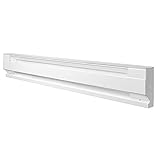
Overview: The Cadet F Series 48" Electric Baseboard Heater delivers reliable supplemental heat for small to medium-sized rooms. Operating at either 1000W (240V) or 750W (208V), this hardwired unit produces 3,415 or 2,560 BTUs respectively. The heater features a clean white finish that blends with most baseboards and décor. As a permanently installed solution, it’s designed for consistent, long-term performance without the clutter of portable units. The package includes the heater only, requiring separate purchase of a thermostat for temperature control.
What Makes It Stand Out: This model’s dual-voltage capability provides exceptional installation flexibility, accommodating both residential 240V and commercial 208V systems. The high-temperature safety shutoff offers peace of mind, automatically cutting power if the unit overheats. Pre-punched knockouts at 1-inch intervals and universal wiring simplify installation, reducing labor costs. The limited lifetime warranty demonstrates manufacturer confidence in durability, setting it apart from competitors offering only short-term coverage. These features combine to create a professional-grade heating solution for discerning homeowners.
Value for Money: Priced competitively within the permanent electric heating market, this Cadet heater justifies its cost through longevity and safety features. Comparable units from other brands typically lack the dual-voltage option and lifetime warranty. While professional installation adds expense, the energy efficiency of electric baseboard heat and minimal maintenance requirements offset initial costs over time. The warranty alone provides significant value, potentially saving hundreds in replacement costs. For those seeking a “set it and forget it” heating solution, the investment proves worthwhile within 2-3 heating seasons.
Strengths and Weaknesses: Pros: Dual-voltage flexibility adapts to various electrical systems; high-temperature safety shutoff prevents fire hazards; lifetime warranty ensures long-term protection; universal wiring simplifies installation; durable construction withstands daily use.
Cons: Thermostat not included, requiring additional purchase; professional installation recommended for safety and warranty validation; 48" length may not suit all room layouts; slower heat response compared to fan-forced heaters.
Bottom Line: The Cadet 4F1000W is an excellent choice for homeowners needing reliable, permanent supplemental heating. Its safety features, warranty, and installation flexibility make it ideal for bedrooms, offices, or additions. Just budget for a compatible thermostat and potential professional installation.
2. Cadet F Series 72 in. Electric Baseboard Heater (Model: 6F1500-1W, Part: 05536), 120 Volt, 1500 Watt, White

Overview: The Cadet F Series 72" Electric Baseboard Heater represents the largest 120V option in the lineup, delivering 1,500 watts of continuous convection heat for medium-sized spaces. Its extended length provides more uniform heat distribution across larger walls compared to shorter models. The unit operates on standard 120V household current, eliminating the need for 240V wiring in situations where upgrading electrical service isn’t feasible. This hardwired heater offers a permanent solution for consistent warmth without the noise of fan-driven alternatives.
What Makes It Stand Out: At 72 inches, this heater maximizes heat dispersion while maintaining the sleek, low-profile design characteristic of the F Series. Its 120V configuration is a significant advantage for older homes, rental properties, or specific zones where only standard voltage is available. The unit’s continuous heat transmission ensures steady temperature maintenance without cycling on and off frequently. While the feature list is minimal, the 1500W output represents the upper limit for 120V baseboard heaters, providing substantial heating capability within voltage constraints.
Value for Money: This model occupies a specific niche—high-output heating without 240V requirements. While generally less energy-efficient than 240V equivalents, it avoids costly electrical upgrades. The price point reflects its specialized application rather than premium features. Compared to installing new 240V circuits or using multiple portable heaters, it offers reasonable value. However, buyers should verify manufacturing standards, as “Made in China” labeling suggests potential quality variations from other Cadet models. Warranty terms should be confirmed at purchase, as this information is notably absent from product documentation.
Strengths and Weaknesses: Pros: 120V compatibility avoids electrical upgrades; 72" length provides excellent heat distribution; 1500W output suitable for 150-200 sq ft rooms; continuous convection heat maintains consistent temperatures; permanent installation eliminates cord hazards.
Cons: Less efficient than 240V models; limited feature documentation; manufacturing origin may raise quality concerns; no mention of safety shutoff or warranty; requires separate thermostat purchase.
Bottom Line: The 6F1500-1W serves a specific need: maximum 120V baseboard heating. It’s best suited for retrofits in older buildings or supplemental heat where 240V isn’t practical. Verify warranty coverage and safety features before purchasing, as documentation appears incomplete.
3. Cadet F Series 36" Electric Baseboard Heater (Model: 3F750W, Part: 09952), 2560/1925 BTU, 240/208 Volt, 750/563 Watt, White
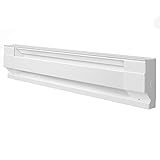
Overview: The Cadet F Series 36" Electric Baseboard Heater offers compact, efficient heating for small spaces like bathrooms, offices, or mudrooms. Delivering 750W at 240V (or 563W at 208V), this unit provides 2,560 BTUs of gentle convection warmth. Its shorter profile makes it ideal for installation beneath windows or in tight spaces where longer units won’t fit. Like its larger siblings, it requires hardwired installation and a separate thermostat. The white finish and subtle design allow it to blend seamlessly into any room’s baseboard area.
What Makes It Stand Out: This model’s compact 36" length combined with dual-voltage capability makes it uniquely versatile for targeted heating applications. The convection design circulates warm air naturally without fans, maintaining silent operation perfect for bedrooms or study areas. Pre-punched knockouts and universal wiring simplify installation despite its smaller size. The limited lifetime warranty, matching larger models, demonstrates that Cadet doesn’t compromise on quality or confidence for their compact units. It’s one of the few small baseboard heaters offering both 208V and 240V compatibility.
Value for Money: For small-space heating, this unit provides excellent value. It avoids the inefficiency of overheating large rooms and costs less than longer models while retaining premium features like dual-voltage operation and lifetime warranty. Compared to portable heaters, its permanent installation eliminates storage hassles and safety concerns. The energy savings from zone-specific heating can recover the purchase price within a single heating season. Professional installation costs remain similar to larger units, but the lower wattage reduces long-term operating expenses, making it economical for supplemental heat applications.
Strengths and Weaknesses: Pros: Compact 36" size fits tight spaces; dual-voltage flexibility; silent convection heating; lifetime warranty coverage; lower operating costs for small areas; universal wiring simplifies installation.
Cons: Limited to small rooms (~100 sq ft at 240V); thermostat sold separately; slower heating response; hardwired installation requires electrical work; output may be insufficient for poorly insulated spaces.
Bottom Line: The 3F750W is perfect for targeted heating in compact areas. Its dual-voltage capability and warranty make it a smart choice for bathrooms, small offices, or supplemental zone heating. Ensure your space requirements match its modest output before purchasing.
4. Cadet Baseboard Heater Ul 120 V/4.17 A White 30 " 500 W

Overview: This 30" Cadet baseboard heater delivers 500W of convection heat for small spaces, operating on standard 120V household current. The unit draws 4.17 amps, making it compatible with most existing circuits. Its compact dimensions (6" x 30" x 6") and lightweight design facilitate simple floor-mount installation. The product listing includes two units, suggesting versatile placement options for multiple rooms or larger spaces requiring distributed heating. This hardwired solution provides permanent warmth without the inconvenience of portable heater cords.
What Makes It Stand Out: The inclusion of two separate units in one package offers immediate value for multi-room applications or extended wall coverage. The remote control feature provides convenient temperature adjustment without manual dial operation—a rarity in baseboard heaters. At only 0.34 pounds, the ultra-lightweight design simplifies one-person installation. The 500W output targets very small spaces or supplemental heating needs, operating more economically than higher-wattage units. The UL listing ensures basic safety standards are met, providing baseline confidence in electrical safety.
Value for Money: While affordable upfront, the claimed 1,710 sq ft coverage area raises significant concerns about accuracy—500W realistically heats only 50-75 sq ft. This specification discrepancy suggests potential quality control issues in product documentation. The dual-unit package provides theoretical value if both heaters function reliably. However, the absence of warranty information and questionable specifications demand cautious evaluation. Compared to verified Cadet F Series models, this unit’s value proposition remains uncertain. Buyers should verify all claims directly with the manufacturer before purchasing, as the listing contains multiple inconsistencies that undermine confidence.
Strengths and Weaknesses: Pros: Compact size fits very small spaces; dual-unit packaging offers placement flexibility; remote control adds convenience; 120V compatibility; lightweight design eases installation.
Cons: Unrealistic coverage area claims; no warranty information provided; suspiciously low weight for a heating element; limited power output; documentation quality concerns; unclear if genuine F Series product.
Bottom Line: Approach this product with caution. While the dual-unit concept and remote control are appealing, specification inconsistencies warrant verification. Confirm coverage capabilities, warranty terms, and authenticity before purchasing. Consider proven Cadet models with clear documentation instead.
5. Cadet F Series 49" Portable Electric Baseboard Heater (Model: 4P1500W, Part: 05601), 5120 BTU, 120 Volt, 1500 Watt, White

Overview: The Cadet F Series 49" Portable Electric Baseboard Heater offers 1,500 watts of on-demand warmth without permanent installation. Delivering 5,120 BTUs via standard 120V outlet, this plug-in unit provides immediate heating for rooms up to 150 square feet. Its portable design allows users to move heat where needed—perfect for renters, seasonal use, or supplemental warmth in cold spots. The 49" length balances substantial heating capacity with manageable portability, while the white finish maintains the discreet aesthetic of traditional baseboard heaters.
What Makes It Stand Out: True portability sets this model apart from the hardwired F Series lineup. The unit plugs into any standard outlet, eliminating installation costs and permitting instant deployment. This flexibility serves renters, homeowners avoiding electrical work, or those needing workshop/garage heat seasonally. At 1,500W, it matches the output of permanent 120V units while offering freedom of placement. The design incorporates safety features typical of portable heaters, including tip-over protection and overheat shutoff—enhancements not always present in hardwired models. Its baseboard form factor reduces tip risk compared to tower-style portable heaters.
Value for Money: For temporary or supplemental heating, this portable unit delivers excellent value. It avoids $200-400 installation costs associated with hardwired models while providing equivalent output. Renters particularly benefit, as the heater moves between residences. However, portable units typically cost 20-30% more than comparable hardwired heaters, reflecting added convenience features. Operating costs remain identical to permanent 1,500W units, but the ability to heat only occupied rooms generates savings. The lack of installation requirement means immediate use, justifying the premium for those prioritizing flexibility over permanence.
Strengths and Weaknesses: Pros: Plug-and-play convenience; no installation costs; portable for multi-room use; 1,500W output matches permanent units; enhanced safety features; ideal for renters and temporary spaces.
Cons: Occupies floor space; cord presents tripping hazard; less efficient than 240V models; higher purchase price than hardwired equivalents; may not meet landlord requirements for permanent heat; noise from expansion/contraction more noticeable in portable use.
Bottom Line: The 4P1500W excels as a flexible heating solution for those unwilling or unable to install permanent units. It’s ideal for renters, seasonal rooms, or targeted supplemental heat. Accept the floor space tradeoff for unmatched convenience and mobility in the baseboard heater category.
6. Comfort Zone 1500W Convection Baseboard Heater with Built-In Thermostat, Overheat & Tip-Over Protection, Dent-Proof Ends, Plug-In Portable, Ideal for Home, Bedroom & Office, White

Overview: The Comfort Zone 1500W Convection Baseboard Heater delivers reliable, fan-free warmth for medium-sized spaces. This portable unit plugs into standard 120V outlets and features a built-in adjustable thermostat with two heat settings, making it suitable for bedrooms, offices, or dorms year-round.
What Makes It Stand Out: Its whisper-quiet operation sets it apart—no fans means no noise disruption for sleep or work. The dent-proof end panels provide exceptional durability against daily wear, while comprehensive safety features including tip-over shut-off, overheat protection, and stay-cool exterior offer peace of mind for families with children or pets.
Value for Money: This heater justifies its cost through robust safety certifications and durable construction. Unlike budget models that skimp on protection mechanisms, the ETL-listed design ensures reliable operation. It competes favorably with pricier convection heaters while delivering equivalent heating performance, making it a smart mid-range investment.
Strengths and Weaknesses: Strengths include silent operation, multiple safety systems, portable plug-in design, and dent-resistant construction. The adjustable thermostat allows basic temperature customization. Weaknesses are the lack of smart connectivity, less precise temperature control compared to digital models, and floor-space footprint that may clutter smaller rooms.
Bottom Line: An excellent choice for users prioritizing safety, silence, and simplicity over high-tech features. Ideal for supplemental heating in bedrooms or offices where quiet operation is paramount.
7. Dreo Smart Wall Heater, Electric Space Heater for Bedroom 1500W, 120° Vertical Oscillation, Adjustable Thermostat, Remote Control, 24H Timer, Easy-Mount Heater for Indoor Use, Works with Alexa, WH719S
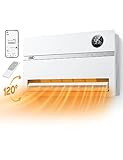
Overview: The Dreo Smart Wall Heater WH719S combines 1500W PTC ceramic heating with intelligent controls for modern homes. This wall-mounted unit features 120° vertical oscillation to distribute warmth evenly from floor to ceiling, making it ideal for bedrooms and living spaces where consistent temperature matters.
What Makes It Stand Out: Its vertical oscillation is a game-changer—most wall heaters are static. The 1°F temperature accuracy and range from 41-95°F provide exceptional climate control. Seamless smart integration with Alexa, Google Home, and the Dreo app allows voice commands and remote scheduling, while the auto-dimming LED panel ensures sleep-friendly operation.
Value for Money: This heater commands a premium but delivers features unmatched by conventional units. The combination of oscillation, precision temperature control, and smart connectivity rivals heaters costing significantly more. Installation hardware and drilling guide included add tangible value, making it worth the investment for tech-savvy users.
Strengths and Weaknesses: Strengths include widespread oscillating warmth, multiple smart control options, precise thermostat, 24-hour timer, and space-saving wall mount. The reusable filter simplifies maintenance. Weaknesses are required wall installation, dependency on stable Wi-Fi, and higher cost compared to basic models. Some users may find the feature set excessive for simple heating needs.
Bottom Line: A top-tier choice for tech enthusiasts seeking intelligent, evenly-distributed heating. Worth the investment for those who value convenience, precision, and smart home integration.
8. Fahrenheat FBE15002 Portable Electric Baseboard Heater,1500 Watt, 120 Volt, 46" Wide, White

Overview: The Fahrenheat FBE15002 is a straightforward 1500W portable baseboard heater measuring 46 inches wide. This fanless convection unit provides silent, even heating for medium rooms by naturally circulating warm air without blowing dust or allergens around, making it suitable for allergy sufferers.
What Makes It Stand Out: Its simplicity is its strength—no complex controls or connectivity to troubleshoot. The extended 46-inch width distributes heat more evenly than compact models. The overheat protection and linear high-temperature safety cutout provide reliable protection without adding cost, while the fanless design ensures completely silent operation and cleaner air quality.
Value for Money: This heater offers solid value for buyers prioritizing function over features. It delivers the core benefits of convection heating—silence and even warmth—at a competitive price point. While lacking modern conveniences, its durable construction and safety systems match those of pricier basic models, making it a cost-effective choice.
Strengths and Weaknesses: Strengths include silent fanless operation, effective heat distribution from its wide profile, robust overheat protection, and cleaner heat that doesn’t stir up allergens. The portable 120V plug-in design offers flexibility. Weaknesses are the absence of a built-in thermostat, lack of tip-over protection due to baseboard design, no smart features, and its 46-inch length demands substantial wall space.
Bottom Line: An excellent no-nonsense option for those seeking reliable, silent heating without complications. Ideal for allergy-conscious users and spaces where simplicity trumps technology.
9. DREO Smart Wall Heater, IP24 Electric PTC Space Heaters for Indoor Use, 30° Oscillation, Adjustable Thermostat, Remote Control, Works with Alexa, 24H Timer, Easy-mounted for Office, Bedroom, Home

Overview: The DREO Smart Wall Heater offers intelligent climate control with an IP24 waterproof rating, making it versatile for bedrooms, offices, and moisture-prone spaces. This 1500W PTC heater delivers powerful warmth through optimized airflow at just 28 dB, combining efficiency with whisper-quiet operation.
What Makes It Stand Out: The IP24 rating distinguishes it from most indoor heaters, allowing safe use in bathrooms or humid environments. Its impressive 11.5 ft/s airflow velocity ensures rapid heat distribution, while 30° manual oscillation lets users precisely direct warmth. The ability to calibrate temperature readings via the app ensures accuracy, and 5 VA flame-retardant materials provide superior fire safety.
Value for Money: This model offers excellent value for those needing waterproof protection. The IP24 rating typically commands a premium, yet DREO includes smart features and robust safety at a mid-range price. It bridges the gap between basic wall heaters and premium smart models without sacrificing core performance.
Strengths and Weaknesses: Strengths include IP24 waterproofing, multiple control methods, precise temperature management, strong yet quiet airflow, and comprehensive overheat protection. The 70.8-inch power cord provides flexible placement. Weaknesses are manual oscillation requiring physical adjustment, mandatory wall installation, and reliance on Wi-Fi connectivity. The feature set may overwhelm users wanting simple plug-and-play heating.
Bottom Line: A smart investment for those seeking safe, waterproof heating with modern conveniences. Particularly valuable for bathrooms or spaces requiring IP-rated appliances.
10. Comfort Zone 1500W Convection Baseboard Heater – Silent Portable Electric Space Heater with Adjustable Thermostat, 2 Heat Settings & Safety Tip-Over Switch – Black

Overview: The Comfort Zone 1500W Convection Baseboard Heater in black provides silent, fan-free warmth through natural convection. Designed for medium-sized rooms, this portable unit features two heat settings (750W/1500W) and an adjustable thermostat, making it ideal for bedrooms, nurseries, and home offices where quiet operation is essential.
What Makes It Stand Out: The stay-cool exterior offers exceptional safety, remaining cool to the touch even during extended operation—crucial for homes with curious children or pets. High-impact, dent-resistant end panels ensure durability against daily bumps. The black finish provides a sleek, modern alternative to standard white heaters, blending seamlessly with contemporary décor while maintaining robust safety systems.
Value for Money: This heater delivers excellent value through its dual safety features and durable construction. The tip-over switch and overheat protection sensor match those found in more expensive models. While lacking smart capabilities, it provides reliable, silent heating that justifies the cost for users prioritizing safety and simplicity over connectivity.
Strengths and Weaknesses: Strengths include completely silent operation, comprehensive safety systems, stay-cool housing, dent-resistant panels, and simple plug-and-play portability. The two heat settings offer basic energy management. Weaknesses are the manual thermostat’s limited precision, absence of remote or smart controls, and floor-space footprint. The black finish, while stylish, may require more frequent dusting than lighter colors.
Bottom Line: A dependable, safety-focused heater perfect for those wanting quiet, effective warmth without complexity. The black colorway adds modern aesthetic appeal.
Understanding Electric Baseboard Heater Technology
How Convection Heating Creates Natural Airflow
Electric baseboard heaters operate on a beautifully simple principle: convection. As the heating element warms the air immediately around it, that air becomes less dense and naturally rises, creating a gentle upward current. Cooler air from floor level gets drawn into the heater, creating a continuous circulation pattern that distributes warmth throughout the room without noisy fans or moving parts. This silent operation makes them ideal for bedrooms, home offices, and living areas where peace and quiet are paramount.
The Difference Between Standard and Hydronic Models
You’ll encounter two primary designs when shopping: standard electric and hydronic models. Standard units heat air directly through exposed elements, providing rapid warmth but cooling down quickly once the thermostat cycles off. Hydronic models contain a sealed fluid—typically oil or a special heat-transfer liquid—that gets heated by the electric element. This fluid retains warmth much longer, radiating gentle, consistent heat even after the unit shuts off, which significantly reduces temperature fluctuations and creates more uniform comfort.
Heating Element Materials and Their Impact
The construction of the heating element itself dramatically affects performance and longevity. Nickel-chromium alloy elements offer excellent durability and consistent heat output over decades of use. Some premium designs feature aluminum-finned elements that maximize surface area contact with the air, improving heat transfer efficiency by up to 30%. Understanding these material differences helps you evaluate whether a heater will maintain its heating capacity year after year or gradually degrade, leading to uneven performance.
Key Features for Even Room Heating
Length and Wattage Relationship
The physical length of a baseboard heater directly correlates with its ability to distribute heat evenly across a room. Longer units spread warmth over a wider area, preventing hot spots near the heater while reaching distant corners more effectively. A 96-inch unit will naturally create more uniform temperatures than a 36-inch model of the same wattage because the heat source is distributed across more linear feet, encouraging better air circulation patterns throughout the entire space.
Design Elements That Enhance Circulation
Look for features that actively improve airflow. Vented tops and fronts allow heated air to escape more freely, while internal baffles can direct this airflow upward at optimal angles. Some advanced designs incorporate subtle architectural elements that create micro-turbulence in the rising air column, breaking up thermal layers that can cause stratification—where hot air pools near the ceiling while floors remain cold.
Surface Temperature Consistency
The exterior temperature of the heater itself matters more than you might think. Units that maintain lower surface temperatures while delivering the same BTU output typically feature better internal insulation and heat distribution designs. This not only improves safety but also creates a more gentle, radiant heat effect that warms objects and people directly, supplementing the convective airflow and eliminating cold zones throughout the room.
Sizing and Capacity Considerations
Calculating BTU Requirements Accurately
Proper sizing is the single most critical factor for achieving even heating. The standard calculation of 10 watts per square foot serves as a starting point, but you’ll need to adjust for ceiling height, window quality, insulation values, and exterior wall exposure. A room with 12-foot ceilings requires approximately 25% more capacity than one with standard 8-foot ceilings. North-facing rooms with large windows might need 30% additional wattage to overcome heat loss and maintain consistent temperatures.
Accounting for Room-Specific Variables
Every room presents unique challenges for even heating. Open floor plans benefit from multiple smaller units placed strategically rather than one large heater in a single location. Rooms with furniture blocking airflow paths need careful placement planning. Even the color of your walls affects heat distribution—dark surfaces absorb and radiate warmth more effectively than light ones, subtly influencing how evenly temperatures spread throughout the space.
Installation and Placement Strategies
Optimal Wall Positioning for Airflow
Wall placement dramatically impacts heating uniformity. Install heaters on exterior walls beneath windows to counteract cold downdrafts, creating a thermal barrier that prevents chill from penetrating the room. Maintain at least 12 inches of clearance above the unit and 6 inches from any furniture to allow unrestricted air circulation. Never install them behind doors or in recessed areas that trap heat and prevent proper convection currents from forming.
Professional vs. DIY Installation Factors
While many baseboard heaters are marketed as DIY-friendly, achieving truly even heating often requires professional expertise. Electricians can ensure proper voltage matching, calculate circuit loads accurately, and identify optimal placement that accounts for your home’s unique airflow patterns. They’ll also verify that your electrical panel can handle the additional load without voltage drops that can cause uneven heating performance across multiple units operating simultaneously.
Thermostat Options and Controls
Line-Voltage vs. Low-Voltage Thermostats
Your thermostat choice directly affects temperature consistency. Line-voltage thermostats mount directly on the heater or nearby wall, offering simple control but sometimes less precise temperature sensing. Low-voltage systems with remote sensors provide superior accuracy by measuring temperature away from the heat source, preventing the “short-cycling” that occurs when thermostats get fooled by localized warmth, leading to temperature swings throughout the room.
Smart Controls for Precision Heating
Modern smart thermostats designed for electric baseboard systems offer features that dramatically improve heating uniformity. Look for models with learning algorithms that anticipate temperature drops, occupancy sensors that adjust output based on room usage, and geofencing capabilities that pre-warm spaces before you arrive. Some advanced systems even offer multi-zone control from a single interface, allowing you to fine-tune temperatures room by room for perfect whole-home comfort.
Energy Efficiency Factors
Understanding Conversion Efficiency
All electric heaters convert 100% of incoming electricity to heat, but how that heat gets distributed varies enormously in efficiency. Units with better insulation and design lose less heat through the back panel into the wall, directing more warmth into the room where it belongs. This “effective efficiency” can differ by 15-20% between models, directly impacting both your comfort and your electric bill.
Supplemental Insulation Strategies
Even the best heater can’t overcome poor insulation. Before upgrading your baseboard units, address air leaks around windows and doors, add weatherstripping, and consider thermal curtains. These improvements reduce the heating load, allowing your baseboard system to cycle less frequently and maintain more stable, even temperatures throughout the day and night.
Safety Features to Look For
Overheat Protection Systems
Quality heaters include thermal cutoff switches that automatically shut down the unit if internal temperatures exceed safe limits. This prevents fire hazards and protects the heating element from damage that could create hot spots or uneven heating performance. Look for units with resettable thermal protectors rather than one-time fuses, as these provide ongoing protection without requiring component replacement.
Tip-Over and Tamper-Resistant Designs
While baseboard heaters are wall-mounted and don’t tip over like portable units, some models include tilt sensors as an extra safety layer. More importantly for homes with children, tamper-resistant controls and locked covers prevent accidental setting changes that could lead to overheating or inefficient operation, maintaining both safety and consistent performance.
Maintenance and Longevity
Routine Cleaning for Optimal Performance
Dust accumulation inside baseboard heaters acts as insulation, preventing efficient heat transfer and creating uneven output. Clean units thoroughly before each heating season by removing the front panel and gently vacuuming the element and fins. This simple 15-minute task maintains the original heating capacity and ensures air flows freely through the unit, distributing warmth evenly throughout the room.
Expected Lifespan and Performance Degradation
A well-maintained electric baseboard heater should last 20 years or more, but performance gradually changes over time. Elements slowly oxidize, reducing efficiency by approximately 1-2% annually. After 15 years, you might notice certain areas of the room cooling slightly compared to when the unit was new. Planning for eventual replacement ensures you maintain the even, comfortable heating you originally enjoyed.
Cost Considerations
Initial Investment vs. Operating Expenses
Budget models might save money upfront but often cost more to operate due to inferior insulation and less precise thermostats that create temperature swings. Premium units with better controls and hydronic designs typically pay for themselves through reduced energy consumption within 3-5 years. Calculate the total cost of ownership, factoring in both purchase price and estimated annual operating costs for your climate and electricity rates.
Value Features Worth Paying For
Certain upgrades deliver exceptional value for achieving even heating. Programmable thermostats add about $50-75 to the cost but can reduce energy use by 15-20%. Hydronic designs cost $100-150 more than standard models but provide noticeably more uniform temperatures. Better warranties (10+ years vs. 1-2 years) indicate manufacturer confidence in long-term performance consistency.
Alternatives and Complementary Systems
When Baseboard Heaters Aren’t Ideal
For homes with extremely high ceilings, open-concept layouts larger than 600 square feet, or rooms with significant airflow obstacles, baseboard heaters alone might struggle with even heating. In these cases, consider supplementing with ceiling fans set to winter mode (pushing warm air down) or exploring alternative heating solutions like mini-split heat pumps that actively circulate air.
Integrating with Existing HVAC
Baseboard heaters excel as supplemental heat in rooms underserved by central systems. When adding them to a home with existing heating, install them on separate circuits with independent thermostats. This zoning approach lets you maintain the central system at a lower baseline temperature while using baseboard units to fine-tune comfort in specific rooms, creating more even temperatures throughout the entire house while reducing overall energy consumption.
Frequently Asked Questions
How do I know what size electric baseboard heater I need for even heating?
Calculate your room’s square footage and multiply by 10 watts for standard 8-foot ceilings with average insulation. Add 25% for ceilings over 9 feet, 30% for north-facing exterior walls with large windows, and another 20% for poor insulation. It’s better to slightly oversize and use a quality thermostat to modulate output than to undersize and struggle with cold spots.
Can electric baseboard heaters effectively heat multiple rooms?
Individual baseboard heaters work best in single rooms or open-concept spaces under 600 square feet. For multiple separate rooms, install dedicated units in each space with independent controls. This zoning approach ensures each room maintains its ideal temperature and prevents the uneven heating that occurs when trying to warm adjacent rooms through doorways.
What’s the difference between convection and hydronic baseboard heating?
Convection models heat air directly through exposed elements, providing quick warmth but cooling rapidly when cycled off. Hydronic units heat a sealed fluid that retains warmth for extended periods, radiating gentle, consistent heat that eliminates temperature fluctuations and creates more uniform room temperatures without the hot/cold cycling of standard models.
How much clearance do baseboard heaters need for proper airflow?
Maintain minimum 12 inches of clear space above the heater, 6 inches from furniture or drapes, and avoid placing anything directly in front that blocks the bottom air intake. These clearances ensure proper convection currents that draw cool floor-level air in and allow warm air to circulate throughout the entire room.
Are electric baseboard heaters expensive to operate for even heating?
Operating costs depend entirely on your electricity rates and how well your home retains heat. At average US rates of $0.13 per kWh, a 1500-watt heater costs about $0.20 per hour when running. Quality thermostats and good insulation reduce runtime significantly, often making them competitive with gas heat in well-insulated spaces.
Can furniture placement affect heating evenness?
Absolutely. Large furniture pieces blocking the heater’s front or top vents disrupt convection currents, creating hot zones near the unit and cold spots elsewhere. Arrange furniture to allow air to rise freely, and avoid placing sofas or beds within 6 inches of the heater. Consider furniture height—lower pieces allow better warm air circulation than tall items that block airflow.
Do I need special wiring for electric baseboard heaters?
Most 240-volt units require dedicated 20-amp circuits, while 120-volt models can sometimes share existing general-purpose circuits. However, for even heating performance, dedicated circuits prevent voltage drops that occur when multiple devices operate simultaneously. Consult an electrician to ensure your panel has adequate capacity and circuits are properly sized for consistent operation.
How often should I clean my baseboard heaters for optimal performance?
Clean thoroughly before each heating season and perform a quick dusting monthly during heavy use. Dust buildup acts as insulation, reducing efficiency and creating uneven heat distribution. Simply vacuuming the element and fins with a brush attachment takes minutes but maintains the original heating capacity and ensures consistent airflow.
Can smart thermostats really improve heating evenness?
Yes, significantly. Smart thermostats with remote sensors measure temperature away from the heater, preventing short-cycling caused by localized heat. Learning algorithms anticipate temperature drops, while features like open-window detection prevent waste. The result is smoother, more consistent temperatures throughout the entire room with fewer hot and cold fluctuations.
What’s the lifespan of an electric baseboard heater?
Quality units last 20-25 years with proper maintenance. However, heating elements gradually lose efficiency over time. If you notice developing cold spots after 15+ years, the element may be degrading. Replacing older units restores even heating performance and often improves efficiency enough to offset replacement costs through energy savings within a few seasons.
See Also
- 10 Best Electric Baseboard Heaters for Small Apartments This Year
- Stop Uneven Heating with the 10 Best Baseboard Ceramic Heaters This Year
- 10 Best Budget Baseboard Heaters Under $150 for Quick Room Heating
- 10 Best Value Electric Baseboard Heaters for Whole House Heating in 2026
- The 10 Ultimate Best Baseboard Heaters for Whole-Room Heating in 2026