Table of Contents
Imagine stepping into your sunroom on a sunny afternoon, expecting a peaceful retreat, only to be hit by a wall of stifling heat. Those beautiful windows that flood your space with natural light become a double-edged sword, turning your intended oasis into an uncomfortable greenhouse. Standard central air often struggles with these unique spaces—either overcooling the rest of the house to reach the sunroom or failing to tackle the intense solar gain effectively. This frustration is incredibly common, leaving many homeowners wondering if they’ll ever enjoy their sunroom without breaking the bank or sacrificing comfort elsewhere in the home.
The good news is there’s a smart, efficient solution designed specifically for zones like sunrooms and home additions: ductless cooling systems. Often called mini-splits, these units bypass the need for cumbersome ductwork, delivering targeted comfort exactly where you need it. They’re not just a fix; they’re a game-changer, offering precise temperature control, significant energy savings, and surprisingly sleek designs that blend into your space. If you’re tired of your sunroom feeling like a sauna in summer or an icebox in winter, understanding how to choose the right ductless system is the first step toward transforming it into your favorite room year-round.
Top 10 Ductless Cooling Systems
Detailed Product Reviews
1. MRCOOL 12000 BTU 115V Ductless Inverter Mini Split Air Conditioner & Heat Pump System, Easy Pro Series - Wall-Mounted AC Unit w/Heating and Cooling for Home, Office & Commercial Space

Overview: This 12,000 BTU ductless mini-split system delivers efficient heating and cooling for spaces up to 550 sq. ft., targeting homeowners and small offices seeking a DIY-friendly, year-round HVAC solution. Operating on standard 115V power, it eliminates ductwork needs.
What Makes It Stand Out: Its standout feature is true DIY installation with pre-charged refrigerant lines, significantly reducing setup costs and complexity versus traditional HVAC. The inverter technology ensures quiet operation (as low as 26dB) and seamless transitions between heating and cooling modes, maintaining consistent comfort without temperature swings.
Value for Money: Priced competitively for its class, it offers substantial long-term savings through energy efficiency (up to 30% less than conventional ACs) and avoidance of professional installation fees. While higher-capacity units exist, this model excels for moderately sized rooms where 115V compatibility is essential.
Strengths and Weaknesses: Strengths: Simple DIY setup, dual heating/cooling functionality, quiet inverter operation, 115V compatibility. Weaknesses: Limited to 550 sq. ft. (smaller coverage than some competitors), no smart/wifi features, basic remote control only.
Bottom Line: An excellent budget-friendly, energy-efficient choice for small to medium rooms needing straightforward installation and reliable year-round comfort; ideal for DIYers avoiding 230V requirements.
2. MRCOOL 18000 BTU 230V Ductless Inverter Mini Split Air Conditioner & Heat Pump System, Easy Pro Series - Wall-Mounted AC Unit w/ Heating and Cooling for Home, Office & Commercial Space
Overview: Designed for larger areas up to 800 sq. ft., this 18,000 BTU unit provides robust heating and cooling using inverter technology. It targets medium-sized homes, offices, or commercial spaces requiring efficient climate control without ductwork, operating on 230V power.
What Makes It Stand Out: The Easy Pro Series shines with its streamlined DIY installation process, including pre-charged refrigerant lines that minimize mess and cost. Its inverter-driven compressor adjusts output precisely, ensuring quiet operation (under 30dB) and significant energy savings during extended use.
Value for Money: Despite requiring 230V wiring, it delivers strong value through reduced installation expenses and operational efficiency. It outperforms similarly priced single-room units in coverage area and long-term energy costs, though professional electrical work may add initial expense.
Strengths and Weaknesses: Strengths: High coverage (800 sq. ft.), energy-efficient inverter operation, DIY-friendly setup, durable build. Weaknesses: Needs 230V circuit (may require electrician), no advanced smart controls, remote lacks backlighting.
Bottom Line: A top pick for medium-sized spaces needing powerful, efficient heating/cooling with DIY accessibility; just ensure 230V power is available for optimal value.
3. Mountman 12000 BTU Mini Split AC/Heating System,19 SEER2 110/120V Energy Efficient Ductless Inverter System,Cools Up to 750 Sq.Ft with Pre-Charged Condenser,Heat Pump & Installation Kits

Overview: This 12,000 BTU system cools spaces up to 750 sq. ft. using R32 refrigerant and includes comprehensive installation kits. It targets eco-conscious users seeking versatile climate control with enhanced convenience features on standard 110/120V power.
What Makes It Stand Out: Mountman differentiates with specialized modes (ECO, Sleep, Turbo Boost) and exceptional quietness (26dB in Sleep Mode). The auto-defrost function works down to -4°F, and self-cleaning technology reduces maintenance. Pre-charged R32 refrigerant is more environmentally friendly than older alternatives.
Value for Money: Competitive pricing includes unique value-adds like ECO Mode (30% energy savings) and washable filters, reducing long-term costs. While similar to MRCOOL in capacity, its broader coverage claim (750 vs. 550 sq. ft.) and advanced features justify a slight premium for feature-focused buyers.
Strengths and Weaknesses: Strengths: 750 sq. ft. coverage, ultra-quiet Sleep Mode, ECO/Turbo modes, self-cleaning, R32 refrigerant. Weaknesses: R32 requires certified handling for repairs, remote display auto-shutoff may frustrate some, installation complexity slightly higher than MRCOOL.
Bottom Line: Highly recommended for those prioritizing quiet operation, smart features, and eco-friendliness in a DIY-friendly 12K BTU unit; ideal for bedrooms or living areas.
4. MRCOOL 24000 BTU 230V Ductless Inverter Mini Split Air Conditioner & Heat Pump System, Easy Pro Series - Wall-Mounted AC Unit w/ Heating and Cooling for Home, Office & Commercial Space
Overview: This heavy-duty 24,000 BTU system efficiently heats/cools spaces up to 1,050 sq. ft., targeting large rooms, open-plan areas, or light commercial use. It leverages MRCOOL’s Easy Pro Series for simplified installation on 230V power.
What Makes It Stand Out: Its high-capacity inverter technology delivers consistent comfort across expansive areas while maintaining surprising quietness. The pre-charged refrigerant lines and clear DIY instructions make large-system installation unusually accessible, avoiding typical professional markup.
Value for Money: Offers exceptional value for large spaces by combining commercial-grade output with residential affordability. Energy savings from inverter efficiency offset higher electricity use, and DIY installation saves hundreds versus traditional ducted systems for comparable coverage.
Strengths and Weaknesses: Strengths: Covers large areas (1,050 sq. ft.), robust heating/cooling, energy-efficient inverter, DIY installation simplicity. Weaknesses: Requires 230V circuit, no smart features, outdoor unit can be noisy at max capacity.
Bottom Line: The best DIY option for large spaces needing serious heating/cooling power; perfect for garages, workshops, or great rooms where professional HVAC is cost-prohibitive.
5. IDEALHOUSE 24,000 BTU Mini Split Air Conditioner and Heat Pump, 21 SEER2 Ultra Quiet 208-230V Ductless AC with WiFi & Alexa Control, Cools/Heats up to 1500 Sq.Ft, Easy Installation Kit

Overview: This 24,000 BTU smart mini-split system cools/heats areas up to 1,500 sq. ft. with 21 SEER2 efficiency. It includes WiFi/Alexa control and targets tech-savvy users needing whole-room comfort in large residential or light commercial spaces.
What Makes It Stand Out: Standout features include whisper-quiet operation (28dB), robust smart controls (app/voice), and industry-leading coverage (1,500 sq. ft.). The 21 SEER2 rating ensures top-tier energy savings, while the pre-charged line set simplifies setup.
Value for Money: Priced higher than basic models, it justifies cost through smart functionality, superior coverage, and significant energy savings (40% vs. non-inverter units). Professional installation is required, adding expense, but long-term efficiency and convenience enhance ROI.
Strengths and Weaknesses: Strengths: Massive 1,500 sq. ft. coverage, WiFi/Alexa integration, ultra-quiet, 21 SEER2 efficiency. Weaknesses: Mandatory professional installation (voids warranty if DIY), higher upfront cost, app connectivity occasionally glitchy.
Bottom Line: A premium choice for large spaces where smart control and quiet, efficient operation are priorities; best for those willing to invest in professional setup for hassle-free, connected comfort.
6. 9000 BTU Mini Split AC w/Remote Control19 SEER2 Cools Up to 450 Sq. Ft,Ductless Inverter Mini Split System w/0.75 Ton Heat Pump Pre-Charged & Installation Kit, Ultra-Quiet

Overview:
This 9000 BTU ductless mini-split system delivers energy-efficient cooling and heating for spaces up to 450 sq. ft. Featuring inverter technology, a pre-charged refrigerant system, and a comprehensive installation kit, it targets bedrooms, garages, and small commercial areas. ETL and AHRI certified, it promises reliability and year-round climate control.
What Makes It Stand Out:
Its ultra-quiet 23 dB operation is exceptional for nighttime use, while six versatile modes (including Eco, Health, and Auto) enhance customization. The 0.75-ton heat pump handles extreme temperatures (-4°F to 140°F), and smart features like iFEEL mode (adjusts based on remote location) and PM2.5 filtration add unique value. The inclusion of negative ion technology sets it apart for air quality.
Value for Money:
Priced competitively, it includes a full installation kit (copper tubing, drain hose, mounting hardware) typically sold separately. While professional installation is required, the pre-charged system reduces setup costs. It undercuts pricier brands but matches their efficiency (19 SEER2) and features, making it ideal for budget-conscious buyers needing compact, quiet performance.
Strengths and Weaknesses:
Strengths: Near-silent operation, robust all-weather performance, health-focused air filtration, comprehensive kit.
Weaknesses: Installation requires two packages (may delay setup), lacks Wi-Fi in base model, limited to 450 sq. ft.
Bottom Line:
A top choice for small spaces prioritizing whisper-quiet comfort and air purity. Its efficiency, extreme-temperature resilience, and inclusive kit justify the investment for homeowners seeking reliable, health-conscious climate control.
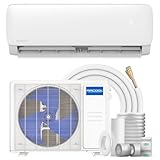
7. MrCool Easy Pro 24k BTU 18.9 SEER2 Ductless Heat Pump Split System 5th Generation - DIY Mini Split w/ 16ft Lineset & 1 YR Labor Warranty by IWAE
Overview:
The MrCool Easy Pro 24k BTU system targets medium-to-large spaces (500–1,200 sq. ft.) with dual cooling/heating capabilities. Its 18.9 SEER2 rating and 11.2 HSPF2 efficiency cater to garages, sunrooms, and additions. Designed for DIY enthusiasts, it includes a 16ft lineset and a rare 1-year labor warranty.
What Makes It Stand Out:
The “Easy Pro” branding emphasizes simplified installation with pre-charged refrigerant and swaged lines, reducing DIY complexity. Gold Fin coating on the condenser prevents corrosion, extending lifespan in harsh climates. The included labor warranty (uncommon for DIY units) mitigates installation risks, while 5th-gen inverter tech ensures quiet, efficient operation.
Value for Money:
Though pricier than basic kits, the labor warranty and Gold Fin protection add long-term savings. It outperforms similar-capacity units in efficiency (18.9 SEER2 vs. industry-standard 16–17 SEER) and includes essentials like the lineset. For DIYers, it eliminates costly professional labor fees, delivering premium value.
Strengths and Weaknesses:
Strengths: True DIY-friendly design, corrosion-resistant coating, labor warranty, high efficiency.
Weaknesses: SEER2 rating slightly below top-tier competitors (e.g., 20+ SEER), limited smart features.
Bottom Line:
Highly recommended for DIY-savvy users needing robust, large-space coverage. The labor warranty and durability upgrades make it a smart, cost-effective investment despite minor efficiency gaps.
8. Cooper & Hunter 24,000 BTU, 230V, 17 SEER Ductless Mini Split AC/Heating System Pre-Charged Inverter Heat Pump with 16ft Installation Kit

Overview:
This 24,000 BTU (2-ton) Cooper & Hunter system cools/heats up to 1,500 sq. ft., targeting large rooms, offices, and commercial spaces. With 18 SEER2 efficiency (despite the 17 SEER title), pre-charged R32 refrigerant, and a 16ft installation kit, it prioritizes professional-grade performance for demanding environments.
What Makes It Stand Out:
The Smart Kit enables smartphone control via app, a rarity in this segment. UL/AHRI certification ensures safety and efficiency, while the inverter compressor maintains heating down to 5°F. The pre-charged system with included copper lineset streamlines professional installation, and R32 refrigerant offers eco-friendly operation with lower global warming potential.
Value for Money:
Positioned as a premium commercial solution, it justifies its cost with superior capacity and durability. The Smart Kit adds convenience without extra fees, and R32’s efficiency lowers long-term energy costs. Though pricier than residential models, it competes well against commercial units lacking app integration.
Strengths and Weaknesses:
Strengths: Excellent for large/commercial spaces, smartphone control, R32 refrigerant, robust build.
Weaknesses: Requires 230V power (not 110V), no Wi-Fi/Alexa in base model, professional installation mandatory.
Bottom Line:
Ideal for commercial or large residential applications needing reliable, app-connected climate control. Its capacity, eco-friendly refrigerant, and certification make it a worthwhile upgrade for serious cooling/heating demands.
9. YITAHOME 12000 BTU Mini Split Air Conditioner Heat Pump System, Wifi Enabled 20 SEER2 115V Inverter Ductless AC Cool Up to 750 Sq. Ft, Compatible with Alexa, Complete Installation Kit, White

Overview:
YITAHOME’s 12,000 BTU system covers up to 750 sq. ft. with 20 SEER2 efficiency, targeting bedrooms and living areas. It combines Alexa/Wi-Fi control, health-focused air purification, and a complete installation kit. ETL/AHRI certified, it emphasizes smart, eco-friendly comfort for modern homes.
What Makes It Stand Out:
Wi-Fi and Alexa compatibility enable remote control via app, a standout for smart homes. The “HEALTH” mode with negative ions and PM2.5 removal addresses air quality, while 41 dB operation balances quietness and power. Heating down to 5°F and 50-ft airflow ensure wide coverage, and the washable filter simplifies maintenance.
Value for Money:
Competitively priced for its smart features, it includes all essentials (remote, drain hose, copper tubing). While installation requires pros, the kit reduces add-on costs. It undercuts premium brands like Mitsubishi but matches their SEER2 rating and smart capabilities, offering strong value for tech-focused buyers.
Strengths and Weaknesses:
Strengths: Excellent smart-home integration, air purification, high 20 SEER2 rating, wide temperature range.
Weaknesses: 41 dB is noisier than ultra-quiet rivals (e.g., 23 dB models), installation excludes some hardware.
Bottom Line:
A compelling pick for smart-home users prioritizing air quality and convenience. Its efficiency, app control, and robust features deliver exceptional value for medium-sized residential spaces.
10. MEPTY 12000BTU Mini Split AC/Heating System, 19 SEER2 Energy Efficient Mini Split Air Conditioner with Heat Pump, Cools Up to 750sq.ft, Ductless Inverter AC Unit with Pre-Charged Condenser

Overview:
MEPTY’s 12,000 BTU unit cools 750 sq. ft. with 19 SEER2 efficiency and R32 refrigerant. It emphasizes rapid temperature adjustment (30s cooling/60s heating), multi-mode operation, and whisper-quiet performance. Targeted at homes and light commercial spaces, it includes a pre-charged condenser and essential installation components.
What Makes It Stand Out:
The “Quick Cooler & Heater” function claims near-instant comfort, while R32 refrigerant boosts eco-efficiency. The 4-in-1 design (cooling, heating, fan, dehumidifying) with auto fan speeds and 35 dB “mute mode” ensures adaptability. Up/down air swing prevents direct airflow discomfort, and the 24-hour timer enhances convenience.
Value for Money:
Priced accessibly, it delivers 36% energy savings via inverter tech and includes a full kit (16ft lineset, drainage extension). Though lacking smart features, its R32 refrigerant and speed-focused design offer tangible utility. It undercuts Wi-Fi models but excels in core performance for budget installations.
Strengths and Weaknesses:
Strengths: Rapid temperature adjustment, R32 eco-refrigerant, versatile 4-mode operation, very quiet (35 dB).
Weaknesses: No Wi-Fi/smart compatibility, heating limited to 5°F (less extreme than rivals).
Bottom Line:
Best for buyers seeking fast, quiet, and efficient climate control without smart features. Its speed, eco-friendly refrigerant, and low noise make it a practical, cost-effective solution for standard residential use.
Understanding Why Sunrooms Demand Specialized Cooling
Sunrooms present unique thermal challenges that standard HVAC systems simply aren’t built to handle effectively. The extensive glazing, often spanning walls and ceilings, allows massive solar heat gain, especially during peak sun hours. This creates intense localized heat that central systems struggle to counteract without overworking, leading to uneven temperatures and higher energy bills. Furthermore, sunrooms are frequently additions built onto the main structure, meaning they lack integration with existing ductwork. Trying to force cooled air through long, inefficient duct runs (if even possible) results in significant energy loss and poor performance.
The Greenhouse Effect Challenge
Glass is fantastic for views but terrible for heat retention. Sunlight streams through windows, heats surfaces inside the sunroom, and that heat gets trapped – the classic greenhouse effect. This can make sunroom temperatures soar 10-20 degrees Fahrenheit higher than the adjacent interior rooms, overwhelming even a properly sized central system. Ductless units tackle this head-on by providing concentrated cooling power directly within the space, combating the heat at its source before it migrates.
Zoning Is Non-Negotiable
One-size-fits-all cooling fails miserably in sunrooms. Your living room might be perfectly comfortable while your sunroom is sweltering. Ductless systems excel as a dedicated zoning solution. They operate independently, allowing you to set the sunroom temperature precisely where you want it, without affecting other zones. This targeted approach eliminates the waste of cooling unused spaces and ensures your sunroom is always ready to enjoy.
Overcoming Ductwork Limitations
Adding ductwork to an existing sunroom or addition is often prohibitively expensive, invasive (requiring tearing into walls or ceilings), and inefficient. Long duct runs lose significant cooling capacity. Ductless systems eliminate this hurdle entirely. With only a small 3-inch conduit connecting the indoor and outdoor units, installation is minimally disruptive, preserving your home’s aesthetics and structure while delivering maximum cooling efficiency right where it’s needed.
Key Features to Evaluate for Sunroom Success
Choosing the right ductless system isn’t just about cooling power; it’s about matching the technology to the specific demands of a sun-drenched space. Prioritizing the correct features ensures optimal comfort, efficiency, and longevity, turning your sunroom from a seasonal liability into a year-round haven. Don’t settle for a generic unit – focus on capabilities designed for high-heat, variable-load environments.
Accurate BTU Sizing: The Absolute Foundation
Undersizing leaves you sweating; oversizing wastes energy and causes uncomfortable short-cycling (frequent on/off cycles that don’t dehumidify properly). Sunrooms require careful BTU calculation considering glass area (type, orientation, coatings), insulation levels, ceiling height, and local climate. A professional load calculation (Manual J) is non-negotiable – guessing based on square footage alone is a recipe for failure. High solar gain often demands 20-30% more capacity than a standard room of the same size.
Inverter Technology: Essential for Efficiency and Comfort
This is where modern ductless systems shine. Unlike traditional systems that only run at full blast or not at all, inverter-driven compressors continuously adjust their speed to match the exact cooling demand. In a sunroom, where heat gain fluctuates dramatically with cloud cover and time of day, this means the unit runs quieter, uses far less energy, and maintains a remarkably stable, comfortable temperature without annoying swings.
High SEER Ratings: Maximizing Long-Term Savings
SEER (Seasonal Energy Efficiency Ratio) measures cooling efficiency over a typical season. Higher SEER = lower operating costs. For sunrooms, which can run extensively during hot months, prioritizing a high SEER rating (18+ is excellent, 20+ is top-tier) is crucial. The slightly higher upfront cost is often recouped through significant energy savings, especially given the potential for heavy usage in these high-heat zones. Look for ENERGY STAR certification as a baseline.
Navigating Installation Challenges and Considerations
Installing a ductless system in a sunroom or addition involves unique factors compared to whole-house systems. Careful planning for placement, wiring, and conduit routing is vital for optimal performance, aesthetics, and avoiding costly mistakes down the line. This isn’t a typical DIY project; expertise matters significantly for these specialized applications.
Strategic Indoor Unit Placement
Where you mount the indoor blower unit dramatically impacts comfort and efficiency. Avoid placing it directly opposite large windows where intense sunlight can interfere with the unit’s operation or cause uneven cooling. Prioritize high, central locations on walls (or ceilings for cassettes) for optimal air distribution. Ensure sufficient clearance above, below, and around the unit as specified by the manufacturer for proper airflow and maintenance access. Consider sightlines – you want cooling, not a visual distraction.
Outdoor Unit Siting for Performance and Peace
The condenser needs adequate airflow and protection. Place it on a stable, level pad away from direct afternoon sun if possible (though shading must not restrict airflow). Maintain manufacturer-specified clearances from walls, shrubs, and other obstructions. Crucially, minimize the distance between indoor and outdoor units – longer refrigerant lines reduce efficiency. Also, consider noise; place it away from bedroom windows or patios if the unit isn’t ultra-quiet.
Dealing with High Ceilings and Awkward Layouts
Many sunrooms feature vaulted or cathedral ceilings, which create stratification (hot air rising, cool air sinking). Standard wall-mounted units might struggle. Consider multi-head systems (one outdoor unit serving multiple indoor units) or specialized high-airflow models designed for tall spaces. Ceiling cassette units, discreetly mounted in the ceiling, are excellent for even distribution in rooms with high ceilings or open layouts, pulling hot air down and pushing cool air across the room effectively.
Optimizing Energy Efficiency and Operational Costs
While ductless systems are inherently efficient, maximizing savings in a high-heat-load space like a sunroom requires smart choices and habits. Understanding how features translate to real-world energy use and knowing how to operate the system effectively will protect your wallet and the environment, making year-round sunroom enjoyment truly sustainable.
Smart Thermostats and Scheduling: Your Secret Weapon
Pairing your ductless system with a compatible smart thermostat unlocks significant savings. Program it to cool the sunroom only when you use it (e.g., not during the hottest, unoccupied midday hours if possible). Use geofencing to turn it on just before you head home. Smart thermostats learn patterns and provide usage reports, helping you identify further savings opportunities. Avoid setting temperatures drastically lower than needed – every degree matters.
Leveraging Built-In Energy-Saving Modes
Most modern ductless units have dedicated eco-modes or energy-saving features. These intelligently adjust fan speed and compressor operation to maintain comfort while minimizing power draw. Features like “I Feel” remote sensors (which measure temperature at the remote’s location, not just at the unit) ensure the space feels comfortable without overcooling. Don’t ignore these settings – they are designed specifically for efficiency in variable-load environments.
The Impact of Proper Maintenance on Efficiency
A dirty system is an inefficient system. Clogged air filters restrict airflow, forcing the compressor to work harder. Dirty outdoor coils can’t dissipate heat effectively. Schedule professional maintenance annually, including coil cleaning and refrigerant level checks. Clean or replace indoor filters monthly during peak cooling season. This simple upkeep ensures your system operates at peak efficiency, saving you money and extending its lifespan – critical for a unit working hard in a sunroom.
Ensuring Long-Term Reliability and Comfort
Your sunroom cooling investment should deliver worry-free comfort for years. Choosing a system built for durability and understanding the importance of quality installation and ongoing care are paramount. Sunrooms can be demanding environments, subjecting equipment to higher ambient temperatures and potential weather exposure, so reliability isn’t optional.
Prioritizing Build Quality and Components
Look for systems from manufacturers known for robust construction, especially critical components like the compressor and heat exchangers. Units designed for higher ambient temperature operation (often rated for 115°F+ outdoor temps) handle the heat radiating off sunroom glass and adjacent walls much better than basic models. Corrosion-resistant outdoor coils (e.g., with blue fin coating) are essential for longevity, particularly in coastal or humid environments.
The Non-Negotiable Role of Professional Installation
Cutting corners on installation is the fastest route to poor performance, higher bills, and premature failure. A qualified technician ensures: precise refrigerant charging, correct line set sizing and insulation, proper electrical wiring, secure mounting, and optimal airflow. They understand the nuances of sunroom heat loads and can advise on best practices for your specific structure. Never skip professional installation – it’s integral to the system’s warranty and performance.
Realistic Expectations for Noise Levels
While modern ductless units are remarkably quiet (often 19-25 dB on low fan speed), “silent” is a myth. Manage expectations: indoor units produce some fan noise, and outdoor units have compressor sound. For sunrooms used as quiet retreats, prioritize models specifically advertised as ultra-quiet and ensure the indoor unit isn’t mounted directly above a favorite reading chair. Proper installation (secure mounting, avoiding vibration transfer) also minimizes noise. Listen to demo units before purchasing if noise sensitivity is high.
Frequently Asked Questions
Frequently Asked Questions
Can a ductless system effectively cool a sunroom with lots of south-facing windows? Absolutely. Ductless systems are ideal for this challenge. Their targeted cooling power and ability to be sized specifically for high solar gain areas make them far more effective than trying to extend central air. Proper sizing by a professional is critical to handle the intense heat load.
Will a ductless unit make my sunroom too cold in the shoulder seasons? No. Modern ductless systems with inverter technology provide precise temperature control down to very low cooling capacities. You can set it to maintain a comfortable 72°F without the unit constantly cycling on and off or overshooting the temperature, unlike traditional systems.
How disruptive is the installation process for an existing sunroom? Installation is significantly less invasive than adding ductwork. It typically involves a small (3-inch) hole through the wall for the conduit and wiring, plus mounting the indoor and outdoor units. Most installations are completed in one day with minimal mess or structural damage.
Can one outdoor unit handle both my sunroom and another addition? Yes, multi-zone ductless systems are common. A single outdoor condenser can connect to multiple (usually 2-5) indoor air handlers in different rooms or additions. This is often the most cost-effective and efficient solution for cooling multiple distinct zones like a sunroom and a finished garage.
Do ductless systems work well for heating sunrooms in cooler weather too? Most modern ductless heat pumps provide efficient heating down to well below freezing (often -13°F or lower). They are an excellent year-round solution, extracting heat from the outside air even when it’s cold, making your sunroom usable far beyond just summer months.
Are ductless systems prone to leaking water in a sunroom? Properly installed and maintained units should not leak. They produce condensate like any AC, which is drained away via a small pipe. Ensuring the indoor unit is level during installation and the drain line has a clear slope to the outside is crucial. Regular filter cleaning prevents clogs that cause overflow.
Can I use a ductless system if my sunroom has very high ceilings? Yes, but placement and unit type matter. Wall-mounted units might struggle with stratification. Ceiling cassette units, designed to mount flush in the ceiling and distribute air in 360 degrees, are often the best solution for vaulted or cathedral ceilings, pulling hot air down effectively.
How loud are ductless systems during operation in a quiet sunroom? The quietest models operate as low as 19 decibels on their lowest fan setting (comparable to rustling leaves). While not silent, this is generally very unobtrusive for background noise. Noise levels increase slightly on higher settings, but are still typically much quieter than portable AC units.
Will the indoor unit be an eyesore in my beautiful sunroom? Modern indoor units are designed to be sleek and low-profile. Wall-mounted units are slim and can be mounted high on a wall. Ceiling cassettes are nearly invisible when installed. Choose a unit color that blends with your ceiling or walls for maximum discretion.
Can I install a ductless system myself to save money? Professional installation is strongly recommended and often required for warranty validation. Refrigerant handling requires EPA certification, electrical work must meet code, and improper installation leads to inefficiency, poor performance, leaks, and potential system damage. The risks outweigh the potential savings.
See Also
- 10 Best Ductless Cooling Systems for Sunrooms and Additions This Year
- Top 10 Best Ductless Mini Split Systems for Home Cooling and Heating in 2026
- 10 Affordable Ductless Cooling Systems That Don’t Sacrifice Quality in 2026
- Top 10 Best Ductless Mini Split Systems for Home Cooling in 2026
- 10 Best Ductless Cooling Systems for Summer Relief This Year