Table of Contents
Imagine this: it’s a crisp winter morning, your home office is quiet, and you’re settling in for a productive day. But instead of diving into work, you’re hunched over your keyboard with stiff fingers, wrapped in a blanket, staring longingly at the thermostat you’ve already cranked up. The central heating blasts warmth into the rest of the house, yet your dedicated workspace feels like an Arctic outpost. You need targeted, efficient warmth right where you sit – without the roar of a space heater drowning out your video calls or the fear of tripping over a bulky unit. This frustrating scenario is all too common for remote workers, making the humble desktop heater not just a comfort item, but a critical productivity tool for the modern home office.
Finding the right solution, however, feels like navigating a blizzard of confusing options. You want something powerful enough to take the edge off, yet quiet enough for conference calls. Compact enough for your desk, but safe enough to leave running unattended for hours. Energy-efficient to avoid shocking electricity bills, yet responsive enough to feel the warmth immediately. And with technology evolving rapidly, what features truly matter for the home office environment of 2026? Forget generic space heaters; the desktop ceramic heater market has matured significantly, offering sophisticated solutions designed specifically for the nuanced demands of your workspace. Let’s cut through the cold and explore exactly what you need to know to find your perfect personal warmth companion.
Top 10 Desktop Ceramic Heaters for Home Office
Detailed Product Reviews
1. Gaiatop Mini Space Heater, Lightweight PTC Ceramic Fast Heating 500W Energy Efficient for Indoor Use, Overheating & 45° Tip-Over Protection, Portable Desk Electric Heaters for Office Home Black

Overview:
This 500W PTC ceramic heater offers compact, efficient personal heating for desks, offices, or small rooms. Its minimalist black design prioritizes safety and quiet operation for focused environments.
What Makes It Stand Out:
The 2-second rapid heating and V0 fireproof material set it apart, alongside dual safety systems (45° tip-over and overheating protection). The near-silent operation and LED status indicator enhance usability without disrupting work or sleep.
Value for Money:
Priced mid-range, it justifies cost through premium safety certifications and energy efficiency. While cheaper 500W models exist, the V0 material and responsive PTC element reduce long-term fire risks and electricity waste, offering better ROI than no-name brands.
Strengths and Weaknesses:
Strengths: Exceptionally quiet; robust safety suite; heats instantly; ultra-portable.
Weaknesses: Limited to 500W (less powerful for larger spaces); no adjustable thermostat; short cord restricts placement.
Bottom Line:
Ideal for students or office workers needing localized warmth in tight spaces. Its safety focus and silent performance make it a reliable budget-conscious pick for personal use, though insufficient for whole-room heating.
2. Amazon Basics Ceramic Space Heater, Portable Mini Heater for Office Desk, 500W, With Tip-Over Protection, Lightweight 1.4 lbs, White, 5.9"D x 3.2"W x 6"H

Overview:
A no-frills, ultra-portable 500W ceramic heater designed for minimal desk footprint. Amazon Basics delivers barebones functionality with essential safety for transient heating needs.
What Makes It Stand Out:
Its featherlight 1.4 lb weight and tiny dimensions (5.9"x3.2"x6") make it the most travel-friendly option here. The ceramic coil provides adequate warmth for immediate personal zones without complex controls.
Value for Money:
The lowest-priced model reviewed, it excels as a disposable solution. While lacking advanced features, it outperforms dollar-store heaters with verified tip-over protection and consistent 48dB quietness—perfect for renters or temporary setups.
Strengths and Weaknesses:
Strengths: Unbeatable portability; reliable tip-over shutoff; simple plug-and-play use.
Weaknesses: No overheat protection; single heat setting; basic plastic build feels flimsy.
Bottom Line:
Choose this for emergency warmth in dorms or offices where space and budget are critical. It’s a functional “heater of last resort” but lacks durability or versatility for primary heating.
3. Space Heater, Portable Small Heaters for Indoor Use, Electric Desk Heater with Overheat and Tip-Over Protection, Mini Personal Heaters for Home Office Workspace, Blue

Overview:
A versatile 700W/1000W dual-mode heater targeting home offices with UL certification and adjustable warmth. Its compact blue design balances power and safety for personal spaces up to 200 sq ft.
What Makes It Stand Out:
The two heat settings (1000W high/700W eco) and near-silent 40dB operation cater to energy-conscious users. The integrated carry handle and 4ft cord enhance mobility, while UL certification assures rigorous safety standards.
Value for Money:
Mid-priced with premium features like dual wattage modes and child-safe cooling. Competes strongly against pricier models by offering thermostat-like control without digital complexity, making it ideal for budget-aware families.
Strengths and Weaknesses:
Strengths: Energy-saving eco mode; UL-certified safety; ultra-quiet; ergonomic handle.
Weaknesses: No timer or remote; slightly bulky for tight desks; blue color may not suit all decors.
Bottom Line:
A top recommendation for parents or remote workers needing adaptable, safe heating. The eco mode justifies its cost over single-setting rivals, though tech enthusiasts may crave smart features.
4. Coolfor Space Heater,PTC Ceramic/Portable Electric Desktop Heater High Output Desktop Heater for Home Bedroom Office Desk Indoor Use(Light Brown)
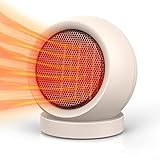
Overview:
This 600W PTC heater in light brown emphasizes rapid 3-second heating and portability. Targeted at bedrooms or offices, it promises efficient warmth with quiet operation and robust safety.
What Makes It Stand Out:
The 600W output (higher than most mini-heaters) and ABS flame-retardant housing deliver stronger heat without noise spikes. Its 45dB operation and lightweight build make it ideal for bedside or study use where silence is critical.
Value for Money:
Slightly pricier than 500W models but justified by the extra wattage and durable ABS construction. Outperforms similarly sized units in heat distribution, though lacks the eco-modes of competitors like Product 3.
Strengths and Weaknesses:
Strengths: Faster heating than 500W rivals; sturdy flame-resistant build; exceptionally quiet.
Weaknesses: No adjustable thermostat; limited color options; shorter cord than Product 3.
Bottom Line:
Best for users prioritizing quick, powerful warmth in compact areas. The wattage edge makes it worth the modest premium, but those needing precise temperature control should consider alternatives.
5. DREO Space Heater, Portable Electric Heaters for Indoor Use with Thermostat and Remote, 2024 Upgraded, Digital Display, 12H Timer, 5 Mode, 1500W PTC Ceramic Fast Safety Heat for Office Bedroom Home

Overview:
A premium 1500W smart heater featuring thermostat control, remote operation, and whisper-quiet 34dB performance. Designed for whole-room heating with advanced safety and customization.
What Makes It Stand Out:
The hyper-accurate 41–95°F thermostat (1° increments), ECO mode, and 12-hour timer enable precise energy management. The brushless motor and winglet fan achieve near-silent operation unmatched by competitors, while ETL certification ensures rigorous safety.
Value for Money:
Highest-priced but justified by smart features and 1500W power. Saves long-term energy costs via thermostat precision and memory function. Outclasses basic heaters for whole-room use, though overkill for desk-only needs.
Strengths and Weaknesses:
Strengths: Industry-leading quietness; exceptional temperature control; robust safety suite; remote convenience.
Weaknesses: Bulkiest model reviewed; premium cost may deter casual users.
Bottom Line:
The definitive choice for primary room heating. Its smart features and safety justify the investment for homeowners, though its size makes it less ideal for ultra-portable use.
6. Amazon Basics Ceramic Space Heater, Mini Heater for Office Desk, Portable Tent Heater (Indoor Use), 500 W, With Tip-Over Protection, Lightweight (1.4 LBS), Black, 5.87”D x 3.15”W x 5.95”H

Overview: This ultra-compact 500W ceramic heater targets personal warmth in tight spaces like desks or tents. Its minimalist black design prioritizes portability and basic functionality for spot heating. What Makes It Stand Out: Its standout feature is exceptional portability—weighing just 1.4 lbs with dimensions smaller than a coffee mug. The ceramic element delivers heat rapidly, and tip-over protection ensures fundamental safety without cluttering the simple design. Value for Money: Priced accessibly, it’s ideal for budget-conscious buyers needing emergency or supplemental heat. While lacking advanced features like thermostats, it outperforms cheaper resistive heaters in efficiency and safety, making it a sensible buy for minimalistic needs. Strengths and Weaknesses: Strengths: Extremely lightweight and space-saving; quick ceramic heating; reliable tip-over safety; near-silent operation (48dB). Weaknesses: No temperature control or power settings; limited to 500W output; basic build quality; not suitable for larger areas. Bottom Line: A no-frills, dependable solution for personal warmth in confined spaces. Best for students or office workers prioritizing portability over customization. Avoid if you need room-wide heating or thermostat control.
7. Gaiatop Mini Space Heater, Lightweight PTC Ceramic Fast Heating 500W Energy Efficient for Indoor Use, Overheating & 45° Tip-Over Protection, Portable Desk Electric Heaters for Office Home Blue
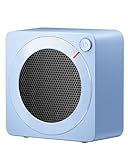
Overview: This 500W PTC ceramic heater combines compactness with enhanced safety features, targeting home offices and dorms. Its sleek blue finish and rapid-heating claim position it as a stylish, efficient personal warmer. What Makes It Stand Out: The dual safety system—45° tip-over protection and overheating shutdown—exceeds basic models. The PTC ceramic element heats spaces in 2 seconds, while its quiet operation (<45dB) and LED status indicator add user-friendly touches. Value for Money: Slightly pricier than barebones alternatives, but justifies cost with robust safety certifications (V0 fireproof material) and energy efficiency. Outperforms generic heaters in reliability, though 500W output limits coverage to very small zones. Strengths and Weaknesses: Strengths: Exceptional safety suite; near-silent; instant heat-up; attractive design; responsive customer support. Weaknesses: No thermostat for temp control; 500W insufficient for rooms >100 sq ft; blue color may not suit all decors. Bottom Line: A secure, efficient choice for focused warmth in deskside or bedside use. Recommended for safety-focused buyers in compact spaces, but skip if you require adjustable temperature settings.
8. Lmkeji Desk Heater,600W Energy Efficient Desktop Heater for Indoor Use,Safe and Quiet for Bedroom Home Office Use(White)
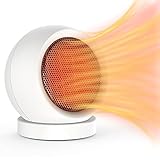
Overview: This 600W white desktop heater emphasizes safety and quiet operation for bedrooms or offices. UL certification and thermostat functionality elevate it beyond entry-level personal heaters. What Makes It Stand Out: The adjustable thermostat maintains consistent ambient temperatures—a rarity in this class. UL certification and V0 fire-resistant construction provide verified safety, while 45dB noise ensures bedroom compatibility. Value for Money: Competitively priced for its features. The thermostat adds significant long-term value by preventing energy waste, and 600W output offers slightly better coverage than 500W rivals. A balanced mid-tier investment. Strengths and Weaknesses: Strengths: Thermostat for precise climate control; UL safety certified; rapid 3-second heat-up; ultra-quiet; durable V0 materials. Weaknesses: No dual power settings; cord lacks storage; plain white design; tip-over angle unspecified. Bottom Line: An excellent thermostat-equipped option for noise-sensitive environments. Ideal for light sleepers or home offices needing sustained, efficient warmth. Choose over thermostat-free models for better energy management.
9. Coolfor Space Heater, Small Desk Heater with Temperature Control, 800W/500W Safe and Quiet Ceramic Desktop Heater for Home Bedroom Office Indoor Use(White)

Overview: This dual-power (800W/500W) white heater targets versatile indoor use with temperature control. Its compact frame and carry handle cater to mobile heating needs across bedrooms, offices, or under-desk setups. What Makes It Stand Out: The dual-wattage mode (800W for rapid heating, 500W for maintenance) and adjustable thermostat offer unmatched flexibility. ABS flame-retardant material and automatic shutoff at 176°F enhance safety during extended use. Value for Money: Higher wattage delivers faster room warming than 500W competitors, justifying a modest price premium. The thermostat optimizes energy use, and dual settings provide better long-term value for variable heating demands. Strengths and Weaknesses: Strengths: Dual power settings for efficiency; precise thermostat; portable with handle; robust safety cutoffs; heats quickly (3s). Weaknesses: Slightly bulkier than others; no fan-only mode; white shows dust easily. Bottom Line: A versatile, safety-conscious heater for those needing adaptable warmth. Highly recommended for users prioritizing temperature control and portability in medium-small rooms. Avoid only if minimal size is critical.
10. Electactic Portable Small Ceramic Space Heater w/Thermostat, 1200W Indoor Electric Space Heater Fan with Overheat & Tip-Over Protection, Heat Up 200 Square Feet for Office Room Dorm Desk

Overview: This 1200W/600W heater uniquely combines powerful heating with a summer fan mode. Designed for spaces up to 200 sq ft, it targets year-round utility in offices, dorms, or bedrooms. What Makes It Stand Out: The 2-in-1 functionality (heater + fan) and 1200W output for rapid room heating are exceptional. The thermostat auto-adjusts between 41°F–95°F, and triple safety protections exceed industry standards for peace of mind. Value for Money: Priced higher but delivers substantial ROI via energy savings (thermostat + spot heating) and dual-season use. Heats larger areas than competitors, eliminating the need for separate fan purchases—ideal for dorms or small apartments. Strengths and Weaknesses: Strengths: Year-round versatility; powerful 1200W heat; precise thermostat; ultra-quiet (<45dB); heats 200 sq ft claims validated. Weaknesses: Heaviest model (2 lbs); bulkier footprint; fan mode less effective than dedicated units. Bottom Line: The most feature-rich option for comprehensive climate control. A top pick for maximizing value in multi-use scenarios, though overkill for purely personal desk heating.
Understanding the Unique Needs of Home Office Heating
The home office presents distinct heating challenges compared to other rooms. It’s typically a smaller, dedicated zone where you spend extended, stationary periods. Central heating often struggles with this microclimate, leading to inefficiency and discomfort. A desktop heater addresses this by delivering focused warmth precisely where you need it – your immediate seating area – without wasting energy heating unused space. This targeted approach is inherently more energy-conscious and provides quicker, more personalized comfort.
Why Desktop Placement Matters Most
Placing the heater directly on or under your desk revolutionizes heat delivery. Warm air rises naturally, but a desktop unit positions the heat source closer to your body, creating a localized warm pocket around your legs and torso much faster than a floor unit fighting convection currents. This proximity minimizes the temperature differential you feel, reducing the need for excessively high settings. It also keeps the unit out of high-traffic paths, enhancing safety and reducing clutter in your workspace.
The Critical Role of Silence in Productivity
Unlike living rooms or bedrooms, home offices demand near-silent operation. Even a low hum or fan noise can be incredibly distracting during concentration-heavy tasks, video conferences, or podcast recording. Standard space heaters with powerful fans become productivity killers. Desktop ceramic heaters, particularly those utilizing natural convection or ultra-quiet fan-assisted models, are engineered for whisper-quiet performance, ensuring your focus remains on work, not the sound of the heater.
Essential Features to Prioritize for Your Workspace
Not all desktop heaters are created equal, especially when judged against the specific backdrop of a home office environment. Moving beyond basic heat output, several key features significantly impact usability, safety, and long-term satisfaction in your daily work routine.
Precision Thermostats: Beyond Simple On/Off
A reliable, adjustable thermostat is non-negotiable. Look for models offering precise temperature control (e.g., in 1-2 degree increments) rather than just high/medium/low settings. This allows you to set the exact comfort level for your space, preventing the unit from constantly cycling on and off at extremes, which wastes energy and creates temperature swings. Advanced digital thermostats often provide more consistent ambient temperature maintenance crucial for sustained focus.
Advanced Overheat Protection Mechanisms
Safety is paramount when a heater operates inches from paperwork, laptops, and you. Basic tip-over switches are standard, but seek units with multi-layered overheat protection. This includes internal thermal fuses that cut power if internal components exceed safe temperatures and surface temperature sensors that prevent the exterior casing from becoming dangerously hot to the touch – a vital feature if you accidentally brush against it during a busy work session.
Noise Level Specifications Decoded
Don’t rely solely on marketing terms like “quiet.” Check the manufacturer’s actual decibel (dB) rating, ideally under 40 dB for true office silence (comparable to a whisper or quiet library). Understand the difference between convection-only models (silent, but slower heat distribution) and fan-assisted models (faster heat, potential for minimal noise). If opting for fan-assisted, prioritize models specifically advertising “ultra-quiet” operation with noise ratings confirmed in independent reviews.
Optimizing Size, Power, and Heat Distribution
Choosing the right capacity and understanding how heat moves within your confined workspace are crucial for effectiveness without discomfort or energy waste.
Matching Wattage to Your Desk Footprint
Desktop heaters typically range from 200W to 1500W. Resist the urge to max out. For a standard home office desk setup (within a 3x3 meter / 10x10 ft area), a unit between 500W and 1000W is usually sufficient. Higher wattage (1500W) is often overkill for a single desk and can lead to excessive heat buildup, forcing you to turn it down frequently and negating efficiency benefits. Lower wattage (200-500W) might struggle in very drafty areas but is ideal for mild climates or personal spot heating.
The Strategic Value of Oscillation
Oscillation, even on a small scale, significantly improves heat distribution around your immediate workspace. Instead of a concentrated jet of warm air hitting just one spot (which can feel uncomfortably hot while leaving adjacent areas cold), oscillation gently sweeps warmth across your desk area and lower body. This creates a more uniform, comfortable microclimate without needing to constantly reposition the heater, essential for maintaining focus during long work hours.
Directional Vents for Personalized Comfort
Fine-tuning where the warm air goes is incredibly useful. Look for models with adjustable louvers or directional vents. This allows you to angle the airflow precisely towards your legs or torso, avoiding blowing directly onto your screen (which can cause glare or static) or sensitive electronics. The ability to control the airflow path ensures the heat benefits you directly without creating localized hotspots or drafts.
Energy Efficiency and Cost Considerations for Daily Use
Running a heater for 8+ hours daily adds up. Understanding efficiency features helps minimize operational costs without sacrificing comfort.
Intelligent Energy-Saving Modes Explained
Beyond basic thermostats, look for dedicated energy-saving or eco modes. These often work by slightly lowering the target temperature once the desired warmth is reached, maintaining comfort with less frequent or lower-intensity heating cycles. Some advanced models might integrate timers or adaptive learning to align heating with your typical work schedule, automatically reducing power during lunch breaks or after work hours.
The Real Impact of Ceramic Elements on Efficiency
Ceramic heating elements are the standard for good reason. They heat up almost instantly, providing warmth quickly without a long warm-up period where energy is consumed but not effectively delivered. More importantly, ceramic elements naturally regulate their own heat output – as they get hotter, their electrical resistance increases, reducing power draw. This inherent characteristic makes them significantly more energy-efficient than older resistive coil heaters, translating directly to lower running costs over time.
Calculating Your Potential Running Costs
Estimate costs simply: (Wattage / 1000) x Hours Used x Electricity Rate (per kWh). For example, a 750W heater used 8 hours/day with electricity at $0.15/kWh costs roughly (0.75 x 8 x 0.15) = $0.90 per workday. While seemingly small, this adds up over months. Choosing a correctly sized, efficient model with good thermostat control keeps this cost predictable and manageable compared to inefficient alternatives or cranking up central heating for one room.
Design, Usability, and Integration into Your Workspace
Your heater shouldn’t be an eyesore or a hassle. Seamless integration into your professional environment matters.
Compact Footprint and Space-Saving Designs
Measure your available desk or under-desk space before buying. Prioritize units designed for tight quarters – low profiles, rounded corners, or vertical orientations that tuck neatly beside a monitor stand or under a desk shelf. Avoid models with large protruding handles or bases unless you have ample room. A heater that visually and physically blends into your setup reduces clutter and maintains a professional workspace aesthetic.
Intuitive Controls for Minimal Distraction
Fumbling with confusing dials or tiny buttons disrupts workflow. Opt for clear, well-labeled controls. Large, responsive touch buttons or a simple dial thermostat are preferable to complex digital menus requiring multiple presses. If a remote control is included, ensure it’s practical (not easily lost) and offers essential functions (power, temp, fan speed, oscillation) without overwhelming complexity. The goal is adjustment in one or two smooth actions.
Material Quality and Aesthetic Compatibility
Durability matters for a device used daily. Look for robust plastics or metal grilles that won’t feel flimsy or crack easily. Consider the finish – matte textures hide dust better than glossy ones. Choose a color (white, black, silver, grey) that complements your existing desk accessories and office decor. A heater that looks like a deliberate part of your setup, rather than an afterthought, contributes positively to your work environment.
Looking Ahead: Emerging Trends for 2026 and Beyond
The desktop heater market continues to innovate, with features becoming more sophisticated and user-centric, particularly for the professional home office.
Enhanced Smart Home and Voice Control Integration
While basic Wi-Fi control exists now, expect deeper, more reliable integration by 2026. Seamless compatibility with major platforms (without complex hubs) and robust voice control via assistants for precise temperature adjustments (“Set desk heater to 22°C”) will become standard expectations. True “set and forget” scheduling based on calendar integration or location awareness (heating up as your morning commute ends) will move from novelty to norm.
Advanced Air Quality Monitoring and Purification Features
As awareness of indoor air quality grows, heaters may incorporate basic sensors (PM2.5, VOCs) and small, quiet purification elements (like activated carbon filters). While not replacing dedicated air purifiers, this could offer a baseline improvement in the immediate breathing zone around your desk, contributing to overall well-being during long work sessions, a significant consideration for health-conscious remote workers.
Predictive Maintenance Alerts and Self-Diagnostics
Future models might leverage internal sensors to monitor component health and usage patterns. This could translate to proactive alerts (e.g., “Dust accumulation detected on filter, clean recommended”) or diagnostics indicating potential performance issues before they cause failure. This predictive capability minimizes unexpected downtime, ensuring your essential workspace heater is always reliable when you need it.
Safety Protocols You Must Verify
Safety isn’t a feature to compromise on, especially with a device operating in close proximity to you and your work materials for extended periods.
Mandatory Certifications: Your Baseline Guarantee
Never purchase a heater without recognized safety certifications prominently displayed. In North America, look for UL (Underwriters Laboratories) or ETL marks. In Europe, CE marking is essential, often alongside national marks like GS (Germany). These certifications signify the unit has undergone rigorous independent testing for electrical safety, fire risk, and mechanical hazards. This is the absolute non-negotiable starting point.
Surface Temperature Management Technology
Beyond basic overheat protection, investigate how the unit manages external surface temperatures. Advanced models use thermal barriers, heat-dissipating materials, or strategic airflow to ensure the casing, especially the top and front grilles, remains warm but not hot enough to cause burns on brief accidental contact – a critical consideration if you have children, pets, or simply reach near the heater frequently while working.
The Non-Negotiable Tip-Over Switch
A functional, sensitive tip-over switch is mandatory. This internal mechanism instantly cuts all power if the heater is knocked over, preventing it from operating while lying on its side – a major fire hazard. Ensure the switch mechanism feels robust (not flimsy) and that the unit has a stable base with a low center of gravity to minimize the chance of tipping in the first place, especially on a potentially crowded desk.
Installation, Placement, and Ongoing Maintenance
Correct setup and care ensure optimal performance, safety, and longevity.
Ideal Placement for Maximum Effectiveness and Safety
Position the heater on a stable, level surface at least 3 feet away from any combustible materials: papers, books, curtains, furniture, or your clothing. Never place it directly under a desk shelf where heat can become trapped. The optimal spot is often slightly off to the side of your main seating position (e.g., under the desk near your legs), angled towards you, allowing for even heat distribution without blowing directly onto sensitive electronics. Ensure vents are completely unobstructed on all sides.
Essential Cleaning Routine for Performance and Safety
Dust accumulation on internal components and vents is a major cause of reduced efficiency, strange odors, and potential fire hazards. Unplug the unit and let it cool completely. Regularly (every 1-2 weeks during heavy use), use a soft brush attachment on a vacuum cleaner to gently remove dust from the intake and output grilles. Wipe the exterior with a slightly damp cloth. For deeper cleaning (annually), consult the manual – some models allow safe filter removal and rinsing. Never use liquids or aerosols directly on the unit.
Long-Term Storage Best Practices
If storing the heater seasonally, clean it thoroughly as described above. Ensure it’s completely dry. Wrap the power cord loosely (avoid tight bends) and store the unit in its original box or a breathable fabric bag in a cool, dry place. Avoid storing under heavy items or in areas prone to moisture or extreme temperature fluctuations. Proper storage prevents damage and ensures it’s ready and safe for use when needed again.
Frequently Asked Questions
Frequently Asked Questions
Can a desktop ceramic heater significantly increase my electricity bill if used daily in my home office? Used strategically for targeted heating in your workspace, a correctly sized desktop heater (500W-1000W) is generally far more energy-efficient than raising the thermostat for your entire home heating system. While it adds cost, the incremental increase for 8 hours of daily use is typically modest (often less than $1 per workday), especially compared to the energy wasted heating unused rooms. Choosing an efficient model with a good thermostat maximizes savings.
Are desktop ceramic heaters truly quiet enough for video conferencing and focused work? Yes, many modern models designed for office use prioritize ultra-quiet operation. Convection-only models are silent, while fan-assisted models specifically marketed for offices often operate below 40 dB – quieter than a whisper. Always check verified noise level specifications (in decibels) rather than just marketing claims to ensure suitability for your audio-sensitive tasks.
Is it safe to leave a desktop ceramic heater running unattended overnight or while I step out for a short lunch break? While modern units have robust safety features (tip-over switch, overheat protection), it’s generally recommended not to leave any space heater running unattended for extended periods or while sleeping. For short absences (e.g., 15-30 minute lunch break), a certified heater placed correctly on a stable surface with ample clearance might be acceptable, but always prioritize manufacturer guidelines and err on the side of caution. Never leave it on overnight.
How do I prevent the heater from making the air in my home office feel dry? All electric resistance heating can reduce relative humidity. Combat dryness by placing a small, clean humidifier nearby, using a houseplant that releases moisture, or keeping a glass of water on your desk. Avoid pointing the heater’s airflow directly at you for prolonged periods, as this accelerates moisture loss from your skin and respiratory tract. Staying hydrated also helps.
Can I use a desktop ceramic heater effectively in a very drafty home office? Drafts significantly challenge any space heater. First, address the draft source if possible (weather stripping windows/doors). A desktop heater can still work, but you may need a slightly higher wattage model (e.g., 1000W-1500W) and position it to create a warm air barrier between you and the draft source. However, severe drafts will make any heater struggle and increase energy costs; fixing the draft is the more efficient long-term solution.
What’s the difference between a ceramic heater and an oil-filled radiator for a desk? Ceramic heaters use a fan (often quiet) to blow air over hot ceramic plates, providing near-instant warmth but potentially minimal noise. Oil-filled radiators heat oil inside sealed fins, radiating gentle, silent warmth but taking much longer to warm up and cool down. For a home office needing quick, responsive heat, ceramic is generally preferred; oil radiators are better for all-night, silent background warmth in bedrooms.
Do I need a special outlet or circuit for a desktop ceramic heater? Most standard desktop models (under 1500W) plug into a regular 120V household outlet. However, never use an extension cord or power strip. Plug it directly into a wall outlet. Ensure the circuit isn’t overloaded with other high-wattage devices (like computers, monitors, printers). If the outlet feels warm or the circuit breaker trips, consult an electrician – the circuit may be inadequate.
How often should I replace my desktop ceramic heater? With proper care and maintenance, a quality desktop ceramic heater can last 5-10 years. Signs it’s time for replacement include inconsistent heating, unusual burning smells (even after cleaning), excessive noise, visible damage to the cord or casing, or if safety features seem unreliable. Don’t push a unit beyond its safe lifespan, especially as safety standards and efficiency improve.
Are ceramic heaters safe to use around pets in a home office? They can be, with extreme caution. Place the heater well out of reach (high on a desk shelf, not under the desk where pets roam) and ensure it has cool-touch exteriors and robust tip-over protection. Never leave it on unattended with pets loose in the room. Pets can knock units over, chew cords, or get burned on hot surfaces. Constant supervision is essential if pets are present.
Can the heat from a desktop heater damage my laptop or other electronics? Direct, prolonged exposure to strong, concentrated heat airflow can potentially cause overheating in sensitive electronics like laptops. Always position the heater so its primary airflow is directed towards you (your legs/torso), not directly onto your computer, monitor, or router. Maintain the recommended 3-foot clearance from all electronics. Using oscillation helps disperse the heat and reduces the risk of localized hotspots on devices.
See Also
- 10 Must-Have Desktop Ceramic Heaters for Home Office Warmth in 2026
- The 10 Best Tower Ceramic Heaters for Home Use in 2026
- 10 Must-Have Desktop Ceramic Heaters for Home Offices in 2026
- The 10 Best Ceramic Fan Heaters for Home Use in 2026
- We Tested 50 Portable Ceramic Heaters - Here are the 10 Best for Office Use