Table of Contents
Those sweltering summer nights when your bedroom feels more like a sauna than a sanctuary can wreak havoc on your sleep quality. Finding the right cooling solution becomes essential not just for comfort, but for your overall health and well-being. While air conditioning might seem like the obvious answer, modern cooling fans have evolved into sophisticated devices that can transform your bedroom climate without the hefty energy bills or complex installation.
Understanding what makes a fan truly effective for overnight bedroom use requires looking beyond simple blade rotation. Today’s market offers an impressive array of options designed specifically for sleep environments, featuring whisper-quiet operation, precise airflow control, and smart features that adapt to your nightly routine. This comprehensive guide will walk you through everything you need to know about selecting the perfect bedroom cooling fan, focusing on the features that matter most for restful, temperature-regulated sleep.
Top 10 Cooling Fans for Hot Bedroom Nights
Detailed Product Reviews
1. Dreo Tower Fan for Bedroom, 2026 Upgraded DC Motor, 28ft/s High Velocity, 20dB Ultra Quiet Standing Fan, 8 Speeds 4 Modes, 90° Oscillating Bladeless Fan for Indoors, Floor Fans with Remote, Black

Overview: The Dreo Tower Fan represents the brand’s latest 2026 upgraded model, engineered for those who demand powerful cooling without sacrificing silence. This bladeless standing fan combines a brushless DC motor with TurboWind technology to deliver exceptional airflow up to 28ft/s while maintaining whisper-quiet operation at just 20dB. Designed for bedrooms and living spaces, it offers extensive customization through eight speed settings and four distinct modes.
What Makes It Stand Out: The 20dB noise level sets a new benchmark for quiet operation—quieter than a library whisper. The algorithmic impeller design and Coanda effect create smooth, natural airflow that won’t disturb sleep or concentration. Safety features exceed expectations with a pinch-proof grille, fused plug, and circuit protection, making it ideal for households with children or pets. The 90° oscillation ensures comprehensive room coverage up to 34 feet.
Value for Money: Priced in the premium tier, this fan justifies its cost through superior engineering and features competitors lack. The upgraded DC motor consumes minimal electricity while delivering commercial-grade airflow. Compared to basic AC tower fans, the energy savings alone can offset the initial investment within a year. The removable grille and impeller design eliminate costly maintenance issues.
Strengths and Weaknesses: Pros: Unbeatable 20dB quiet operation, powerful 28ft/s airflow, eight speeds for precise control, excellent safety features, easy cleaning, remote and touchscreen operation. Cons: Premium pricing may deter budget buyers, “2026” designation appears to be marketing rather than actual model year, larger footprint than compact alternatives.
Bottom Line: This is the ultimate tower fan for noise-sensitive environments. If you prioritize silence, power, and safety above all else, the Dreo upgraded model delivers exceptional performance that justifies its premium price tag. Perfect for light sleepers and home offices.
2. DR.PREPARE Tower Fan for Bedroom, 25 dB Quiet DC Bladeless Fan with Remote, 8 Speeds, 1-8H Timer, 80° Oscillating Fans for Indoors, 16 Inch Portable Desk Table Fans for Room, Home, Office

Overview: The DR.PREPARE Tower Fan targets budget-conscious consumers seeking quiet, portable cooling solutions. This 16-inch bladeless fan delivers decent performance with its 12W DC motor, reaching speeds of 23ft/s while maintaining a respectable 25dB noise level. Its compact footprint makes it versatile for desk, table, or floor placement in small to medium rooms.
What Makes It Stand Out: Portability defines this model—the 16-inch height and lightweight design allow easy relocation between rooms. The progressive 1-8 hour timer offers more flexibility than basic models, while the upper control panel provides convenient access without bending. Eight speed settings give users fine-grained control rarely found at this price point, and the detachable impeller simplifies maintenance.
Value for Money: This fan occupies the sweet spot between cheap AC models and premium DC alternatives. It delivers 80% of the performance of high-end fans at roughly 60% of the cost. The DC motor ensures energy efficiency, and the eight-speed variability means you won’t overpay for unnecessary power. For apartment dwellers or those needing seasonal cooling, it offers excellent ROI.
Strengths and Weaknesses: Pros: Highly portable, affordable pricing, eight speed settings, convenient timer, easy-to-clean design, quiet DC motor operation. Cons: Narrower 80° oscillation limits coverage, lower wind speed than premium models, basic build quality, lacks advanced modes like Natural or Sleep cycles.
Bottom Line: An excellent entry-level bladeless fan for small spaces and targeted cooling. Choose this if you need portability and value over maximum power. It’s ideal for desks, bedrooms, or supplemental air circulation rather than whole-room cooling. The timer function makes it perfect for nighttime use.
3. LEVOIT Tower Fan for Bedroom, 25ft/s Velocity Standing Fan with 28dB Quiet for Sleep, Remoter, 12H Timer, 5 Speeds, 4 Modes, 90° Oscillation for Home, Office, Indoor, Bladeless 36 inch, White

Overview: LEVOIT’s tower fan distinguishes itself through intelligent automation rather than raw power. The 36-inch bladeless design produces 25ft/s airflow with 90° oscillation, but its signature feature is the integrated temperature sensor that automatically adjusts output based on ambient conditions. This smart functionality targets tech-savvy users wanting set-it-and-forget-it comfort.
What Makes It Stand Out: The dynamic temperature sensor is genuinely innovative, modulating airflow to prevent overcooling as rooms cool down. This eliminates manual adjustments throughout the night. The 12-hour timer exceeds standard offerings, while the curved air inlet and multi-blade system create a natural, non-buffeting breeze. Four modes including Turbo and Advanced Sleep cater to different comfort preferences.
Value for Money: Mid-range pricing delivers premium smart features typically found in connected IoT devices. While slightly louder at 28dB and offering only five speeds, the autonomous temperature adjustment provides value through convenience and energy savings. The 1062 CFM airflow competes with pricier models, making it cost-effective for large spaces.
Strengths and Weaknesses: Pros: Intelligent temperature-based adjustment, extended 12-hour timer, excellent oscillation coverage, natural airflow design, four versatile modes. Cons: 28dB noise level lags behind ultra-quiet competitors, only five speed settings limits fine-tuning, white finish shows dust, no app connectivity for a “smart” device.
Bottom Line: Best for users who value automation over manual control. The temperature sensor genuinely improves comfort and efficiency, making it perfect for bedrooms where conditions change overnight. If you want a fan that thinks for you, this LEVOIT model is worth the modest premium over basic timers.
4. Dreo Tower Fan for Bedroom, 90° Oscillating Standing Fans for Room with 4 Speeds, 3 Modes, 28dB Quiet for Sleep, 25ft/s Velocity, 8H Timer, Remote, Living Room, Office, Home, Black

Overview: This entry-level Dreo tower fan strips away complexity to deliver essential cooling performance at an accessible price point. Maintaining Dreo’s build quality reputation, it offers 25ft/s airflow with 90° oscillation in a compact 36-inch frame. The simplified control scheme features four speeds and three modes, targeting users overwhelmed by excessive options.
What Makes It Stand Out: The hypersilent technology keeps noise at 28dB despite solid airflow, while the space-saving design fits corners and tight spaces. The 29-foot airflow projection ensures effective cooling without requiring maximum settings. Dreo’s signature safety features remain intact, including the fused plug and stable base. The remote control provides convenience without app dependency.
Value for Money: This represents Dreo’s most affordable DC motor tower fan, competing directly with generic brands while offering superior reliability. It sacrifices speed variability (four versus eight) but retains core performance. For users wanting brand quality without premium pricing, it hits the optimal balance. Energy consumption remains low, and the eight-hour timer covers typical sleep cycles.
Strengths and Weaknesses: Pros: Compact footprint, reliable brand engineering, quiet 28dB operation, strong safety features, simple intuitive controls, good oscillation range. Cons: Only four speeds limits customization, three modes feel sparse compared to siblings, shorter eight-hour timer, basic aesthetic lacks premium feel.
Bottom Line: A solid no-frills tower fan from a trusted brand. Perfect for buyers wanting reliable performance without complexity or high cost. It handles bedrooms and offices admirably but lacks the fine-tuning enthusiasts crave. Choose this for straightforward, dependable cooling that just works.
5. Dreo Fan for Bedroom, 12 Inches, 70ft Powerful Airflow, 28db Quiet Table Air Circulator Fans for Whole Room, 120° Adjustable Tilt, 3 Speeds, Desktop Fan for Home, Office, Kitchen

Overview: Breaking from tower fan conventions, this 12-inch Dreo circulator prioritizes directed airflow over oscillating coverage. The WingBoost system and deep-pitched blades propel air an impressive 70 feet, making it ideal for whole-room circulation rather than personal cooling. Its tabletop design with 120° tilt adjustment offers unmatched positioning flexibility for targeted comfort.
What Makes It Stand Out: The 70-foot reach dramatically exceeds any tower fan, effectively eliminating hot spots when paired with HVAC systems. NACA technology and bionic design reduce noise to 28dB while maximizing efficiency. Versatility shines through multiple placement options—desktop, wall-mounted, or floor-standing with its stable base. The compact 12-inch height suits kitchens and offices where tower fans feel obtrusive.
Value for Money: This circulator delivers premium engineering at a mid-range price. While it lacks the elegance of bladeless towers, its superior air movement capability makes it more effective for climate control. It amplifies heating and cooling systems, potentially reducing energy bills year-round. The simple knob control eliminates electronic failure points, extending lifespan.
Strengths and Weaknesses: Pros: Exceptional 70ft airflow range, versatile 120° tilt adjustment, compact portable design, amplifies HVAC efficiency, easy-clean removable parts, stable base. Cons: Only three speeds, no remote control, blade design less safe around children, directional rather than oscillating, louder at maximum speed.
Bottom Line: Choose this circulator fan for utility over aesthetics. It’s perfect for circulating conditioned air, eliminating stagnant corners, and providing targeted cooling in specific zones. Not ideal as a primary bedroom fan due to lack of remote and oscillation, but excels as a supplemental air mover in multi-purpose spaces. The 70ft reach is genuinely impressive for its size.
6. Dreo Tower Fan for Bedroom, 25ft/s Velocity Quiet Floor Fan, 90° Oscillating Fans for Indoors with 4 Speeds, 4 Modes, 8H Timer, Standing Fans, Bladeless Fan, White (DR-HTF007)

Overview: The Dreo DR-HTF007 tower fan delivers brisk cooling in a compact 36-inch frame, pushing air at speeds up to 25ft/s. Designed for bedrooms and living spaces, this bladeless unit prioritizes quiet operation through its algorithmic impeller design and Conada effect technology. With four speeds, four modes, and an 8-hour timer, it offers customizable comfort for daily use.
What Makes It Stand Out: The bladeless design isn’t just aesthetic—it’s a safety powerhouse with fingertip pinch-proof grills and comprehensive circuit protection. The Conada effect creates smoother airflow with less noise, while the auto-muting Sleep mode and display shutoff ensure undisturbed rest. The removable rear grille and impeller simplify maintenance, addressing a common pain point with tower fans.
Value for Money: Positioned in the mid-range category, this fan competes favorably against basic models from Honeywell and Lasko. While more expensive than entry-level mechanical fans, its quiet operation, safety certifications, and cleaning convenience justify the premium. It lacks smart features but delivers core functionality exceptionally well.
Strengths and Weaknesses: Pros include whisper-quiet performance, excellent safety features, easy cleaning access, and effective oscillation. The 25ft/s airflow is adequate for personal spaces but may struggle in larger rooms. The remote is functional but basic, and there’s no smart home integration. The white finish shows dust more readily than darker colors.
Bottom Line: Ideal for families with children or light sleepers, the Dreo DR-HTF007 excels in quiet, safe operation. It’s a solid investment for bedroom cooling where noise levels matter more than raw power.
7. Dreo Smart Fan for Bedroom, 120° +120° Omni-Directional Oscillating Fans, 100ft Quiet Pedestal Fan with RGB Light, 9 Speeds, 6 Modes, 20dB, 8H Timer, Wi-Fi/Voice/Alexa, 37-42" Floor Fans with Remote

Overview: The Dreo Smart Fan redefines air circulation with an impressive 100ft airflow range and 1000 CFM output, covering 105 square feet in just one minute. This 37-42" adjustable pedestal fan features groundbreaking 120° horizontal and vertical oscillation, plus Wi-Fi connectivity and voice control. Nine speeds, six modes, and an integrated RGB light make it a versatile cooling solution.
What Makes It Stand Out: The omni-directional oscillation is a game-changer, delivering true whole-room circulation rather than just sweeping horizontally. Smart integration through the DREO app, Alexa, and voice commands offers unprecedented convenience. The RGB light adds ambient functionality, while TurboWind technology ensures rapid cooling. The 20dB noise level is remarkable for such power.
Value for Money: This premium-priced fan competes with high-end models from Dyson and other smart appliance brands. The combination of dual-axis oscillation, smart features, and near-silent operation justifies the cost for tech enthusiasts. Budget buyers may find simpler models sufficient.
Strengths and Weaknesses: Pros include exceptional airflow, ultra-quiet DC motor, comprehensive smart controls, and unique vertical/horizontal oscillation. The RGB feature may feel unnecessary to some users, and setup requires smartphone literacy. At 20dB, it’s incredibly quiet but the advanced features come with a learning curve.
Bottom Line: Perfect for smart home enthusiasts seeking powerful, whisper-quiet cooling. The omni-directional oscillation and app control make it worth the premium if you’ll use the features.
8. Dreo Fan for Bedroom, Desk Air Circulator Fan with Remote, 11 Inch Table Fans for Whole Room, 60ft Powerful Airflow, 120° Vertical Manual +90° Oscillating, 4 Speeds, 8H Timer, Quiet Fan, Home

Overview: This 11-inch Dreo desk fan punches above its weight, delivering airflow up to 60ft with 730CFM through TurboSilent technology. Compact enough for desks or side tables, it combines 90° oscillation with 120° manual vertical tilt for targeted cooling. At 28dB, it maintains quiet operation while offering four speeds, two modes, and an 8-hour timer for personalized comfort.
What Makes It Stand Out: The dual adjustment capability—oscillation plus manual tilt—provides exceptional directional control rarely seen in desk fans. TurboSilent technology maximizes airflow while minimizing noise. The 60-second auto screen-off prevents LED disturbance during sleep, and detachable grille/blades make cleaning straightforward without requiring specialized tools.
Value for Money: Positioned competitively against brands like Vornado and Honeywell, this fan offers premium features at a mid-range price. The remote control and timer add convenience typically found in larger units. For personal cooling, it outperforms cheaper generic models significantly and provides better value than entry-level tower fans.
Strengths and Weaknesses: Pros include powerful airflow for its size, whisper-quiet operation, versatile positioning, and easy maintenance. The 6-inch blade diameter limits total air movement, making it unsuitable for large rooms. It lacks smart features and the power cord could be longer for flexible placement in bigger spaces.
Bottom Line: An excellent choice for office desks, nightstands, or small bedrooms. The Dreo 11-inch fan delivers impressive performance and quiet operation in a compact, user-friendly package that belies its affordable price point.
9. Dreo Fan for Bedroom, 13-Inch Oscillating Table Air Circulator Fan for Whole Room, 120° Tilt Adjustment, 28dB Ultra-Quiet, 70ft Powerful Airflow, 4 Speeds Desk Fans with Remote for Home, Office
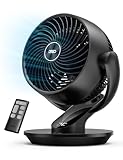
Overview: The Dreo 13-inch table fan leverages WingBoost technology to project airflow 70ft with 853 CFM, making it suitable for whole-room circulation in bedrooms and offices. Standing 13.2 inches tall, it features 90° horizontal oscillation and 120° vertical manual tilt. Four speeds, an Auto mode, and an 8-hour timer provide flexible cooling options at a whisper-quiet 28dB noise level.
What Makes It Stand Out: The increased blade diameter and WingBoost technology deliver noticeably stronger airflow than smaller desk fans while maintaining compact portability. The concealed temperature sensor in Auto mode intelligently adjusts speed based on ambient conditions, a feature uncommon in non-smart fans. The 1-minute auto screen-off ensures sleep-friendly operation throughout the night.
Value for Money: This model bridges the gap between basic desk fans and premium tower units. It offers more power than the 11-inch version for a modest price increase, competing well against similar-sized Vornado circulators. The remote and timer add convenience worth the slight premium over purely mechanical alternatives.
Strengths and Weaknesses: Pros include robust airflow for medium rooms, ultra-quiet operation, intelligent Auto mode, and easy-clean design. The 13-inch footprint may be too large for crowded desks. It lacks smart connectivity, and the vertical tilt requires manual adjustment. Power could still fall short for open-concept living areas.
Bottom Line: A versatile performer for small to medium rooms where smart features aren’t essential. The Dreo 13-inch fan offers excellent airflow and quiet operation for bedrooms, home offices, or living spaces that need consistent circulation without breaking the bank.
10. Amazon Basics 28" 60-Degree Oscillating Tower Fan with Powerful Airflow for Bedroom, Living Room, Office, 3 Speeds, Mechanical Control, Air Circulator, 35W, 27.8"H x 9.4"D x 9.4"W, Black

Overview: The Amazon Basics 28-inch tower fan offers straightforward cooling with mechanical controls and three speed settings. Delivering powerful airflow through a compact 12.5 x 12.5 x 27.8-inch frame, it provides 60-degree oscillation for targeted circulation. This 35W unit focuses on essential functionality without digital complexity for simple operation.
What Makes It Stand Out: Its simplicity is its strength—no apps, remotes, or complicated settings to navigate. The mechanical controls are intuitive and reliable, while the compact footprint fits virtually anywhere. As an Amazon Basics product, it benefits from solid quality control and customer support at a baseline price point.
Value for Money: This is among the most affordable tower fans available, significantly undercutting brands like Lasko and Honeywell. For budget-conscious buyers, it delivers core cooling functionality without premium frills. The trade-off is fewer features and potentially higher noise levels compared to mid-range models with electronic controls.
Strengths and Weaknesses: Pros include unbeatable price, simple operation, reliable mechanical controls, and space-saving design. The 60-degree oscillation is narrower than competitors’ 90-degree range. It lacks a timer, remote, and multiple modes. Noise levels are higher than premium fans, and there’s no auto-shutoff display. Cleaning access is more limited than removable-grille designs.
Bottom Line: Best for those prioritizing budget over features. The Amazon Basics tower fan reliably cools small spaces but lacks the refinement and convenience of pricier alternatives. Ideal for garages, workshops, or temporary cooling needs where simplicity and low cost are paramount.
Understanding Bedroom Cooling Needs
Why Temperature Matters for Sleep Quality
Your body’s core temperature naturally drops as you prepare for sleep, and maintaining this cooler environment is crucial for staying asleep throughout the night. When your bedroom remains too warm, your body struggles to regulate its temperature, leading to restless tossing, turning, and frequent wake-ups. The ideal sleep temperature typically falls between 60-67°F (15-19°C), and a well-chosen cooling fan helps maintain this range consistently.
The Science of Air Circulation
Moving air feels cooler than still air due to the wind chill effect, which accelerates the evaporation of moisture from your skin. This phenomenon allows you to feel comfortable at higher thermostat settings while your fan does the heavy lifting. Proper air circulation also prevents hot spots and ensures even temperature distribution throughout your bedroom, eliminating those frustrating pockets of stagnant, warm air.
Types of Cooling Fans for Bedrooms
Oscillating Pedestal Fans
Pedestal fans stand on adjustable-height poles, making them incredibly versatile for directing airflow exactly where you need it. Their oscillating function sweeps air across a wide area, preventing direct blasts from becoming uncomfortable while ensuring comprehensive room coverage. These models typically offer powerful airflow suitable for larger bedrooms and can be easily repositioned as needed.
Compact Tabletop Fans
Perfect for smaller bedrooms or nightstand placement, tabletop fans prioritize space efficiency without sacrificing performance. Their compact footprint makes them ideal for renters or anyone with limited floor space. Despite their smaller size, many models deliver surprisingly robust airflow and often include features like adjustable tilt and multiple speed settings tailored for close-range cooling.
Tower Fans with Slim Profiles
Tower fans have become increasingly popular for bedroom use thanks to their space-saving vertical design and modern aesthetics. These units distribute air through a tall, narrow outlet, creating a gentle breeze that covers a larger vertical area. Many tower models incorporate ionizers and filters, adding air purification benefits to their cooling capabilities.
Wall-Mounted Options
When floor or surface space is at a premium, wall-mounted fans offer an excellent alternative. These fans permanently install on your wall, keeping them out of the way while providing consistent airflow. They’re particularly effective in oddly shaped bedrooms or when you want to create cross-ventilation by positioning them opposite windows or doors.
Ceiling Fan Considerations
While not a portable option, ceiling fans deserve mention for their unparalleled ability to circulate air throughout an entire room. Modern ceiling fans come with reversible motors that push cool air down during summer and pull warm air up during winter, making them year-round investments. The key is selecting a model with a DC motor for quieter operation and energy efficiency.
Window Fans for Cross Ventilation
Window fans work by exhausting hot air out and pulling cooler evening air in, creating natural cross-ventilation. These units work best in climates where outdoor temperatures drop significantly at night. Dual-window fans with reversible airflow settings offer maximum flexibility, allowing you to switch between exhaust and intake modes as conditions change.
Key Features to Evaluate
Noise Levels and Sleep-Friendly Operation
The decibel rating should be your primary concern when selecting a bedroom fan. Look for models specifically marketed as “sleep” or “quiet” fans, which typically operate below 50 decibels on their highest setting. Some advanced models include a “white noise” mode that masks disruptive sounds from outside your bedroom, doubling as a sleep aid.
Adjustable Speed Settings and Controls
More speed settings mean more precise temperature control. While basic fans offer three speeds, premium models provide up to 12 incremental levels, allowing you to find the perfect breeze intensity. Look for fans with intuitive controls that are easy to operate in the dark, including clearly labeled buttons or backlit displays that won’t disrupt your sleep.
Energy Efficiency Ratings
Modern fans can consume as little as 1-2% of the energy used by air conditioning units. Check for Energy Star certification or DC motor technology, which reduces electricity consumption by up to 70% compared to traditional AC motors. This efficiency translates to significant savings over a summer of nightly use.
Blade Design and Airflow Power
The number, shape, and material of blades dramatically impact performance. More blades generally create smoother, quieter airflow, while fewer blades move more air but can be noisier. Bladeless designs offer safety advantages and are exceptionally easy to clean, making them ideal for households with children or pets.
Smart Features and Connectivity
Wi-Fi-enabled fans allow you to control settings from your smartphone or integrate with voice assistants. Programmable schedules let you set the fan to automatically adjust speeds throughout the night, perhaps starting strong when you first lie down and gradually reducing as the room cools and your body temperature drops.
Safety Considerations for Overnight Use
Look for fans with stable bases that resist tipping, especially if you have pets that might bump them during the night. Overheat protection automatically shuts off the motor if it runs too hot, while finger-safe grilles prevent curious children from touching moving blades. These features provide peace of mind when leaving the fan running unattended.
Sizing and Placement Strategies
Calculating Room Size Requirements
Match your fan’s power to your bedroom’s square footage. As a general rule, you’ll want a fan that can circulate the room’s air volume at least three times per hour. For a 150-square-foot bedroom, look for a fan with a CFM (cubic feet per minute) rating between 1,000-1,500. Larger rooms may require multiple fans or a more powerful unit.
Optimal Positioning for Maximum Cooling
Place your fan near a window to draw in cooler outside air during evening hours, or position it to create a cross-breeze by aligning it with doorways or other windows. Avoid pointing the fan directly at your face all night, which can cause dry eyes and throat irritation. Instead, aim for indirect airflow that circulates throughout the room.
Height and Angle Adjustments
The ideal fan height aligns with your bed level when you’re lying down. Adjustable tilt mechanisms allow you to direct airflow upward toward the ceiling, creating a gentle recirculating effect that cools without creating uncomfortable drafts. This technique is particularly effective with pedestal and tabletop models.
Special Features for Enhanced Comfort
Timer Functions and Auto-Shutoff
Sleep timers automatically turn your fan off after a set period, preventing you from waking up chilled in the early morning hours. Look for models with multiple timer intervals, such as 1, 2, 4, and 8-hour settings. Some advanced fans include a “fade-to-off” feature that gradually reduces speed before shutting down completely.
Remote Controls and Convenience
Bedroom fans should include remote controls that let you adjust settings without getting out of bed. The best remotes have simple, intuitive layouts with large buttons that are easy to find and press in the dark. Some models even include a remote storage compartment on the fan itself to prevent losing it.
Air Filtration and Purification Add-ons
Fans with built-in HEPA or activated carbon filters remove allergens, dust, and odors while cooling your room. This dual functionality is especially valuable for allergy sufferers who need both temperature control and clean air. Remember to factor in filter replacement costs when evaluating these models.
Humidifier and Misting Functions
Some advanced fans incorporate evaporative cooling or ultrasonic misting to add moisture while cooling, which can be beneficial in dry climates. However, use caution with these features in humid environments, as adding moisture to already damp air can create discomfort and potentially encourage mold growth.
Maintenance and Longevity
Cleaning and Dust Management
Regular cleaning prevents dust buildup that can reduce efficiency and circulate allergens. Look for fans with tool-free disassembly and dishwasher-safe parts. Bladeless designs are the easiest to clean, requiring just a simple wipe-down of the ring and base.
Seasonal Storage Tips
When summer ends, proper storage extends your fan’s lifespan. Choose models that break down into compact components for easy closet storage. Retain original packaging for protection, and always clean thoroughly before storing to prevent dust from settling into internal components during the off-season.
Frequently Asked Questions
What size fan do I need for a 200-square-foot bedroom?
For a bedroom of this size, look for a fan with a CFM rating between 1,500-2,000. A pedestal or tower fan typically works best, as they provide sufficient power while maintaining quiet operation. Consider a model with oscillation to ensure even air distribution throughout the space.
Are bladeless fans worth the extra cost for bedroom use?
Bladeless fans offer significant advantages for bedrooms: they’re quieter, safer, easier to clean, and produce smoother airflow without choppy buffeting. The premium price often pays off through improved sleep quality and reduced maintenance time, making them worthwhile for most users.
How can I reduce fan noise for better sleep?
Place your fan on a soft surface like a rubber mat to reduce vibration transfer. Ensure all screws and components are tight, as loose parts create rattling. Position the fan at least three feet from your bed, and use lower speed settings combined with oscillation rather than high-speed direct airflow.
Do fans actually lower room temperature or just make it feel cooler?
Fans don’t lower air temperature; they create a wind chill effect by accelerating sweat evaporation from your skin. However, they can lower perceived temperature by 4-8°F. Window fans are the exception, as they actively exchange indoor and outdoor air, potentially lowering actual room temperature.
What’s the difference between CFM and RPM in fan specifications?
CFM (cubic feet per minute) measures the volume of air moved, directly impacting cooling effectiveness. RPM (revolutions per minute) measures blade speed. A high RPM doesn’t guarantee high CFM—blade design and size also matter. Always prioritize CFM ratings when evaluating cooling power.
Can I run my bedroom fan all night safely?
Most modern fans are designed for continuous overnight operation. Look for models with thermal overload protection and automatic shutoff timers. Ensure proper ventilation around the motor and keep the fan away from bedding or curtains that could obstruct airflow and cause overheating.
How much electricity does a bedroom fan consume compared to AC?
A typical bedroom fan uses 10-75 watts, while a window AC unit consumes 500-1,500 watts. Running a fan costs approximately $0.01-$0.05 per night, compared to $0.50-$2.00 for air conditioning. This represents a 95% reduction in energy costs for cooling.
Should I point the fan at me or away for better cooling?
Pointing the fan away from you often provides better overall room cooling by creating air circulation rather than direct wind. This prevents dryness and discomfort while still lowering the room’s effective temperature. For immediate relief, direct airflow works temporarily, but indirect positioning is better for sustained overnight comfort.
What maintenance is required for bedroom fans?
Clean the grille and blades weekly with a damp cloth to prevent dust buildup. Deep clean monthly by disassembling per manufacturer instructions. Lubricate the motor annually if specified in your manual. Check and tighten all screws quarterly to prevent noise from loose components.
Are smart fans with Wi-Fi connectivity reliable for overnight use?
Smart fans from reputable manufacturers offer reliable connectivity and include fail-safes that maintain operation even if Wi-Fi drops. The main benefit is scheduling and remote control convenience. However, ensure the fan operates manually without Wi-Fi as a backup, and position it where your router’s signal remains strong.