Table of Contents
As we move into 2026, office spaces continue evolving with hybrid work models, open floor plans, and heightened focus on employee comfort and energy efficiency. The challenge of maintaining consistent, cost-effective warmth throughout commercial environments has never been more complex—or more critical. Baseboard heaters, long considered a reliable heating solution, have undergone significant technological transformations that make them particularly relevant for modern office applications. Understanding these advancements and how they align with your specific workspace needs is essential for making a smart investment that will serve your organization for years to come.
Choosing the right commercial baseboard heater involves far more than simply picking a model with adequate wattage. Today’s office managers and facilities directors must navigate considerations ranging from smart building integration and zoning capabilities to ADA compliance and long-term operational costs. This comprehensive guide walks you through every critical factor to evaluate, ensuring you can confidently identify the optimal heating solution for your office environment without getting overwhelmed by technical jargon or marketing hype. We’ll explore what separates truly commercial-grade equipment from residential units masquerading as business-ready, and how emerging 2026 technologies can transform your approach to workplace climate control.
Top 10 Commercial Baseboard Heaters
Detailed Product Reviews
1. Cadet F Series 48" Electric Baseboard Heater (Model: 4F1000W, Part: 09954 ), 3415/2560 BTU, 240/208 Volt, 1000/750 Watt, White
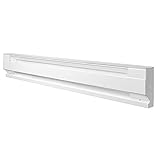
Overview: The Cadet F Series 48" Electric Baseboard Heater delivers robust heating performance for small to medium-sized rooms with its dual voltage capability. Operating at 1000 watts (240V) or 750 watts (208V), it produces 3415 or 2560 BTU respectively. This hardwired unit features a clean white finish that blends with most décor, though it requires professional installation. The heater utilizes conventional convection technology to circulate warm air naturally without fans, ensuring quiet operation. Its universal wiring design accommodates various installation configurations, making it adaptable to different room layouts and electrical setups.
What Makes It Stand Out: The dual voltage flexibility sets this unit apart, allowing installation in both residential (240V) and commercial (208V) settings. The limited lifetime warranty demonstrates manufacturer confidence in durability. Pre-punched knockouts at 1-inch intervals simplify installation, while the high-temperature safety shutoff provides essential protection. The 48-inch length offers substantial heating coverage without dominating wall space.
Value for Money: Priced competitively for a 1000-watt baseboard heater, the lifetime warranty adds significant long-term value. While it doesn’t include a thermostat, the build quality and safety features justify the cost. Comparable units without warranty coverage often cost 20-30% less but lack the same protection.
Strengths and Weaknesses: Strengths: Dual voltage operation, lifetime warranty, safety shutoff, quiet convection heating, flexible installation. Weaknesses: No built-in thermostat, requires hardwired installation, professional installation recommended, only available in white.
Bottom Line: An excellent choice for homeowners seeking a permanent, reliable heating solution with exceptional warranty coverage. Ideal for bedrooms, offices, or small living spaces requiring consistent, quiet warmth.
2. King 3K1207BW 750-Watt 120-Volt 3-Foot Baseboard Heater, Bright White

Overview: The King 3K1207BW is a compact 3-foot baseboard heater delivering 750 watts of power at 120 volts, making it suitable for small rooms up to 75 square feet. This hardwired unit features bright white finish and utilizes an aluminum ribbon fin element for efficient heat transfer. The 120-volt design simplifies installation compared to 240-volt models, requiring only standard household voltage. Its natural convection operation ensures silent performance without moving parts. The heater is designed for permanent mounting and requires direct wiring, though the lower voltage makes it more accessible for DIY-inclined homeowners comfortable with basic electrical work.
What Makes It Stand Out: The aluminum ribbon fin element provides superior heat distribution compared to standard elements. The crushproof design enhances durability, while the full-length safety cutout offers comprehensive overheating protection along the entire unit. At 36 inches, it’s ideal for tight spaces like bathrooms or under windows where longer units won’t fit.
Value for Money: This heater offers solid value for small-space heating needs. The 120-volt operation eliminates the need for special circuits, potentially reducing installation costs. While wattage is modest, the efficient fin element maximizes heat output. Comparable 120-volt units typically cost 10-15% more for similar build quality.
Strengths and Weaknesses: Strengths: 120-volt operation, compact size, aluminum fin element, crushproof construction, full-length safety cutout. Weaknesses: Lower heat output limits room size, no thermostat included, hardwired only, shorter length reduces coverage area.
Bottom Line: Perfect for supplemental heating in small spaces or where 120-volt is the only option. A reliable, compact solution for bathrooms, small bedrooms, or offices needing targeted warmth.
3. Dayton Hydronic Electric Baseboard Heater, Commercial, 208/240VAC, Amps AC 3.1/2.7, 1 Phase, BtuH 2560/1918

Overview: The Dayton Hydronic Electric Baseboard Heater is a commercial-grade unit designed for demanding environments. Operating at 208/240VAC with 3.1/2.7 amps, it delivers 2560/1918 BTU of comfortable, even heat. This oil-filled hydronic heater uses a sealed heating element to warm liquid, which then radiates consistent warmth without the hot spots common in standard convection heaters. The conventional housing style features durable steel construction built to withstand commercial use. This unit requires professional hardwired installation and is significantly heavier than residential models, reflecting its robust build quality and commercial certifications.
What Makes It Stand Out: Commercial-grade construction ensures longevity in high-traffic areas. The hydronic technology provides superior heat retention and distribution, continuing to radiate warmth even after the thermostat cycles off. Dual voltage compatibility offers installation flexibility across commercial and residential panels. The unit maintains lower surface temperatures than conventional heaters, reducing burn risks.
Value for Money: While priced 30-40% higher than residential equivalents, the commercial build quality justifies the premium for businesses or homeowners prioritizing durability. The hydronic technology’s efficiency can yield energy savings over time, offsetting initial cost. However, for typical residential use, the extra expense may be unnecessary.
Strengths and Weaknesses: Strengths: Commercial durability, even hydronic heat, dual voltage, lower surface temperatures, quiet operation. Weaknesses: Higher price point, requires professional installation, no thermostat, heavy construction, commercial aesthetic may not suit homes.
Bottom Line: Ideal for commercial spaces, rental properties, or homeowners wanting maximum durability. Overkill for standard residential use but excels in demanding applications where longevity matters most.
4. Fahrenheat FHP1500T 58 in. 1,500-Watt Electric Hydronic Portable Baseboard Heater

Overview: The Fahrenheat FHP1500T stands out as a portable hydronic baseboard heater delivering 1,500 watts of power through a 58-inch unit. This oil-filled heater features a built-in smart thermostat for precise temperature control without wall-mounted controls. The liquid-filled element provides consistent, even heating without the noise or dust circulation of fan-forced units. As a portable unit, it requires no installation—simply plug into a standard 120-volt outlet. The hydronic design maintains warmth longer than conventional heaters, cycling less frequently. Made in the USA, it combines convenience with efficient heating technology for spaces up to 150 square feet.
What Makes It Stand Out: Portability combined with hydronic technology is rare in baseboard heaters. The integrated smart thermostat eliminates the need for separate wiring or controls. Its 58-inch length and 1500-watt output provide substantial heating capacity. The unit’s ability to retain and radiate heat efficiently reduces energy consumption compared to standard electric heaters.
Value for Money: Priced higher than fixed baseboard units but includes thermostat and portability. The hydronic technology and American manufacturing justify the premium. Comparable portable heaters cost similar but lack hydronic efficiency. No installation costs offset the higher purchase price.
Strengths and Weaknesses: Strengths: Portable, built-in thermostat, hydronic even heating, energy efficient, no installation required, Made in USA. Weaknesses: Larger footprint, slower initial heat-up, higher price point, requires floor space, limited to 120V.
Bottom Line: An excellent choice for those wanting efficient, thermostat-controlled heat without permanent installation. Perfect for apartments, offices, or supplemental heating where portability and precision control are priorities.
5. Cadet Baseboard Heater Ul 120 V/4.17 A White 30 " 500 W

Overview: The Cadet 30-inch Baseboard Heater offers 500 watts of convection heat at 120 volts in a compact white housing. The product description includes two units, remote control operation, and claims coverage up to 1,710 square feet—specifications that warrant verification as they exceed typical performance for this wattage. This appears to be a corded electric unit, unusual for baseboard heaters which are typically hardwired. Measuring 30 inches, it’s designed for floor mounting and targeted heating of small spaces. The lightweight specification (0.34 lb) seems inconsistent with heater construction, suggesting possible data errors in the product listing.
What Makes It Stand Out: The inclusion of two units and a remote control at this price point is unique. The 120-volt operation simplifies installation, while the compact 30-inch size fits where larger units cannot. The remote control adds convenience for temperature adjustments without manual dial operation.
Value for Money: If specifications are accurate, two units with remote control offer exceptional value. However, the unrealistic coverage claim and questionable weight specification raise concerns. Verify specifications before purchasing. Typical 500-watt heaters reasonably cover 50-75 square feet, not 1,710 square feet.
Strengths and Weaknesses: Strengths: Two units included, remote control convenience, 120-volt operation, compact size, easy installation. Weaknesses: Extremely low wattage limits heating capacity, questionable product specifications, corded design may not meet code for permanent baseboard heating, no thermostat integration.
Bottom Line: Approach with caution due to inconsistent specifications. Could work for very small spaces or supplemental heating if actual performance matches standard 500-watt expectations. Verify details with manufacturer before purchasing.
6. Cadet F Series 72 in. Electric Baseboard Heater (Model: 6F1500-1W, Part: 05536), 120 Volt, 1500 Watt, White

Overview: The Cadet F Series 72-inch Electric Baseboard Heater delivers consistent warmth for larger spaces requiring permanent heating solutions. This 1500-watt, 120-volt unit provides continuous heat transmission across its six-foot length, making it suitable for living rooms, basements, or supplementary whole-room heating. The clean white finish integrates seamlessly with most interior trim and décor.
What Makes It Stand Out: Its extended 72-inch length distinguishes it from standard 48-inch models, delivering more uniform heat distribution along exterior walls. The continuous operation design maintains steady temperatures without the cycling common to fan-forced units, reducing temperature fluctuations. As a hardwired solution, it eliminates the clutter of portable heaters while providing reliable, maintenance-free operation for years.
Value for Money: At its price point, this heater offers solid value for homeowners seeking permanent installation. While 120-volt operation is less energy-efficient than 240-volt alternatives, it simplifies installation in existing construction. The unit’s durability and maintenance-free design offset initial costs compared to replacing multiple portable heaters over time.
Strengths and Weaknesses: Strengths include generous length for superior coverage, continuous heat transmission, reputable brand reliability, and clean aesthetic integration. Weaknesses involve 120-volt limitations for larger spaces, professional installation requirements, and manufacturing in China which may concern buyers prioritizing domestic production. The fixed wattage also lacks flexibility for zone heating adjustments.
Bottom Line: Ideal for homeowners needing consistent, quiet heating in medium-sized rooms. Best suited for new construction or renovation projects where 120-volt wiring already exists. Consider 240-volt models for larger spaces or maximum efficiency.
7. Hydronic Electric Baseboard Heater, Commercial, 120VAC, Amps AC 12.5, 1 Phase, BtuH 5118
Overview: This commercial-grade hydronic electric baseboard heater provides 5,118 BTUs of heating capacity through an oil-filled design that retains and radiates heat efficiently. Operating at 120VAC with 12.5 amps, it suits commercial offices, retail spaces, or residential applications requiring robust construction. The conventional housing style maintains a professional, unobtrusive appearance.
What Makes It Stand Out: The hydronic system excels through thermal retention, continuing to radiate warmth even after the heating element cycles off. This creates more stable temperatures and reduces energy consumption compared to standard electric models. Its commercial-grade build quality ensures durability in high-traffic environments where standard residential heaters might fail.
Value for Money: Commercial construction commands a premium, but the investment pays dividends in longevity and performance. The hydronic design’s efficiency can reduce operating costs by 10-15% versus conventional electric baseboards. For businesses or homeowners prioritizing durability over initial expense, this represents sound long-term value.
Strengths and Weaknesses: Strengths include superior heat retention, commercial durability, consistent temperature maintenance, and quiet operation without fans. Weaknesses involve 120-volt limitations restricting output, potentially excessive robustness for residential use, generic branding lacking consumer support reputation, and no aesthetic customization options. The 5118 BTU rating may prove insufficient as a primary heat source in cold climates.
Bottom Line: Excellent for commercial applications or residential spaces demanding industrial-grade reliability. Best utilized as supplemental heating or in moderate climates. Verify BTU requirements before purchasing, as 120-volt constraints limit its capacity for larger areas.
8. 1128/1500W 208/240V Electric Baseboard Heater
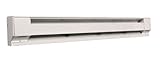
Overview: This versatile electric baseboard heater offers dual-wattage flexibility at 1,128 or 1,500 watts, operating on either 208 or 240 volts. Its convection heating technology distributes warmth evenly from floor to ceiling without creating hot and cold zones. The UL-listed unit includes comprehensive safety features and a spacious wiring compartment for straightforward installation.
What Makes It Stand Out: Unmatched versatility defines this heater, adapting to different electrical systems while maximizing efficiency. The fanless convection design eliminates dust circulation, making it ideal for allergy sufferers. Its overheat protection automatically shuts down the unit if air intake becomes blocked, providing crucial safety reassurance. The large wiring compartment with dual knockouts simplifies installation for DIYers and professionals alike.
Value for Money: Exceptional value stems from its adaptability—one model works for multiple voltage scenarios, reducing inventory costs for contractors. The 240-volt operation delivers superior energy efficiency, converting 100% of electrical input to heat per Department of Energy standards. Safety features and ease of installation add significant worth compared to basic models.
Strengths and Weaknesses: Strengths include dual voltage/wattage flexibility, allergy-friendly convection heating, robust safety systems, easy wiring access, and high energy conversion efficiency. Weaknesses involve unspecified brand reputation, unknown length dimensions limiting application planning, and requirement of 208/240-volt supply unavailable in all locations. Professional installation may still be advisable despite DIY-friendly design.
Bottom Line: Highly recommended for versatile heating applications, particularly in multi-unit buildings or renovation projects with varied electrical systems. Perfect for allergy-conscious households prioritizing safety and efficiency. Confirm your voltage availability before purchasing.
9. Cadet F Series 49" Portable Electric Baseboard Heater (Model: 4P1500W, Part: 05601), 5120 BTU, 120 Volt, 1500 Watt, White

Overview: The Cadet F Series 49-inch Portable Electric Baseboard Heater combines the efficiency of baseboard heating with plug-and-play convenience. Delivering 5,120 BTUs at 1,500 watts and 120 volts, this unit provides substantial heating power without permanent installation. Its compact four-foot length suits bedrooms, offices, or supplemental heating in stubbornly cold areas.
What Makes It Stand Out: True portability distinguishes this from fixed baseboard heaters, requiring only a standard wall outlet. The 49-inch length balances heating capacity with space efficiency, fitting where longer units cannot. As part of Cadet’s reputable F Series, it maintains quality construction despite its mobile design. The white finish and low profile allow discreet placement along walls.
Value for Money: This heater offers excellent value for renters or homeowners needing targeted heating without wiring costs. While portable units typically cost more per BTU than permanent models, the elimination of installation expenses makes it economically attractive. The ability to move it between rooms maximizes utility across multiple seasons.
Strengths and Weaknesses: Strengths include true portability, reputable brand backing, adequate output for small-to-medium rooms, and no installation requirements. Weaknesses involve tip-over risks inherent to portable heaters, limited coverage area compared to 72-inch models, 120-volt inefficiency versus 240-volt systems, and potential cord obstruction. It cannot replace whole-home heating systems.
Bottom Line: Perfect for supplemental heating or temporary solutions. Ideal for renters, offices, or single-room applications. Not suitable as primary heat source for large spaces. Use with caution around children and pets due to tip-over risk.
10. Stelpro Single Pole Line Voltage Thermostat, Mechanical 240 Volts, Compatible with Most Heating Products (Electric Baseboards, Wall Fan Heaters or Commercial Fan-Forced Heaters), (SWT1F) White

Overview: The Stelpro SWT1F is a mechanical line-voltage thermostat designed for 240-volt heating systems, offering universal compatibility with electric baseboards, wall fan heaters, and commercial fan-forced heaters. Its simple dial operation provides reliable temperature control without digital complexity. The molded plastic construction ensures durability while maintaining a sleek, compact profile that blends with any décor.
What Makes It Stand Out: Remarkable versatility allows this single thermostat to control multiple heater types, simplifying inventory for contractors and property managers. The mechanical design eliminates batteries and electronic failure points, providing decades of reliable service. Its two-wire connection system enables quick installation, reducing labor costs significantly.
Value for Money: This thermostat delivers outstanding value for basic temperature control needs. Priced substantially below programmable digital alternatives, it offers essential functionality without unnecessary features. The mechanical reliability means replacement costs are virtually eliminated, making it a fiscally smart choice for rental properties and budget-conscious installations.
Strengths and Weaknesses: Strengths include broad compatibility, foolproof mechanical operation, straightforward two-wire installation, durable construction, and proven reliability. Weaknesses involve single-pole limitation (no true off position), lack of programming features, 240-volt exclusivity (incompatible with 120V systems), and less precise temperature control compared to digital models. No backlight makes nighttime adjustments difficult.
Bottom Line: An excellent choice for straightforward, reliable temperature control in 240-volt heating systems. Ideal for rental properties, workshops, and applications where simplicity trumps advanced features. Not suitable for those wanting programmable scheduling or precise digital readouts.
Understanding Commercial Baseboard Heaters for Modern Offices
What Distinguishes Commercial from Residential Models
Commercial baseboard heaters are engineered for dramatically different demands than their residential counterparts. These units feature heavier-gauge steel construction, commercial-grade heating elements designed for continuous operation, and internal components rated for 10,000+ hours of use. Unlike residential models that might cycle on and off a few times daily, commercial units in office environments often run continuously during business hours, requiring robust thermal protection systems and industrial-strength wiring connections that prevent degradation over time.
Benefits for Office Environments
The low-profile design of baseboard heaters preserves valuable floor space while delivering consistent, draft-free warmth along perimeter walls where heat loss occurs most. In office settings, this means employees near windows stay comfortable without adjusting central thermostat settings that might overheat interior spaces. The silent operation—devoid of fan noise—creates a more focused work environment, while individual room controls allow departments to customize temperatures based on occupancy and preference without impacting other zones.
2026 Technology Landscape
This year’s commercial heating market emphasizes connectivity and predictive efficiency. Advanced models now feature built-in occupancy sensors that learn office traffic patterns, automatically reducing heat in rarely-used conference rooms while maintaining comfort in high-traffic areas. Integration with popular building management systems allows facility managers to monitor energy consumption in real-time through centralized dashboards, while machine learning algorithms optimize heating schedules based on weather forecasts and historical usage data.
Key Features to Evaluate Before Investing
Heating Capacity and BTU Ratings
Proper sizing begins with calculating your space’s heating requirements, typically measured in BTUs (British Thermal Units) or watts per square foot. Commercial offices generally need 6-8 watts per square foot for adequate heating, though this varies based on ceiling height, window quality, and insulation. A 200-square-foot office would require approximately 1,200-1,600 watts, but factors like north-facing external walls or poor insulation can increase demands by 30-40%. Always select models with slightly higher capacity than calculations suggest to accommodate extreme weather events and ensure quick warm-up times on Monday mornings.
Energy Efficiency Metrics
Look beyond simple wattage ratings to understand true operating costs. The most efficient commercial baseboard heaters convert over 99% of electrical energy into heat, but smart features determine how effectively that heat is utilized. Models with digital thermostats maintaining temperature within 0.5 degrees prevent energy-wasting temperature swings. Some units now display real-time energy consumption metrics directly on the control panel, helping you track costs by department or individual heater—an invaluable feature for budget-conscious facility managers.
Smart Controls and Connectivity
2026’s commercial heaters offer sophisticated control options beyond basic programmable thermostats. Wi-Fi-enabled models allow remote adjustment through secure apps, while BACnet or Modbus compatibility enables integration with existing building automation systems. Look for units supporting open API protocols if you plan to develop custom control interfaces. Advanced scheduling features should accommodate irregular office hours, holidays, and even “work-from-home” days when heating specific zones becomes unnecessary.
Noise Levels and Operation
While baseboard heaters are inherently quieter than forced-air systems, not all commercial models are created equal. Premium units employ expansion joints that minimize clicking sounds as elements heat and cool. Some feature dual-tube heating elements that distribute thermal expansion more evenly, virtually eliminating operational noise. For open-plan offices or recording studios, request decibel ratings from manufacturers—quality commercial heaters should operate below 25 dB, roughly equivalent to whisper-level sound.
Build Quality and Durability
Inspect construction details that indicate longevity. Commercial-grade heaters use 20-gauge or heavier steel for the cabinet, with powder-coated finishes that resist scratches and corrosion. Heating elements should be embedded in aluminum fins for efficient heat transfer, with a minimum 10-year warranty on the element itself. The junction box must accommodate large-gauge wiring typical in commercial installations, and all connections should be accessible for maintenance without requiring cabinet removal.
Sizing and Placement Strategies for Office Layouts
Calculating Heating Requirements for Commercial Spaces
Begin with a detailed heat loss calculation considering window types, wall insulation, door traffic, and ceiling height. Commercial buildings with large glass facades may require perimeter heating loads 50% higher than interior calculations suggest. Don’t forget to factor in heat generated by office equipment—server rooms need minimal supplemental heat, while spaces with extensive computer workstations generate significant warmth that reduces heating demands. Professional HVAC engineers can perform Manual J calculations, but many manufacturers offer online calculators specifically designed for commercial office applications.
Optimal Placement in Different Office Zones
Strategic placement maximizes efficiency and comfort. Position heaters along exterior walls beneath windows to counteract cold downdrafts, maintaining a 2-inch clearance above flooring for proper airflow. In open-plan offices, space heaters every 8-10 feet for even distribution. Avoid placing heaters behind furniture or in high-traffic walkways where they become tripping hazards or get blocked from circulating air. Conference rooms benefit from dedicated units with occupancy sensors, while reception areas near frequently-opening doors need higher-capacity units to maintain comfort.
Zoning and Independent Control
Modern office layouts demand flexible zoning capabilities. Each department or enclosed office should have independent temperature control to accommodate varying preferences and occupancy. Look for heaters with built-in relays that can be controlled by centralized thermostats or building management systems. This allows you to create heating zones that align with your office’s actual usage patterns—perhaps keeping sales teams warm during early morning calls while engineering spaces remain cooler until later in the day.
Installation and Integration Considerations
Hardwired vs. Plug-In Models
Commercial office applications almost always require hardwired installation for safety and code compliance. Hardwired units connect directly to dedicated circuits, eliminating the risk of overloaded receptacles and providing cleaner aesthetics without visible cords. While plug-in models offer installation flexibility, they’re typically limited to 1,500 watts maximum—insufficient for most commercial spaces. Hardwired commercial heaters can handle up to 4,000 watts per unit, allowing fewer units to heat larger areas more efficiently.
Electrical Requirements and Circuit Planning
Commercial baseboard heaters operate on 208V, 240V, or 277V electrical systems, requiring careful circuit planning. A 20-amp 240V circuit can safely power up to 3,840 watts, typically accommodating two 1,500-watt heaters. Work with a licensed electrician to ensure your electrical panel has adequate capacity and that circuits are balanced across phases. Consider future expansion needs—installing conduit with extra capacity now prevents costly retrofitting when you add more heating zones later.
Professional Installation vs. DIY Approaches
While technically inclined facilities managers might handle residential installations, commercial applications demand professional expertise. Licensed electricians understand local codes, permit requirements, and commercial insurance mandates. They’ll ensure proper wire gauge, secure connections that withstand years of thermal cycling, and correct thermostat placement away from heat sources that could cause inaccurate readings. Professional installation typically includes warranty validation and compliance documentation essential for property insurance and building inspections.
Integration with Existing HVAC Systems
Baseboard heaters should complement, not compete with, existing heating systems. In many modern offices, they serve as supplemental perimeter heat while central systems handle baseline temperature maintenance. Install lockout relays that prevent baseboard heaters from operating when the central HVAC is in cooling mode. Smart thermostats can coordinate between systems, automatically switching to the most efficient heat source based on outdoor temperature and occupancy. This hybrid approach optimizes energy consumption while ensuring consistent comfort throughout the space.
Energy Efficiency and Cost Management
Understanding Operating Costs
Calculate annual operating costs using the formula: (Wattage ÷ 1,000) × Hours Used × Electricity Rate. A 2,000-watt heater running 10 hours daily at $0.12 per kWh costs $2.40 per day or approximately $576 during a five-day workweek through winter months. However, actual costs are typically 30-40% lower because heaters cycle on and off once reaching set temperature. Invest in models with precise thermostats that minimize overshooting and maintain steady temperatures to maximize these natural savings.
Programmable Features for Office Schedules
Advanced programming capabilities extend far beyond 7-day schedules. Look for heaters with holiday scheduling, automatic daylight saving time adjustments, and “away” modes that maintain minimal heat to prevent pipe freezing while dramatically reducing consumption. Some commercial units now integrate with calendar systems, automatically warming conference rooms 15 minutes before scheduled meetings and reducing heat during known unoccupied periods. This intelligent scheduling can reduce heating costs by 25-35% compared to manual thermostat adjustments.
Energy-Saving Modes and Eco Features
Eco modes automatically adjust temperature setpoints based on occupancy detection and external weather data. When sensors detect no movement for 30 minutes, the heater reduces temperature by 3-5 degrees, then quickly recovers when someone enters. Geofencing capabilities can detect when the last employee leaves for the day, triggering an immediate setback. These features are particularly valuable in hybrid work environments where daily occupancy fluctuates unpredictably.
ROI Calculations for Commercial Investments
Quality commercial baseboard heaters represent a 15-20 year investment. Calculate ROI by comparing purchase price plus installation against annual energy savings versus less efficient alternatives. A $500 premium for a high-efficiency model with smart controls typically pays for itself within 3-5 years through reduced energy consumption. Factor in maintenance costs—units with easily replaceable elements and modular designs cost less to service over their lifespan. Don’t forget potential utility rebates; many providers offer incentives for commercial installations of energy-efficient electric heating equipment.
Safety Standards and Compliance
Commercial Certifications to Verify
Ensure heaters carry UL (Underwriters Laboratories) or ETL (Intertek) certification specifically for commercial use, not just residential rating. Look for NEC (National Electrical Code) compliance and, for certain applications, NSF certification if heaters will be used in break rooms or areas with food preparation. For international companies, verify CE marking for European standards compatibility. Reputable manufacturers provide detailed specification sheets listing all applicable certifications—request these documents before purchasing to ensure compliance with your building’s insurance requirements.
Office-Specific Safety Features
Commercial environments demand enhanced safety mechanisms. Overheat protection with automatic shutoff is standard, but premium models include tip-over sensors (even for wall-mounted units) and thermal limiters that prevent surface temperatures from exceeding safe touch thresholds. In offices with children or vulnerable populations, look for heaters with lockable control panels that prevent unauthorized temperature adjustments and tamper-resistant construction that prevents access to internal components without specialized tools.
ADA Compliance Considerations
The Americans with Disabilities Act affects heater placement and operation. Controls must be accessible to individuals in wheelchairs, typically mounted 15-48 inches above finished floor. Heaters cannot protrude more than 4 inches into circulation paths when mounted above 27 inches, or they become tripping hazards. Ensure your placement plan maintains clear floor space requirements and that thermostat controls are operable with closed fists, not just pinching motions. Some manufacturers offer remote control options that eliminate physical reach requirements entirely.
Fire Codes and Insurance Requirements
Commercial fire codes often mandate minimum clearances between heaters and combustible materials—typically 12 inches above, 6 inches to the side, and clearance from floor coverings. Your insurance carrier may have additional requirements, such as temperature-limiting features or installation by certified professionals. Document all installations with photos and keep specification sheets on file. Some jurisdictions require annual inspection of commercial heating equipment; verify local requirements and establish a maintenance schedule that ensures compliance.
Maintenance and Longevity
Routine Maintenance Tasks for Facility Managers
Commercial baseboard heaters require minimal but consistent maintenance. Quarterly tasks include vacuuming dust from fins and cabinets—accumulated debris reduces efficiency by up to 15% and creates fire hazards. Inspect element supports for sagging, which causes uneven heating and premature failure. Check that thermostats respond accurately by testing with a separate thermometer. Annually, tighten electrical connections (with power off) as thermal cycling can loosen terminals over time. Keep a maintenance log for each unit to track performance trends and predict replacement needs.
Expected Lifespan in Commercial Applications
Quality commercial baseboard heaters typically last 15-25 years in office environments. The heating element itself often carries a lifetime warranty, while cabinets and controls usually have 5-10 year coverage. Lifespan varies dramatically based on usage patterns—units in continuously-occupied spaces may need element replacement after 15 years, while those in conference rooms used sporadically can last decades longer. Factor in your office’s occupancy model when estimating replacement cycles and budget accordingly.
Warranty Considerations and Fine Print
Commercial warranties differ significantly from residential coverage. Read terms carefully—some “commercial” warranties are actually pro-rated after the first year, meaning you receive only partial credit toward replacement. Look for warranties that cover full replacement for at least 5 years, with extended coverage on elements. Verify whether the warranty requires professional installation and annual maintenance documentation. Understand the claims process; some manufacturers require you to ship the entire unit back for inspection, causing significant downtime.
Troubleshooting Common Issues
Uneven heating often indicates blocked airflow or failed element sections—check for furniture obstruction first, then test element continuity with a multimeter. Units that won’t turn on may have tripped thermal limiters due to overheating; clean dust from fins and verify thermostat settings before calling for service. Cycling on and off too frequently suggests thermostat placement issues—relocate if it’s receiving direct sunlight or is too close to the heater itself. Keep spare thermostats and element sections in stock for critical zones to minimize downtime during failures.
Design and Aesthetic Considerations
Profile and Footprint Options
Commercial baseboard heaters have evolved beyond bulky, institutional designs. Slimline models measure as little as 2.5 inches deep, preserving walkways in narrow corridors. Low-height versions at 6 inches tall fit neatly under large windows without obstructing views. For spaces with baseboard-level air returns, some manufacturers offer custom heights that coordinate with existing HVAC elements. Consider the visual weight—darker colors and textured finishes make heaters less conspicuous against typical office color schemes.
Color and Finish Selections
Standard commercial colors include white, almond, and gray, but custom powder-coating options now allow matching corporate brand colors or interior design palettes for large orders. Textured finishes resist fingerprints and scuffs better than smooth surfaces in high-traffic areas. For premium installations, some manufacturers offer wood-grain vinyl wraps or architectural metal finishes that transform heaters into design elements rather than necessary utilities. Remember that darker colors radiate heat more efficiently but may show dust more readily.
Discreet vs. Prominent Placement Strategies
Sometimes the best design choice is making heaters disappear. Recessed installation kits allow units to sit flush with wall surfaces, creating a built-in appearance. For historical buildings or architecturally-sensitive spaces, custom covers can match baseboard molding profiles. Conversely, in industrial-chic office designs, exposed heaters with metallic finishes can complement the aesthetic. Consider your overall design philosophy—minimalist offices benefit from low-profile, neutral-colored units, while creative spaces might embrace heaters as visible, functional sculpture.
Impact on Office Design and Space Planning
Heater placement should inform furniture layout, not the reverse. During office design phases, mark all heater locations on floor plans and create clear zones where furniture cannot encroach. This prevents costly redesigns when you discover a planned workstation blocks a heater’s airflow. For flexible office designs with movable furniture, consider heaters with side-mounted controls that remain accessible regardless of furniture placement. Some manufacturers offer wireless thermostats that can be wall-mounted anywhere within 30 feet, providing layout flexibility while maintaining optimal sensor placement.
2026 Market Trends and Innovations
Emerging Technologies in Commercial Heating
This year’s breakthrough features include integrated air quality sensors that modulate heating based on CO2 levels—when occupancy increases and air becomes stale, heaters can signal ventilation systems to increase fresh air exchange while compensating for temperature changes. Some units now incorporate photocatalytic oxidation technology that purifies air while heating, addressing both comfort and health concerns. Others feature “learning” algorithms that adapt to your office’s unique thermal characteristics, reducing temperature overshoot by up to 40% after the first month of operation.
Sustainability and Carbon Footprint Reduction
With corporate sustainability mandates intensifying, manufacturers now offer heaters with declared environmental product declarations (EPD) documenting cradle-to-grave carbon impact. Some feature recycled steel construction and recyclable packaging. Renewable energy integration allows heaters to prioritize operation when solar panels or wind turbines are producing excess power. For companies pursuing LEED certification, certain models contribute points for energy performance and indoor environmental quality—verify specific contributions with your LEED consultant before specifying equipment.
Integration with Building Management Systems
Modern commercial heaters speak the same language as your BMS. BACnet IP connectivity enables two-way communication, allowing facility managers to monitor individual heater performance, receive predictive maintenance alerts, and generate energy reports by department or cost center. Some systems now support MQTT protocol for cloud-based management across multiple locations. This integration transforms baseboard heaters from standalone appliances into intelligent building components that contribute to holistic facility optimization strategies.
Predictive Maintenance and IoT Capabilities
The most advanced commercial heaters include onboard diagnostics that monitor element resistance, cycle counts, and temperature differentials. When performance degrades—perhaps indicating impending element failure—the system automatically alerts facility managers via email or SMS, allowing replacement scheduling before complete failure disrupts operations. Some manufacturers offer subscription services where they monitor your heaters remotely, providing monthly health reports and priority service scheduling. This predictive approach reduces emergency repair costs by up to 60% compared to reactive maintenance models.
Making Your Final Decision
Creating a Comparison Framework
Develop a weighted scoring matrix based on your priorities. Assign points for critical features: energy efficiency (25 points), smart controls (20 points), warranty coverage (15 points), safety certifications (15 points), noise level (10 points), and aesthetics (10 points). Add custom categories for your specific needs—perhaps ADA compliance or BMS integration. Score each model you’re considering, but don’t let total scores alone dictate choice. A heater scoring 85 with excellent smart features may better serve your needs than one scoring 90 with superior warranty but limited connectivity.
Budget Allocation Strategies
Divide your budget into three categories: equipment (50-60%), installation (25-35%), and contingency (10-15%). Premium heaters with advanced features cost more upfront but reduce long-term operating expenses. For offices in regions with expensive electricity, allocate more toward high-efficiency models. Consider phased installations—piloting two or three models in different zones for a full heating season before committing to a building-wide standard. This approach reveals real-world performance in your specific environment, preventing costly mass deployments of unsuitable equipment.
Vendor Evaluation Criteria
Assess manufacturers on factors beyond product specifications. Do they offer technical support during installation? Can they provide reference installations in similar office environments? What are their typical parts availability and lead times? Evaluate their commitment to long-term support—companies that have manufactured commercial heating equipment for decades are more likely to support products 15 years from now than recent market entrants. Request their product roadmap to ensure the model you choose won’t be discontinued before your next renovation cycle.
Pilot Testing Recommendations
Install 2-3 competing models in representative office zones for at least 30 days during heating season. Monitor energy consumption with submeters, survey employee comfort levels, and assess noise impact during quiet work periods. Test smart features thoroughly—do mobile apps connect reliably? Does BMS integration function as advertised? Document installation challenges and maintenance access issues. This real-world evaluation reveals problems that spec sheets hide, providing confidence in your final selection. Some manufacturers offer pilot programs with discounted evaluation units or extended return periods for commercial customers.
Frequently Asked Questions
How do I calculate the correct wattage for my office space?
Measure your room’s square footage and multiply by 6-8 watts per square foot for standard 8-foot ceilings with average insulation. Add 25% for spaces with large windows, poor insulation, or high ceilings. For precise calculations, conduct a heat loss analysis considering window types, wall construction, and local climate data. Always round up to the next standard heater size rather than down to ensure adequate capacity.
Can commercial baseboard heaters work with existing smart building systems?
Yes, many 2026 models offer BACnet, Modbus, or Wi-Fi connectivity for integration with building management systems. Verify protocol compatibility with your facilities team before purchasing. Some units require additional gateway devices for integration, while others connect directly to Ethernet networks. Test integration during the pilot phase to confirm seamless communication and feature support.
What’s the typical payback period for premium commercial models?
High-efficiency commercial baseboard heaters typically pay for themselves through energy savings within 3-7 years, depending on local electricity rates and usage patterns. Smart control features can accelerate payback by 20-30% in offices with irregular occupancy. Factor in utility rebates and reduced maintenance costs when calculating ROI. Offices in regions with high electricity prices often see payback in under 4 years.
Are there tax incentives for installing energy-efficient commercial heaters?
Many jurisdictions offer commercial energy efficiency tax credits, rebates, or accelerated depreciation for qualifying heating equipment. The specific incentives vary by location and may require meeting efficiency thresholds or ENERGY STAR certification. Check with your local utility provider and tax professional. Some manufacturers maintain databases of available incentives and can provide necessary certification documentation.
How noisy are commercial baseboard heaters during operation?
Quality commercial heaters operate at 25 dB or lower—quieter than a whisper. You may hear occasional soft clicking as elements expand and contract during heating cycles. Premium models use engineered expansion joints to minimize this noise. Avoid placing heaters in quiet zones like recording studios or executive offices without first conducting a sound test during your pilot evaluation period.
Can I install heaters myself or do I need a licensed electrician?
Commercial installations require licensed electricians to maintain warranty coverage, insurance compliance, and code adherence. Electricians ensure proper circuit sizing, secure connections that withstand commercial use, and correct thermostat placement. They also handle permit applications and inspection scheduling. Attempting DIY installation risks voiding warranties, creating safety hazards, and failing commercial building inspections.
What clearance requirements apply in office environments?
Maintain 12 inches of clearance above heaters, 6 inches to each side, and keep floor coverings away from the unit’s base. Heaters cannot obstruct exit paths or protrude more than 4 inches into circulation routes per ADA guidelines. In offices with movable furniture, mark floor zones where placement is prohibited to prevent airflow blockage and fire hazards.
How do hybrid work schedules impact heater selection?
Choose models with rapid warm-up capabilities and occupancy-based controls that adapt to unpredictable schedules. Smart heaters with geofencing or calendar integration automatically adjust for fluctuating occupancy. Consider zoning capabilities that allow heating individual offices on days when only some employees work on-site. This flexibility prevents heating empty spaces while ensuring occupied areas reach comfort temperatures quickly.
What’s the difference between single-phase and three-phase heaters?
Single-phase heaters operate on standard 208V or 240V circuits common in smaller commercial spaces. Three-phase heaters (typically 277V or 480V) are more efficient for large installations, allowing more heaters per circuit and better electrical load balancing. Most offices under 10,000 square feet use single-phase, while larger facilities benefit from three-phase distribution. Your building’s electrical service determines which type is appropriate.
How often should commercial baseboard heaters be replaced?
With proper maintenance, commercial baseboard heaters last 15-25 years. Replace units when repair costs exceed 50% of replacement cost, when elements fail repeatedly, or when efficiency degrades significantly. Upgrade sooner if you need smart features unavailable on older models or if safety certifications become outdated. Establish a replacement schedule based on installation age and usage intensity to avoid unexpected failures during peak heating seasons.
See Also
- 10 Premium Commercial Baseboard Heaters for Office Buildings (Worth the Investment)
- 10 Essential Commercial Baseboard Heaters Every Office Manager Needs in 2026
- 10 Game-Changing Silent Baseboard Heaters for Quiet Office Spaces in 2026
- The 10 Ultimate Best Compact Baseboard Heaters for Tight Spaces in 2026
- Why Weather Resistant Baseboard Heaters Are Essential for Garages and Outdoor Spaces