Table of Contents
Winter mornings in an unheated garage can feel like stepping into a walk-in freezer, especially when you’re trying to tackle a DIY project or just retrieve tools before work. That bone-chilling dampness seeps into your bones, making even simple tasks feel like a battle against the elements. For many homeowners, transforming that cold, drafty space into a functional year-round area isn’t just a luxury—it’s a necessity for hobbies, workshops, or even as supplemental workspace. The right heating solution can turn your garage from a seasonal storage pit into a productive sanctuary, but navigating the options without getting overwhelmed requires clear, practical guidance.
Ceramic heaters have surged in popularity for garage use, and for good reason: they offer a compelling mix of efficiency, safety, and targeted warmth that traditional heating methods often struggle to match in these challenging environments. Unlike bulky space heaters that guzzle energy or central heating systems that weren’t designed for detached structures, ceramic models provide rapid, focused heat through advanced technology that’s surprisingly adaptable. But not all ceramic heaters are created equal—especially when facing the unique demands of garages, where insulation is often poor, moisture lingers, and safety hazards multiply. Understanding exactly what features matter most can save you from shivering through projects or worse, compromising your safety. Let’s break down what truly makes a ceramic heater effective for your garage, so you can invest wisely without falling for marketing hype.
Top 10 Garage Ceramic Heaters
Detailed Product Reviews
1. Dura Heat EUH1465 Electric Forced Air Heater with Pivoting Base 5,120 BTU, Yellow

Overview: This rugged 1,500W forced-air heater targets workshops and garages with its durable steel build and pivoting base. It delivers targeted warmth using PTC ceramic tech, prioritizing function over finesse for demanding environments.
What Makes It Stand Out: Its industrial-grade steel construction stands out for longevity in harsh spaces, while the pivoting base allows precise directional heating. The dual heat/fan settings add versatility, functioning as both a heater and air circulator without frills.
Value for Money: Priced competitively for commercial-grade durability, it outperforms cheaper plastic units in workshops but lacks smart features of premium home heaters. Ideal for budget-conscious professionals needing no-nonsense reliability.
Strengths and Weaknesses: Strengths: Extremely durable, effective spot heating, simple operation, overheat protection. Weaknesses: No thermostat precision, limited to small spaces, noisy fan operation, basic design lacks modern comforts like oscillation.
Bottom Line: A dependable, no-frills workhorse for garages or sheds where toughness matters most, but skip it for quiet or large-area home heating; best for users prioritizing durability over convenience.
2. Techni Home Industrial Electric Forced Air Heater with Ceramic Heating Element, Adjustable Tilt, Overheat Protection, Portable Shop Garage Heater for Indoor/Outdoor Use, 1500W

Overview: This industrial heater balances power and practicality with ceramic efficiency, targeting workshops and drafty spaces. Its focus on adjustable settings and safety makes it versatile for both professional and home use.
What Makes It Stand Out: The three-mode system (fan/low/high) and adjustable tilt mechanism enable customized airflow direction and intensity. The thermostat provides temperature stability absent in basic models, enhancing comfort in variable environments.
Value for Money: Offers excellent mid-range value by merging workshop durability with home-friendly features like thermostat control. Cheaper than smart heaters but more functional than barebones units, justifying its price for multi-scene use.
Strengths and Weaknesses: Strengths: Flexible heat settings, precise thermostat, sturdy build, portable tilt design, strong safety protections. Weaknesses: No oscillation for wider coverage, moderate noise levels, outdoor use limited to sheltered areas, cord length not specified.
Bottom Line: A versatile, safety-focused heater ideal for workshops or basements needing adaptable warmth; recommended for users wanting thermostat control without smart-tech premiums, though not silent or ultra-wide-reaching.
3. DREO Space Heater, 1500W Electric Heaters for Indoor Use with Thermostat, 70° Oscillation, 8 Safety Protections, 5 Modes, Remote, 12H Timer, Quiet Portable Heater for Office, Bedroom, Large Room

Overview: Designed for quiet, even heating in living spaces, this ETL-certified heater combines advanced safety with library-quiet operation (34dB) and 70° oscillation, targeting bedrooms and offices up to 270 sq. ft.
What Makes It Stand Out: Its whisper-quiet performance and wide oscillation (boosting coverage by 20%) are exceptional. The smart ECO mode dynamically adjusts wattage (1000W–1500W), while 8 safety layers—including a flame-retardant plug—set a high safety benchmark.
Value for Money: Premium-priced but justifies cost with unparalleled quietness, energy-smart ECO mode, and comprehensive safety. Outperforms budget heaters in comfort and efficiency, making it worthwhile for noise-sensitive or safety-conscious households.
Strengths and Weaknesses: Strengths: Near-silent operation, wide oscillation, excellent safety suite, energy-efficient ECO mode, remote/timer convenience. Weaknesses: Limited to 270 sq. ft., no outdoor use, requires direct wall plug (no extension cord), oscillation mechanism may wear over time.
Bottom Line: The top choice for bedrooms or offices demanding tranquility and safety; highly recommended despite the price, though unsuitable for large rooms or outdoor workshops.
4. Gardtech Electric Space Heater for Indoor Use, Outdoor Heater with Overheat Protection, Fast Heat PTC Ceramic Portable Garage Heater for Workshop, Greenhouse (Green)

Overview: Tailored for greenhouses and compact workspaces, this 1500W heater emphasizes rapid 3-second heating and plant-friendly operation, with ETL certification ensuring safety for indoor/outdoor transitional zones.
What Makes It Stand Out: Uniquely optimized for horticulture with 30% higher thermal efficiency and ultra-fast warm-up (2 seconds). The 35dB quiet operation and 25W fan mode cater specifically to greenhouse environments without disturbing plant growth.
Value for Money: Excellent value for niche uses like greenhouses, where its efficiency and quietness justify the cost. Less versatile for general home heating but outperforms generic heaters in targeted agricultural applications.
Strengths and Weaknesses: Strengths: Exceptional speed, greenhouse-optimized modes, very quiet, stabilizing anti-tip bracket, 30% energy efficiency gain. Weaknesses: Limited to 215 sq. ft., outdoor use only in covered areas, no thermostat or oscillation, basic controls.
Bottom Line: A standout for gardeners or greenhouse users needing rapid, quiet warmth; strongly recommended for its specialty role but less ideal for whole-room home heating due to coverage limits.
5. Elevoke Space Heaters for Indoor Use, 1500W PTC Electric Heater with 90°Adjustable Angle, Fast Safety Heat, Small Portable Heater for Office Home (Blue)

Overview: This compact blue heater prioritizes portability and directional flexibility with a 90° oscillation range, targeting small rooms, desks, or outdoor patios where focused warmth is key. Assembly required for the base.
What Makes It Stand Out: The 90° adjustable angle provides unusually wide directional coverage for personal spaces, while its lightweight design and handle enhance mobility. Fast 3-second heating suits quick-warmth needs in offices or porches.
Value for Money: Budget-friendly for its portability and oscillation range, though lacking premium features like thermostats. Offers good value for renters or mobile users needing spot heating, but less efficient for sustained whole-room use.
Strengths and Weaknesses: Strengths: Highly portable, wide 90° oscillation, fast heat-up, includes safety shutoff, versatile for indoor/outdoor spots. Weaknesses: Basic controls (no thermostat), requires base assembly, limited to small areas, noise not quantified but likely moderate.
Bottom Line: A practical, portable pick for supplemental heating in deskside or patio settings; recommended for on-the-go warmth but avoid for primary room heating due to simplicity and coverage constraints.
6. DREO Quiet Space Heater, 1500W Portable Heaters for Indoor Use with Remote, 70° Oscillation, Fast and Safety Electric PTC Ceramic for Desk Office Bedroom, 12H Timer

Overview: The DREO Quiet Space Heater (Model 319) is a compact 1500W PTC ceramic heater designed for bedrooms, offices, and small rooms. It prioritizes silent operation and precise temperature control while delivering efficient warmth. What Makes It Stand Out: Its standout feature is whisper-quiet performance (34dB), achieved via a brushless DC motor and winglet fan, ideal for sleep or focused work. The Hyperamics PTC system claims 200% farther heat reach than traditional models, and the thermostat offers precise ±1℉ adjustments between 41-95℉. Comprehensive ETL-certified safety features (tip-over, overheat, child lock, V0 material) enhance reliability. Value for Money: Priced competitively within the premium quiet-heater segment, it justifies cost through superior noise reduction, accurate thermostat control, and robust safety. It outperforms many budget heaters lacking precise thermostats or quiet operation, offering better long-term comfort and energy efficiency. Strengths and Weaknesses: Strengths: Exceptionally quiet; precise thermostat; strong safety suite; effective oscillation; compact portability. Weaknesses: Limited to smaller spaces (~200 sq ft); no ECO mode mentioned; remote lacks backlighting. Bottom Line: Highly recommended for those prioritizing silent, precise heating in bedrooms or offices. Its safety features and temperature control make it a worthwhile investment for comfort-focused users seeking reliable, unobtrusive warmth.
7. PELONIS 30” Ceramic Tower Space Heater with Adjustable Thermostat for Large Room, 75° Oscillation, Remote Control & 12H Timer, Tip-Over Switch & Overheating Protection, 1500W, PHF15RSAPH30, Black

Overview: The PELONIS 30” Tower Heater is a powerful 1500W ceramic unit built for larger rooms (up to 280 sq ft). Its tall, slim profile and wide oscillation target spacious bedrooms or living areas with rapid, even heating. What Makes It Stand Out: Its height and 75° oscillation provide exceptional coverage for large spaces. Rapid heating (claims 70°F in 3 seconds) is aided by 26% more vents, while the 4 quiet settings (<55dB), including an ECO mode, balance efficiency and noise. The digital panel and remote offer easy 1°F thermostat adjustments. Value for Money: Excellent value for larger rooms where coverage is critical. It competes well against similar tower heaters, offering robust features (ECO mode, wide oscillation, strong safety) at a mid-range price, outperforming compact models in space-heating capability. Strengths and Weaknesses: Strengths: Superior coverage for large rooms; effective ECO mode; intuitive controls; strong safety certifications; quiet operation. Weaknesses: Bulkier footprint; slightly noisier than ultra-quiet models; basic safety features lack advanced elements like child lock. Bottom Line: A top choice for heating larger bedrooms or living rooms efficiently. Its wide oscillation, ECO mode, and rapid heating deliver strong performance, making it a practical and cost-effective solution for spacious areas.
8. DREO Space Heater, Portable Electric Heaters for Indoor Use with Thermostat and Remote, 2024 Upgraded, Digital Display, 12H Timer, 5 Mode, 1500W PTC Ceramic Fast Safety Heat for Office Bedroom Home

Overview: The 2024-upgraded DREO Space Heater is a versatile 1500W PTC ceramic unit featuring enhanced controls and safety. It targets users seeking smart functionality, quiet operation, and portability for homes or offices. What Makes It Stand Out: It combines Hyperamics PTC heating (200% farther reach claim) with a refined NTC chipset for ultra-precise 1°F thermostat control (41-95℉). Key upgrades include 5 modes (Power, ECO, Fan, etc.), memory function, mute, and industry-leading quietness (34dB). The ETL-certified safety suite includes an improved tilt-detection sensor. Value for Money: Represents strong value due to its comprehensive feature set: precise thermostat, multiple modes, memory function, and exceptional quietness. It surpasses similarly priced heaters lacking ECO intelligence or noise optimization, justifying a slight premium for long-term comfort and efficiency. Strengths and Weaknesses: Strengths: Pinpoint temperature accuracy; very quiet; versatile 5-mode operation; useful memory/mute functions; robust safety; portable handle. Weaknesses: No oscillation angle specified beyond standard; ECO mode details less defined than competitors. Bottom Line: Highly recommended for tech-savvy users wanting precise, quiet, and adaptable heating. The 2024 upgrades solidify its position as a feature-rich, user-friendly heater ideal for personalized comfort in various settings.
9. Elevoke Space Heaters for Indoor Use, 1500W PTC Electric Heater with 90°Adjustable Angle, Fast Safety Heat, Small Portable Heater for Office Home(Silver)
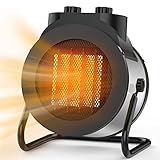
Overview: The silver Elevoke 1500W PTC heater is a compact, portable unit focused on fast, directional heat and basic safety. Its 90° oscillation and lightweight design suit desks, small rooms, or personal spaces. What Makes It Stand Out: The standout feature is the wide 90° adjustable oscillation angle, allowing highly targeted heat distribution. It heats quickly (3 seconds claimed) via PTC tech and a high-speed fan. Its small size, handle, and 5-foot cord enhance portability between rooms or offices. Value for Money: Excellent budget-friendly option for quick, localized heating. It delivers core functionality (fast heat, oscillation, portability) at a lower price point than feature-rich competitors, ideal for users needing simple, no-frills warmth without advanced thermostats. Strengths and Weaknesses: Strengths: Very portable; wide 90° oscillation; fast heat-up; simple mode selection; affordable. Weaknesses: Basic safety (only overheat protection); no thermostat for precise temp control; requires base assembly; noise levels unspecified beyond “quiet”. Bottom Line: A solid, economical pick for supplemental heating in small areas like desks or single-person rooms. Best for users prioritizing portability and wide-angle heat over precise temperature settings or advanced safety.
10. Elevoke Space Heaters for Indoor Use, 1500W PTC Electric Heater with 90°Adjustable Angle, Fast Safety Heat, Small Portable Heater for Office Home (Red)

Overview: The red Elevoke 1500W heater is functionally identical to its silver counterpart but features a vibrant red finish. It offers fast PTC heating, 90° oscillation, and portability for personal or small-space use. What Makes It Stand Out: Like the silver model, its key differentiator is the broad 90° oscillation for flexible heat direction. The red color provides a stylistic choice, while the compact size, handle, and quick 3-second heat-up cater to portable, immediate warmth needs in offices or bedrooms. Value for Money: Matches the silver version’s value proposition: a low-cost solution for basic, portable heating. The color choice doesn’t affect performance or price, making it equally worthwhile for budget-conscious buyers wanting a pop of color alongside core functionality. Strengths and Weaknesses: Strengths: Stylish red design; wide 90° oscillation; rapid heating; lightweight and portable; simple operation. Weaknesses: Limited safety features (only overheat protection); lacks thermostat; base assembly required; no noise level specification. Bottom Line: Recommended purely for aesthetic preference over the silver model. It delivers the same reliable, no-frills heating performance—ideal for users seeking an affordable, portable heater with a bold visual accent for personal spaces.
Why Ceramic Heaters Excel in Garage Environments
Garages present distinct heating challenges that demand specialized solutions. Their typically poor insulation, high ceilings, and frequent door usage cause heat to escape rapidly, making efficiency non-negotiable. Ceramic heaters tackle this head-on through their core technology: a ceramic heating element that warms up almost instantly and distributes heat more evenly than traditional coil-based models. This translates to less wasted energy and faster comfort in spaces where every degree matters.
Superior Heat Distribution for Drafty Spaces
Garages are notorious for drafts sneaking in through doors, windows, and gaps in walls. Ceramic heaters counter this with oscillating fans that actively circulate warm air throughout the area, preventing cold spots from dominating corners or workbenches. Unlike radiant heaters that only warm objects in their direct line of sight, this convection-based approach ensures consistent ambient temperature, crucial when you’re moving around a large space.
Energy Efficiency in Uninsulated Structures
The reality of most garages is minimal insulation, leading to massive heat loss. Ceramic elements are inherently more energy-efficient because they reach optimal operating temperature quickly and maintain it with less power. Many models also include eco-modes or thermostats that automatically adjust output based on the ambient temperature, preventing the heater from running unnecessarily at full blast and keeping electricity costs manageable.
Safety Advantages Over Alternatives
Safety is paramount in garages filled with tools, chemicals, and flammable materials. Ceramic heaters run cooler on the exterior surface compared to oil-filled radiators or quartz heaters, significantly reducing the risk of accidental burns or igniting nearby combustibles. This inherent safety feature makes them a far more reliable choice for cluttered or high-traffic workshop areas.
Critical Features to Prioritize for Garage Use
Selecting a heater without considering your garage’s specific layout and usage patterns is a recipe for disappointment. Key features aren’t just nice-to-haves; they directly impact effectiveness, safety, and operating costs in this demanding environment. Ignoring these can lead to inadequate heating, hazardous situations, or unexpectedly high energy bills.
Determining the Right Wattage Capacity
Wattage directly correlates to a heater’s ability to warm your space. Underpowered units will run constantly without ever reaching a comfortable temperature, while oversized models waste energy. As a baseline, aim for 10 watts per square foot—but this jumps significantly with poor insulation or high ceilings. For example, a 400-square-foot garage with standard 8-foot ceilings might need 4,000 watts, but that same space with 10-foot ceilings or single-pane windows could require 5,000+ watts to compensate for heat loss.
The Non-Negotiable Safety Mechanisms
Garages harbor unique risks that demand robust safety features. Tip-over protection is essential—imagine knocking over a heater while reaching for a ladder. Overheat protection automatically shuts the unit off if internal components get too hot, critical near piled-up cardboard boxes or sawdust. Look for models with cool-touch exteriors and physical grilles that prevent fingers or tools from contacting hot elements, especially important in busy workshop settings.
Portability Versus Permanent Installation
Consider how you’ll use the space. Portable units offer flexibility to move heat where it’s needed most—like near your workbench one day and the car parking spot the next—but require safe storage when not in use. Wall-mounted or ceiling-mounted ceramic heaters save floor space and provide consistent overhead warmth, ideal for dedicated workshops, but require professional installation and wiring. Evaluate your workflow: will you need to reposition heat frequently, or is a fixed zone more practical?
Assessing Your Garage’s Unique Heating Needs
A one-size-fits-all approach fails miserably in garage heating. Before purchasing, conduct a thorough assessment of your space’s physical characteristics and how you intend to use it. This groundwork prevents costly mistakes and ensures the heater you choose is genuinely suited to your reality.
Calculating Effective Square Footage Accurately
Don’t just measure floor area—factor in ceiling height. A 20x20-foot garage with 12-foot ceilings has nearly 50% more volume to heat than the same footprint with 8-foot ceilings. Multiply length x width x height to get cubic footage, then consult heater specifications that list coverage based on volume, not just area. Also, account for attached storage nooks or lofts that create additional zones needing warmth.
Evaluating Insulation and Air Leakage Points
Run your hand along garage door seams, window frames, and wall corners on a windy day. Noticeable drafts indicate significant heat loss. Poor insulation (common in older garages) means you’ll need a heater with higher wattage and robust thermostat control. Seal obvious gaps with weatherstripping first—it’s far cheaper than oversizing your heater—and prioritize models with precise thermostats to maintain temperature without constant cycling.
Understanding Your Usage Patterns and Zones
Are you heating the entire garage for car repairs, or just a small corner for woodworking? Zoned heating needs drastically alter your requirements. If you only need warmth in a 10x10-foot workshop area, a lower-wattage portable heater might suffice. For whole-garage use, especially with vehicles present, you’ll need higher output and possibly multiple units. Consider if you need continuous 24/7 operation (for frost protection) versus intermittent use during projects.
Power Source and Electrical Requirements
Garage heaters often push the limits of standard residential circuits, making electrical compatibility a make-or-break factor. Overlooking this can result in tripped breakers, damaged appliances, or dangerous wiring modifications. Always verify your electrical setup before purchasing.
Matching Heater Wattage to Circuit Capacity
Most standard garage outlets are on 15-amp circuits, supporting up to 1,800 watts (15 amps x 120 volts). Higher-wattage ceramic heaters (2,000W+) require dedicated 20-amp circuits. Attempting to run a 5,000W heater on a standard circuit is impossible without a 240-volt connection. Check your electrical panel—dedicated circuits for garage heaters should be clearly labeled. If unsure, consult an electrician; improper wiring risks fire.
The Reality of 240-Volt Systems
Garages with 240-volt outlets (typically for large tools like welders) can support high-output ceramic heaters (5,000W+). These deliver intense heat for large, poorly insulated spaces but require professional installation. If your garage lacks 240V, don’t assume you’re limited to weak heaters—modern 120V models up to 1,500W can still be effective for zones under 150 square feet with decent insulation. Never use extension cords with high-wattage heaters; they overheat and cause fires.
Voltage Stability in Older Garages
Garages added decades ago might have outdated wiring that can’t handle modern heater demands. Noticeable dimming lights when other tools run indicate voltage drop. In such cases, opt for heaters with lower peak wattage or invest in electrical upgrades first. Ceramic heaters with “soft start” technology gradually ramp up power, reducing strain on aging circuits during initial startup.
Durability and Environmental Resistance
Garages endure extreme conditions—freezing temperatures, humidity from snowmelt, dust from projects, and accidental bumps. A heater failing after one season isn’t just inconvenient; it’s a safety hazard. Prioritize rugged construction designed for workshop abuse.
Weather and Moisture Tolerance
Condensation from cold-to-warm transitions or wet vehicles creates damp conditions. Look for heaters with sealed electrical components and corrosion-resistant materials (like powder-coated steel instead of plastic casings). An IP24 rating or higher indicates protection against dust and light water splashes—essential near garage door entrances where rain or snow might blow in.
Dust and Debris Protection
Sawdust, metal shavings, and general workshop grime can clog vents and damage internal parts. Models with easily removable, washable air filters prevent debris buildup. Tight-mesh grilles stop larger particles from entering the fan housing. Avoid units with complex nooks where dust accumulates; smooth, wipeable exteriors make maintenance simpler in gritty environments.
Impact and Vibration Resistance
Garages are high-traffic areas where tools get knocked over. Heaters with reinforced housings, sturdy feet, and internal shock absorption withstand accidental bumps better. If mounting overhead, ensure the unit is rated for vibration resistance—many wall-mount models specify compatibility with garage door opener vibrations that could loosen components over time.
Operational Features for Practical Usability
Beyond basic heating, smart operational features transform a functional heater into a seamless part of your garage workflow. These details affect daily convenience, long-term costs, and how well the unit integrates into your routine without constant babysitting.
Precision Thermostat Controls
Basic on/off switches lead to temperature swings—too hot when running, too cold once off. Look for digital thermostats with 1-degree increments for maintaining your ideal workshop temperature (e.g., 55°F for paint projects). Programmable timers let you warm the space before your morning commute, avoiding wasted runtime. Some advanced models sync with smart home systems for remote adjustments via phone.
Noise Levels During Operation
Garage heaters often run while you’re working nearby. Ceramic fans can produce a noticeable hum. Check decibel ratings—under 45 dB is ideal for conversation-friendly operation. Lower settings typically run quieter, useful for late-night projects. Avoid units with loud rattling or high-pitched whines mentioned in user reviews, as these become unbearable during extended use.
User-Friendly Maintenance Requirements
Even the best heater fails if neglected. Models with accessible filters that slide out for monthly cleaning prevent performance drops. Indicators showing when filters need attention take the guesswork out. Avoid complex disassembly—simple wipe-downs and filter swaps encourage regular upkeep, ensuring consistent airflow and preventing overheating risks from dust buildup.
Cost Considerations Beyond the Purchase Price
The upfront cost is just the beginning. True value comes from understanding long-term operational expenses and how well the heater avoids hidden costs like repairs or energy spikes. A slightly pricier model with efficiency features often pays for itself within a season.
Calculating Real-World Energy Consumption
Heater wattage directly impacts your electric bill. A 1,500W unit running 8 hours uses 12 kWh daily. At $0.15/kWh, that’s $1.80 per day or $54 monthly—steep if running constantly. Eco-modes or thermostats reducing runtime by 30% save $16/month. Use online calculators factoring in your local electricity rates and estimated daily usage to compare models objectively.
Longevity and Repair Costs
Cheap heaters often use lower-grade ceramics and motors failing within 2–3 winters. Reputable brands with 3–5 year warranties signal better durability. Factor in potential repair costs: a failed thermostat might cost $50 to fix, but if the ceramic element cracks (common in low-end units), replacement often exceeds buying new. Investing in robust construction avoids replacement cycles.
Hidden Savings from Smart Features
Timers preventing all-night operation or occupancy sensors shutting off heat when you leave the garage add up. A unit that maintains 45°F instead of 65°F during freezing spells uses 30% less energy for frost protection. Some utility companies offer rebates for ENERGY STAR-certified heaters—check local programs before buying. These incremental savings make efficiency-focused models financially smarter long-term.
Installation and Placement Best Practices
Even the perfect heater underperforms with poor placement. Strategic positioning maximizes heat distribution, minimizes hazards, and ensures the unit operates at peak efficiency without becoming a workspace obstacle.
Optimizing Airflow and Heat Circulation
Place heaters away from walls (at least 3 feet) and obstructions like tool cabinets to allow unimpeded airflow. For portable units, center them in high-traffic zones rather than tucked in corners. Oscillating models should face the primary work area. Avoid positioning directly under ceiling vents where rising heat escapes rapidly—elevate portable units on sturdy stands if needed for better dispersion.
Avoiding Common Placement Hazards
Never place heaters near flammable liquids (paint, gasoline), loose papers, or hanging tarps. Maintain 6-foot clearance from vehicles—exhaust systems or hot engines could ignite nearby units. Keep away from high-moisture zones like sink areas unless specifically rated for it. In multi-car garages, position units so doors opening won’t blow them over or disrupt airflow patterns.
Securing Wall-Mounted Units Safely
For fixed installations, mount heaters on solid studs using manufacturer-provided hardware—drywall anchors alone won’t support the weight. Ensure vents aren’t blocked by shelves above or below. Position at least 18 inches above floor level to avoid kick damage but low enough for effective convection currents. Always hire an electrician for hardwired models; DIY electrical work risks fire and voids insurance.
Maintenance for Peak Performance and Safety
Regular upkeep isn’t optional—it’s critical for safety and efficiency. Neglected heaters work harder, cost more to run, and become fire hazards. Simple routines extend lifespan and keep your garage reliably warm season after season.
Essential Monthly Cleaning Routines
Power off and unplug the heater. Vacuum exterior vents to remove dust bunnies. Remove and rinse washable filters (if equipped) with mild soap—dry completely before reinserting. Use a soft brush to dislodge debris from internal fins visible through grilles. This prevents airflow restriction, which causes overheating and reduces heating capacity by up to 25%.
Seasonal Inspection Checklist
Before winter starts, test all safety features: unplug the unit, tilt it to verify tip-over shutoff activates, and cover the intake vent to check overheat protection. Inspect cords for fraying or cracks—replace damaged units immediately. Check mounting hardware tightness for wall units. Wipe down exteriors with disinfectant wipes to remove grease or chemical residues from summer projects.
Troubleshooting Common Issues
If the heater runs but produces weak heat, check for clogged filters or vents first—this causes 80% of performance drops. Unusual noises often signal loose screws or debris in the fan; tighten housing and clean carefully. If the unit shuts off unexpectedly, verify room temperature isn’t exceeding the thermostat setting or that safety features aren’t triggering due to poor placement. Persistent issues warrant professional servicing—don’t disassemble internal components.
Integrating Your Heater into Garage Workflow
A heater should enhance, not disrupt, your garage activities. Smart integration means aligning its operation with your habits, ensuring warmth supports productivity without constant adjustments or safety compromises.
Syncing with Project Schedules
Use programmable timers to pre-heat the space 30 minutes before your usual workshop hours, avoiding idle runtime. For weekend projects, set the heater to maintain a baseline 40°F overnight to prevent tools from freezing, then boost to 60°F an hour before you start. This balances comfort with energy savings, especially useful for infrequent users.
Creating Comfort Zones Without Wasting Energy
Focus heat where you actually work. Point portable units toward your workbench instead of heating the entire garage. For larger spaces, consider supplemental radiant panels above specific zones (like a pottery wheel area) paired with a central ceramic heater. This targeted approach uses less total energy than trying to uniformly heat a sprawling, drafty space.
Safety Protocols for Active Workspaces
Establish clear rules: never cover the heater with tarps during projects, keep power cords coiled safely away from sawdust, and install a GFCI outlet as a backup safety layer. Place the heater on a non-flammable mat if near metal shavings. If using solvents or paints, turn off the heater during application and allow fumes to dissipate before restarting—many overlook this critical ventilation step.
Frequently Asked Questions
How many watts do I need for a 2-car garage?
Focus on your garage’s actual cubic footage and insulation level rather than car count. A standard 20x20-foot garage with 8-foot ceilings (1,600 cubic feet) typically requires 3,000–5,000 watts. Add 20% more wattage if ceilings exceed 9 feet or insulation is minimal. Always verify your electrical circuit capacity first.
Can I leave a ceramic heater running overnight in the garage?
Only if it has certified safety features like tip-over and overheat protection, and is placed away from all flammables. Never leave any heater unattended for extended periods without these safeguards. For frost protection, use a model with a precise thermostat set to 40–45°F rather than continuous high-heat operation.
Do ceramic heaters work well in very cold garages below freezing?
Yes, but effectiveness drops as temperatures plunge. Below 20°F, even high-wattage units struggle to maintain warmth in large spaces. Prioritize sealing drafts first, and consider supplemental heat sources like insulated garage doors. Ceramic heaters warm objects faster than ambient air, making them slightly more effective than alternatives in extreme cold.
Are ceramic heaters safe around flammable materials like paint or gasoline?
Only with extreme caution. Maintain at least 6 feet of clearance from all flammables, and never store volatile liquids near operating heaters. Choose models with cool-touch exteriors and automatic shutoffs. For garages storing fuels, hardwired units with explosion-proof ratings are safer but require professional installation.
How do I prevent my ceramic heater from tripping the circuit breaker?
Ensure the heater’s wattage doesn’t exceed 80% of your circuit’s capacity (e.g., 1,440W max on a 15-amp circuit). Plug it directly into the wall—never use extension cords. If breakers trip, you likely need a dedicated circuit. Consult an electrician; overloading circuits causes dangerous overheating.
Can I use a ceramic heater with a thermostat to protect pipes from freezing?
Yes, but set the thermostat to 50–55°F—not lower. Lower settings risk pipes freezing before the heater activates. Use a model with precise 1-degree adjustments and a floor sensor to monitor actual pipe-level temperatures, not just air near the ceiling.
Do I need a special outlet for high-wattage garage heaters?
Heaters over 1,500W (12.5 amps) require a dedicated 20-amp circuit. Units exceeding 5,000W typically need 240-volt wiring. Never force a 240V plug into a standard outlet. An electrician can install the correct receptacle safely—DIY attempts risk fire.
How often should I replace the filter on my garage ceramic heater?
Check monthly during heavy use; clean or replace when visibly dusty (usually every 1–3 months). Clogged filters reduce efficiency by 20% and increase fire risk. Washable filters last years if maintained; disposable ones typically need replacing every heating season.
Will a ceramic heater dry out the air in my garage?
All electric heaters reduce relative humidity slightly by warming air, but ceramic models don’t actively remove moisture like dehumidifiers. In garages, this is rarely problematic—moisture issues usually stem from poor ventilation, not the heater itself.
What’s the difference between ceramic and infrared heaters for garages?
Ceramic heaters warm the air (convection), providing even ambient heat ideal for occupied spaces. Infrared heats objects directly (like sunbeams), better for spot-warming people but less effective for whole-garage comfort. Ceramic is generally safer and more versatile for typical garage use.
See Also
- 10 Best Ceramic Heaters for Cold Garages in 2026
- The 10 Best Ceramic Space Heaters for Fast Heating in 2026
- 10 Affordable Ceramic Heaters That Don’t Sacrifice Quality in 2026
- 10 Game-Changing Outdoor Ceramic Heaters for Patio Comfort in 2026
- The 10 Best Tower Ceramic Heaters for Modern Living Spaces in 2026