Table of Contents
When winter’s chill seeps into your garage, that extra ceiling height you’ve always loved suddenly becomes your biggest enemy. Warm air rises, leaving your workspace frigid at ground level while heat accumulates in the rafters—a frustrating phenomenon that makes traditional heating solutions woefully inadequate. Ceiling mounted heaters have emerged as the smart solution for tall garage spaces, strategically positioned to combat this natural temperature stratification and deliver warmth where you actually need it.
But not all overhead heaters are created equal, especially when you’re dealing with ceiling heights of 10, 12, or even 16 feet. The physics of heating vertical spaces demands specific features, precise mounting considerations, and careful capacity calculations that many standard units simply can’t deliver. Whether you’re protecting valuable tools, creating a year-round workshop, or just making the trek to your car less miserable, understanding what separates effective tall-ceiling heaters from underperforming models will save you money, frustration, and countless cold mornings.
Top 10 Ceiling Mounted Garage Heaters
Detailed Product Reviews
1. Shinic 2 Packs Electric Garage Heaters, 1500W/750W Ceiling Mounted Heater Radiant Heaters with Halogen Light, 90 Degree Rotation, 5 Mode Settings, Space Heater for Garage, Shop, Large Room and Patio
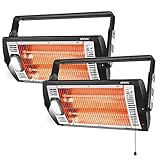
Overview: This dual-pack radiant heater system delivers targeted warmth for two separate zones in your garage or workshop. Each unit provides 1500W maximum output via dual quartz tubes that generate instant infrared heating. The ceiling-mount design with 90-degree rotation saves valuable floor space while directing heat precisely where needed. Perfect for multi-station work environments requiring consistent spot heating.
What Makes It Stand Out: The two-pack configuration offers exceptional value for workshops with multiple workbenches. Integrated halogen work lights illuminate your workspace while heating, eliminating separate lighting needs. Five modes controlled by a pull-string switch provide simple operation: low heat (750W), high heat (1500W), both settings with work light, or off. The radiant design heats objects directly rather than wasting energy warming air, making it efficient for spot heating.
Value for Money: Getting two complete heater units for the price of one premium model represents outstanding value. At approximately $150-180 for the pair, you’re paying under $100 per heating zone. While lacking advanced features, this no-frills approach delivers core functionality at a fraction of commercial system costs. Ideal for budget-conscious DIYers needing zoned heating without complex installation.
Strengths and Weaknesses: Strengths: Dual-zone coverage out of the box; space-saving ceiling mount; instant radiant heat; integrated work lights; simple pull-string operation; affordable per-unit cost. Weaknesses: No remote control; manual adjustment only; 120V limits total power; pull-strings inconvenient for high ceilings; not suitable for large open spaces.
Bottom Line: Perfect for small to medium garages with two distinct work areas. The Shinic 2-pack delivers reliable, targeted heating without breaking the bank. Ideal for DIYers wanting simple, effective warmth at multiple stations.
2. Comfort Zone Hard-Wired Ceiling Mount Garage Space Heater with Remote, 7,500 Watt, 240 Volt, Fan-Forced, Overheat Protection, Digital Thermostat, 12-Hour Timer, Ideal for Garage & Workshop, CZ230ERBK

Overview: This heavy-duty fan-forced heater is built for serious heating demands. Delivering 7,500 watts of power at 240 volts, it effectively warms spaces up to 1,250 square feet. The hard-wired, ceiling-mounted design maximizes floor space while robust steel construction withstands harsh workshop conditions. Designed for commercial-grade performance in residential or professional settings.
What Makes It Stand Out: The digital thermostat and remote control offer precision temperature management from anywhere in your workspace. A 12-hour timer adds convenience and energy savings. Adjustable louvers and variable mounting angles direct heat exactly where needed. The heavy-gauge steel body ensures durability in poorly insulated areas with temperature fluctuations, making it ideal for demanding environments.
Value for Money: Positioned as a premium commercial-grade solution, this heater justifies its higher price through professional features and massive coverage. While installation requires an electrician for 240V wiring, the long-term reliability and performance make it cost-effective for large spaces that would otherwise need multiple smaller units. Professional performance for serious users.
Strengths and Weaknesses: Strengths: Massive 1250 sq ft coverage; powerful 7500W output; remote and digital controls; programmable timer; durable steel construction; precise airflow direction; comprehensive safety features. Weaknesses: Requires professional 240V hard-wiring; highest price point; overkill for small residential garages; fan noise noticeable in quiet environments.
Bottom Line: The ultimate solution for large workshops, warehouses, or commercial garages. If you need serious heating power with modern convenience, this Comfort Zone model delivers professional performance that smaller units simply cannot match.
3. DR. INFRARED HEATER Portable Infrared Indoor and Outdoor Space Heater for Patio, Garage, Commercial & Residential With Remote Control, Without Thermostat, Black

Overview: Dr. Infrared’s versatile heater breaks boundaries with IP55 weatherproof rating for both indoor and outdoor use. This 1500W portable unit delivers clean, instant infrared heat with three power settings (900W, 1200W, 1500W). The included mounting bracket allows wall or ceiling installation while maintaining portability. Perfect for creating comfortable environments in garages, patios, or open-air restaurants.
What Makes It Stand Out: True indoor/outdoor flexibility sets this apart from garage-only heaters. The IP55 rating protects against water and dust, making it perfect for patios, decks, or commercial outdoor spaces. A high-efficiency aluminum reflector with 90% reflectivity maximizes heat output. The remote control adds convenience without complex programming, keeping operation simple and straightforward.
Value for Money: Mid-range pricing offers excellent versatility. You’re essentially getting two heaters in one—garage warmth in winter and patio comfort year-round. While it lacks a built-in thermostat, the three power levels provide reasonable temperature control for the price point. Great for homeowners wanting multi-season utility from a single purchase.
Strengths and Weaknesses: Strengths: IP55 weatherproof rating; indoor/outdoor versatility; portable design; high-efficiency reflector; remote control included; easy 120V plug-and-go; clean infrared heat. Weaknesses: No thermostat for automatic temperature maintenance; limited to 1500W (120V); not suitable for large garage spaces; outdoor use requires weather-protected outlet.
Bottom Line: Best choice for those needing flexible heating solutions. Whether warming a garage workbench or a patio gathering, this Dr. Infrared heater adapts to your needs. Perfect for homeowners wanting year-round utility from a single purchase.
4. Shinic Electric Garage Heaters with Remote Control, 1500W/750W Ceiling Mounted Radiant Quartz Heater with Work Light, 90° Rotation, 5 Mode Settings, Electric Heater for Garage, Shop, Patio Large Room

Overview: Shinic’s single-unit radiant heater combines infrared efficiency with modern convenience. This 1500W ceiling-mounted unit delivers instant warmth through dual quartz tubes while an integrated halogen work light illuminates your project area. The 90-degree rotation targets heat precisely where needed, making it ideal for single-workspace garages and shops.
What Makes It Stand Out: The addition of remote control distinguishes this from Shinic’s basic model, allowing operation without reaching for pull-strings. Five modes include low heat (750W), high heat (1500W), both with work light, and off. Enhanced safety features include overheat auto-shutoff, ETL listing, 3-prong grounded plug, and metal housing for durability and peace of mind.
Value for Money: Priced competitively for a remote-controlled radiant heater, it bridges the gap between basic models and premium fan-forced units. You get modern convenience and safety certifications without the 240V installation costs. Ideal for single-workspace setups where remote operation adds meaningful convenience and safety.
Strengths and Weaknesses: Strengths: Remote control convenience; comprehensive safety features (ETL listed); integrated work light; instant radiant heating; space-saving design; adjustable angle; simple installation. Weaknesses: 120V limits maximum power; radiant heat only (no fan circulation); not ideal for large spaces; remote range may be limited in cluttered garages.
Bottom Line: An excellent upgrade from manual radiant heaters. The Shinic remote-control model delivers targeted warmth with modern convenience and robust safety features. Perfect for DIY enthusiasts who want reliable, zoned heating without complex installation.
5. Comfort Zone Hard-Wired Ceiling Mount Garage Electric Space Heater, Fan-Forced, 5,000 watt, 240 volt, Overheat Protection, Thermal Cut-Out Switch, Ideal for Workshop & Garage, ETL Compliant, CZ220BK

Overview: This mid-tier fan-forced heater from Comfort Zone delivers 5,000 watts of 240V power for medium to large garages. The ceiling-mount design saves floor space while heavy-gauge steel construction ensures durability in demanding environments. Adjustable louvers and mounting angle provide targeted heat distribution throughout your workspace.
What Makes It Stand Out: The dual-knob thermostat offers straightforward temperature control without digital complexity. Fan-forced design circulates heat throughout the space, unlike radiant-only models. The robust steel body withstands temperature fluctuations in poorly insulated areas, while safety features include overheat protection and thermal cut-out switch for worry-free operation.
Value for Money: This model hits the sweet spot between power and price. At roughly half the cost of the 7500W version, it still delivers serious heating for spaces too large for 120V units. The lack of remote/digital features reduces cost while maintaining core performance. Professional installation is required but pays off in consistent, reliable warmth.
Strengths and Weaknesses: Strengths: Powerful 5000W output; durable steel construction; fan-forced circulation; adjustable louvers; reliable safety features; more affordable than premium models; ETL compliant. Weaknesses: Requires 240V hard-wiring; no remote control; manual thermostat only; fan noise; installation adds to total cost.
Bottom Line: A workhorse heater for serious DIYers and medium workshops. The Comfort Zone 5000W model offers reliable fan-forced heating without premium frills. If you need more power than 120V units provide but don’t require remote control, this delivers excellent bang for your buck.
6. Comfort Zone Hard-Wired Ceiling Mount Garage Electric Space Heater, Fan-Forced, 5,000 watt, 240 volt, Overheat Protection, Thermal Cut-Out Switch, Ideal for Workshop & Garage, ETL Compliant, CZ220

Overview: The Comfort Zone CZ220 is a robust, industrial-grade ceiling-mounted heater designed for demanding workshop and garage environments. Delivering 5,000 watts of fan-forced heat at 240 volts, this unit provides serious warming power for spaces up to 500+ square feet. Its hard-wired installation ensures permanent, reliable operation without the clutter of cords, while the heavy-gauge steel construction withstands temperature fluctuations in poorly insulated areas.
What Makes It Stand Out: This heater excels with its precision heat distribution system. Adjustable louvers and mounting angles let you direct warmth exactly where needed, eliminating cold spots in large spaces. The dual-knob thermostat offers intuitive temperature control with quick on/off functionality. Safety is paramount with an overheat protection sensor and thermal cut-out switch that automatically shuts down the unit if temperatures exceed safe levels, complemented by a power indicator light for operational status.
Value for Money: Priced competitively for its class, the CZ220 delivers commercial-grade performance that justifies every dollar. Comparable industrial heaters cost significantly more, while cheaper alternatives lack the durable steel construction and precise airflow control. For serious DIYers or professional workshops requiring consistent, powerful heating, this represents excellent long-term value.
Strengths and Weaknesses: Strengths include powerful 5,000W output, space-saving ceiling design, durable steel construction, adjustable louvers for targeted heating, and comprehensive safety features. Weaknesses are the mandatory professional hard-wiring installation, 240V requirement limiting residential use, absence of remote control or integrated lighting, and fan noise during operation.
Bottom Line: For those seeking a permanent, high-performance heating solution for large garages or workshops, the Comfort Zone CZ220 is an outstanding choice. Its industrial build quality and powerful output make it ideal for serious users who prioritize durability and consistent warmth over convenience features.
7. Electric Garage Heaters for Indoor Use, 1500W/750W Ceiling Mounted Radiant Quartz Heater with Work Light, 90° Rotation, 5 Mode Settings, Electric Heater for Garage, Shop, Patio Large Room
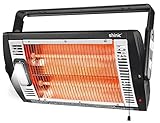
Overview: This versatile ceiling-mounted radiant heater from Shinic combines targeted infrared heating with integrated task lighting in a single space-saving unit. Operating on standard 120V power, it delivers 750W or 1500W through durable dual quartz elements, warming people and objects directly rather than heating air. The 90° rotation capability and five distinct operating modes make it adaptable to various workspace configurations.
What Makes It Stand Out: The five-mode functionality is genuinely impressive, offering combinations of single/dual heating elements with or without the halogen work light. This versatility eliminates the need for separate lighting fixtures in garage workspaces. The pull-string control ensures easy operation without reaching for wall switches, while the 90° adjustable angle provides precise heat direction for workbenches or specific zones.
Value for Money: Mid-range pricing delivers exceptional versatility. Competing radiant heaters typically lack integrated lighting or offer fewer heat settings. The dual-function design saves money on separate work lights while providing flexible heating options. For standard residential garages, this represents strong value compared to installing multiple devices.
Strengths and Weaknesses: Strengths include dual quartz heating elements, integrated halogen work light, five operating modes, 90° angle adjustment, and multiple safety features including overheat alarm and grounded plug. Weaknesses are limited 1500W output restricting large space coverage, pull-string control may be inconvenient for some users, and 120V operation means slower heating than 240V alternatives.
Bottom Line: Perfect for small to medium garages, workshops, or patios needing both heat and illumination. The Shinic heater’s combination of radiant warmth, adjustable direction, and built-in lighting makes it an excellent multi-functional solution for targeted comfort without consuming floor space.
8. 5,000/4,000/3,000W 240V Ceiling Mount Garage Utility Heater

Overview: This no-nonsense utility heater delivers robust heating power with selectable wattage options of 3,000W, 4,000W, or 5,000W at 240V. Designed for ceiling mounting, it provides flexible heat output for various garage and workshop sizes without occupying floor space. The straightforward design focuses on core heating functionality with adjustable louvers and a tilting head for directional control.
What Makes It Stand Out: The three-tiered power selection is the key differentiator, allowing users to match energy consumption to their actual needs. This adaptability prevents overheating smaller spaces while ensuring adequate warmth for larger areas. The adjustable louvers and tilting head provide basic but effective directional control, letting you focus heat on work zones rather than wasting energy on empty spaces.
Value for Money: As a budget-friendly industrial option, this heater strips away fancy features to deliver essential performance at an attractive price point. It competes favorably with more expensive units on raw heating power alone. For users who prioritize function over frills and don’t need digital controls or remote operation, this represents excellent cost-per-watt value.
Strengths and Weaknesses: Strengths include three power settings (3000W/4000W/5000W), adjustable louvers and tilting head, overheat protection, and straightforward operation. Weaknesses are the lack of a built-in thermostat (requires external control), no integrated lighting or remote, very basic feature set, and mandatory professional hard-wiring installation with 30A circuit requirement.
Bottom Line: An ideal choice for budget-conscious buyers needing reliable, powerful heating without premium features. This utility heater excels in basic functionality, making it perfect for well-insulated workshops or garages where simple, robust performance matters more than convenience bells and whistles.
9. CTSC 8500W Garage Heater Electric, 240v Hardwired Fan-Forced Electric Garage Heater with Digital Thermostat, Remote Control and Timer, ECO Function, Ideal for Workshop, ETL Listed Garage Heater

Overview: The CTSC 8500W heater represents the pinnacle of smart garage heating technology, delivering an impressive 29,010 BTUs to warm spaces up to 850 square feet. This feature-rich unit combines industrial-grade power with modern convenience, including a digital thermostat, remote control, programmable timer, and innovative voltage display for troubleshooting. The fan-forced design ensures rapid, even heat distribution throughout large workshops and garages.
What Makes It Stand Out: The voltage display screen is a game-changing innovation that instantly diagnoses installation issues, saving costly electrician calls. The ECO function intelligently maintains temperature while minimizing energy consumption, and the dual control methods (remote or LED touch panel) offer unmatched convenience. Three heat settings (8500W/5600W/fan-only) provide versatility for different seasons.
Value for Money: While priced at the premium end, the CTSC justifies its cost through superior features and raw power. Comparable industrial heaters lack the smart functionality and diagnostic capabilities. The energy-saving ECO mode and precise digital controls deliver long-term operational savings that offset the initial investment, making it cost-effective for daily use in large spaces.
Strengths and Weaknesses: Strengths include massive 8500W output, voltage display for troubleshooting, remote control and digital thermostat, ECO function and timer, three heat settings, and ETL safety certification. Weaknesses are the requirement for 30A/240V professional installation, highest price point in its category, and potentially excessive power for smaller garages.
Bottom Line: For large workshops, garages, or commercial spaces demanding the best in heating technology, the CTSC 8500W is unbeatable. Its combination of brute force heating, intelligent features, and diagnostic capabilities makes it the top choice for serious users who want maximum control and performance.
10. Comfort Zone 1500W Ceiling Mounted Dual Quartz Radiant Heater – Infrared Workshop Heater with 90° Adjustable Tilt, Built-in Halogen Light & Pull String Control – Overheat Protection, Black

Overview: Comfort Zone’s 1500W radiant heater delivers instant infrared warmth through dual quartz tubes, directly heating people and objects in its path. Designed for ceiling installation, this unit combines efficient radiant heating with a built-in halogen work light, making it ideal for drafty workshops and garages. The 90° adjustable tilt and dual heat settings provide flexibility for various workspace configurations.
What Makes It Stand Out: The immediate, sun-like warmth from dual quartz elements is perfect for intermittently used spaces, as there’s no waiting for air to warm up. The integrated 25-watt halogen light operates independently or alongside heating, eliminating the need for separate task lighting. The 90-degree tilting bracket allows precise direction of both heat and light exactly where your work happens.
Value for Money: Positioned in the mid-range category, this Comfort Zone unit offers brand reliability and proven performance. While similarly priced to competitors, the established brand name and consistent quality control provide additional peace of mind. It’s an excellent value for users wanting targeted heating plus illumination without investing in separate systems.
Strengths and Weaknesses: Strengths include instant infrared heating, dual quartz tubes with two power settings, space-saving ceiling mount, 90° adjustable tilt, integrated halogen work light, and overheat protection. Weaknesses are the 120V/1500W limitation for larger spaces, pull-string control that may be hard to reach in high ceilings, and radiant heat’s directional nature leaving peripheral areas cool.
Bottom Line: An excellent choice for small to medium workshops where instant, targeted warmth and task lighting are priorities. The Comfort Zone heater’s reliable performance and adjustable design make it perfect for DIY enthusiasts who need heat directly at their workstation without the complexity of 240V installation or digital controls.
Why Ceiling Mounted Heaters Excel in Garages with Tall Ceilings
The Science of Heat Distribution in Vertical Spaces
Tall garages create natural convection currents that work against conventional heating methods. As warm air generates, it immediately rises to the highest point, creating a thermal barrier that prevents heat from reaching the floor. Ceiling mounted heaters leverage this phenomenon rather than fighting it, positioning the heat source at the optimal elevation to create a consistent temperature gradient. By radiating warmth downward or forcing air in controlled patterns, these units establish a thermal loop that prevents heat from pooling above your head where it provides no benefit.
Overcoming the Challenges of Warm Air Rising
Standard portable heaters placed at ground level in a 14-foot garage might raise the temperature near the ceiling by 15 degrees while leaving your workspace nearly unchanged. Overhead units solve this through strategic design elements like directional louvers, powerful fan systems, and radiant heating elements that project warmth downward. This approach minimizes the “heat stacking” effect and ensures that the BTUs you’re paying for actually reach the occupied zone of your garage rather than heating unused airspace near the roof.
Key Features to Evaluate for High-Ceiling Applications
Heating Capacity and BTU Requirements for Tall Spaces
The standard BTU-per-square-foot calculation falls apart when ceilings exceed 10 feet. You’ll need to apply a volume multiplier—typically adding 25% more capacity for every 2 feet of ceiling height beyond the standard 8-foot baseline. A 1,000-square-foot garage with 16-foot ceilings doesn’t just need heat for 1,000 square feet; it needs to warm 12,000 cubic feet, requiring significantly more power. Look for units with adjustable output settings that can handle this increased demand without constant cycling.
Mounting Height Flexibility and Adjustability
The ideal mounting height varies dramatically based on heater type and garage activities. Infrared models perform best when mounted 8-10 feet above the floor, while forced-air units might need 12-14 feet of clearance for proper air dispersion. Units with adjustable mounting brackets or suspension kits give you the flexibility to fine-tune placement after installation, which is crucial for optimizing performance in uniquely configured spaces or if you later modify your garage layout.
Directional Heating Capabilities
Fixed-position heaters waste energy in tall garages by broadcasting warmth in directions where you don’t need it. Seek models with adjustable louvers, directional fins, or motorized oscillation features that let you focus heat on workbenches, vehicle bays, or specific zones. This targeted approach becomes even more critical with high ceilings, where every degree of directional control helps overcome the increased distance between heater and target area.
Thermostat Precision and Placement Options
Wall-mounted thermostats placed at standard height will read temperatures that don’t reflect conditions at your work surface. The best systems for tall garages include remote temperature sensors that can be positioned at occupant level, or thermostats with offset programming that account for the natural temperature differential. Digital models with 1-degree accuracy and programmable schedules help manage the higher operating costs associated with heating larger air volumes.
Understanding Different Heater Types for Tall Ceilings
Infrared Radiant Heaters: Targeted Warmth from Above
Infrared technology shines in tall garage applications because it heats objects and people directly rather than warming the air. These units emit electromagnetic waves that travel through the air without losing energy, making them incredibly efficient for high-ceiling spaces. They’re ideal for spot heating work areas or for garages that aren’t continuously occupied, as they provide instant warmth without the warm-up time required by air-heating systems. However, their directional nature means you’ll need multiple units for full coverage in large footprints.
Forced Air Unit Heaters: Powerful Circulation
These workhorses use powerful fans to pull cool air from below, heat it rapidly, and force it downward in a concentrated stream. The air movement helps destratify the thermal layers in tall garages, creating more uniform temperatures throughout the space. Look for models with multiple fan speeds and adjustable discharge angles to optimize circulation patterns. While effective for maintaining consistent temperatures, they can stir up dust and may require more frequent filter cleaning in workshop environments.
Electric vs Gas Power Sources: Making the Right Choice
Electric models offer simpler installation without venting requirements and provide 100% efficiency at the point of use—crucial when you’re paying to heat large volumes. Gas units, particularly natural gas, deliver higher BTU output for less operating cost in most regions but require professional venting installation and combustion air supply. For ceilings over 12 feet, gas units often provide the necessary power without demanding excessive electrical upgrades, but the installation complexity increases significantly.
Modulating vs Single-Stage Heating
Single-stage heaters operate at full output until the thermostat is satisfied, then shut off completely, creating temperature swings and inefficient cycling in tall spaces. Modulating heaters adjust their output incrementally, maintaining more consistent temperatures and reducing energy waste. In large-volume garages, this feature becomes economically essential, preventing the constant over-heating and under-heating cycles that plague less sophisticated units.
Installation Considerations for Elevated Mounting
Structural Support and Weight Requirements
Ceiling mounted heaters, especially gas models, can weigh 50-100 pounds. Your garage ceiling joists must support not just the static weight but also vibration during operation. Most installations require mounting to joists, not just drywall, and may need reinforcement with additional blocking or a support platform. For truss systems, consult a structural engineer before mounting heavy units, as concentrated loads can compromise roof integrity.
Electrical Supply and Wiring Needs
High-capacity electric heaters may require 240-volt circuits with amperage draws exceeding 30 amps. The electrical run from your panel to the mounting location becomes more complex with tall ceilings, often requiring conduit and professional installation. Consider the wire gauge needed for the distance—voltage drop over long runs can reduce heater performance and create safety hazards. Plan for dedicated circuits with appropriate disconnect switches located within sight of the unit.
Clearance Requirements and Safety Zones
Manufacturers specify minimum distances from combustible materials, but tall garages present unique challenges with stored items like lumber, seasonal decorations, or kayak racks that might be placed closer than intended. Factor in not just the installed clearance but also “dynamic clearance”—the space needed when you’re moving large objects or working on elevated projects. Gas units require additional clearance for combustion air intake and exhaust venting, which becomes more complex with cathedral or vaulted ceiling designs.
Professional Installation vs DIY Approaches
While many electric models offer DIY-friendly mounting, tall garages introduce complications that often warrant professional help. Working on ladders or scaffolding at 12+ feet while handling heavy equipment increases risk significantly. Gas installations should always be performed by licensed professionals due to venting requirements and gas line connections. Factor installation costs into your budget—what seems like a simple mount can become complex when you’re fighting gravity and working at height.
Critical Safety Features for Overhead Heating
Overheat Protection and Automatic Shutoff
In tall garages, heaters may run longer cycles to overcome heat stratification, increasing the risk of internal component overheating. Look for units with redundant thermal switches that cut power if temperatures exceed safe limits. The best models feature self-diagnostic systems that alert you to restricted airflow or component failures before they become hazards. This protection is non-negotiable when the unit is mounted out of easy reach.
Tip-Over Switches and Tilt Sensors
While ceiling mounted units shouldn’t tip, vibration over time can loosen mounting hardware. Modern heaters include sensors that detect if the unit has shifted from level, automatically shutting down to prevent hot surfaces from contacting combustibles. This feature provides crucial peace of mind when you can’t easily inspect the mounting daily, especially in garages subject to vibration from heavy machinery or frequent door operation.
Flame-Resistant Housing Materials
The housing temperature of overhead units can exceed 200°F during extended operation. Ensure the unit uses galvanized steel or other non-combustible materials with high-temperature powder coating. Plastic components should be limited to controls and handles, not structural elements. In tall garages where heat may be concentrated in the upper portion of the space, this fire resistance becomes even more critical.
Certification Standards to Look For
UL (Underwriters Laboratories) or ETL certification ensures the heater has been tested for safety in real-world conditions. For gas units, ANSI Z83.19 certification is essential. In tall garage applications, also check for specific high-mounting certifications—some units are only rated for installation below certain heights. Don’t rely on generic certifications; verify the specific model is approved for ceiling mounting at your planned elevation.
Energy Efficiency Strategies for Large Volume Spaces
Programmable Controls and Smart Thermostats
Heating a tall garage is expensive—don’t pay for warmth when you’re not there. Smart thermostats with geofencing can begin warming the space as you arrive home, while weekly programming ensures you’re not heating an empty building. Look for units compatible with Wi-Fi controls that allow remote adjustment, especially valuable in tall spaces where you might want to pre-heat for several hours before use rather than maintaining temperature constantly.
Zoning Options for Multi-Purpose Garages
If your tall garage serves multiple functions—vehicle storage, workshop, gym—consider a zoned approach with multiple smaller heaters rather than one large unit. This allows you to heat only the occupied zone, dramatically reducing energy consumption. Some advanced systems use infrared sensors to detect occupancy and direct heat accordingly, perfect for irregularly used spaces with high ceilings.
Insulation’s Impact on Heater Performance
No heater can overcome poor insulation in a tall garage, where heat loss through the roof is amplified. Before upgrading your heater, address air sealing and insulation. R-30 minimum in the ceiling is crucial, and don’t overlook wall insulation and weatherstripping. A well-insulated garage might need 30% less heating capacity, allowing you to purchase a smaller, less expensive unit with lower operating costs.
Calculating Operating Costs for Tall Ceiling Garages
Factor in the cubic footage when estimating costs—tall garages can cost 50-75% more to heat than standard-height spaces of the same footprint. Electric heaters cost roughly $0.15-0.30 per hour per 10,000 BTUs depending on your electricity rates. Gas units are typically cheaper to run but have higher installation costs. Create a seasonal budget based on your actual usage patterns, and consider the payback period of investing in a more efficient modulating unit versus a cheaper single-stage model.
Sizing Your Heater Correctly
The 10-Foot Ceiling Multiplier Rule
For every foot of ceiling height beyond 10 feet, add 10% to your base BTU calculation. A garage with 16-foot ceilings needs 60% more capacity than the same footprint with 8-foot ceilings. This multiplier accounts for increased air volume, greater heat stratification, and additional wall surface area for heat loss. Don’t shortchange this calculation—undersized heaters will run continuously, wear out prematurely, and still leave you cold.
Accounting for Poor Insulation Factors
If your tall garage lacks modern insulation, multiply your BTU needs by an additional 1.3-1.5 factor. Heat rises, and in poorly insulated garages, it escapes rapidly through the roof. This compounding effect means a tall, poorly insulated garage might need double the heating capacity of a standard, well-insulated space. Be honest about your garage’s condition—it’s cheaper to upgrade insulation than to buy and operate an oversized heater.
Climate Zone Adjustments
Garages in Minnesota need far more capacity than those in Tennessee. Use climate zone maps to find your baseline, then adjust for altitude (higher altitudes require derating of gas units by 4% per 1,000 feet). Tall garages in cold climates face extreme temperature differentials between floor and ceiling, often requiring supplemental destratification fans to mix air layers effectively.
BTU Calculator Walkthrough for Tall Spaces
Start with square footage × 25 BTU (standard calculation). For a 20×24 garage (480 sq ft), that’s 12,000 BTU. With 16-foot ceilings (8 feet over baseline), add 80%: 12,000 × 1.8 = 21,600 BTU. If poorly insulated, multiply by 1.4: 30,240 BTU. In Zone 6 climate, add 30%: 39,312 BTU final requirement. This systematic approach prevents the common mistake of buying based on floor area alone.
Maintenance and Longevity
Annual Inspection Checklist
Schedule inspections before heating season. Check mounting hardware tightness—vibration can loosen bolts in tall ceiling installations. Verify electrical connections haven’t corroded, especially in unconditioned spaces. For gas units, inspect vent pipes for corrosion or blockages from bird nests. Test safety controls and thermostat accuracy. Document your heater’s performance baseline so you can detect gradual declines indicating needed service.
Cleaning Filters and Heating Elements at Height
Dust accumulation is amplified in tall garages where airborne particles have more vertical space to circulate. Plan for safe access—telescoping cleaning tools or a secure ladder system. Washable filters need cleaning every 3 months during use; disposable filters monthly. Infrared elements require gentle dusting with compressed air. Forced-air heat exchangers benefit from annual professional cleaning to maintain efficiency in high-mount applications where you can’t easily monitor buildup.
Professional Servicing Recommendations
Even DIY-friendly electric units benefit from professional service every 2-3 years in tall garage applications. Technicians can check internal components, test electrical draws under load, and verify mounting integrity. Gas units require annual professional service to maintain safe combustion and venting. Factor these costs into your long-term budget—neglecting maintenance in hard-to-reach installations leads to premature failure and inefficient operation that negates any initial savings.
Cost Analysis and Budget Planning
Initial Investment vs Long-Term Savings
Budget $300-800 for quality electric units suitable for tall garages, or $800-2,000 for gas models with installation. While cheaper units tempt budget-conscious buyers, they often lack the power, controls, and durability needed for high-ceiling applications. A $600 heater that lasts 15 years and operates efficiently costs less than a $300 unit that fails in 5 years and wastes energy. Consider total cost of ownership, not just purchase price.
Operating Cost Comparisons by Fuel Type
Electric heaters convert 100% of input to heat but cost more per BTU in most regions—expect $1.50-3.00 per hour for a properly sized unit heating a large tall garage. Natural gas costs 30-50% less to operate but requires venting and gas line installation costing $500-1,500. Propane sits between the two but adds fuel delivery or tank rental costs. Calculate break-even points based on your usage hours and local utility rates.
Warranty Value and Coverage Terms
Standard warranties run 1-5 years, but premium units offer 10-year coverage on heat exchangers and elements. For tall ceiling installations, prioritize warranties that cover full replacement rather than prorated values—retrieving and reinstalling a failed unit at height is expensive. Some manufacturers offer extended warranties covering professional installation costs, valuable for high-mount applications where DIY replacement is impractical.
Frequently Asked Questions
How high should I mount my garage heater with 14-foot ceilings? Infrared heaters work best at 9-11 feet above floor level, while forced-air units need 12-14 feet for proper dispersion. Always follow manufacturer specifications, but generally position the unit so the heating element is no more than 8 feet above your primary work area for effective warmth delivery.
Will a ceiling mounted heater really keep my feet warm in a tall garage? Yes, when properly sized and positioned. The key is selecting a unit with sufficient BTU output for your cubic footage and choosing directional models that project heat downward. Supplemental floor mats or a small portable heater can help during the initial warm-up phase in extremely cold conditions.
Do I need multiple heaters for a 24×24 garage with 16-foot ceilings? Often yes. A single 50,000 BTU unit may handle the total volume, but two 30,000 BTU units provide better heat distribution and zoning flexibility. Multiple units also create redundancy—if one fails, you still have some heat while awaiting repairs.
Are gas heaters safe to mount near the peak of a tall garage? Gas heaters require specific clearances from combustibles and proper venting that can be challenging at peak height. Direct-vent models are safest for high mounting, but you must ensure adequate combustion air supply. Consult local codes and consider that servicing a peak-mounted gas unit is extremely difficult.
How much more does it cost to heat a tall garage versus standard height? Expect 40-70% higher heating costs due to increased air volume and heat stratification. Poor insulation can double this premium. Investing in ceiling fans to destratify air layers can reduce the penalty by 15-25% by forcing warm air back to floor level.
Can I install a ceiling heater myself in a tall garage? Electric units are DIY-feasible if you’re comfortable working on tall ladders and have electrical expertise. However, the physical challenge of lifting a 60-pound unit to 12+ feet while securing mounting hardware makes professional installation worth considering. Gas units require licensed professionals for safety and code compliance.
What size breaker do I need for a tall garage heater? Most powerful electric units for tall garages require 240-volt circuits with 30-50 amp breakers. Don’t forget to account for wire gauge—long runs to high ceilings may need thicker wire to prevent voltage drop. Always install a dedicated circuit with a disconnect switch within sight of the unit.
How do I calculate BTU needs for my specific ceiling height? Start with the standard formula: square footage × 25 BTU. Then add 10% for each foot over 10 feet of ceiling height. Multiply by 1.3-1.5 if insulation is subpar, and add 20-40% for extremely cold climates. Online calculators can help, but this method gives you a reliable baseline.
Will a ceiling heater dry out the air in my tall garage? Forced-air heaters reduce relative humidity by warming air, which can dry out wood and tools. Infrared heaters have minimal impact on humidity since they heat objects directly. If dryness is a concern, choose infrared or add a humidifier—tall garages have enough air volume that minor humidity changes are less noticeable than in small rooms.
How long do ceiling mounted garage heaters typically last? Quality units last 15-20 years with proper maintenance. Tall garage installations may see reduced lifespan due to increased cycling and dust accumulation at height. Annual maintenance is critical—neglect can cut lifespan in half. Look for models with replaceable elements and robust warranties to protect your investment in hard-to-service locations.
See Also
- 10 Best Ceiling Mounted Garage Heaters for High Clearance Garages in 2026
- 10 Best Ceiling Mounted Garage Heaters for High-Ceiling Workshops in 2026
- 10 Essential Ceiling Mounted Garage Heaters Every Mechanic Needs in 2026
- 10 Best Value Low Profile Garage Heaters for Limited Ceiling Space in 2026
- 10 Best Wall Mounted Garage Heaters for DIY Enthusiasts in 2026