Table of Contents
Tackling the challenge of keeping a high-ceiling workshop comfortable during frigid months requires a different approach than heating a standard residential garage. That massive vertical space might be perfect for tall projects and equipment, but it becomes a heat-sucking vortex where warm air disappears upward, leaving your work area cold and drafty. Traditional space heaters and floor-mounted units simply can’t compete with the physics of heat stratification in spaces with 12-foot, 16-foot, or even higher ceilings.
Ceiling-mounted garage heaters represent the smart solution for these demanding environments, working with gravity instead of against it. By positioning the heat source overhead, these systems deliver warmth where you need it while taking advantage of natural air circulation patterns. Whether you’re running a professional auto shop, a woodworking studio, or a metal fabrication space, understanding the nuances of these overhead heating systems will help you make an informed decision that balances performance, efficiency, and safety.
Top 10 Ceiling Mounted Garage Heaters
Detailed Product Reviews
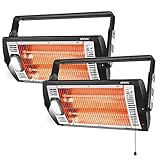
1. Shinic 2 Packs Electric Garage Heaters, 1500W/750W Ceiling Mounted Heater Radiant Heaters with Halogen Light, 90 Degree Rotation, 5 Mode Settings, Space Heater for Garage, Shop, Large Room and Patio
Overview:
The Shinic 2 Packs Electric Garage Heaters deliver targeted warmth for large spaces through dual quartz radiant technology. Each unit offers 750W and 1500W settings with an integrated halogen work light, mounting easily to ceilings with 90-degree rotational capability. The five-mode pull-string operation controls heat and lighting independently, making it practical for workshops and garages.
What Makes It Stand Out:
The twin-pack configuration provides exceptional coverage for multi-zone heating in workshops or expansive garages. Radiant quartz tubes deliver immediate directional warmth rather than slowly heating air, while the built-in halogen lights eliminate the need for separate task lighting. The adjustable bracket system allows precise targeting of heat zones without occupying floor space.
Value for Money:
Purchasing two coordinated units separately would cost significantly more. This package delivers professional-grade radiant heating for medium to large spaces at a compelling per-unit price point, rivaling single-unit competitors while providing superior coverage flexibility for detached garages or basements.
Strengths and Weaknesses:
Pros include dual-unit coverage, instant radiant heat, space-saving ceiling design, integrated task lighting, and adjustable angles. Cons involve manual pull-string operation (no remote), halogen bulbs requiring eventual replacement, and mandatory installation. The lack of a thermostat limits temperature precision.
Bottom Line:
Perfect for DIY enthusiasts and professionals needing targeted heating across multiple garage or workshop zones. The two-unit system offers unmatched flexibility for the price, though tech-savvy users may miss remote operation.
2. Shinic Electric Garage Heaters with Remote Control, 1500W/750W Ceiling Mounted Radiant Quartz Heater with Work Light, 90° Rotation, 5 Mode Settings, Electric Heater for Garage, Shop, Patio Large Room

Overview:
The Shinic Electric Garage Heater with Remote Control offers the same powerful radiant heating as its two-pack sibling but in a single, more convenient package. This 1500W ceiling-mounted unit features dual quartz tubes, halogen work light, and 90-degree rotation, enhanced with remote operation and comprehensive safety certifications for residential and commercial use.
What Makes It Stand Out:
The remote control transforms user experience, allowing adjustments without reaching for pull strings—a major convenience for ceiling-mounted units. Enhanced safety features include overheat auto-shutoff, ETL listing, and robust metal housing, providing peace of mind for unattended operation. The radiant quartz technology continues to deliver instant, directional warmth exactly where needed.
Value for Money:
While pricier than individual units from the twin-pack, the remote functionality and certified safety features justify the modest premium. It competes favorably with other single-unit radiant heaters lacking wireless controls, offering modern convenience without a steep price increase for budget-conscious buyers.
Strengths and Weaknesses:
Pros include remote operation, excellent safety features, instant radiant heat, integrated lighting, and space-saving design. Cons are single-unit coverage, mandatory hardwiring considerations, and halogen bulb maintenance. The five-mode system remains manually selected rather than thermostatically controlled.
Bottom Line:
Ideal for users prioritizing convenience and safety in a single-zone workshop or two-car garage. The remote control eliminates the hassle of manual adjustments, making it the smarter choice for solo installations where accessibility matters.
3. DR. INFRARED HEATER Portable Infrared Indoor and Outdoor Space Heater for Patio, Garage, Commercial & Residential With Remote Control, Without Thermostat, Black

Overview:
The DR. INFRARED HEATER Portable model breaks the ceiling-mount mold with IP55 weatherproofing for indoor and outdoor versatility. This 1500W infrared unit offers three power settings (900W, 1200W, 1500W) and includes both wall and ceiling mounting brackets, plus portable functionality for patio or garage use without permanent installation.
What Makes It Stand Out:
True portability sets this apart—use it in the garage in winter and on the patio year-round. The IP55 rating ensures rain and dust resistance, while the high-efficiency mirror aluminum reflector maximizes heat projection with 90% reflectivity. Standard 120V operation eliminates complex wiring while delivering clean, odorless infrared warmth.
Value for Money:
Its dual indoor/outdoor capability effectively provides two heaters for the price of one. While single-zone coverage limits large garage heating, the versatility outweighs this for users needing flexible warmth across multiple locations, saving the cost of separate units.
Strengths and Weaknesses:
Pros include weatherproof design, portability, multiple mounting options, efficient reflector, and three power levels. Cons are lower maximum output limiting large space heating, no built-in thermostat, and weaker wind resistance in exposed outdoor areas. The unit requires manual aiming for optimal effect and lacks integrated lighting.
Bottom Line:
Best suited for homeowners wanting one heater for both garage and outdoor living spaces. The weatherproofing and portability justify moderate heating power, making it a versatile seasonal solution rather than a primary workshop heater.
4. Comfort Zone Hard-Wired Ceiling Mount Garage Electric Space Heater, Fan-Forced, 5,000 watt, 240 volt, Overheat Protection, Thermal Cut-Out Switch, Ideal for Workshop & Garage, ETL Compliant, CZ220BK

Overview:
The Comfort Zone Hard-Wired Ceiling Mount heater brings industrial-grade performance to residential garages with its 5000W, 240V fan-forced design. Constructed from heavy-gauge steel, this permanent-mount unit delivers robust heating through adjustable louvers and mounting angles for precise airflow control in demanding environments like warehouses and poorly insulated shops.
What Makes It Stand Out:
Fan-forced technology rapidly circulates heat throughout large spaces rather than just warming objects in its path. The durable steel construction withstands temperature swings in poorly insulated garages, while the dual-knob thermostat provides simple, reliable temperature control without digital complexity or failure points.
Value for Money:
For serious DIYers and workshops, this professional-grade unit outperforms multiple 1500W heaters at a competitive price point. The 240V efficiency reduces operating costs compared to equivalent 120V units, justifying installation expenses through lower electricity bills.
Strengths and Weaknesses:
Pros include powerful 5000W output, durable steel construction, precise louver control, simple thermostat, and overheat protection. Cons require professional 240V wiring, permanent installation limits flexibility, no remote control, and fan noise may be noticeable in quiet workshops, limiting residential appeal.
Bottom Line:
Ideal for large garages, warehouses, and workshops needing consistent, whole-space heating. The industrial build quality and powerful output make it a long-term investment for users serious about climate control in challenging spaces.
5. Comfort Zone 10,000W Hard-Wired Garage Heater – Industrial & Commercial Ceiling Mount, 240V Fan-Forced Heater with Remote, Digital Thermostat, Timer, 2 Heat Settings, Overheat Protection, Grey

Overview:
The Comfort Zone 10,000W Hard-Wired Garage Heater represents the pinnacle of industrial heating capacity for the most demanding spaces. This 240V fan-forced powerhouse delivers unmatched warmth through heavy-gauge steel construction, with modern amenities including remote control, digital thermostat, and timer functionality for precise climate management in harsh environments.
What Makes It Stand Out:
The extraordinary 10,000W output heats massive spaces efficiently, while the remote and digital controls bring residential convenience to a commercial-grade unit. Adjustable louvers and mounting angles direct airflow precisely, and the overheat protection ensures safe operation even in dusty workshop conditions where debris poses ignition risks.
Value for Money:
While commanding a premium price, this unit replaces multiple smaller heaters in commercial settings. The energy efficiency and durability provide long-term value for businesses and serious hobbyists requiring reliable, powerful heating without the maintenance of multiple units.
Strengths and Weaknesses:
Pros include massive heating capacity, remote operation, digital thermostat, timer, durable construction, and precise airflow control. Cons involve high initial cost, mandatory professional 240V installation, significant power consumption, and potential overkill for standard residential garages under 600 square feet.
Bottom Line:
The ultimate solution for industrial workshops, commercial garages, and massive spaces exceeding 1000 square feet. For residential users, it’s overkill unless heating a multi-bay garage or large workshop. Commercial users will appreciate the unmatched power and advanced features.
6. Electric Garage Heaters for Indoor Use, 1500W/750W Ceiling Mounted Radiant Quartz Heater with Work Light, 90° Rotation, 5 Mode Settings, Electric Heater for Garage, Shop, Patio Large Room
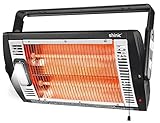
Overview: This ceiling-mounted radiant quartz heater delivers targeted warmth for garages and workshops. With dual heating elements and integrated halogen lighting, it combines two essential workshop functions in one space-saving unit. The 1500W maximum output provides ample heat for small to medium spaces, while the 120V design plugs into standard outlets.
What Makes It Stand Out: The five-mode system offers unmatched versatility, allowing users to select 750W or 1500W heating with or without the work light. The 90° rotation mechanism lets you direct heat precisely where needed, while comprehensive safety features including automatic overheat protection at 176°F, grounded plug, sturdy metal grill, and ETL listing ensure peace of mind.
Value for Money: Positioned in the mid-range segment, this unit justifies its cost through dual functionality. Purchasing separate heater and work light would exceed this price, while the durable quartz elements promise longevity. Comparable single-mode heaters cost only slightly less, making the premium worthwhile for serious users.
Strengths and Weaknesses: Pros include space-saving ceiling design, versatile operation modes, integrated lighting, and robust safety systems. The radiant heating method efficiently warms objects rather than air. Cons: Requires installation, heats only the area in its direct path, and the pull-string control may be inconvenient in high-ceiling applications.
Bottom Line: Ideal for DIY enthusiasts and home mechanics seeking an efficient, safe heating solution that won’t clutter floor space. The light integration and adjustable angle make it particularly valuable for detailed work areas.
7. Shinic 2 Packs Electric Garage Heaters with Remote Control, 1500W/750W Ceiling Mounted Radiant Quartz Heater with Work Light, 90° Rotation, 5 Mode Settings, Electric Heater for Garage, Shop, Patio
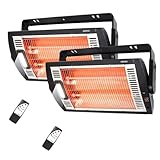
Overview: This two-pack bundle from Shinic provides comprehensive heating coverage for larger workshops or multiple garage bays. Each unit mirrors the single-pack version with 1500W/750W quartz radiant heating, integrated halogen work light, and 90° adjustable mounting. The inclusion of remote controls elevates convenience significantly for hard-to-reach installations.
What Makes It Stand Out: The remote control functionality distinguishes this from competitors, allowing operation without reaching for pull strings. Buying in pairs reduces per-unit cost substantially while enabling zone heating strategies. Both heaters maintain the same five-mode versatility and safety certifications as the single unit, including overheat protection and ETL listing.
Value for Money: Exceptional value for money. Two heaters with remotes typically cost 60-70% more than a single unit, but this bundle offers significant savings. For spaces exceeding 400 square feet or multi-vehicle garages, the dual setup provides superior coverage compared to a single high-wattage unit, making it economically smart.
Strengths and Weaknesses: Pros include remote operation convenience, excellent coverage area, cost savings versus individual purchases, and consistent performance across both units. The radiant heating principle remains efficient for object warming. Cons: Installation complexity doubles, both units require separate electrical considerations, and the remote adds a potential failure point over time.
Bottom Line: Perfect for professional mechanics or serious hobbyists managing large workshop spaces. The remote convenience and dual-zone capability justify the investment, though overkill for single-car garages.
8. Comfort Zone 1500W Ceiling Mounted Dual Quartz Radiant Heater – Infrared Workshop Heater with 90° Adjustable Tilt, Built-in Halogen Light & Pull String Control – Overheat Protection, Black

Overview: Comfort Zone’s ceiling-mounted heater leverages dual quartz tubes to deliver instant infrared warmth directly to people and objects. This targeted approach proves ideal for drafty workshops where heating entire air volumes proves inefficient. The integrated 25-watt halogen light provides adequate task illumination for detailed work.
What Makes It Stand Out: The brand’s reputation for reliability and straightforward pull-string operation appeals to users preferring simplicity over complex controls. The 90° tilt adjustment allows precise heat direction, while the independent light operation provides flexibility. The fan-less design ensures silent operation, making it suitable for noise-sensitive environments.
Value for Money: Priced competitively against generic alternatives, the Comfort Zone name carries reassurance. While lacking multiple modes, the essential 750W/1500W settings cover most needs. The separate light control adds value without complexity, and the durable construction promises years of service, offsetting the initial investment.
Strengths and Weaknesses: Pros include trusted brand heritage, silent operation, simple controls, and durable construction. The infrared heating method excels in poorly insulated spaces. Cons: No remote control, limited to two heat settings versus five-mode competitors, and the halogen bulb may require periodic replacement.
Bottom Line: A solid choice for users prioritizing reliability and simplicity over advanced features. Works best in dedicated workstations where silent operation matters.
9. Comfort Zone Hard-Wired Ceiling Mount Garage Electric Space Heater, Fan-Forced, 5,000 watt, 240 volt, Overheat Protection, Thermal Cut-Out Switch, Ideal for Workshop & Garage, ETL Compliant, CZ220

Overview: This hard-wired, fan-forced heater represents a professional-grade solution for serious workshops and commercial spaces. The 5000-watt, 240-volt design delivers powerful, even heat distribution across large areas, while the heavy-gauge steel construction withstands harsh conditions and temperature fluctuations.
What Makes It Stand Out: The fan-forced mechanism actively circulates warm air, solving the directional limitations of radiant heaters. Louvers and adjustable mounting angles enable precise airflow control throughout the space. The robust steel body handles demanding environments, while the dual-knob thermostat provides intuitive temperature management.
Value for Money: While significantly more expensive than plug-in models, the commercial-grade construction and superior heating capacity justify the cost for professional users. For spaces over 600 square feet, this unit eliminates the need for multiple smaller heaters, reducing overall equipment costs and energy waste.
Strengths and Weaknesses: Pros include exceptional heating power, even distribution, durable steel construction, and professional thermostat controls. The hard-wired installation ensures clean aesthetics and eliminates cord hazards. Cons: Requires professional electrical installation, no integrated lighting, higher energy consumption, and the fan generates operational noise.
Bottom Line: Best suited for professional mechanics, contractors, or serious DIYers with large, drafty spaces. The investment pays off through reliable performance and comprehensive coverage.
10. Powerscale 1500W Electric Patio Heater, IP65 Waterproof, Remote, Fast Heating, 4 Heat Levels, 24H Timer & Memory Function, Wall Mounted Indoor/Outdoor Heater for Patio, Garage, Backyard, Black
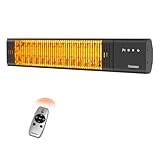
Overview: This versatile electric heater transitions seamlessly between indoor garage use and outdoor patio applications. The IP65 waterproof rating and remote control functionality distinguish it from garage-only alternatives, while four heat levels and a 24-hour timer provide precise comfort control for various scenarios.
What Makes It Stand Out: The memory function recalls previous settings, eliminating daily reprogramming. Its weatherproof design withstands rain and humidity, making it unique among heaters in this category. The flexible mounting options accommodate walls, ceilings, or gazebos, adapting to any space configuration with minimal effort.
Value for Money: Positioned at a premium price point, the dual-purpose capability justifies the cost for users needing both garage and patio heating. Comparable outdoor heaters cost similarly without garage-appropriate features, while indoor models lack weather resistance, making this a smart hybrid investment for multi-use properties.
Strengths and Weaknesses: Pros include all-weather durability, remote convenience, timer functionality, and versatile mounting. The infrared heating works efficiently in both enclosed and semi-open spaces. Cons: Outdoor-focused design may be excessive for pure garage use, and the 1500W output may prove insufficient for large workshops compared to dedicated high-power units.
Bottom Line: Ideal for homeowners wanting one heater for garage projects and outdoor entertaining. The smart features and weatherproofing add value, though dedicated garage heaters offer more power for less money.
Why Ceiling-Mounted Heaters Excel in High-Ceiling Workshops
The fundamental advantage of ceiling-mounted heating lies in its strategic positioning. Warm air naturally rises, so starting the heating process from the top allows you to create a thermal blanket that gradually pushes downward. This approach minimizes the temperature differential between floor and ceiling, reducing the energy waste that occurs when you heat from ground level only to lose that warmth to the rafters. In workshops with 14-foot ceilings or higher, this top-down heating strategy can improve efficiency by up to 30% compared to traditional methods.
Ceiling placement also preserves your valuable floor space for tools, workbenches, and project materials. Unlike portable heaters that create trip hazards and occupy square footage, overhead units remain completely out of your workflow. This positioning eliminates the risk of equipment damage from accidental bumps or spills, a critical consideration in busy commercial environments where equipment durability directly impacts your bottom line.
Understanding Heat Distribution in Tall Spaces
Heat stratification is the enemy of comfort in high-ceiling workshops. Without proper air movement, temperatures can vary by 15-20 degrees from floor to ceiling, creating a situation where your head is warm while your feet remain frozen. Ceiling-mounted heaters combat this phenomenon through various distribution methods, from powerful built-in fans to radiant heat panels that warm objects and people directly rather than heating the air.
The cubic volume of your space dramatically affects heating requirements. A workshop with 16-foot ceilings has double the air volume of an 8-foot ceiling space of the same footprint. This means you’ll need roughly twice the heating capacity to achieve the same temperature at floor level. Understanding this relationship helps prevent the common mistake of undersizing your heater based on square footage alone.
Types of Ceiling-Mounted Garage Heaters
Electric Radiant Heaters
Electric radiant heaters function like miniature suns, emitting infrared energy that travels through the air until it strikes a solid object. These units excel in workshops with spot heating needs, warming tools, workbenches, and personnel directly without wasting energy heating empty air. They operate silently without fans, making them ideal for spaces where dust and debris could be problematic. Installation is straightforward since they require only electrical connections, though you’ll need adequate amperage to support their power draw.
Electric Forced-Air Heaters
These units combine electric heating elements with powerful fans to circulate warm air throughout your space. They heat up quickly and can raise ambient temperatures uniformly, which benefits workers moving between different stations. The fan-assisted distribution helps combat stratification by continuously mixing the air column. However, the moving air can stir up dust and sawdust, potentially creating breathing hazards or coating finished surfaces with airborne particles.
Gas-Fired Unit Heaters
Powered by natural gas or propane, these heaters deliver serious BTU output for large workshops. They typically mount near the ceiling and use a fan to distribute combustion-warmed air. The operating cost per BTU is generally lower than electric models, making them economical for spaces heated frequently. Installation complexity increases significantly with gas lines, venting requirements, and combustion air provisions. These units demand professional installation and regular maintenance to ensure safe operation.
Infrared Tube Heaters
Infrared tube heaters stretch a long radiant element across your ceiling, creating a broad pattern of infrared warmth. The tube glows red-hot, radiating heat downward in a cone-shaped pattern that can cover substantial floor areas. These systems are exceptionally efficient for workshops with high ceilings because they minimize heat loss to the upper air volume. They’re particularly effective in drafty spaces or buildings with poor insulation since they heat objects and people rather than the air that might escape through gaps.
Key Features to Evaluate
Heating Capacity and BTU Output
Matching heater capacity to your space is non-negotiable. Calculate your needs based on cubic footage, insulation quality, and climate zone. A well-insulated 1,500-square-foot workshop with 14-foot ceilings in a moderate climate typically requires 45,000-60,000 BTUs. Poorly insulated spaces or those in extreme cold regions might need 75,000 BTUs or more. Oversizing leads to short cycling and inefficiency, while undersizing results in endless operation and inadequate comfort.
Mounting Height Requirements
Every ceiling heater specifies optimal mounting heights that ensure both safety and performance. Radiant heaters might require 8-12 feet of clearance to prevent overheating nearby surfaces while maintaining effective heat patterns. Forced-air units often need minimum heights to allow proper air mixing. Exceeding maximum mounting heights reduces effectiveness, while mounting too low creates safety hazards and uncomfortable hot spots. Always verify your ceiling height against manufacturer specifications before purchasing.
Thermostat Control Options
Advanced thermostat controls transform a basic heater into an intelligent heating system. Look for models compatible with programmable or smart thermostats that allow scheduling, remote control via smartphone apps, and integration with other smart building systems. Some heaters include built-in thermostats with adjustable differential settings to prevent constant cycling. For workshops with multiple zones, consider units that support wireless temperature sensors, letting you maintain different temperatures in office areas versus work floors.
Safety Certifications
Your workshop heater should carry UL (Underwriters Laboratories) or ETL (Intertek) certification, proving it meets rigorous safety standards. For gas units, additional certifications from the American National Standards Institute (ANSI) are essential. These marks indicate the heater has been tested for electrical safety, temperature limits, and structural integrity. In commercial settings, insurance companies may require specific certifications, making this feature a potential deal-breaker.
Energy Efficiency Ratings
Electric heaters convert nearly 100% of input energy to heat, but efficiency varies in how that heat gets delivered. Look for units with adjustable power settings, allowing you to run at lower output during milder weather. Gas heaters should display AFUE (Annual Fuel Utilization Efficiency) ratings; modern units achieve 80-95% AFUE. Some infrared models include reflectors that direct up to 90% of generated heat downward, minimizing waste to the ceiling.
Installation Considerations for High Ceilings
Structural Support Requirements
Ceiling-mounted heaters weigh anywhere from 25 to 150 pounds, requiring robust mounting points. Standard drywall ceilings cannot support this weight; you need attachment to ceiling joists, rafters, or engineered steel beams. For installations on metal building frames, verify the gauge and span capacity of your purlins. Some heavy commercial units may need supplementary support structures or spreader bars to distribute weight across multiple framing members.
Electrical Supply Needs
High-capacity electric heaters demand dedicated circuits with appropriate wire gauge. A 5,000-watt unit requires a 240-volt, 30-amp circuit with 10-gauge wire. Multiple heaters need separate circuits to prevent overload. Assess your electrical panel’s capacity before purchasing; older buildings may require panel upgrades. For gas heaters, you’ll still need electrical service for ignition systems and fans, typically 120-volt, 15-amp circuits.
Ventilation Requirements
Gas-fired heaters produce combustion byproducts that must be vented outdoors. Type B venting systems for natural gas or specialized propane venting materials are mandatory. You’ll need to plan routes through the roof or wall, maintaining proper clearances from combustibles. Even electric heaters benefit from ventilation to manage humidity and fumes from workshop processes. Ensure your building’s overall ventilation strategy accommodates heating system operation.
Clearance and Spacing Guidelines
Maintain specified clearances from walls, ceilings, and stored materials. Most heaters require 3-foot horizontal clearance from combustible materials and adequate vertical space above the unit. In workshops storing flammable liquids or chemicals, additional clearances may be mandated by local fire codes. Consider the swing radius of overhead doors and crane operations when positioning heaters to prevent accidental contact.
Sizing Your Heater Correctly
Calculating Cubic Footage
Begin with precise measurements: length × width × height. A 30×40 foot workshop with 16-foot ceilings equals 19,200 cubic feet. Heating requirements scale with volume, not just floor area. For each cubic foot, you need roughly 1.5-2.5 BTUs depending on insulation and climate. This calculation prevents the common error of selecting a heater based solely on square footage ratings.
Factoring in Insulation Quality
Assign your workshop an insulation factor. Well-insulated spaces with R-19 walls and R-30 ceilings rate “excellent.” Moderately insulated buildings with some air leaks rate “average.” Drafty metal buildings with minimal insulation rate “poor.” Multiply your cubic footage by higher BTU factors for poorer insulation. An uninsulated steel building might require 3 BTUs per cubic foot, while a tightly sealed spray-foam insulated shop might need only 1.5.
Accounting for Climate Zones
Your geographic location dramatically impacts heating loads. Zone 1 (Miami) requires minimal heating capacity, while Zone 7 (Northern Minnesota) demands maximum output. Adjust your BTU calculations using climate multipliers: 1.0 for temperate zones, 1.2 for cold zones, and 1.4 for extreme cold regions. This fine-tuning ensures your heater can maintain comfortable temperatures during the coldest anticipated weather events.
Safety Features That Matter
Overheat Protection
Automatic high-limit switches shut down the heater if internal temperatures exceed safe thresholds. This prevents damage to the unit and reduces fire risk if airflow becomes blocked or the fan fails. The best systems include manual reset buttons that force you to investigate the cause before restarting, rather than automatic reset features that could cycle endlessly during a fault condition.
Tip-Over Switches
While primarily for portable units, some ceiling-mounted heaters include tilt sensors that cut power if the unit detaches from its mounting. This crucial safety feature prevents operation of a dangling heater that could contact combustible materials. In earthquake-prone regions, this feature provides extra peace of mind for overhead installations.
Automatic Shutoff Systems
Modern heaters include multiple shutoff triggers: flame roll-out sensors for gas units, pressure switches that verify proper airflow before ignition, and thermocouples that confirm pilot light presence. These redundant systems ensure the heater cannot operate in unsafe conditions. Look for units with visible LED diagnostic lights that communicate fault codes, simplifying troubleshooting and maintenance.
Energy Efficiency Strategies
Zone Heating Approaches
In large workshops, install multiple smaller heaters rather than one massive unit. This creates zones you can heat based on occupancy and activity. A metal fabrication area might run at 65°F while an office corner maintains 72°F. Zone heating can cut energy consumption by 20-40% by avoiding heating empty spaces. Use individual thermostats for each zone and consider motion sensors that automatically lower temperatures in unoccupied areas.
Programmable Thermostats
Set back temperatures during non-working hours to dramatically reduce energy costs. A 10-degree setback over 16 hours daily can slash heating bills by 15%. Programmable thermostats allow different schedules for weekends and holidays. Smart thermostats with learning algorithms adapt to your actual usage patterns, optimizing comfort while minimizing waste. Some models even factor in local weather forecasts, pre-heating ahead of cold snaps.
Insulation Improvements
The most cost-effective efficiency upgrade isn’t the heater itself—it’s reducing heat loss. Adding R-30 insulation to a previously uninsulated ceiling can cut heating requirements by 50%. Seal gaps around doors, windows, and penetrations with spray foam or caulk. Insulate garage doors with kits designed for your climate zone. These improvements allow you to purchase a smaller, less expensive heater while enjoying lower operating costs for years.
Maintenance and Longevity
Regular Cleaning Protocols
Dust and debris are the enemies of heater efficiency. Clean intake and exhaust grilles monthly using a soft brush or vacuum. Wipe down radiant heater surfaces when cool to maintain optimal heat transfer. For forced-air units, inspect fan blades for buildup that can cause imbalance. In woodworking shops, consider installing dust collection systems near heaters to reduce airborne particle loads that can clog components.
Annual Inspection Checkpoints
Schedule professional inspections for gas heaters annually to check combustion efficiency, heat exchanger integrity, and venting system condition. Electric heaters need annual checks of electrical connections, which can loosen due to thermal cycling. Test safety controls like high-limit switches and flame sensors. Verify mounting hardware remains tight and corrosion-free, especially in humid or coastal environments.
Filter Replacement Schedules
Forced-air heaters with filters require regular replacement—typically every 1-3 months depending on workshop dust levels. pleated filters capture more debris but restrict airflow more than fiberglass options. Balance filtration efficiency with airflow requirements. Mark installation dates on filters and set calendar reminders. Clogged filters reduce heat output, increase energy consumption, and can cause overheating damage.
Cost Considerations Beyond Purchase Price
Operating Cost Analysis
Calculate true operating costs using your local utility rates. A 50,000 BTU gas heater running 40 hours weekly might cost $45/month in natural gas, while an equivalent electric unit could cost $120/month depending on electricity rates. Factor in efficiency: a 90% efficient gas unit delivers 45,000 BTUs of usable heat per 50,000 BTU input. Consider time-of-use rates if your utility offers them, shifting heating to off-peak hours when possible.
Installation Expenses
Professional installation for gas heaters typically runs $500-$1,500, including venting and gas line work. Electric heater installation might cost $200-$800 depending on electrical work complexity. Factor in thermostat wiring, structural reinforcement, and potential panel upgrades. DIY installation can save money but may void warranties or create safety hazards if done improperly. Some municipalities require permits and inspections, adding $50-$200 to project costs.
Long-Term Value Factors
A $1,200 heater that lasts 20 years costs $60 annually, while a $400 unit failing after 5 years costs $80 annually plus replacement hassle. Consider warranty length—premium units often include 10-year warranties versus 1-2 years for budget models. Factor in parts availability and manufacturer reputation for service. Energy-efficient models command higher prices but deliver payback through lower utility bills, often within 3-5 years in cold climates.
Frequently Asked Questions
How do I determine the right mounting height for my ceiling heater?
Check the manufacturer’s specifications, which typically list minimum and maximum mounting heights. Radiant heaters usually mount 8-12 feet high, while forced-air units work best at 10-15 feet. Measure from the finished floor to the bottom of the heater, not the ceiling. If your ceiling exceeds the maximum height, consider dropping the heater with an approved mounting kit or choosing a unit designed for greater heights.
Can I install a ceiling heater myself, or do I need a professional?
Electric heaters with plug-in connections can be DIY-installed if you’re comfortable with basic mounting and your electrical system is adequate. Hardwired electric units require electrical knowledge and permit compliance. Gas heaters demand professional installation due to venting, gas line connections, and combustion safety requirements. Improper installation voids warranties, violates building codes, and creates serious safety hazards.
What’s the difference between radiant and convection heating for workshops?
Radiant heaters emit infrared energy that warms objects and people directly, like sunlight. They don’t heat the air, making them efficient in drafty spaces. Convection heaters warm the air, which then circulates to heat the space. Convection provides more uniform ambient temperatures but loses efficiency in poorly insulated workshops. Many high-ceiling installations benefit from combining both types.
Will a ceiling heater create hot spots directly underneath while leaving corners cold?
Properly sized and positioned heaters distribute heat effectively across the entire floor area. Radiant heaters create overlapping heat patterns when spaced correctly. Forced-air units use powerful fans to mix air and eliminate hot spots. In very large workshops, install multiple smaller units rather than one large heater to ensure even coverage. Adjustable louvers on forced-air models help direct heat to specific zones.
How much ventilation does my workshop need when running a gas heater?
Gas heaters require combustion air—typically 50 cubic feet per 1,000 BTUs hourly. A 75,000 BTU unit needs 3,750 cubic feet of fresh air. In tightly sealed buildings, install combustion air vents or use direct-vent models that draw air from outside. Even with electric heaters, general workshop ventilation of 0.5 air changes per hour manages fumes and humidity.
Can ceiling heaters be used in workshops with flammable materials?
Standard heaters require modification for hazardous locations. Look for Class I, Division 2 rated units if you store flammable liquids or have explosive dust. Maintain maximum clearances from combustibles—typically 3 feet horizontally and above. Never mount heaters directly above flammable storage areas. Consider radiant heaters that don’t create sparks or hot surfaces exposed to the workspace.
What’s the typical lifespan of a ceiling-mounted garage heater?
Quality electric heaters last 15-25 years with minimal maintenance. Gas heaters typically last 10-20 years depending on usage and maintenance. Infrared tube heaters often exceed 20 years. Harsh environments with chemicals, excessive dust, or humidity shorten lifespans. Regular maintenance, proper installation, and appropriate sizing significantly extend heater longevity.
How noisy are ceiling-mounted forced-air heaters?
Modern units operate at 45-60 decibels, comparable to normal conversation. The noise comes from the fan motor and air movement. Belt-drive fans are quieter but require more maintenance. Direct-drive units are louder but more reliable. Mounting height reduces perceived noise at floor level. For noise-sensitive applications, consider radiant heaters that operate silently.
Do ceiling heaters work during power outages?
Electric heaters won’t function without power. Gas heaters with standing pilot lights and gravity venting can operate during outages, but most modern units require electricity for ignition fans and safety controls. Consider a backup generator or battery backup system for critical heating needs. Some gas heaters offer millivolt controls that operate without external power, though these are less common in commercial units.
Can I use a ceiling heater to keep my workshop above freezing when I’m not there?
Yes, set thermostats to 40-45°F for freeze protection. This prevents tool rust and protects water pipes. Programmable thermostats can automatically raise temperatures before your arrival. Ensure your heater includes freeze protection settings that prevent short cycling. For extended absences, combine heating with drain-down procedures for plumbing. Monitor energy costs—maintaining 45°F in a poorly insulated shop during winter can be expensive.
See Also
- 10 Best Ceiling Mounted Garage Heaters for High Clearance Garages in 2026
- 10 Best Ceiling Mounted Garage Heaters for Tall Ceilings This Year
- 10 Essential Ceiling Mounted Garage Heaters Every Mechanic Needs in 2026
- 10 Premium Heavy Duty Garage Heaters for Workshops (Worth the Investment)
- 10 Best Value Low Profile Garage Heaters for Limited Ceiling Space in 2026