Table of Contents
Summer heat doesn’t wait for your budget to catch up, and that sticky, sweltering feeling when your space becomes an oven is all too familiar for first-time buyers. If you’re navigating the world of home cooling for the first time, the promise of affordable wall-mounted air conditioning can feel like a lifeline, especially with prices seemingly within reach. But diving headfirst into the “budget” category without knowing the pitfalls can leave you with a unit that underperforms, guzzles electricity, or worse, sits unused in a corner. Understanding what truly matters in a sub-$400 wall-mounted system isn’t just smart shopping—it’s the key to avoiding costly regrets and actually enjoying cool, comfortable air without breaking the bank.
Forget the glossy ads promising “premium cooling” for pennies. The reality for first-time buyers eyeing this price bracket is nuanced. These units serve a vital purpose for small spaces or supplemental cooling, but they operate under significant constraints compared to their pricier counterparts. Your success hinges entirely on setting realistic expectations, knowing the non-negotiable features for reliable operation, and understanding the hidden factors that turn a “great deal” into a frustrating experience. This guide cuts through the marketing hype, focusing squarely on the practical knowledge you need to make a confident, informed decision that delivers real value without hidden headaches. Let’s demystify what a genuine budget-friendly wall-mounted AC can and cannot do for you.
Top 10 Wall Mounted Air Conditioners Under $400
Detailed Product Reviews
1. Portable Wall Air Conditioner Fan 2 In 1 Wall Mounted Heating System, Quiet Ac Fan Heater Combo Unit for Living Room Bedroom Office, Smart Air Conditioner with Remote Control(White)
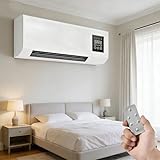
Overview: This compact unit markets itself as a year-round climate solution, functioning as both a heater and cooling fan. Crucially, it’s a circulating evaporative system—not a compressor-based AC—making it suitable only for dry climates where evaporative cooling works. Its lightweight design targets small spaces like bedrooms or offices seeking basic temperature modulation without complex installation.
What Makes It Stand Out: True versatility defines this product. Effortless switching between heating and fan modes, wall-mount or portable use, and intuitive remote control offer exceptional flexibility for renters or small-space dwellers. The space-saving dual-installation and automatic overheating shutoff enhance its practicality for clutter-free climate control.
Value for Money: Priced accessibly, it replaces separate fan and basic heater units. While it won’t match a true AC’s cooling power, its evaporative approach costs significantly less upfront and to operate than compressor units, ideal for mild climates or supplemental use where traditional AC is impractical.
Strengths and Weaknesses:
Strengths: Ultra-portable, silent operation, easy remote management, safe auto-shutoff, and dual mounting.
Weaknesses: Limited cooling efficacy in humidity (not real AC), heating is only for mild chills, and lacks dehumidification.
Bottom Line: A pragmatic, budget-friendly choice for dry climates needing basic air circulation and mild heating—perfect for apartments or offices where installing traditional AC is impossible. Manage expectations: it cools via evaporation, not refrigeration.
2. 2 In1 Mini Wall Mounted Air Conditioner Fan, Portable Cooling And Heating Air Conditioners Heating System for Bathroom Office Bedroom RV, Ac and Heater Combo Unit(White)
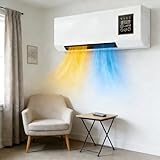
Overview: Promising true portability without exhaust vents, this unit leverages evaporative cooling (not compressor tech) for mild climate control. It targets spaces like bathrooms, RVs, or dorms where window units won’t fit, combining heating, dehumidifying airflow, and ventilation in one compact, wall-mountable design.
What Makes It Stand Out: Its ductless split-mini structure eliminates complex setup, while smart timer functions and ultra-quiet operation (critical for bedrooms) differentiate it from basic fans. Safety features enable secure bathroom use, and the all-in-one approach replaces multiple single-function devices.
Value for Money: Offers compelling value by consolidating a heater, dehumidifier, and fan. Though cooling is limited to evaporative performance, its energy efficiency and elimination of separate appliance costs justify the price for targeted, supplemental climate control in small areas.
Strengths and Weaknesses:
Strengths: No exhaust needed, versatile wall/portable use, dehumidifies, quiet, and bathroom-safe.
Weaknesses: Cooling ineffective in high humidity, heating capacity modest, not a substitute for real AC.
Bottom Line: An excellent space-saving solution for mild temperature adjustments in dry environments—ideal for renters or compact spaces needing flexible airflow and light heating, but not for serious cooling demands.
3. ZHORCIN Small M-ini Split Air-Conditioner, Ductless AC Unit, Wall Mounted Air-Conditioner No Window, with Remote Control, 3 Speed, for Kitchen & Bedroom Use

Overview: This minimalist unit emphasizes portability and modern aesthetics, using evaporative tech for rapid (though climate-dependent) cooling. Marketed for renters and small spaces, it promises USB-C battery operation, ultra-quiet airflow, and flexible placement—from walls to desks—without permanent installation.
What Makes It Stand Out: The 6000mAh USB-C battery enables true cordless mobility (12-hour runtime), while the 10dB noise level and magnetic levitation motor deliver near-silent operation. The claimed 13°C drop in 10 seconds is ambitious but highlights its focus on swift, localized relief in confined areas like kitchens.
Value for Money: Its niche value lies in unparalleled flexibility for renters. The battery operation and tool-free setup justify the cost for users needing temporary, movable cooling where outlets are scarce, though it lacks the power of grid-dependent units.
Strengths and Weaknesses:
Strengths: Cordless mobility, whisper-quiet, USB-C rechargeable, easy setup, and space-efficient.
Weaknesses: Overstated cooling claims, battery limits runtime, ineffective in humidity, and no heating function.
Bottom Line: A stylish, portable evaporative cooler perfect for renters in dry climates needing spot cooling—but verify realistic performance expectations; it’s a fan booster, not an AC replacement.
4. 2 In1 Mini Wall Mounted Air Conditioner Fan, Portable Cooling And Heating Air Conditioners Heating System for Bathroom Office Bedroom RV, Ac and Heater Combo Unit(Yellow)

Overview: Identical to Product 2 but in yellow, this unit delivers the same evaporative cooling and heating functionality via a ductless design. It targets identical use cases—bathrooms, RVs, and small rooms—emphasizing no-exhaust installation, smart controls, and dual mounting for adaptable climate management.
What Makes It Stand Out: Retains all key features of Product 2: timer-enabled remote operation, ultra-quiet fan modes, and integrated safety for humid spaces. The yellow variant offers subtle aesthetic differentiation while maintaining the core value proposition of consolidated heating/cooling/dehumidifying in one compact unit.
Value for Money: Priced comparably to the white model, it provides identical functionality. The color choice may appeal to specific decor needs, but value hinges on the same practical benefits: replacing multiple appliances and saving energy in mild climates.
Strengths and Weaknesses:
Strengths: Exhaust-free, versatile placement, dehumidifies, bathroom-safe, and quiet.
Weaknesses: Cooling ineffective in humidity, modest heating power, not true refrigeration-based AC.
Bottom Line: Choose this yellow version solely for aesthetic preference; performance mirrors Product 2. Ideal for supplemental climate control in dry environments where traditional AC can’t be installed.
5. 1800W Ductless Air Conditioner,3 in 1 Portable Wall Mounted Air Conditioner,Wall Mounted with Remote Control & Timer, Efficient Cooling Solution for Home Comfort

Overview: A significant step up, this 1800W unit features a genuine compressor-based cooling system alongside heating and fan modes—making it a true 3-in-1 solution. Its wall-mounted design includes a towel rack, targeting bathrooms and bedrooms with robust, year-round climate control without window modifications.
What Makes It Stand Out: The compressor technology delivers real refrigeration cooling (unlike evaporative models), while the IPX4 water resistance and rust-resistant coils ensure bathroom durability. The integrated towel rack and 12-inch airflow outlet enhance space efficiency and performance, setting it apart from basic fan-heaters.
Value for Money: Higher priced but justifies cost with authentic AC capability, durability, and multi-room versatility. It outperforms evaporative units in humidity and replaces standalone heaters/fans, offering long-term savings for whole-home climate management.
Strengths and Weaknesses:
Strengths: Real compressor cooling, effective heating, bathroom-safe, space-saving towel rack, and robust build.
Weaknesses: Louder than evaporative units (≤45dB), requires wall mounting, and higher energy use than fans.
Bottom Line: The only true AC here—essential for humid climates or serious cooling needs. A premium, durable investment for whole-room comfort where window units aren’t feasible.
6. 2 In1 Mini Wall Mounted Air Conditioner Fan, Portable Cooling And Heating Air Conditioners Heating System for Bathroom Office Bedroom RV, Ac and Heater Combo Unit(Red)

Overview: This compact unit markets itself as a true ductless portable air conditioner and heater. It promises versatile wall-mounted or portable use for bedrooms, offices, or RVs without requiring an exhaust hose—a significant claim for “air conditioning.” What Makes It Stand Out: Its primary appeal lies in the bold assertion of being a genuine AC without exhaust, alongside all-in-one functionality (heating, dehumidifying, fan). Smart remote control, ultra-quiet operation, and flexible installation (fixed or portable) are highlighted as key differentiators over basic heaters or fans. Value for Money: Priced moderately, it offers decent value if viewed strictly as a supplemental heater and fan. However, the “true AC” claim is misleading; it lacks refrigerant-based cooling, making it unsuitable for genuine heat extraction. It replaces a space heater and fan but not a real AC, diminishing value for those seeking actual cooling. Strengths and Weaknesses: Strengths: Quiet operation, easy remote control, dual heating/fan function, space-saving wall mount, energy-efficient heating. Weaknesses: Fails to deliver real air conditioning (only circulates/breathes air), limited cooling efficacy, safety concerns for bathroom use without explicit moisture protection, heating power may be insufficient for large spaces. Bottom Line: A capable space heater and quiet fan combo, but do not expect air conditioning. It’s a fair purchase for supplemental warmth and airflow in small rooms, but the marketing overpromises on cooling. Avoid if you need actual temperature reduction.
7. Multifuntional Wall Air Conditioner Fan 2-in-1 Wall Mounted Air Conditioner Heating Fan Portable New Ac and Heater Combo Unit Smart Air Conditioner Fan Heater For Home Office Bedroom

Overview: Despite its title, this product explicitly states it is not an air conditioner. It’s a wall-mounted electric fan/heater combo designed for year-round comfort in spaces like bathrooms, bedrooms, and offices, focusing on heating and airflow. What Makes It Stand Out: The integrated towel drying rack is a unique, practical feature for bathrooms. Its specific bathroom optimization, space-saving wall design, whisper-quiet operation, and clear admission that it’s not an AC set it apart from misleading competitors. True all-season utility via fan and heater modes is genuine here. Value for Money: Excellent value for its actual capabilities. It’s a cost-effective solution for bathroom heating and towel drying, plus basic summer airflow. Priced lower than units falsely claiming AC functionality, it delivers exactly what it promises without deceptive marketing, offering solid utility for the cost. Strengths and Weaknesses: Strengths: Honest marketing (not an AC), effective bathroom heater with towel rack, very quiet, space-saving, safe for intended use. Weaknesses: Zero cooling capability (fan only), limited heating power for large rooms, towel rack may not suit all bathroom layouts, no smart features like timers beyond basic operation. Bottom Line: Highly recommended for bathroom use as a heater and towel warmer, but manage expectations—it’s purely a fan/heater. Its clarity, practicality, and bathroom focus make it a trustworthy, value-driven choice where real AC isn’t needed.
8. Mini Wall Mounted air heater, 2 In1 Smart Air Conditioner Fan, With Remote Control, Mounted Split AC/Heating System For Bedroom, Office, Bathroom

Overview: This unit positions itself as a dual-function mini-split alternative, offering adjustable cooling (16-40°C) and heating via a wall-mounted design. It emphasizes rapid heating, energy efficiency, and quiet operation for small spaces like bedrooms or offices. What Makes It Stand Out: The wide 16-40°C temperature range and claim of matching conventional fan cooling are notable. Energy-saving focus (30% less than “traditional units”), 1-6H smart timer, and ultra-quiet operation via remote or touch control enhance its appeal as a discreet, efficient climate helper for compact areas. Value for Money: Reasonable value as a supplemental heater and fan. The energy efficiency claims and timer function could yield savings versus standard heaters. However, the “cooling” effect is fan-only, so value diminishes if genuine AC is expected. It excels as a low-cost, space-saving heater/fan combo. Strengths and Weaknesses: Strengths: Fast supplemental heating, quiet operation, intuitive remote/touch controls, energy-conscious design, compact wall-mount saves space. Weaknesses: No real cooling (only fan breeze), plastic build may lack durability, heating output limited to small zones, “split AC” terminology is inaccurate and misleading. Bottom Line: A solid choice for supplemental heating and airflow in studios or small rooms, but it’s not an air conditioner. Buy for efficient warmth and quiet fan use, not cooling. Good value within its true functional scope.
9. Small Space Heater for Indoor Use, Wall Mounted Air Conditioner Electric for Bedroom with Remote Control, 2 in 1 Small Heater and Fan Combo, Adjustable Thermostat, Easy-Mount for Indoor Use

Overview: This product is a wall-mounted electric heater/fan combo featuring 120° oscillation, remote control, and a focus on safety for indoor use in bedrooms or bathrooms. It markets dual-season functionality but lacks true cooling technology. What Makes It Stand Out: The 120° vertical oscillation ensures even heat/fan distribution uncommon in compact units. Strong safety features (overheat protection, cool-touch exterior, 24H timer) and Eco Mode for energy savings are significant highlights, especially for households with children or pets. Value for Money: Strong value for a dedicated space heater. The oscillation, robust safety suite, and Eco Mode justify the price over basic models. However, the “air conditioner” label inflates expectations; it’s purely a heater/fan. Worthwhile for safe, efficient supplemental heat—not cooling. Strengths and Weaknesses: Strengths: Excellent safety features, effective oscillation for even warmth, genuine energy-saving Eco Mode, easy wall mounting, reliable remote control. Weaknesses: Zero AC capability (fan mode only), 1500W heating may increase bills if primary heat source, oscillation adds noise at higher fan speeds. Bottom Line: Highly recommended as a safe, efficient wall heater with useful fan functionality. Ignore the “air conditioner” misnomer—it’s a top-tier supplemental heater for small spaces where safety and even heat matter most.
10. Mini Wall Mounted Air Conditioner Quiet Wall AC Unit For Bedroom 2 In 1 Smart Air Conditioner Cooler And Heater Combo With Remote Control, Portable Air Conditioner For Bedroom, Garage, Nursery

Overview: Marketed as a quiet, wall-mounted “AC” cooler and heater for bedrooms or nurseries, this unit emphasizes safety features, uniform airflow, and year-round temperature control via a compact design. What Makes It Stand Out: The “grid-type air outlet” and “fully enclosed air inlet” claim enhanced safety and quieter operation. Built-in overheating protection and “intelligent constant temperature” are promoted for reliability, especially in moisture-prone areas like bathrooms—though explicit moisture resistance isn’t confirmed. Value for Money: Questionable value due to misleading “AC” claims. It functions only as a heater/fan, yet pricing often reflects AC expectations. The build quality (ABS plastic) and safety features offer modest heater value, but it’s overpriced compared to honest fan/heater combos without deceptive branding. Strengths and Weaknesses: Strengths: Quiet operation claims, overheating protection, adjustable thermostat, versatile room suitability (bedroom/nursery), simple remote control. Weaknesses: Not a functional air conditioner (marketing is inaccurate), “cooling” is ineffective fan airflow, safety for bathrooms unverified (no IP rating mentioned), heating capacity likely minimal for garages. Bottom Line: Avoid if seeking real air conditioning. As a basic wall heater/fan, it’s mediocre—outperformed by cheaper, honestly marketed units. Only consider if you need a very compact heater and fully accept its lack of cooling capability.
Understanding Wall-Mounted ACs vs. Your Needs
Why Wall-Mounted Over Window Units?
Wall-mounted air conditioners offer distinct advantages for specific situations, particularly appealing to renters or those unable to install traditional window units. They provide a more permanent, streamlined look that doesn’t block windows, crucial for egress compliance in bedrooms or aesthetically sensitive spaces. Installation, while requiring a wall sleeve, often feels less intrusive than a bulky window unit, especially in casement or double-hung windows where fit is problematic. For first-time buyers seeking a cleaner aesthetic and the ability to keep windows fully functional, this type presents a compelling alternative, provided the installation location is suitable.
Assessing Your Room Size Honestly
The single biggest mistake first-time buyers make is underestimating the cooling power required. Ignoring your room’s actual square footage, ceiling height, sun exposure, and insulation quality guarantees an underperforming unit. A unit too small will run constantly, fail to cool effectively, and drive up energy bills significantly. Conversely, an oversized unit cycles on and off too frequently, wasting energy and failing to dehumidify properly, leading to a clammy feel. Accurately measuring your space and considering heat-generating appliances (like ovens or computers) is non-negotiable for finding the right capacity within your budget constraints.
Realistic Expectations for Sub-$400 Cooling
It’s vital to enter this search understanding the inherent limitations of the budget tier. Units under $400 are almost exclusively designed for smaller rooms, typically 150 square feet or less. They often feature lower maximum BTU outputs (around 5,000-8,000 BTU), basic single-speed compressors, and simpler controls. You won’t find advanced inverter technology, multi-zone capabilities, or sophisticated smart home integration in this price range. Focus on core functionality: reliable, basic cooling for a confined space. Expecting whole-house comfort or premium features will lead to disappointment; embracing the unit’s specific, limited role is key to satisfaction.
Budget Realities: What $400 Actually Buys You
Decoding the Price Tag Components
Your $400 isn’t just for the cooling unit itself. It typically covers the indoor wall sleeve assembly, basic mounting hardware, and essential installation instructions. Crucially, it usually does not include the outer wall sleeve kit (necessary for proper drainage and weatherproofing), specialized electrical components (like dedicated circuits if needed), or professional installation fees. Many budget pitfalls arise when buyers overlook these additional costs, assuming the sticker price is all-inclusive. Always factor in potential sleeve kit costs ($20-$50) and possible electrical upgrades before finalizing your purchase.
The BTU vs. Price Trade-Off
Within the sub-$400 bracket, there’s a direct correlation between cooling capacity (BTUs) and cost. Higher BTU units naturally command higher prices. For first-time buyers, resisting the urge to max out the BTU within your budget is critical. Choosing a unit significantly larger than your room’s requirement leads to inefficient short-cycling, poor humidity control, and higher long-term energy costs. Prioritize matching the BTU rating precisely to your measured space needs, even if it means selecting a unit at the lower end of the capacity spectrum offered within your price point. Efficiency trumps raw power here.
Build Quality and Material Considerations
Budget pricing inevitably impacts construction. Expect more plastic components, thinner metal casings, and potentially less robust internal parts compared to mid-range or premium models. While not inherently a dealbreaker for light, seasonal use in a small room, it does signal the need for careful handling during installation and operation. Pay attention to user reviews mentioning durability, especially regarding the slide-out chassis mechanism and drain pan construction. A slightly sturdier build within your price range, even if it means sacrificing a few BTUs, can prevent leaks and malfunctions down the line.
Hidden Costs That Break the Budget
The initial purchase is just the beginning. First-time buyers often overlook ongoing operational expenses. Budget units frequently have lower Energy Efficiency Ratings (EER), meaning they consume more electricity to produce the same cooling, significantly increasing your summer utility bills. Factor in the estimated annual operating cost based on local electricity rates. Additionally, consider potential costs for window sealing kits if used temporarily, specialized filters beyond the basic washable one, and the time investment required for frequent maintenance like coil cleaning. True affordability includes both purchase price and running costs.
Essential Features for First-Time Buyers on a Budget
Non-Negotiable: The Right Energy Efficiency Rating
While top-tier efficiency (high EER) is rare under $400, ignoring the EER entirely is a false economy. Look for the highest EER you can find within your specific BTU range and budget. Even a small difference (e.g., 10.0 vs. 9.5) translates to measurable savings on your electricity bill over a single cooling season, especially with frequent use. Check the yellow EnergyGuide label for estimated yearly operating costs. Prioritizing the best possible efficiency within your constraints ensures the unit doesn’t become a financial burden long after the initial savings are forgotten.
Simplified Controls You Can Actually Use
Complex digital interfaces with dozens of settings are unnecessary and often frustrating for basic cooling needs, especially on a budget unit. Prioritize clear, intuitive controls – physical buttons or a simple digital display are ideal. Essential functions include basic temperature setting (not just “cool,” “fan,” “dry” modes), fan speed selection (at least high/low), and a reliable timer. Avoid units with overly complicated remotes or mandatory smartphone apps in this price range, as these features often add cost without robust functionality and can become obsolete quickly. Ease of daily operation is paramount.
Noise Levels: Don’t Sacrifice Peace and Quiet
Cooling performance means little if the unit sounds like a jet engine, especially in a bedroom. Budget models can be notably louder than premium ones. Pay close attention to the decibel (dB) rating, specifically the noise level on the highest fan setting (often the most relevant for cooling). Aim for units consistently rated below 55 dB on high; lower is better for living spaces. Read reviews carefully for mentions of rattling, buzzing, or compressor noise, which aren’t always reflected in the spec sheet. A slightly quieter unit, even if marginally more expensive within budget, drastically improves comfort.
Drainage Solutions for Hassle-Free Operation
Proper drainage is critical to prevent water damage and mold. Budget wall-mounted units primarily rely on gravity drainage. Understand the unit’s specific drainage requirements: Does it need a slight downward slope? Is a drain hose included? How is condensation managed internally? Units with accessible, easy-to-clean drain pans and clear drainage paths are essential. Avoid models requiring complex pump systems (rare under $400 but sometimes advertised) as these add failure points. Ensure your installation location allows for a simple, gravity-fed drain path away from the wall to avoid constant bucket-emptying chores.
Avoiding Common First-Time Buyer Pitfalls
The Temptation of “Too Good to Be True” Deals
Deep discounts on units significantly below typical market rates for their claimed BTU often signal major red flags. This could indicate discontinued models with obsolete parts, units using banned or inefficient refrigerants (like R-22, largely phased out), poor manufacturing quality, or even stolen goods. Stick with reputable retailers, even if prices are slightly higher, to ensure legitimate products, valid warranties, and access to customer support. Saving $50 upfront only to face $200 in repair costs or a dead unit after one season isn’t a bargain.
Ignoring Installation Complexity and Requirements
Installing a wall-mounted AC is significantly more involved than a window unit. It requires cutting a precise hole through an exterior wall, installing a sleeve, ensuring proper weatherproofing, and often managing electrical wiring. Many first-time buyers underestimate this complexity, assuming it’s a simple DIY task. Assess your skill level honestly. If you’re uncomfortable with basic carpentry, sealing, and potentially electrical work (consulting an electrician is wise for circuit checks), factor in professional installation costs ($150-$300+), which can easily blow your $400 budget. Attempting a shoddy DIY install risks water leaks, structural damage, and safety hazards.
Overlooking Warranty Coverage and Support
Warranty terms are crucial safety nets, especially with budget equipment. Scrutinize the warranty details: What’s covered (parts, labor, compressor)? For how long (typically 1 year parts/labor is standard in this range)? Are there exclusions? Is the warranty valid only with professional installation? Some budget brands offer minimal or difficult-to-claim warranties. Prioritize units from manufacturers known for reasonable customer service within the budget segment, even if their warranty isn’t the longest. A solid 1-year parts/labor warranty is the absolute minimum to seek.
Confusing Wall-Mounted with Ductless Mini-Splits
A critical distinction often blurred in marketing: true wall-mounted air conditioners (the focus here) are single-room units installed through a wall sleeve. Ductless mini-split systems, while also wall-mounted, involve separate indoor and outdoor units connected by refrigerant lines and are significantly more expensive ($1000+). Be vigilant to avoid accidentally purchasing a mini-split “indoor head” under the mistaken belief it’s a complete, self-contained wall unit. The price point ($400) is your best clue – a genuine complete wall-mounted AC for under $400 will not have an outdoor condenser unit.
Installation and Maintenance for Longevity
Pre-Installation Wall Assessment is Key
Before buying any unit, carefully inspect your intended installation wall. Is it an exterior load-bearing wall? What’s behind the drywall (wires, pipes)? Can you achieve the necessary slight downward slope for drainage? Is there clear access outside for the sleeve and drainage? Measure window and door proximity to ensure the sleeve placement won’t interfere. Taking these steps before purchase prevents discovering deal-breaking obstacles after you’ve committed to a specific model, saving time, money, and frustration. Never assume any wall is suitable without a thorough check.
Essential Post-Installation Sealing Steps
A poorly sealed installation is the fastest route to high energy bills, drafts, water intrusion, and pest problems. After mounting the sleeve and unit, meticulous sealing is non-optional. Use high-quality, paintable acrylic caulk around the entire exterior sleeve perimeter where it meets the siding. Inside, seal gaps between the sleeve and wall with expanding foam (carefully, to avoid warping) and finish with caulk or trim. Ensure the drain hose exit point is also properly sealed. Skipping or rushing this step negates any efficiency gains and invites costly repairs.
Simple Maintenance Routines for Budget Units
Budget units often require more frequent attention to maintain performance. Establish a simple routine: Clean or replace the air filter every 2-4 weeks during peak use (clogged filters drastically reduce airflow and efficiency). Vacuum dust from the front and rear grilles monthly. At the end of the cooling season, carefully remove the unit (following safety procedures), clean the internal evaporator coils and drain pan with a soft brush and mild cleaner, check for debris, and store it properly if removed. This minimal effort prevents most common failures and extends the unit’s usable life significantly.
Knowing When to Call a Professional
While basic maintenance is DIY-friendly, recognize the limits. If you encounter refrigerant leaks (hissing sound, oil spots, poor cooling), electrical issues (burning smell, tripping breakers), persistent water leaks despite proper drainage setup, or major component failures (compressor not running), stop using the unit immediately. These require certified HVAC technicians. Attempting complex repairs on a budget unit is often uneconomical; the cost of parts and labor may exceed the value of the unit. Your safety and avoiding further damage are paramount.
Frequently Asked Questions
Can I install a wall-mounted AC myself as a complete beginner?
While possible for handy individuals, it’s significantly more complex than a window unit. It requires cutting a precise wall hole, ensuring proper drainage slope, weatherproofing, and potentially electrical work. If you lack experience with carpentry, sealing, and basic electrical safety, professional installation is highly recommended to avoid costly damage, leaks, or safety hazards, even if it impacts your initial budget.
Will a sub-$400 unit effectively cool a standard bedroom?
It can, but only if the unit’s BTU rating precisely matches the bedroom’s size, layout, and conditions (e.g., 150 sq ft max for 8,000 BTU, less for sun exposure). Oversizing or undersizing leads to poor performance and higher energy use. Be realistic about room size; these budget units are not designed for large or open-plan areas.
How much will it actually cost to run per month?
Monthly cost depends heavily on your local electricity rate, the unit’s EER, daily usage hours, and temperature setting. A typical 8,000 BTU unit (EER ~10) running 8 hours/day might cost $15-$30 monthly. Always check the EnergyGuide label for estimated yearly costs and prioritize the highest EER within your budget to minimize operating expenses.
Do these units come with everything needed for installation?
Typically, no. The $400 price usually covers the main unit and basic indoor mounting hardware. You will almost certainly need to purchase a separate outer wall sleeve kit ($20-$50) for proper drainage and weatherproofing. Electrical requirements (like a dedicated circuit) may also necessitate additional materials or an electrician.
Are repair costs high for budget models when they break?
Repair costs can quickly exceed the unit’s value. Simple fixes (like a new filter or fan motor) might be economical, but major issues (compressor, refrigerant leaks) often aren’t worth repairing on a $400 unit. Factor in the likelihood of needing replacement sooner than a pricier model when assessing true long-term value.
Can I use this unit in a room with no exterior wall?
No. Wall-mounted ACs require installation through an exterior wall to expel hot air and condensation. They cannot be vented through a window like some portable units, nor do they have an outdoor condenser like mini-splits. An exterior wall is mandatory.
How noisy are these budget units compared to more expensive ones?
Budget models are generally louder, often ranging from 50-60+ dB on high fan setting. Premium units might operate below 45 dB. Pay close attention to the listed noise levels and user reviews mentioning specific sounds (rattling, buzzing). Prioritize lower dB ratings within your budget for bedrooms or living areas.
What’s the average lifespan of a sub-$400 wall-mounted AC?
With proper installation, suitable sizing, and diligent maintenance (regular filter cleaning, end-of-season care), expect 3-7 years of reliable service. Heavy usage, poor maintenance, or installation errors can significantly shorten this lifespan. They are generally less durable than higher-priced models.
Do I need a special electrical outlet?
Most units under 8,000 BTU use a standard 115-volt household outlet (like a window unit). However, always verify the specific voltage and amperage requirements before purchase. If your circuit is already overloaded, you might need an electrician to install a dedicated circuit, adding to the cost.
Is a wall-mounted unit better than a portable AC for my situation?
Generally, yes, for permanent installation. Wall-mounted units are more efficient (no hot air recirculation through the hose), quieter indoors, provide better dehumidification, and don’t take up floor space. Portables are only suitable if wall installation is impossible, but they are significantly less effective and efficient for the same room size.
See Also
- 10 Best Budget Portable Air Conditioners Under $300 for First-Time Buyers
- The 10 Best Wall Mounted Air Conditioners Every First-Time Homeowner Needs This Year
- 10 Best Budget Wall Mounted Air Conditioners Under $400 for Apartments
- 10 Best Budget Wall Mounted Air Conditioners Under $400 for Renters in 2026
- The 10 Ultimate Best Wall Mounted Air Conditioners for Bedroom Comfort in 2026