Table of Contents
Renting doesn’t mean resigning yourself to sweltering summer nights or dreading the lease-renewal conversation about your “permanent” window unit. For budget-conscious tenants, finding effective cooling that won’t trigger landlord fury or drain your wallet is a genuine struggle. You need something powerful enough to handle your space, affordable upfront (staying firmly under that crucial $400 mark), and crucially, removable without leaving a trace when you move out. The promise of a “wall-mounted” unit sounds ideal – sleeker than a window box, right? But the reality for renters is often more complicated than ads suggest, filled with potential pitfalls like permanent drilling requirements or exorbitant installation fees that blow your budget.
Navigating the sea of air conditioning options as a renter requires a different checklist than homeowners. That “wall-mounted” label can be dangerously misleading; many true wall units demand significant structural modifications that simply aren’t renter-friendly. Your priority isn’t just cooling capacity or fancy smart features – it’s reversibility, ease of installation without damage, and strict adherence to your lease terms. This guide cuts through the marketing hype to focus on what actually matters for your specific situation: identifying genuinely renter-safe cooling solutions that deliver real value without risking your security deposit or exceeding your budget. Let’s unpack how to find effective, affordable cooling that respects your temporary home.
Top 10 Wall Mounted Air Conditioners
Detailed Product Reviews
1. Portable Wall Air Conditioner Fan 2 In 1 Wall Mounted Heating System, Quiet Ac Fan Heater Combo Unit for Living Room Bedroom Office, Smart Air Conditioner with Remote Control(White)
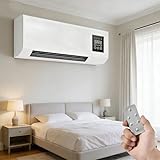
Overview: This compact unit markets itself as a year-round climate solution, combining heating and cooling in a single wall-mountable or portable device. Crucially, it functions as an evaporative cooler (not a true compressor-based AC), circulating and slightly cooling air via water evaporation in summer while providing resistive heating in winter. Targeted at small spaces like bedrooms or offices, it emphasizes convenience and space-saving design. What Makes It Stand Out: Its dual installation flexibility (wall-mounted or freestanding) and genuine 2-in-1 functionality for heating and evaporative cooling are key differentiators. The included remote control and automatic overheating protection add practical convenience and safety, especially for a unit in this price bracket focused on basic climate adjustment rather than true refrigeration. Value for Money: Priced accessibly, it offers decent value for users needing supplemental, non-intensive cooling (like in dry climates) and reliable spot heating. However, it lacks the cooling power of true mini-splits or window units, making it unsuitable for humid environments or significant temperature reduction. It’s a budget-focused solution for mild climates. Strengths and Weaknesses: Strengths: Lightweight, easy setup, safe operation, dual heating/cooling modes, space-saving versatility. Weaknesses: Not true air conditioning (minimal cooling effect, ineffective in humidity), limited heating capacity, evaporative function requires water refills, noise levels may be noticeable at higher fan speeds. Bottom Line: A practical and affordable supplemental heater and evaporative fan for dry climates, but manage expectations: it won’t replace a real air conditioner. Ideal for mild weather or as a secondary heat source, not for serious cooling demands.
2. ZHORCIN Small M-ini Split Air-Conditioner, Ductless AC Unit, Wall Mounted Air-Conditioner No Window, with Remote Control, 3 Speed, for Kitchen & Bedroom Use

Overview: Marketed as a ductless mini-split, this device is fundamentally an advanced evaporative personal fan, not a refrigerant-based air conditioner. It promises rapid cooling and humidity reduction for small spaces like kitchens or bedrooms, featuring USB-C battery power and ultra-quiet operation, but its cooling claims defy thermodynamic principles for its size and type. What Makes It Stand Out: The emphasis on portability (USB-C battery, 12-hour runtime), extremely quiet operation (10dB claimed), and desktop/wall versatility are notable. The magnetic levitation motor and ABS build suggest durability for a personal cooling device, targeting renters needing flexible, non-permanent solutions without exhaust hoses. Value for Money: It offers fair value as a high-end personal evaporative fan or air circulator, especially for renters or desk use. However, its misleading “AC” labeling and exaggerated claims (e.g., “13°C drop in 10 seconds,” “300% faster than fans”) significantly overpromise. True mini-splits cost far more but deliver actual refrigeration. Strengths and Weaknesses: Strengths: Highly portable, whisper-quiet, battery-powered for mobility, easy setup, good for spot cooling personal space. Weaknesses: Not real air conditioning (minimal cooling), ineffective in humidity, battery runtime likely less than claimed under load, overhyped specifications, limited to very close proximity use. Bottom Line: A capable personal evaporative fan for desk or bedside use in dry climates, but its “AC” claims are inaccurate. Avoid if you need genuine room cooling; consider it only as a premium, quiet personal circulator.
3. LG 11,800 BTU Through the Wall Air Conditioner, 115V, Cools up to 530 Sq. Ft. for Bedroom, Living Room, Apartment, with Remote, 3 Cool & Fan Speeds, Universal design fits most sleeves, White

Overview: This is a legitimate, high-capacity through-the-wall air conditioner using efficient R-32 refrigerant. Designed for permanent sleeve installation (not windows), it effectively cools spaces up to 530 sq. ft. with genuine refrigeration, targeting bedrooms, living rooms, or apartments seeking robust, energy-efficient cooling. What Makes It Stand Out: The use of eco-friendly R-32 refrigerant (superior EER of 10.6) and Energy Saver mode (compressor cycles off while fan runs) deliver significant efficiency gains over older models. Its dedicated through-the-wall design ensures optimal performance and sealing, unlike adapted window units, and includes a full trim kit for professional installation. Value for Money: While priced higher than basic window units, it offers excellent long-term value through superior energy efficiency (lowering running costs) and reliable, powerful cooling. The included trim kit, filter, and remote add convenience. For permanent installations, it outperforms portable “ductless” evaporative units significantly. Strengths and Weaknesses: Strengths: True, powerful refrigeration cooling, high energy efficiency (R-32), well-designed for permanent wall installation, multiple modes (Cool, Dry, Energy Saver), comprehensive accessories. Weaknesses: Requires professional sleeve installation (not DIY-friendly for all), larger physical footprint, higher upfront cost than window units. Bottom Line: A top-tier, energy-efficient solution for permanent through-the-wall cooling. Highly recommended for those able to install a sleeve, offering reliable, powerful performance where portable evaporative units fail.
4. 2 In1 Mini Wall Mounted Air Conditioner Fan, Portable Cooling And Heating Air Conditioners Heating System for Bathroom Office Bedroom RV, Ac and Heater Combo Unit(White)
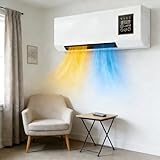
Overview: Similar to Product 1, this unit is an evaporative cooler/heater combo, not a true refrigerant-based air conditioner. It promises ductless, exhaust-free operation for cooling and heating in spaces like bathrooms, bedrooms, or RVs, leveraging portability and wall-mounting options for flexible placement. What Makes It Stand Out: Its focus on bathroom/RV suitability (highlighting safety and humidity handling) and the claim of “no exhaust needed” differentiate it. The integration of dehumidifying and gentle breeze functions alongside heating targets multi-season use in moisture-prone or compact areas where traditional AC isn’t feasible. Value for Money: It presents reasonable value as a supplemental heater and evaporative fan for mild climates or specific use cases (e.g., bathroom ventilation/heating). However, the “AC” label is misleading; it lacks meaningful cooling capacity. It’s a niche solution, cheaper than real mini-splits but far less capable for cooling. Strengths and Weaknesses: Strengths: True portability (no exhaust hose), safe for bathrooms (with caveats), dual heating/cooling (evaporative) modes, quiet operation, easy installation options. Weaknesses: Ineffective cooling (evaporative only, useless in humidity), limited heating power, requires water for cooling function, not suitable for primary room cooling. Bottom Line: A functional supplemental heater and personal evaporative fan for dry climates or specific spots like bathrooms, but not an air conditioner. Choose it only for mild heating or light airflow needs where true AC isn’t possible.
5. 1800W Ductless Air Conditioner,3 in 1 Portable Wall Mounted Air Conditioner,Wall Mounted with Remote Control & Timer, Efficient Cooling Solution for Home Comfort

Overview: This unit is another evaporative cooler marketed deceptively as a “ductless air conditioner.” It claims 3-in-1 cooling, heating, and fan modes with rapid cooling via a “compressor system,” but lacks the components for true refrigeration. It targets whole-home use through portability, focusing on bathrooms and kitchens. What Makes It Stand Out: Features like the IPX4 water resistance rating (valid for bathroom use), rust-resistant coils, integrated towel rack, and ≤45 dB noise level cater specifically to bathroom environments. The emphasis on “ventless” operation and humidity removal addresses common bathroom fogging issues better than most similar units. Value for Money: It offers decent value specifically as a bathroom heater/ventilator/fan combo. The build quality (IPX4, aluminum coils) justifies a mid-range price for this niche. However, the “cooling” claims are invalid; it won’t meaningfully cool a room. It’s overpriced if purchased expecting real AC. Strengths and Weaknesses: Strengths: Excellent bathroom suitability (water-resistant, dehumidifying), durable build, quiet operation, useful towel rack, safe heating, true portability. Weaknesses: Not real air conditioning (evaporative cooling ineffective for room temp drop), heating limited to spot warmth, cooling claims are misleading, compressor mention is inaccurate. Bottom Line: A well-designed bathroom companion for heating, ventilation, and mild airflow, but avoid if seeking actual air conditioning. Its value lies solely in bathroom functionality, not as a room cooler.
6. Amazon Basics 5000-BTU Window Air Conditioner with Quiet Operation, Up to 150 Sqf, Cool and Fan Functions, Washable Filter, Adjustable Window Kit, Intuitive Mechanical Controls, for Small Room, White

Overview: This compact Amazon Basics window unit targets small spaces (up to 150 sq. ft.) like bedrooms or offices, offering essential cooling and fan functions with straightforward mechanical controls. Its focus is on simplicity and affordability for basic climate control needs. What Makes It Stand Out: The standout features are its exceptionally quiet operation (56 dB max), crucial for sleep or concentration, and the included washable filter for easy maintenance. The adjustable window kit accommodates a wide range of standard windows (23"-36" wide), simplifying installation for renters or DIYers. Value for Money: As a budget-friendly entry point, it delivers reliable basic cooling where it’s needed most. While lacking smart features or a remote, its low price point and included mounting kit make it a strong value for cooling very small, specific areas without complex setup. Strengths and Weaknesses: Strengths: Very quiet; easy installation with adjustable kit; washable filter; intuitive mechanical dials; affordable. Weaknesses: Limited to very small rooms; no remote control; basic single-speed fan; mechanical controls feel dated; filter access could be easier. Bottom Line: An excellent, no-frills solution for cooling tiny rooms quietly and affordably; ideal for dorms, small home offices, or as supplemental cooling where advanced features aren’t needed.
7. Keystone 8,000 BTU Wall Mounted Air Conditioner and Dehumidifier, 115V, Wall Unit for Bedroom, Bathroom, Small-Medium Sized Rooms up to 350 Sq.Ft., Quiet, High Efficiency Wall Mounted AC Unit, White

Overview: The Keystone 8K BTU unit is a dedicated wall-mounted AC/dehumidifier designed for small to medium rooms (up to 350 sq. ft.), prioritizing space-saving installation and humidity control alongside cooling. What Makes It Stand Out: Its key differentiators are the effective built-in dehumidifier (2.1 pints/hour) and the “smart” remote that measures ambient room temperature and adjusts cooling accordingly every 3 minutes. The 4-way louvers and space-saving wall design (preserving windows) are significant advantages. Value for Money: It offers strong value for those needing dedicated wall installation and humidity management. The dehumidifier function adds utility beyond basic cooling, and Energy Saver/Sleep modes enhance efficiency, justifying its price over comparable window units lacking these features. Strengths and Weaknesses: Strengths: Effective dehumidification; smart remote for accurate temps; space-saving wall mount; Energy Saver/Sleep modes; quiet operation; 4-way airflow. Weaknesses: Wall installation is more complex than window units; remote sensor accuracy can be situational; lacks advanced smart home integration. Bottom Line: Highly recommended for bedrooms or bathrooms where space is limited and humidity control is essential; a practical, efficient wall unit offering features beyond basic cooling at a reasonable cost.
8. LG 10,000 BTU Through the Wall Air Conditioner, 115V, Cools up to 440 Sq. Ft. for Bedroom, Living Room, Apartment, with Remote, 3 Cool & Fan Speeds, Wall AC Unit, White
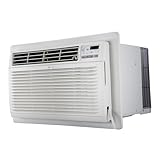
Overview: This LG unit is a high-efficiency through-the-wall air conditioner engineered specifically for permanent wall sleeve installation (not windows), cooling spaces up to 440 sq. ft. with modern refrigerant technology. What Makes It Stand Out: The use of eco-friendly, energy-efficient R-32 refrigerant (EER 10.7) is a major innovation, offering better performance and lower environmental impact. The comprehensive feature set—including Turbo fan, Dry mode (2.9 pints/hour dehumidification), and 4-way airflow—provides versatile climate control. Value for Money: While the upfront cost is higher than basic window units, the R-32 refrigerant translates to long-term energy savings and superior cooling efficiency. The included remote, robust features (Dry/Turbo modes), and suitability for larger rooms make it a sound investment for permanent installations. Strengths and Weaknesses: Strengths: Energy-efficient R-32 refrigerant; strong dehumidification (Dry mode); Turbo fan for quick cooling; comprehensive remote; washable filter; ideal for larger rooms (440 sq. ft.). Weaknesses: Only for wall sleeve installation (not windows); higher initial cost; installation requires a sleeve (included but needs setup). Bottom Line: A top-tier choice for permanent through-the-wall installations in medium-sized rooms; worth the investment for its efficiency, advanced features, and eco-friendly refrigerant, especially where window units aren’t feasible.
9. BLACK+DECKER Window or Through The Wall Air Conditioner 18000 BTU, AC Window Unit Cools Up to 1000 Square Feet, AC Unit with Remote Control, 3 Cooling Speeds and Fan Only, BD18WT6, White

Overview: The BLACK+DECKER BD18WT6 is a powerful dual-installation (window or wall sleeve) unit targeting large spaces up to 1,000 sq. ft., offering robust cooling for living areas, offices, or entire floors. What Makes It Stand Out: Its massive 18,000 BTU capacity for very large areas is the primary draw. The flexibility of being usable as both a window unit (with accordion panels for 28"-40.5" windows) and a through-the-wall unit (sleeve included) is highly unique for this capacity class. Value for Money: It provides exceptional cooling power per dollar for substantial spaces where central AC isn’t an option. The remote control, Energy Saver mode, and timer add convenience, though the price reflects the significant BTU output and dual-install capability. Strengths and Weaknesses: Strengths: Very high cooling capacity (1000 sq. ft.); dual window/wall installation flexibility; full-function remote; Energy Saver mode; suitable for large living spaces. Weaknesses: Heavy and cumbersome; through-the-wall installation requires a professional; high energy consumption; significant noise level expected at max capacity. Bottom Line: The go-to solution for cooling very large single rooms or open areas; choose this if you need maximum power and installation flexibility, but be prepared for higher energy use and professional help for wall mounting.
10. Keystone 12,000 BTU Wall Mounted AC Unit and Dehumidifier, 115V, Wall Unit for Bedroom, Bathroom, Nursery, and Medium Sized Rooms up to 550 Sq.Ft., AC Wall Unit with Remote, Quiet, High Efficiency AC
Overview: Keystone’s 12K BTU wall unit delivers capable cooling and dehumidification for medium-sized rooms (up to 550 sq. ft.), emphasizing quiet operation, ease of use, and energy-saving features in a space-saving wall design. What Makes It Stand Out: It boasts the highest dehumidification capacity in this list (2.5 pints/hour), crucial for damp climates or nurseries. The “smart” remote, mirroring Product 7, measures room temperature and adjusts cooling every 3 minutes, while Energy Saver and Sleep modes optimize efficiency automatically. Value for Money: It represents excellent value for a wall-mounted unit in its class. The strong dehumidification, effective energy-saving modes, remote control, and quiet operation provide significant benefits that outweigh the premium over comparable window units, especially where space is limited. Strengths and Weaknesses: Strengths: Powerful dehumidification (2.5 pints/hour); smart remote for precise temp control; Energy Saver/Sleep modes; quiet operation; space-saving wall mount; 4-way airflow. Weaknesses: Wall installation is more involved than window units; remote sensor can be affected by placement; lacks advanced connectivity. Bottom Line: Highly recommended for medium rooms where humidity control and space conservation are priorities; a quiet, efficient, and feature-rich wall unit offering superior comfort and value for its cooling capacity.
Understanding Renter-Specific Cooling Challenges
Why Standard Wall Units Often Aren’t Renter Options
True ductless mini-split systems, often marketed as wall-mounted, typically require permanent installation involving drilling large holes through exterior walls for refrigerant lines and condensate drainage. This level of modification is almost always prohibited in rental agreements and can lead to significant disputes over security deposits. The associated professional installation costs also frequently exceed the $400 budget threshold, making them impractical for most renters seeking an affordable, temporary solution.
The Critical Importance of Lease Agreement Review
Before even considering purchasing any cooling unit, meticulously review your lease agreement. Look for specific clauses regarding alterations to the property, restrictions on window units (size, type, security), and prohibitions against any wall penetrations. Many leases explicitly forbid drilling holes for air conditioners. Violating these terms can result in denied security deposit returns or even lease termination. Your landlord’s written permission is non-negotiable for any installation method involving potential damage.
The Reality of “Wall-Mounted” for Renters
Most affordable units marketed as “wall-mounted” for renters under $400 are actually specialized window units designed to sit within the window frame opening, sometimes with brackets that attach minimally to the sill or frame, not the wall itself. True, no-damage wall mounting within this price point is exceptionally rare. Understanding this distinction prevents costly mistakes and misplaced expectations. Focus on solutions designed for temporary, non-invasive placement.
Essential Features for Budget Renter AC Units
BTU Sizing: Avoiding the Undercooling Trap
Choosing the correct cooling capacity (measured in BTUs) is paramount for efficiency and comfort. An undersized unit will run constantly, struggle to cool the space, and inflate your electricity bill, negating any budget savings. For typical rental apartments or studios (150-300 sq ft), units in the 5,000 to 8,000 BTU range are usually sufficient. Always calculate based on your room’s actual square footage, ceiling height, sun exposure, and number of occupants – don’t guess.
Noise Level Considerations for Shared Walls
Rental properties often have thin walls and shared living spaces. A noisy AC unit can quickly become a source of tension with neighbors or roommates. Look for units explicitly advertising low decibel (dB) ratings, ideally below 50 dB on the lowest setting. Pay attention to user reviews mentioning noise levels; specifications can sometimes be optimistic. Quieter operation is a non-negotiable comfort feature in close quarters.
Energy Efficiency: The Hidden Cost Factor
While upfront cost is critical under $400, don’t ignore energy efficiency (measured by the EER – Energy Efficiency Ratio). A slightly higher upfront cost for a better EER rating can save significantly on monthly electricity bills over a hot season, especially in regions with high cooling demands. Prioritize units with an EER of 10.0 or higher within your budget – it pays off in the long run and is often more environmentally friendly.
Installation & Removal: The Renter’s Top Priority
Evaluating True No-Drill Installation Methods
This is the absolute cornerstone for renters. Scrutinize installation requirements:
- Slide-in Window Kits: The most common renter solution. Units slide into the window frame, secured by adjustable side panels and brackets that attach only to the window sash or frame, not the wall studs. Ensure the kit is robust and designed for your specific window type (double-hung, sliding).
- No-Drill Brackets: Some units utilize specialized brackets that clamp securely onto the window sill or frame using heavy-duty tension screws, eliminating the need for drilling into wall surfaces. Verify the bracket design and weight capacity.
- Avoid Any Mention of Wall Stud Anchoring: If installation instructions require finding and screwing into wall studs behind the window frame, it’s not renter-safe.
Weight Capacity and Structural Support
Even no-drill solutions rely on the structural integrity of your window frame and sill. Older apartments may have weaker frames. Check the unit’s weight and ensure your window frame (especially the lower sash and sill) is sturdy enough to support it securely without bowing or cracking. Units under 50 lbs are generally safer for older windows, but always assess your specific situation.
The Crucial Test: Removal and Restoration
Before finalizing your decision, mentally walk through the removal process:
- Can the unit be lifted out easily by one person?
- Do brackets or panels leave any holes, scuffs, or residue?
- Can the window be closed and latched perfectly afterward, looking undisturbed?
- Is there a clear path to restore the window to its original condition? If the answer to any is “no,” keep looking. Your security deposit depends on seamless removal.
Budget Considerations Beyond the Price Tag
Total Cost of Ownership Calculation
The $400 sticker price is just the beginning. Factor in:
- Installation Accessories: Specialized no-drill brackets, heavy-duty support brackets, or reinforced window kits might be an extra cost.
- Energy Consumption: Estimate monthly operating costs based on BTU, EER, local electricity rates, and expected usage hours. A less efficient unit can cost $10-$20 more per month to run.
- Potential Repair Costs: Cheapest units might have shorter lifespans or harder-to-find parts. Consider if basic warranty coverage is included.
Warranty Coverage Specifics for Renters
Understand what the warranty covers, especially regarding installation-related issues. Some manufacturers void warranties if the unit isn’t installed by a professional, which isn’t feasible for renters. Look for warranties that acknowledge DIY/reversible installation methods are acceptable. A standard 1-year parts/labor warranty is typical in this price range; longer coverage is a bonus.
Where to Find Reliable Deals Without Sacrificing Safety
Focus on major retailers known for clear return policies and customer service, especially during seasonal sales (end of summer, early spring). Avoid obscure online marketplaces where specifications might be inaccurate or support non-existent. Read recent reviews specifically from other renters detailing their installation and removal experience. Don’t chase the absolute cheapest option if it compromises on essential renter-friendly features.
Maximizing Performance and Longevity
Proper Window Sealing Techniques
Even with a slide-in unit, gaps around the AC can let hot air in and cool air out, drastically reducing efficiency. Use high-quality, flexible foam insulation strips or specialized window AC sealing kits designed to expand and fill gaps without damaging the frame. Avoid permanent caulk or expanding foam. Ensure the seal is tight but allows for easy removal without residue.
Condensate Management for Renter Safety
All ACs produce condensation. Budget units often rely on dripping water outside or evaporating it internally via the condenser fan. Ensure the unit’s drainage path is completely clear outside your window well. Never let water drip inside the building envelope, as this can cause mold and severe damage, leading to major liability. Some units have small internal tanks requiring periodic emptying – know this requirement.
Maintenance Essentials for Budget Units
Keep your affordable unit running efficiently with simple, regular tasks:
- Clean/Replace Filters Monthly: Clogged filters restrict airflow, reduce cooling, and increase energy use. Most budget units have basic washable filters.
- Clear Exterior Vents: Ensure the outdoor-facing vents (on the back/sides) aren’t obstructed by plants, debris, or window screens.
- Check Drainage Holes: Periodically verify condensate can exit freely to prevent internal water buildup.
Navigating Landlord and Lease Requirements
Documenting Pre-Installation Condition
Before installing anything, take multiple dated photos and videos of the window frame, sill, and surrounding wall area. This documentation is vital proof if any damage is later disputed upon move-out. Note the exact condition in writing and consider sharing it with your landlord for acknowledgment.
Securing Written Landlord Permission
Never assume verbal permission is enough. Get explicit, written approval from your landlord before purchasing or installing. Specify the exact model, installation method (emphasizing “no wall drilling, reversible installation”), and your plan for removal and restoration. This protects you and sets clear expectations. A responsible landlord will appreciate the transparency.
Understanding Insurance Implications
Some leases require tenants to carry renters insurance. Installing an AC unit, even a window type, might have implications (e.g., if improper installation leads to water damage). While rare for standard window units, it’s worth a quick check with your insurance provider. More importantly, ensure your installation method won’t create a hazard that could void coverage (like blocking an emergency exit).
Frequently Asked Questions
Frequently Asked Questions
Can I really find a true wall-mounted AC under $400 that’s renter-friendly? True ductless mini-splits requiring wall penetration are almost always over $400 installed and not renter-friendly. Affordable “wall-mounted” options for renters under $400 are almost exclusively specialized window units designed for reversible, no-drill installation into the window frame itself.
Will a no-drill window AC unit fall out? Properly installed units using manufacturer-recommended slide-in kits or no-drill brackets designed for your specific window type and unit weight are very secure. Ensure the window is locked down onto the unit’s frame and the support brackets are correctly tensioned. Never install in a window that can’t be securely latched.
How do I know if my window is compatible? Measure your window’s width (open and closed) and height carefully. Compare these dimensions to the unit’s required window opening range (found in specs). Most budget units fit standard double-hung windows (20"-40" wide). Sliding windows require specific kits; verify compatibility before buying.
Do I need landlord permission for a window AC? Absolutely yes. Most leases require permission for any air conditioner installation. Installing without written permission risks eviction or losing your security deposit, regardless of the unit type. Always get approval first.
Will the AC damage my window frame? Quality no-drill kits use brackets that distribute weight and avoid direct screwing into wood. However, very old, rotted, or weak frames might still show pressure marks. Assess your frame’s condition first. Using protective felt pads on brackets can minimize potential scuffing.
How much will it cost to run per month? Estimate using: (BTU / EER) / 1000 = kW per hour. Multiply by hours used daily and your electricity rate (e.g., $0.15/kWh). A 5,000 BTU unit (EER 10) running 8 hours/day: (5000/10)/1000 = 0.5 kW * 8 * $0.15 = ~$0.60/day or ~$18/month. Actual cost varies significantly.
Can I install it in a casement (crank-out) window? Installing standard slide-in units in casement windows is extremely difficult and often unsafe due to the window’s operation. Specialized, often custom, brackets exist but are rare under $400. This window type is generally incompatible with affordable renter AC solutions; consider portable units instead.
What happens if water drips inside? This is a serious issue indicating improper installation or a clogged drain. Immediately turn off the unit. Identify and clear the blockage (often external fins or the drain hole). Never let water pool inside – it can cause mold and structural damage, making you liable. Ensure the outdoor vent path is completely clear.
Is a higher BTU unit always better? No. An oversized unit will cool too quickly without removing enough humidity, leading to a clammy, uncomfortable space and short-cycling (frequent on/off), which wears out the unit faster and increases energy use. Match BTUs precisely to your room size and conditions.
How do I prove I installed it correctly when I move out? Provide your landlord with the dated “before” photos/videos you took. Demonstrate the window closes and latches perfectly with no gaps where the unit was. Offer to show them the unobstructed drainage path outside. Having written permission referencing the reversible method is your strongest proof.
See Also
- 10 Best Budget Wall Mounted Air Conditioners Under $400 for Apartments
- 10 Best Portable and Wall Mounted Air Conditioners for Renters in 2026
- 10 Best Budget Wall Mounted Air Conditioners Under $400 for First-Time Buyers in 2026
- The 10 Ultimate Best Wall Mounted Air Conditioners for Bedroom Comfort in 2026
- Best Wall Mounted Air Conditioners for Seniors: 10 Expert Picks for 2026