Table of Contents
Imagine coming home to a chilly living room after a long winter day. You crave that cozy, flickering warmth of a traditional fireplace—but the thought of chimney maintenance, wood hauling, or sky-high gas bills makes you sigh. What if you could snap your fingers and summon instant, adjustable heat with the glow of dancing flames, all without renovation permits or safety concerns? For first-time buyers navigating the heating maze in 2026, electric fireplaces under $300 aren’t just a fantasy; they’re a surprisingly sophisticated reality. Forget outdated notions of cheap, plasticky units. Today’s budget-friendly models blend smart engineering with aesthetic versatility, turning any space into a sanctuary without draining your wallet or your sanity.
This guide cuts through the noise specifically for newcomers overwhelmed by technical jargon and inflated claims. We won’t drown you in specs or push specific brands—because your perfect match depends entirely on your space, needs, and non-negotiables. Instead, we’ll demystify what truly matters when shopping under $300: how to gauge real heating power versus marketing fluff, spot safety features that actually protect your family, and choose a style that elevates your room instead of clashing with it. Whether you’re renting a studio apartment, warming a drafty home office, or seeking a supplemental heat source for your living room, understanding these fundamentals transforms a risky impulse buy into a decade-long investment in comfort. Let’s turn confusion into confidence.
Top 10 Electric Fireplaces Under $300
Detailed Product Reviews
1. EUHOMY 50 Inch Electric Fireplace Wall Recessed and Wall Mounted with Adjustable Flame Color, Fireplace Heater with Remote Control, Linear Fireplace with Timer, Touch Screen, Log & Crystal, 750/1500W

Overview: The EUHOMY 50-inch electric fireplace offers versatile installation (recessed or wall-mounted) and year-round ambiance with adjustable heating. Ideal for spaces up to 400 sq. ft., it combines functional warmth with customizable visual effects for living rooms, bedrooms, or offices.
What Makes It Stand Out: Its 12 flame colors, 12 fuel bed colors, and 5 brightness levels enable highly personalized atmospheres. The dual 750W/1500W heating modes, 1–8-hour timer, and quiet 45dB operation enhance usability. The included log and crystal stones, plus ETL certification, add aesthetic and safety credibility.
Value for Money: Priced competitively for its size and features, it outperforms basic plug-in heaters with its design flexibility and dual controls. The 2-year support and recessed/wall-mount options justify the cost versus single-function alternatives, though larger spaces may require supplemental heating.
Strengths and Weaknesses: Strengths: Exceptional visual customization, seamless décor integration, reliable safety features (auto shut-off), and whisper-quiet performance. Weaknesses: Limited to supplemental heating (not whole-home), and the recessed installation may require professional help for clean aesthetics.
Bottom Line: A top-tier choice for ambiance-focused buyers seeking a stylish, low-maintenance fireplace. Its flexibility and robust feature set deliver excellent value for zone heating and mood enhancement in medium-sized rooms.
2. ZAFRO Electric Fireplace Stove, 5100 BTU Quick Heating Electric Fireplace Heater with Adjustable Flame Brightness, 1000W/1500W Thermostat, for Living Room, Bedroom

Overview: This vintage-style freestanding electric stove heater merges retro charm with modern efficiency. Compact (15.35"W x 22"H) and portable, it provides 5,100 BTU supplemental heat for small rooms while simulating realistic flames without installation hassles.
What Makes It Stand Out: The 3D dancing flame technology with adjustable brightness creates immersive visuals, rare in this price bracket. Dual 1,000W/1,500W heating modes and thermostat control ensure rapid warmth, while the widened base minimizes tipping risks—a standout safety feature for households with kids or pets.
Value for Money: An affordable entry point for authentic stove aesthetics without gas lines or venting. It’s pricier than basic space heaters but justifies cost through superior design, safety, and ambiance. Ideal for renters or those wanting temporary, movable coziness.
Strengths and Weaknesses: Strengths: Portable freestanding design, quick heating, excellent retro styling, and dual safety protections (overheat + stability). Weaknesses: Limited to small spaces (under 200 sq. ft.), lacks advanced customization like color options, and the plastic finish may feel less premium.
Bottom Line: Highly recommended for style-conscious users needing portable, safe supplemental heat. Though not for large rooms, its charm and functionality make it a worthwhile investment for apartments or cozy nooks.
3. EUHOMY 60 Inch Electric Fireplace Wall Recessed and Wall Mounted with Adjustable Flame Color, Fireplace Heater with Remote Control, Linear Fireplace with Timer, Touch Screen, Log & Crystal, 750/1500W

Overview: EUHOMY’s 60-inch linear electric fireplace expands on their 50-inch model with a broader display, targeting larger rooms. It supports recessed or wall mounting, offering adjustable heating (62°F–82°F) and flame effects for a luxurious focal point in modern homes.
What Makes It Stand Out: The expansive 60-inch width creates dramatic visual impact, while 12 flame/fuel bed colors and 5 brightness levels allow intricate ambiance tuning. The 45dB quiet operation, dual remote/touch controls, and included decor elements (log/crystals) cater to high-end interior needs without complex setup.
Value for Money: Slightly costlier than the 50-inch variant, but the added width justifies the premium for spacious rooms. It competes well with premium brands by offering ETL certification, 2-year support, and versatile installation—avoiding costly renovations for a fireplace aesthetic.
Strengths and Weaknesses: Strengths: Superior scale for open areas, exceptional color customization, energy-efficient dual heating modes, and seamless décor integration. Weaknesses: Heavier installation logistics for recessed mounting; heating capacity still capped at 400 sq. ft., limiting whole-house use.
Bottom Line: The best pick for large living areas seeking a statement piece. If space permits, its immersive visuals and flexible features deliver outstanding value over smaller models or traditional inserts.
4. DUMOS 36 Inch Electric Fireplace Wall Mounted/Recessed/Free Standing Space Heater with Remote Control Adjustable Flame Colors Touch Screen Energy Saving, Black

Overview: The DUMOS 36-inch unit stands out with triple installation flexibility (wall-mounted, recessed, or freestanding), making it adaptable for any room layout. It combines robust safety features with customizable ambiance, targeting safety-conscious buyers in compact to mid-sized spaces.
What Makes It Stand Out: An automatic shut-off at 115°C and sub-40dB noise level exceed industry standards for safety and quietness. Unique extras include 13 flame colors, 5 flame speeds, and a wide 59°F–95°F thermostat range—uncommon in budget models—plus tempered glass for durability.
Value for Money: Its versatility justifies the price, eliminating the need for multiple units. The freestanding option adds renter-friendly appeal, while energy-saving modes undercut operational costs of gas fireplaces. A smart buy for those prioritizing safety and adaptability over sheer size.
Strengths and Weaknesses: Strengths: Triple installation, exceptional safety, whisper-quiet operation, and broad temperature/flame customization. Weaknesses: Smaller footprint (36") suits only modest rooms; lacks physical decor elements like logs; remote may feel basic.
Bottom Line: Ideal for renters or small-space dwellers needing a safe, adaptable heater. Not the largest option, but its flexibility and reliability make it a practical, cost-effective choice for targeted comfort.
5. Sweetcrispy Freestanding Electric Fireplace Heater, 26” Indoor Fireplace with 3D Flame Effect, Overheating Safe Design, Energy Saving Space Heater with 12H Timer&Remote for Living Room, Bedroom, Black

Overview: This 26-inch freestanding electric fireplace delivers portable warmth and 3D flame effects for bedrooms or offices. With 750W/1500W heating and child lock safety, it focuses on simplicity and accessibility for everyday use in compact areas.
What Makes It Stand Out: The 12-hour timer and child lock prioritize family safety, while the 3D flame effect mimics realism better than basic LED models. Its plug-and-play design requires zero installation—just position and enjoy—making it perfect for instant coziness in rentals or dorms.
Value for Money: Budget-friendly for its core functions, though less customizable than premium wall units. The energy-saving timer reduces costs, and the freestanding form avoids installation fees. Best for those wanting basic heat/flames without complexity or high investment.
Strengths and Weaknesses: Strengths: True portability, strong safety suite (overheat + child lock), intuitive remote/touch controls, and effective 3D flames. Weaknesses: Limited to very small rooms (under 150 sq. ft.); lacks color options; plastic build feels less durable.
Bottom Line: A solid, no-frills option for small spaces needing safe, movable heat. While not feature-rich, its reliability and ease of use make it a sensible pick for supplemental heating on a budget.
6. R.W.FLAME 60" Recessed and Wall Mounted Electric Fireplace, Low Noise, Fit for 2 x 6 Stud, Remote Control with Timer, Touch Screen, Adjustable Flame Color and Speed, 750-1500W
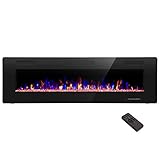
Overview:
This slim 60-inch electric fireplace offers versatile installation (recessed or wall-mounted) for modern homes. Its ultra-thin 3.86-inch depth fits standard 2x6 studs, while ETL certification ensures safety. It heats up to 400 sq. ft with dual power settings and features touch-screen/remote operation for flame customization.
What Makes It Stand Out:
The redesigned compact profile (35% slimmer than predecessors) enhances aesthetics without sacrificing function. Standout features include 12 flame/LED bed colors, 5 speed/brightness levels, and an auto-change mode for dynamic visuals. The whisper-quiet operation (≤40dB) and humidity-preserving heat distinguish it from noisy alternatives.
Value for Money:
Priced competitively for its size and features, it outperforms bulkier models with similar specs. The energy-efficient 750W/1500W modes reduce costs versus central heating, though premium brands charge more for comparable tech. Ideal for renters or renovators seeking a permanent-looking fixture without complex installation.
Strengths and Weaknesses:
Strengths: Space-saving design; intuitive touch/remote controls; realistic flame effects; effective supplemental heating; auto-shutoff safety.
Weaknesses: Limited to 400 sq. ft coverage; no independent flame-only mode mentioned; basic timer (1-8 hours).
Bottom Line:
A top choice for modern installations needing a slim, safe, and visually adaptable fireplace. Excellent value for supplemental heating in medium rooms, though larger spaces may require additional solutions.
7. duraflame Freestanding Electric Fireplace Stove Heater with 3D Flame Effect for 1,000 Sq. Ft, Bronze

Overview:
This portable bronze stove heater combines classic aesthetics with practical infrared heating for spaces up to 1,000 sq. ft. Its freestanding design features opening glass doors, side windows, and a brick back panel, doubling as décor and a supplemental heat source.
What Makes It Stand Out:
The realistic 3D flame effect with glowing logs creates authentic cabin ambiance. Independent flame/heat controls allow year-round glow without warmth—a rarity in this category. Portability and the 1,000 sq. ft claim (unusually high for electric models) are key differentiators.
Value for Money:
While the 1,000 sq. ft rating is optimistic for sustained heating, it excels as a zone heater to cut energy bills. Priced moderately, it offers better ambiance than basic heaters but costs more than utilitarian models. The durable build justifies the investment for primary living areas.
Strengths and Weaknesses:
Strengths: Authentic stove design; portable; true flame-only mode; effective for targeted heating; adjustable thermostat.
Weaknesses: Overstated coverage claim; heavy for frequent moving; no color customization; basic timer.
Bottom Line:
Highly recommended for cozy, decorative heating in living rooms or dens. Best for ambiance and supplemental warmth in rooms under 500 sq. ft, where its charm and efficiency shine.
8. DUMOS 42" Freestanding Electric Fireplace, 1500W/750W Wall Mounted or Recessed Insert Fireplaces Heater with Remote Control,13 Adjustable Flame Color, 12H Timer, Touch Screen, Inky

Overview:
The DUMOS 42-inch unit offers triple installation flexibility (recessed, wall-mounted, or freestanding) with robust heating (5,100 BTU) for rooms up to 400 sq. ft. It features advanced flame customization and smart controls via touch screen or remote.
What Makes It Stand Out:
A staggering 169 color combinations (13 flame + 13 ember colors) and dynamic color-cycling create unparalleled ambiance. Dedicated “Sleep” and “Recreation” modes automate settings for relaxation or parties. The 3-in-1 installation and included base legs cater to diverse spaces.
Value for Money:
Priced mid-to-high, it delivers exceptional versatility and visual flair. While similar models lack its color depth, budget options suffice for basic heating. Ideal for buyers prioritizing ambiance customization over pure heating power.
Strengths and Weaknesses:
Strengths: Unmatched color customization; triple installation; intuitive controls; child lock; precise thermostat (59°F–95°F).
Weaknesses: 400 sq. ft coverage lags behind duraflame’s claim; no humidity-focused heating; complex menus may overwhelm some users.
Bottom Line:
A premium pick for design-focused buyers seeking theatrical flame effects. Worth the cost for ambiance enthusiasts, though heating capacity suits medium rooms best.
9. 60" Electric Fireplace in-Wall Recessed and Wall Mounted 1500W Fireplace Heater and Linear Fireplace with Timer/Multicolor Flames/Touch Screen/Remote Control

Overview:
This 60-inch linear fireplace targets seamless in-wall integration with a slim 3.86-inch depth, fitting standard 2x6 studs. It emphasizes modern aesthetics with a large glass display and whisper-quiet operation, heating up to 400 sq. ft via 750W/1500W modes.
What Makes It Stand Out:
The “ultra high intensity” LED system creates lifelike flames that rise organically from the ember bed. The recessed design minimizes protrusion (ideal under TVs with 8-inch clearance), while 12 flame/ember colors and 5 speed settings offer rich customization. ETL-certified safety adds peace of mind.
Value for Money:
Competitively priced against branded rivals, it excels in installation flexibility and visual realism. The linear design justifies the cost for contemporary spaces, though identical features exist in Product 6 at similar price points.
Strengths and Weaknesses:
Strengths: Sleek, modern profile; realistic flame physics; quiet blower; independent heat/flame controls; versatile mounting.
Weaknesses: No unique innovations beyond standard features; 400 sq. ft limit; timer capped at 8 hours.
Bottom Line:
A solid choice for modern homes needing a built-in linear fireplace. Prioritize it for aesthetics and seamless TV integration, but verify sizing against Product 6 for value comparison.
10. duraflame Freestanding Electric Fireplace Stove Heater with 3D Flame Effect for 1,000 Sq. Ft. Room, Black

Overview:
This black-finished freestanding stove heater mirrors Product 7’s functionality but in a darker hue. It delivers infrared heat for up to 1,000 sq. ft, featuring opening glass doors, 3D flames, and a brick back panel for rustic charm in any room.
What Makes It Stand Out:
The realistic 3D flame effect with adjustable brightness doubles as a nightlight, while independent flame/heat controls enable seasonal ambiance. Portability and duraflame’s trusted design make it a versatile décor piece beyond heating.
Value for Money:
Priced identically to the bronze model (Product 7), it offers color choice without feature trade-offs. The 1,000 sq. ft claim is aspirational—realistically efficient for zones under 500 sq. ft—but its décor value enhances cost justification.
Strengths and Weaknesses:
Strengths: Authentic stove appearance; portable; flame-only mode; effective supplemental heating; simple thermostat control.
Weaknesses: Overstated coverage; no color/speed adjustments; heavier than basic heaters; basic timer.
Bottom Line:
An excellent ambiance-focused heater for medium rooms. Choose the black finish for contemporary spaces; otherwise, identical to Product 7 in performance and value.
Understanding Electric Fireplace Types for Smart Budgeting
Infrared vs. Fan-Forced Heating Mechanics
Infrared models heat objects and people directly (like sunlight), creating an instant, gentle warmth ideal for spot heating near your seating area. Fan-forced units blow warm air across a heated coil, circulating heat more broadly throughout a room. Infrared often feels cozier at lower wattages but may not heat large spaces as quickly. Fan-forced tends to be louder but distributes warmth more evenly. Under $300, infrared units frequently offer better value for personal comfort zones, while fan-forced shines for medium-sized rooms needing consistent ambient temperature.
Wall-Mounted vs. Freestanding Designs
Wall-mounted units save precious floor space and create a built-in, high-end look, but require secure anchoring into studs—critical for renters or those wary of drilling. Freestanding stoves or console styles offer plug-and-play flexibility; move them between rooms or take them when you relocate. Budget models under $300 in wall-mounted categories often prioritize slim profiles over ultra-high heat output, while freestanding versions may include faux log sets or realistic ember beds for added ambiance at this price point.
Insert-Style Units for Existing Fireplaces
If you inherited a dusty, unused traditional fireplace, insert-style electric models are a game-changer. They slide directly into your current fireplace opening, instantly upgrading it with modern heat and flame effects. Under $300, these focus on functional heating rather than ultra-realistic visuals, but they’re unbeatable for homeowners wanting to leverage existing infrastructure. Verify exact dimensions match your fireplace cavity before purchasing—many budget inserts have strict size requirements.
Critical Features That Define Value Under $300
Realistic Flame Effect Technology
Don’t assume “budget” means cartoonish flames. Look for models using LED projections with multiple color settings (amber, blue, violet) and randomized motion algorithms that mimic natural flicker. Higher-end budget units employ 3D flame effects where light dances across reflective materials, creating depth without complex mechanics. Avoid units relying solely on spinning wheels with static images—they feel dated and cheap. The best under $300 use layered LEDs for convincing depth even when the heater is off.
Adjustable Heat Settings and Wattage Control
True versatility comes from granular heat control. Units offering multiple wattage settings (e.g., 750W for mild warmth, 1500W for primary heating) let you tailor energy use to the season and room size. Some budget models include eco-modes that automatically reduce power once the desired temperature is reached. Crucially, verify if the unit provides actual heat output (not just flame ambiance) at lower settings—many cut heating entirely below 1000W, defeating the purpose of “adjustable” warmth.
Safety Mechanisms You Can’t Compromise On
Overheat protection is non-negotiable: the unit must auto-shutoff if internal components exceed safe temperatures. Tip-over switches are equally vital, especially in homes with kids or pets. Under $300, prioritize models with cool-touch exteriors—especially the front glass panel—tested to stay below 140°F (60°C) during operation. Avoid units with exposed heating elements or flimsy grilles; mesh screens should be securely recessed. UL certification is mandatory; skip any listing without it.
Sizing and Placement Strategies for Maximum Efficiency
Calculating Room Size Versus Heating Capacity
A common rookie mistake is underestimating room volume. Measure your space’s square footage and ceiling height—high ceilings demand more power. As a rule of thumb, 10 watts per square foot is the bare minimum for supplemental heat; 15 watts is better for primary heating in colder climates. A 1500W unit (the max for standard household circuits) typically heats 150 sq ft effectively. If your room exceeds this, position the unit centrally or near seating areas—it won’t heat the entire space evenly, but it will keep you comfortable.
Optimal Placement for Heat Distribution
Never place an electric fireplace directly against walls or furniture; maintain at least 3 feet of clearance on all sides for airflow. For wall-mounted units, install at eye level when seated to maximize radiant heat reach. Freestanding models work best in room corners where walls reflect warmth inward. Avoid placing under windows or near exterior doors where drafts sabotage efficiency. In open-plan spaces, angle the unit toward your primary seating zone rather than blowing heat into hallways.
Ventilation and Electrical Requirements
Unlike gas fireplaces, electric models need zero venting—but they still require dedicated electrical attention. Most 1500W units need a 15-amp circuit without other high-draw appliances (like space heaters or microwaves) sharing the outlet. Check if your chosen model includes a long power cord; under $300 units often have shorter cords (3-5 feet), limiting placement flexibility. Never use extension cords—they’re a fire hazard. If your room lacks nearby outlets, budget for a professional outlet installation instead of risking unsafe workarounds.
Installation and Setup Realities for Beginners
Renters vs. Homeowners: Navigating Restrictions
Renters must prioritize non-permanent solutions: freestanding units or vent-free wall mounts using heavy-duty adhesive strips (check lease terms first!). Avoid any model requiring hardwiring. Homeowners gain flexibility for wall-mounted or insert styles but must confirm if landlord approval is needed for condos/HOAs. Under $300, wall-mount kits often include basic brackets—factor in potential stud-finder or anchor costs if your walls aren’t standard drywall.
DIY Complexity: What You Can Safely Handle
Most sub-$300 electric fireplaces are true DIY projects. Freestanding units need zero tools—just plug in. Wall-mounting typically involves drilling two holes for brackets (15-30 minutes with basic tools). Inserts require careful measurement but no electrical work beyond plugging in. Red flags for beginners: units needing external transformers, complex mounting hardware, or instructions lacking clear diagrams. If assembly involves wiring beyond plugging components together, hire an electrician—safety isn’t a place to cut corners.
Calibration and Initial Operation Testing
After setup, run the unit at max heat for 15 minutes in a well-ventilated room to check for odd smells (a slight “new appliance” odor is normal; burning plastic is not). Test all controls: flame effects, heat settings, and thermostat functions. Verify the auto-shutoff works by covering the top vent slightly (with a non-flammable tool!) to trigger overheat protection. This isn’t paranoia—it’s ensuring your $300 investment won’t fail when you need it most.
Long-Term Ownership Considerations
Energy Consumption and Cost Implications
Electric fireplaces are 100% efficient at point-of-use (all electricity becomes heat), but costs depend on your local rates. Running a 1500W unit for 5 hours daily at $0.15/kWh costs about $34/month. The real savings come from zone heating: lowering your central thermostat and using the fireplace only where you’re active. Budget models under $300 rarely include smart thermostats, so manual adjustment is key to avoiding waste. Always turn off heating when leaving the room—the flames alone use minimal power.
Maintenance Requirements for Durability
Dust is the enemy. Vacuum the exterior vents monthly with a brush attachment to prevent overheating. Wipe the glass front gently with a microfiber cloth (no ammonia-based cleaners!). Under $300, internal components aren’t user-serviceable—never open the casing. Most failures stem from dust-clogged fans or blocked vents, not motor defects. A yearly deep clean (unplugged, cooled down) extends lifespan dramatically. Avoid placing near humidifiers or kitchens where moisture and grease accelerate wear.
Warranty Coverage and Support Realities
Reputable budget brands offer 1-2 year warranties covering heating elements and electrical components—not cosmetic flaws or damage from misuse. Read the fine print: some exclude “commercial use” (even in home offices) or require registration. Under $300, expect email-only support; avoid brands with no stated warranty period. A solid warranty signals manufacturer confidence, but don’t assume “lifetime” coverage—it’s often limited to 90 days for budget lines.
Style and Ambiance: More Than Just Heat
Flame Color Customization Options
Gone are the days of orange-only flames. Quality budget units now offer 3-5 color presets (crimson, gold, blue, violet) via remote or app. Blue flames create a modern, cool aesthetic; deep reds feel traditional. Some models blend colors dynamically for sunset effects. Prioritize units where color adjustments don’t require cycling through all options—it’s a small touch that matters during movie nights. Avoid units where colors look washed out or uniform; depth comes from layered lighting.
Media Bed Choices: Logs, Crystals, or Driftwood
The “fuel” below the flames impacts realism. Faux logs suit rustic or classic decor but can look artificial under close inspection. Glass crystals or gems offer contemporary sparkle and reflect light beautifully—ideal for modern spaces. Driftwood or stone beds provide subtle texture without overpowering the room. Under $300, media beds are usually static (not rotating), so choose based on aesthetic harmony. Removable beds allow future swaps if you redecorate.
Remote Control and Smart Features
Basic IR remotes are standard, but check if they control all functions (flame brightness, heat settings, timers). Bluetooth connectivity is rare under $300, but some units integrate with existing smart plugs for voice control of on/off cycles (not precise temperature). Avoid “smart” claims requiring proprietary hubs—true Wi-Fi models start above $400. A physical control panel is essential if remotes get lost; verify it’s intuitive with tactile buttons.
Avoiding Common First-Time Buyer Pitfalls
Misinterpreting “Room Size” Claims
Manufacturers often cite “heats up to 400 sq ft!"—this assumes ideal conditions (8-foot ceilings, perfect insulation). Real-world performance in drafty older homes may be 50-60% of that. Always cross-reference wattage (150 sq ft for 1500W is realistic). If a unit promises massive coverage under $300, it’s likely inflating numbers. Check independent reviews focusing on actual heating performance, not just flame visuals.
Overlooking Noise Levels During Operation
Fan-forced units emit a low hum; cheap models sound like hair dryers. Infrared is nearly silent but may have faint ticking as components expand. Never judge noise from product videos (they often mute sound). Search reviews for “noise,” “buzz,” or “hum.” Under $300, prioritize infrared for bedrooms or quiet spaces. If buying fan-forced, look for mentions of “whisper-quiet” motors—some budget lines invest in better fans.
Ignoring Aesthetic Integration With Your Decor
A fireplace should complement your space, not dominate it. Measure your wall or floor area before browsing. A 24-inch-wide unit gets lost on a 10-foot wall; a bulky stove overwhelms a tiny apartment. Consider frame finishes: black suits modern rooms, oak veneer blends with traditional furniture, stainless steel feels industrial. Budget models often have limited color options—match the frame to existing metal accents (lamp bases, shelf brackets) for cohesion.
Future-Proofing Your Purchase
Compatibility With Emerging Home Systems
While true smart home integration is scarce under $300, check if the unit has a standard plug for compatibility with existing smart plugs. Avoid models with proprietary power adapters—they limit future flexibility. Some newer budget units include USB ports for device charging, a small but practical perk. Prioritize brands with consistent design languages; if you upgrade later, matching aesthetics across rooms matters.
Anticipating Evolving Needs and Room Changes
Buy for where you are, not where you hope to be. A unit perfect for a studio apartment may underheat a future family room. If planning to move, prioritize portable freestanding models over wall-mounts. Consider if you’ll need supplemental heating in multiple rooms—a single versatile unit you can relocate beats multiple cheap, fixed installations. Under $300, flexibility often trumps max power.
Recognizing When to Invest Beyond Budget
If you need whole-house heating, severe climate resilience, or museum-grade realism, $300 is unrealistic. This tier excels at supplemental warmth and ambiance. If your space exceeds 200 sq ft, has poor insulation, or requires constant 24/7 heating, a higher-wattage unit (or central system adjustment) is wiser. Don’t force a budget solution where safety or effectiveness is compromised—your comfort is worth the incremental cost.
Frequently Asked Questions
Frequently Asked Questions
Can electric fireplaces really lower my heating bills?
Yes, when used for zone heating. By warming only occupied rooms and lowering your central thermostat by 7-10°F, you can reduce overall energy consumption by 10-15%. Focus the fireplace where you spend the most time.
Are they safe to leave on overnight?
Never run heating functions unattended or while sleeping. However, most units allow flame effects without heat overnight. Always verify auto-shutoff features are enabled, and keep flammable items 3+ feet away.
Do I need a dedicated electrical circuit?
For 1500W units (standard max), use a circuit without other high-wattage appliances. Most home circuits handle this, but avoid sharing with space heaters, refrigerators, or microwaves to prevent tripped breakers.
How realistic are the flames at this price point?
Modern LED technology delivers convincing flicker and depth even under $300. Look for multi-colored flames with randomized motion patterns—avoid single-speed spinning wheels for best results.
Can I install one in a bedroom?
Absolutely. Prioritize infrared models for near-silent operation and ensure it meets safety clearances. Place it away from bedding and use only flame effects (no heat) while sleeping.
Will it work during a power outage?
No—all electric fireplaces require standard household electricity. They don’t function as backup heat sources unless paired with a generator.
How long do budget models typically last?
With proper maintenance (dust control, avoiding overheating), quality sub-$300 units last 5-7 years. Heating elements may wear faster than flame mechanisms.
Can I use it as primary heat in a small space?
In well-insulated rooms under 150 sq ft, yes—during mild to moderate winters. For very cold climates or drafty spaces, it’s best as supplemental heat to reduce reliance on central systems.
Do they produce any emissions or dry out the air?
Zero emissions—no fumes, carbon monoxide, or humidity loss. Unlike gas or wood fireplaces, they won’t affect indoor air quality or moisture levels.
Is professional installation ever required?
Only for hardwired models (rare under $300). Plug-in units are DIY-friendly. If mounting on tile, brick, or unusual surfaces, consult a handyman for secure anchoring, but electrical work isn’t needed.
See Also
- 10 [Electric Fireplaces] Recommendations for First-Time Buyers in 2026
- 10 Best Budget Floor Furnaces Under $800 for First-Time Buyers in 2026
- The 10 Best Electric Fireplaces Every First-Time Homeowner Needs This Year
- 10 Best Budget Electric Fireplaces Under $200 for Cozy Nights in 2026
- 10 Expert-Recommended Residential Baseboard Heaters for First-Time Buyers in 2026