Table of Contents
When winter’s chill creeps into your home and your central heating system struggles to keep up, finding an affordable supplemental heating solution becomes a top priority. Baseboard heaters have long been the unsung heroes of spot heating, offering silent operation and consistent warmth without the complexity of ductwork or the noise of forced-air systems. The good news for budget-conscious homeowners is that effective room heating doesn’t require breaking the bank—quality options exist well below the $150 mark that can transform a cold, uncomfortable space into a cozy retreat in minutes.
Navigating the world of budget heating equipment, however, requires more than just grabbing the cheapest option on the shelf. The sub-$150 price range is packed with choices that vary dramatically in efficiency, safety features, and long-term value. Understanding what separates a bargain from a liability means looking beyond the price tag to examine wattage, thermostat accuracy, build quality, and safety certifications. Whether you’re warming a drafty bedroom, supplementing heat in a home office, or taking the edge off a chilly basement, making an informed decision ensures you get maximum warmth for your money while keeping operating costs and safety concerns in check.
Top 10 Baseboard Heaters Under $150
Detailed Product Reviews
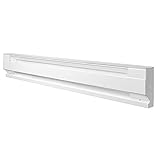
1. Cadet F Series 48" Electric Baseboard Heater (Model: 4F1000W, Part: 09954 ), 3415/2560 BTU, 240/208 Volt, 1000/750 Watt, White
Overview:
The Cadet F Series 48" Electric Baseboard Heater delivers robust heating performance for small to medium rooms with its 1000W capacity at 240V. This hardwired unit features universal wiring and pre-punched knockouts spaced at 1-inch intervals, streamlining installation whether floor or wall mounted. Built for permanence, it includes a critical high-temperature safety shutoff to protect your household, backed by a limited lifetime warranty that underscores its durability.
What Makes It Stand Out:
The lifetime warranty distinguishes this heater from competitors, offering exceptional long-term value. Its dual-wattage capability (1000W at 240V, 750W at 208V) provides installation flexibility for different electrical configurations. The universal wiring system and frequent knockouts significantly reduce installation complexity and labor costs, making it contractor-friendly.
Value for Money:
Positioned in the mid-range price category, the heater justifies its cost through superior build quality and that lifetime warranty. While it doesn’t include a thermostat, the durable construction means you won’t be replacing it in five years. Compared to budget alternatives, the Cadet’s reliability and safety certifications make it a smarter long-term investment.
Strengths and Weaknesses:
Pros include excellent durability, easy installation design, proven safety shutoff, and brand reliability. The lifetime warranty provides peace of mind. Cons: thermostat sold separately, requires 240V circuit (professional installation likely), and it’s not portable once installed.
Bottom Line:
Ideal for homeowners seeking a permanent, reliable heating solution. The Cadet F Series 48" excels in build quality and safety, making it worth the investment for those planning to stay in their home long-term.
2. Cadet Baseboard Heater Ul 120 V/4.17 A White 30 " 500 W

Overview:
This Cadet 120V baseboard heater offers a plug-in solution delivering 500W of convection heat. The package includes two 30-inch units, making it suitable for supplemental heating in small spaces. Designed for floor mounting, these heaters feature remote control operation and a corded electric design that eliminates complex wiring. The compact profile integrates discreetly into living spaces without permanent installation.
What Makes It Stand Out:
The inclusion of two heaters and a remote control at this price point is unusual. Operating on standard 120V power means no special circuits required, allowing immediate use in most rooms. The compact 30-inch profile fits under windows or along walls where larger units cannot, providing targeted heating flexibility that hardwired models lack.
Value for Money:
The dual-unit package presents solid value for targeted supplemental heating. However, the claimed 1,710 sq ft coverage is unrealistic for 500W—expect effective heating for 50-100 sq ft instead. The specifications show some inconsistencies, suggesting potential quality control issues in product documentation that buyers should verify before purchasing.
Strengths and Weaknesses:
Pros include easy plug-in installation, remote convenience, dual units for flexibility, and no hardwiring required. Cons: Underpowered for claimed coverage, questionable product specifications, limited durability compared to hardwired models, and no advanced safety features beyond basic overheat protection.
Bottom Line:
Best suited as a temporary or supplemental heating solution for small areas like bathrooms or offices. While convenient, verify actual specifications before purchasing and consider it a budget-tier option rather than a primary heat source.
3. Comfort Zone Baseboard Space Heater with Digital Thermostat, Electric, Dent-Proof End Panels, Overheat Protection, Tip-Over Switch, & Stay-Cool Body, Ideal for Home, Bedroom, & Office, 1,500W, CZ650B

Overview:
The Comfort Zone CZ650B delivers 1500W of quiet convection heating for medium-sized rooms. This portable unit features a digital thermostat with clear temperature display, two heat settings, and comprehensive safety features including tip-over protection, overheat sensor, and stay-cool body. Dent-proof end panels ensure durability against everyday impacts, while the low-profile design blends into any room aesthetic.
What Makes It Stand Out:
The digital thermostat provides precise temperature control rarely found in portable baseboard heaters. Combined with whisper-quiet operation and robust safety systems, it creates a premium user experience. The dent-proof construction addresses common damage concerns with portable units, maintaining appearance despite regular repositioning throughout your home or office.
Value for Money:
Competitively priced against similar portable heaters, it offers superior features—digital controls, multiple safety systems, and quiet operation—that justify a slight premium over basic models. The ability to heat specific rooms reduces whole-house heating costs, delivering ongoing energy savings that offset the initial investment within a single heating season.
Strengths and Weaknesses:
Pros include precise digital thermostat, ultra-quiet operation, excellent safety suite (tip-over, overheat, cool-touch), durable dent-proof design, and portability. Cons: Requires 120V outlet, less permanent than hardwired solutions, and may not match the longevity of commercial-grade units for continuous daily use.
Bottom Line:
An excellent choice for renters or homeowners needing flexible, safe heating. The Comfort Zone CZ650B combines modern features with reliable performance, making it ideal for bedrooms, offices, or supplemental heat where quiet operation is paramount.
4. Comfort Zone 1500W Convection Baseboard Heater with Built-In Thermostat, Overheat & Tip-Over Protection, Dent-Proof Ends, Plug-In Portable, Ideal for Home, Bedroom & Office, White

Overview:
This Comfort Zone 1500W convection baseboard heater offers plug-in portability with built-in thermostat control. Designed for medium rooms, it features two heat settings, tip-over and overheat protection, and a stay-cool exterior. The slim profile and dent-proof end panels blend seamlessly into any décor, while ETL listing ensures reliable operation. At 1500W, it provides substantial heating without permanent installation.
What Makes It Stand Out:
The combination of plug-in convenience, built-in thermostat, and comprehensive safety features makes this a hassle-free heating solution. ETL listing ensures reliable operation, while the dent-proof design maintains appearance despite regular repositioning. The unit operates whisper-quiet, making it suitable for bedrooms and offices where noise disruption is unacceptable.
Value for Money:
Priced similarly to portable heaters with fewer features, this model delivers excellent value. The built-in thermostat simplifies operation without the complexity of digital interfaces. For users wanting reliable heat without frills, it strikes an ideal balance between cost and functionality, particularly for temporary or supplemental heating needs.
Strengths and Weaknesses:
Pros include easy plug-in use, effective safety protections, quiet operation, durable dent-proof ends, and ETL certification. Cons: Built-in thermostat lacks precision of digital models, requires accessible 120V outlet, and the 1500W draw may limit circuit sharing with other appliances.
Bottom Line:
Perfect for those seeking straightforward, safe portable heating. While the thermostat is basic, the heater performs reliably and safely. Ideal for dorm rooms, offices, or as supplemental heat where installation flexibility matters more than advanced controls.
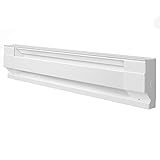
5. Cadet F Series 36" Electric Baseboard Heater (Model: 3F750W, Part: 09952), 2560/1925 BTU, 240/208 Volt, 750/563 Watt, White
Overview:
The Cadet F Series 36" Electric Baseboard Heater provides 750W (563W at 208V) of convection warmth for smaller spaces. This hardwired unit features universal wiring and pre-punched knockouts for simplified installation. Built to Cadet’s commercial standards, it includes a limited lifetime warranty. The convection design circulates warm air throughout rooms without fans, ensuring silent operation and even heat distribution.
What Makes It Stand Out:
The lifetime warranty on a hardwired heater under $100 represents exceptional value. Its convection design circulates warm air effectively throughout rooms, while dual voltage compatibility accommodates various electrical systems. The 36-inch length fits where larger heaters cannot, making it ideal for bathrooms, small bedrooms, or offices with limited wall space.
Value for Money:
Excellent value for permanent installations in compact rooms. The warranty alone justifies the price premium over disposable portable units. While less powerful than its 48-inch sibling, it’s appropriately sized for small rooms, avoiding energy waste from oversized equipment. Contractor-friendly features reduce installation costs.
Strengths and Weaknesses:
Pros include lifetime warranty, easy installation design, reliable convection heating, dual voltage flexibility, and proven brand durability. Cons: No included thermostat, requires 240V circuit and professional installation, fixed location limits flexibility, and lower output restricts room size to approximately 100-150 square feet.
Bottom Line:
A smart investment for homeowners needing permanent heat in compact spaces. The Cadet 36" combines quality construction with long-term warranty protection, making it ideal for targeted heating applications where reliability trumps portability.
6. Cadet F Series 72 in. Electric Baseboard Heater (Model: 6F1500-1W, Part: 05536), 120 Volt, 1500 Watt, White

Overview: The Cadet F Series 72-inch electric baseboard heater is a hardwired heating solution designed for permanent installation along baseboards. Operating at 120 volts and 1500 watts, this unit provides continuous heat transmission for supplemental warmth in residential spaces. Manufactured in China, this heater represents a straightforward approach to zone heating without the complexity of portable units.
What Makes It Stand Out: Its 72-inch length distinguishes it from portable alternatives, allowing for more even heat distribution across larger wall sections. Unlike many modern heaters, this model focuses on simplicity—providing reliable, continuous operation without digital controls or fans. The permanent installation design eliminates tipping risks and creates a clean, integrated look in any room.
Value for Money: Positioned in the mid-range for permanent baseboard heaters, this Cadet model offers reasonable value for those seeking basic, reliable heating. While lacking advanced features, its durable construction and continuous operation capability justify the investment for supplemental heating needs. Comparable permanent heaters often cost 20-30% more with similar specifications.
Strengths and Weaknesses: Strengths include simple operation, continuous heat transmission, permanent installation stability, and adequate heating capacity for medium rooms. Weaknesses involve the lack of an integrated thermostat, limited safety feature disclosure, basic design, and minimal control over heat output. The repeated feature descriptions suggest sparse product information.
Bottom Line: This heater suits homeowners needing straightforward, permanent supplemental heating. While feature-light, its reliable performance and integrated design make it ideal for laundry rooms, basements, or additions where simple, continuous heat is preferred over programmable convenience. Consider adding a wall thermostat for optimal control.
7. Comfort Zone 1500W Convection Baseboard Heater – Silent Portable Electric Space Heater with Adjustable Thermostat, 2 Heat Settings & Safety Tip-Over Switch – Black

Overview: The Comfort Zone 1500W Convection Baseboard Heater delivers powerful, fan-free warmth through natural convection circulation. This portable unit features dual heat settings (750W and 1500W) with an adjustable thermostat, making it suitable for medium-sized rooms. Designed with family safety in mind, it operates silently, ideal for bedrooms, nurseries, and home offices where noise disruption is undesirable.
What Makes It Stand Out: This heater excels with its comprehensive safety suite including tip-over switch, overheat protection sensor, and stay-cool exterior that remains safe to touch during extended operation. The dent-resistant end panels ensure durability against daily impacts, maintaining its sleek black appearance. Silent convection technology eliminates the annoying fan noise common in other portable heaters.
Value for Money: Offering excellent value, this unit packs premium features typically found in higher-priced competitors. The combination of adjustable thermostat, dual heat settings, and advanced safety systems at a mid-range price point positions it as a smart investment. Comparable models with similar safety certifications and features often retail for $20-40 more.
Strengths and Weaknesses: Strengths include whisper-quiet operation, robust safety features, portable convenience, durable construction, and precise temperature control. Weaknesses involve limited color options (black only), potential difficulty heating very large spaces, and convection heating’s slower warm-up time compared to fan-forced models.
Bottom Line: This Comfort Zone heater is an outstanding choice for those prioritizing safety and silence. Perfect for bedrooms, offices, or children’s rooms, its comprehensive protection features and quiet operation make it worth every penny. Highly recommended for families seeking reliable, worry-free supplemental heating.
8. BEYOND HEAT Electric Baseboard Heater, 1500W Convection Heater with Adjustable thermostat and Overheat Protection, Slient Operation for indoor use, White

Overview: The BEYOND HEAT Electric Baseboard Heater provides 1500W of convection heating in a compact, portable design. Measuring 29.25x5.25x9.25 inches, this white heater features dual heat settings and an adjustable thermostat for customized comfort. ETL approval for the US market ensures it meets stringent safety standards, making it suitable for indoor spaces like bedrooms and offices.
What Makes It Stand Out: Its compact footprint allows placement in tight spaces where larger heaters won’t fit, while maintaining full 1500W output capability. The ETL certification provides verified safety assurance, and the dent-proof end panels enhance durability. Silent convection technology ensures zero operational noise, creating a peaceful environment.
Value for Money: This unit offers competitive pricing aligned with similar portable baseboard heaters. While not the cheapest option, the ETL certification and compact design justify the modest premium over budget models. For small to medium rooms, it delivers efficient heating without the energy waste of whole-home systems.
Strengths and Weaknesses: Strengths include ETL safety approval, ultra-quiet operation, compact portability, comprehensive protection systems, and adjustable thermostat. Weaknesses involve its smaller size limiting heat distribution in larger rooms, basic aesthetic design, and lower brand recognition compared to established competitors.
Bottom Line: The BEYOND HEAT heater is a solid choice for space-conscious consumers needing reliable, certified heating. Its compact dimensions and silent operation make it ideal for apartments, offices, or small bedrooms. While not suited for large spaces, it excels in targeted heating applications where size and safety certifications matter most.
9. EZ-HEAT 1,500 Watt Baseboard Space Heater with Adjustable Thermostat, Dent-Proof End Panels, Overheat Protection, Tip-Over Switch, & Stay-Cool Body, CZ600

Overview: The EZ-HEAT 1,500 Watt Baseboard Space Heater combines convection heating with advanced safety features for medium-sized rooms. This portable unit offers dual heat settings and an adjustable thermostat, allowing precise temperature control. The CZ600 model emphasizes cost-efficient zone heating, enabling users to warm occupied spaces rather than heating entire homes, potentially reducing energy expenses.
What Makes It Stand Out: This heater prioritizes cost-efficiency while maintaining premium features like tip-over protection, overheat sensors, and a stay-cool body. Dent-proof end panels preserve its aesthetic appeal despite daily use. The silent operation ensures no disruption to conversations, media consumption, or sleep, making it exceptionally bedroom-friendly.
Value for Money: Excellent value proposition, delivering high-end safety and convenience features at a competitive price point. The energy-saving approach—heating only occupied rooms—provides ongoing cost benefits that offset the initial investment. Comparable units with similar feature sets typically cost more.
Strengths and Weaknesses: Strengths include comprehensive safety systems, whisper-quiet performance, durable dent-resistant design, adjustable thermostat, and energy-efficient zone heating capability. Weaknesses include similarity to competing models lacking distinct brand differentiation, potential limitations in very large or poorly insulated spaces, and slower heating compared to fan-forced alternatives.
Bottom Line: The EZ-HEAT CZ600 is an intelligent choice for budget-conscious buyers wanting premium features. Its focus on cost-efficient, targeted heating makes it perfect for supplemental warmth in bedrooms, offices, or living spaces. The robust safety package and silent operation justify the investment for families and professionals alike.
10. Cadet F Series 49" Portable Electric Baseboard Heater (Model: 4P1500W, Part: 05601), 5120 BTU, 120 Volt, 1500 Watt, White

Overview: The Cadet F Series 49" Portable Electric Baseboard Heater provides 1500 watts of heating power in a compact, mobile design. Operating at 120 volts and producing 5120 BTU, this white heater offers efficient warmth for any room. As a portable unit from an established brand, it emphasizes simplicity and reliability over complex features.
What Makes It Stand Out: Its 49-inch length strikes a balance between heating capacity and portability, making it more versatile than larger permanent units. The Cadet brand reputation for durable heating solutions provides confidence in long-term reliability. The straightforward design focuses on core heating functionality without unnecessary complexity.
Value for Money: This heater represents solid mid-range value for those wanting brand reliability without premium feature costs. While basic in functionality, its competitive pricing reflects the essential heating capability. Comparable portable heaters from lesser-known brands may be cheaper but lack Cadet’s established track record.
Strengths and Weaknesses: Strengths include reputable brand name, portable convenience, simple operation, adequate 1500W output, and compact 49-inch size. Weaknesses involve minimal feature disclosure (no thermostat mentioned), limited safety feature information, basic design, and potential lack of precise temperature control.
Bottom Line: This Cadet portable heater suits users wanting reliable brand performance in a simple package. Ideal for temporary heating needs, workshops, or spaces where basic supplemental warmth suffices, it trades advanced features for straightforward dependability. Consider your need for temperature control before purchasing, as this model appears designed for simplicity-first applications.
Understanding Baseboard Heaters for Budget-Conscious Shoppers
Baseboard heaters operate on a beautifully simple principle: they use electric resistance to generate heat that naturally rises along walls, creating a gentle convection current that evenly warms a room from floor to ceiling. Unlike portable space heaters that blast hot air in one direction, these units provide consistent, silent warmth that eliminates cold spots and maintains comfortable temperatures without the annoying cycling on and off that disrupts your peace.
The budget category under $150 typically includes compact electric models ranging from 500 to 1500 watts, designed for spaces between 50 and 300 square feet. While premium models might offer smart home integration or ultra-precise digital thermostats, affordable heaters focus on core functionality—reliable heat output, essential safety features, and straightforward operation. The key is recognizing which features are truly necessary for your specific situation and which are just nice-to-have upgrades that inflate the price.
Key Features to Evaluate in Sub-$150 Models
Wattage Ratings and Heating Capacity
The heart of any electric heater is its wattage, which directly determines how much space it can effectively warm. In the budget range, you’ll typically find models from 500 watts (suitable for small bathrooms or offices) up to 1500 watts (capable of heating medium-sized bedrooms). A good rule of thumb is that you’ll need roughly 10 watts per square foot for quick, effective heating. However, ceiling height, insulation quality, and window efficiency can shift this calculation significantly. A 750-watt unit might suffice for a well-insulated 75-square-foot room but struggle in a drafty space of the same size.
Thermostat Types and Accuracy
Budget baseboard heaters come with three main thermostat configurations: built-in dial thermostats, remote wall-mounted thermostats, or models requiring a separate thermostat purchase. Built-in options offer convenience but sacrifice precision—their temperature markings are often estimates rather than exact degrees. Models compatible with external line-voltage thermostats provide better accuracy and let you position the control away from the heat source, though this adds $20-40 to your total cost. Look for units with at least basic temperature sensing that prevents dramatic temperature swings.
Build Quality and Materials
Even at lower price points, construction quality varies significantly. The housing should feel substantial, with vents that won’t bend under light pressure. Steel construction is standard, but gauge thickness matters—heavier units typically indicate better heat retention and durability. Check for sharp edges, poorly aligned seams, or flimsy mounting brackets, which suggest corners cut during manufacturing. The heating element itself should be fully enclosed rather than exposed, protecting it from dust and accidental contact.
Types of Baseboard Heaters in the Budget Range
Electric Convection Models
The most common and affordable type uses a heating element that warms the air passing through the unit’s fins. These heaters warm up quickly—typically reaching optimal temperature within 5-10 minutes—and respond rapidly to thermostat changes. They’re ideal for spaces you use intermittently, like guest rooms or workshops, where you want heat on demand rather than constant low-level warmth. The trade-off is that they cool down just as quickly when turned off, which can lead to more temperature fluctuation.
Hydronic-Style Electric Heaters
Some budget-friendly models mimic hydronic systems by heating a sealed fluid—usually oil or a glycol mixture—that retains heat longer. While true hydronic systems connect to boilers, these self-contained electric versions offer extended warmth after shutoff, reducing cycling and maintaining more stable temperatures. They take longer to initially heat up but provide more consistent comfort and can be more energy-efficient in constantly occupied rooms. Under $150, these are less common and typically shorter in length, making them suitable for small to medium spaces.
Portable vs. Permanent Installation
Your $150 budget can stretch to either portable units with wheels and carrying handles or hardwired, wall-mounted models. Portable heaters offer flexibility—move them from room to room as needed and simply plug into a standard 120-volt outlet. Permanent installations require electrical work but provide cleaner aesthetics, eliminate cord hazards, and often deliver more consistent performance. Consider your long-term needs: are you renting and need a temporary solution, or do you own and want a fixed heating source?
Sizing Your Heater for Quick Room Heating
Calculating BTU Needs from Wattage
While furnaces are rated in BTUs, electric heaters use watts—a simple conversion exists between the two. Multiply the wattage by 3.41 to get BTU output. A 1500-watt heater produces approximately 5,115 BTUs, sufficient for a 150-200 square foot room with standard 8-foot ceilings. For quick heating, err on the side of slightly higher wattage rather than underpowered units that will run continuously without reaching comfortable temperatures. An overworked heater costs more to operate and wears out faster.
Room Layout and Placement Factors
Baseboard heaters work best when installed on exterior walls beneath windows, where they counteract cold drafts and create a thermal barrier. In rooms with multiple windows, a longer, lower-wattage unit often performs better than a short, high-wattage model. Consider furniture placement—heaters need 12 inches of clearance in front and 6 inches on each side to operate safely and efficiently. A 6-foot wall might accommodate a 4-foot heater, leaving necessary clearance at ends and corners.
Insulation and Draft Considerations
Your heater’s effectiveness depends heavily on the room’s heat retention capabilities. Before buying, address obvious issues: apply weatherstripping to doors, use window film on drafty panes, and seal obvious air leaks. A well-insulated room might need just 7-8 watts per square foot, while a poorly insulated space could require 12-15 watts for the same comfort level. Investing $30 in draft-sealing supplies can allow you to purchase a smaller, cheaper heater and save on electricity costs long-term.
Installation Considerations for DIYers
Electrical Requirements and Circuit Capacity
Most 1500-watt heaters draw 12.5 amps, leaving minimal headroom on a standard 15-amp circuit. If other devices share the circuit, you risk tripping breakers. Ideally, dedicated 20-amp circuits provide safe, reliable operation. For hardwired units, you’ll need basic electrical knowledge or a professional installer. Plug-in models offer simpler setup but still require a grounded outlet in good condition. Never use extension cords—the high amperage can cause overheating and fire hazards.
Wall Mounting vs. Floor Placement
Permanent heaters mount directly to wall studs, keeping them stable and ensuring proper airflow underneath. Most budget units include mounting brackets and hardware, but check that your walls can support the weight—larger models can exceed 20 pounds. For portable units, ensure the floor is level and the unit won’t tip easily. Carpeted surfaces can restrict bottom airflow, reducing efficiency by up to 15%. Place portable units on hard surfaces or use manufacturer-approved risers.
Clearance and Safety Distances
Building codes specify minimum clearances for baseboard heaters: 12 inches in front, 6 inches to sides, and never install below electrical outlets. Curtains must be at least 8 inches above the unit. These rules aren’t just suggestions—violating them creates fire hazards and voids insurance coverage if incidents occur. Measure your available wall space carefully before purchasing, accounting for these mandatory gaps. In small rooms, this often means choosing shorter units to maintain proper clearances.
Safety Features That Matter Most
Overheat Protection Mechanisms
Every heater worth considering includes an automatic shutoff that activates if internal temperatures exceed safe limits. This prevents fires if airflow becomes blocked or the unit malfunctions. Test this feature by temporarily blocking the intake (briefly and carefully) after installation—the heater should power down within minutes. Quality units also include thermal fuses that permanently disable the heater if temperatures reach dangerous levels, preventing restart until serviced.
Tip-Over Switches for Portable Models
If you opt for a portable heater, a tip-over switch is non-negotiable. This simple mechanism cuts power instantly if the unit tilts more than 30-45 degrees, preventing carpet fires and burn injuries. Test this feature immediately after purchase by gently tilting the unit while it’s running—it should shut off immediately. The switch should reset automatically when returned to upright position. Avoid any portable heater lacking this critical safety component, regardless of how attractive the price.
Certifications and Testing Standards
Look for UL (Underwriters Laboratories) or ETL (Intertek) certification marks, which indicate the heater has undergone rigorous safety testing. These certifications verify that the unit meets national electrical and fire safety standards. While many budget imports lack these marks, reputable manufacturers submit even their cheapest models for testing. The certification label should be permanently attached to the heater housing, not just mentioned on the packaging. This small detail separates legally compliant heaters from potential hazards.
Energy Efficiency on a Budget
Understanding Operating Costs
A 1500-watt heater running continuously costs roughly $0.18 per hour at average electricity rates (12 cents/kWh). However, thermostats cycle the unit on and off, typically resulting in 50-60% actual run time in moderately cold weather. This means heating a 150-square-foot room might cost $2-3 per day. To maximize efficiency, choose heaters with accurate thermostats that prevent overheating and look for models with high-limit temperature switches that prevent energy waste. Programmable timers, often available for under $15 as add-ons, can cut costs by scheduling heat only when needed.
Zone Heating Strategies
The real value of budget baseboard heaters lies in zone heating—warming only occupied rooms rather than heating your entire home. A $100 heater in a frequently used bedroom allows you to lower the whole-house thermostat by 5-10 degrees at night, potentially saving $30-50 monthly on heating bills. The math is simple: if you can reduce central heating by 10% by strategically using spot heaters, they pay for themselves within a single season. Focus on rooms where you spend the most time for maximum return on investment.
Supplementing vs. Primary Heat
Budget baseboard heaters excel as supplemental heat sources but rarely suffice as primary heating in cold climates. Use them to boost temperatures in problem areas—rooms above unheated garages, north-facing spaces with large windows, or additions disconnected from ductwork. For primary heating in milder climates (Zone 4 and warmer), multiple budget units can effectively heat a small home, but you’ll need careful placement and potentially upgraded electrical service. Always calculate total heating loads before relying on electric heat exclusively.
Maintenance and Longevity Tips
Cleaning and Dust Management
Dust accumulation reduces efficiency by insulating heating elements and can create burning smells when the unit first activates each season. Unplug portable units monthly and vacuum the fins and vents using a brush attachment. For hardwired models, turn off the circuit breaker and use compressed air to blow out dust. Never use liquid cleaners or spray anything into the unit. A clean heater operates 10-15% more efficiently and lasts years longer than a neglected one.
Seasonal Storage for Portable Units
If you store portable heaters during summer, clean them thoroughly first and wrap in breathable cloth—not plastic, which traps moisture. Store upright in a dry location to prevent internal condensation. Before first use the following winter, inspect the cord for damage and vacuum any dust that accumulated. This simple routine prevents corrosion and electrical issues that plague heaters stored improperly.
When to Replace vs. Repair
Budget heaters under $150 rarely justify professional repairs costing $75 or more. If the heating element fails, the thermostat becomes erratic, or the housing shows corrosion, replacement makes more financial sense. However, many issues are simple fixes: a tripped manual reset button (often hidden on the bottom or back), loose wire connections, or a clogged air intake. Always check these basics before discarding a seemingly dead unit. Quality budget heaters should last 8-12 years with basic care.
Common Mistakes to Avoid When Buying
Choosing Underpowered Units
The most frequent error is selecting a heater too small for the space, hoping to save money. An underpowered unit runs continuously, never reaching the set temperature, and costs more to operate than a properly sized model that cycles normally. It also wears out faster from constant operation. If you’re between sizes and the budget allows, always choose the higher wattage option. The incremental electricity cost is minimal compared to the comfort and longevity benefits.
Ignoring Electrical Infrastructure
Another costly mistake is buying a heater your home’s electrical system cannot safely support. A 1500-watt heater on an already-loaded 15-amp circuit will trip breakers repeatedly, potentially damaging the heater and creating fire risks. Check your electrical panel before purchasing—if you lack available circuits, factor a $150-200 electrician visit into your budget or opt for a lower-wattage heater that your system can handle. This upfront assessment prevents dangerous installations.
Overvaluing Cosmetic Features
Budget manufacturers sometimes add digital displays, remote controls, or faux-wood finishes to distract from core performance shortcomings. While these features seem appealing, they often fail first and don’t improve heating efficiency. Prioritize fundamental quality: solid construction, accurate thermostats, and robust safety features. A plain-looking heater with excellent reviews for reliability will serve you far better than a flashy model with a pretty exterior but mediocre heating performance.
Maximizing Performance in Your Space
Strategic Thermostat Management
Set your baseboard heater’s thermostat 5 degrees lower than your central heating target. This creates a comfortable boost without wasting energy overheating the space. For bedrooms, start the heater 30 minutes before bedtime, then lower it 3-4 degrees once under covers—your body heat and blankets will maintain comfort while cutting overnight costs by 30%. In home offices, use a simple plug-in timer to preheat the room before your workday starts, ensuring comfort without paying for unnecessary warm-up time.
Complementary Insulation Improvements
Maximize your heater’s effectiveness with low-cost insulation upgrades. Window insulation film ($10-15 per window) can reduce heat loss by 50%, while door draft stoppers ($5-10) eliminate cold air infiltration. Even rearranging furniture away from exterior walls and adding area rugs on cold floors can make a room feel 3-5 degrees warmer without touching the thermostat. These small investments dramatically improve heating performance and often pay for themselves within weeks.
Creating Thermal Zones with Multiple Units
For larger spaces, two smaller heaters often outperform one large unit. Position them on opposite exterior walls to create overlapping convection currents that eliminate cold pockets. This approach also prevents overloading a single circuit if you have limited electrical capacity. Two 750-watt units on separate circuits can heat a 300-square-foot room more effectively and efficiently than a single 1500-watt heater struggling against drafts from multiple windows.
Frequently Asked Questions
How much does it cost to run a budget baseboard heater per day?
A typical 1500-watt heater costs $2-3 per day when used as supplemental heat, assuming 12 cents per kWh electricity rates and 12-14 hours of cycling operation. Actual costs vary based on thermostat settings, room insulation, and local utility rates. Using timers and lowering the thermostat at night can reduce daily costs by 30-40%.
Can I safely leave a budget baseboard heater running overnight?
Yes, if it has UL or ETL certification and proper safety features like overheat protection. However, it’s more economical to lower the temperature setting by 3-5 degrees while sleeping. For bedrooms, look for units with quieter operation and tip-over switches if portable. Never leave a heater running in an unoccupied room or while away from home.
What’s the difference between a $50 and $150 budget baseboard heater?
The $50-75 range typically includes smaller portable units (500-1000 watts) with basic dial thermostats and shorter warranties. The $100-150 range offers higher wattage (1500 watts), better build quality, more precise temperature control, longer warranties (3-5 years vs. 1 year), and often includes advanced safety features like thermal fuses. The investment pays off in durability and performance.
Do I need a dedicated circuit for a 1500-watt baseboard heater?
Ideally, yes. A 1500-watt heater draws 12.5 amps, leaving minimal capacity on a 15-amp circuit shared with other devices. A dedicated 20-amp circuit prevents nuisance tripping and is safer for continuous operation. If a dedicated circuit isn’t feasible, ensure the existing circuit has no more than one or two low-draw devices sharing it.
How long should a budget baseboard heater last?
With proper maintenance and moderate use, quality budget heaters last 8-12 years. Units that run continuously in cold climates may last 5-7 years. Extend lifespan by cleaning regularly, avoiding extreme thermostat settings, and storing portable models properly during summer. Cheaper models lacking UL certification may fail sooner due to inferior components.
Can I use a baseboard heater in a bathroom?
Only if specifically rated for bathroom use with GFCI protection and appropriate splash guards (IP21 rating or higher). Standard baseboard heaters pose shock hazards in damp environments. For bathroom heating, consider dedicated bathroom heaters with built-in GFCI plugs and sealed construction, though these often exceed the $150 budget.
What’s the best way to clean a baseboard heater?
Unplug or turn off the circuit breaker first. Vacuum fins and vents monthly using a brush attachment. For stubborn dust, use compressed air blowing from the inside out. Never spray cleaners or water into the unit. Wipe the exterior with a damp cloth only after ensuring the unit is completely cool. Clean heaters operate 10-15% more efficiently.
Are oil-filled radiators better than standard electric baseboard heaters?
Oil-filled models retain heat longer, cycling less frequently and providing more stable temperatures, making them ideal for constantly occupied rooms. However, they cost 20-30% more initially and take longer to warm up. Standard electric heaters heat faster, suiting intermittent use. For the sub-$150 budget, standard electric models offer more wattage-per-dollar value.
Can I install a hardwired baseboard heater myself?
If you have basic electrical knowledge and your local code allows homeowner installations, yes. You’ll need to run 12-gauge wire to a 20-amp breaker, install a junction box, and follow manufacturer mounting instructions. However, many jurisdictions require licensed electricians for hardwired appliances. When in doubt, hire a professional—improper installation creates fire and shock hazards.
How do I know if my room is too large for a budget heater?
If the heater runs continuously for over an hour without reaching your desired temperature, it’s likely undersized. Another sign is dramatic temperature drops within 15 minutes of the unit cycling off. Measure your room and apply the 10-watts-per-square-foot rule. For poorly insulated or high-ceiling spaces, you may need 12-15 watts per square foot. If your heater can’t maintain temperature on its highest setting, it’s time for a second unit or higher wattage model.
See Also
- 10 Best Electric Baseboard Heaters for Even Room Heating This Year
- The 10 Ultimate Best Baseboard Heaters for Whole-Room Heating in 2026
- 10 Expert-Recommended Fan-Forced Heaters for Quick Room Heating in 2026
- 10 Best Line Voltage Baseboard Heaters for Fast Room Heating in 2026
- Top 10 Best Baseboard Heaters for Efficient Room Heating in 2026