Table of Contents
When summer heat becomes unbearable or indoor air feels stale and stagnant, window ventilation offers one of the most cost-effective solutions for refreshing your living space. Box fans have long been the unsung heroes of home cooling, transforming ordinary windows into powerful air exchange portals that can dramatically improve comfort without the energy drain of central air conditioning. Understanding how to select and utilize these workhorse appliances effectively can make the difference between a stuffy, uncomfortable home and a breezy, breathable sanctuary.
The evolution of box fan technology has brought significant improvements in efficiency, noise reduction, and safety features that many homeowners aren’t aware of. Whether you’re looking to exhaust hot air from upstairs bedrooms, draw cool evening air into your living room, or create a cross-breeze throughout your entire house, the right box fan strategy can achieve remarkable results. This comprehensive guide walks you through everything you need to know about choosing and using box fans for window ventilation, helping you make an informed decision without getting overwhelmed by technical jargon or marketing hype.
Top 10 Box Fans for Window Ventilation
Detailed Product Reviews
1. Comfort Zone Twin Window Fan with Reversible Airflow Control, 9 inch, Auto-Locking Expanders, 2 Speed Fan, Dual Fan, Exhaust, Airflow 9.84 ft/sec, Ideal for Home, Kitchen, Bedroom & Office, CZ319WT

Overview:
The Comfort Zone CZ319WT is a budget-friendly twin window fan designed for straightforward ventilation. With dual 9-inch blades, reversible airflow, and auto-locking expanders fitting windows 22.25" to 33", it offers simple cooling solutions for homes and offices. The unit converts to a tabletop fan with included feet, adding versatility for targeted airflow wherever needed.
What Makes It Stand Out:
The auto-locking accordion expanders provide a tool-free, secure installation that prevents rattling and air leakage. The removable protective fabric cover is a thoughtful addition that blocks bugs and debris while preventing backdrafts when idle. Its dual-purpose design functions equally well as a window or tabletop unit, maximizing utility without added cost.
Value for Money:
Positioned as an entry-level option, this fan delivers solid performance for its price point. While lacking advanced features, it covers essential functions effectively. Comparable basic window fans cost 15-25% more, making this an economical choice for those prioritizing simplicity over bells and whistles. The dual functionality effectively provides two products for the price of one.
Strengths and Weaknesses:
Strengths include secure window mounting, reversible airflow for intake/exhaust, easy conversion to tabletop use, and straightforward maintenance. Weaknesses are the limited two-speed settings (no medium option), manual reverse operation requiring physical adjustment, and absence of modern features like timers or remote control. The plastic construction feels adequate but not premium.
Bottom Line:
This fan excels as a no-frills ventilation solution. Perfect for renters or budget-conscious buyers needing reliable window cooling without complexity. While basic, its secure fit and dual functionality make it a practical choice for targeted airflow management.
2. Comfort Zone 9-Inch 3-Speed Reversible Twin Window Fan – Dual Blade Window Exhaust Fan with Auto-Locking Expanders, 22.25" to 33" Wide – Tabletop Feet & Removable Bug Screen included

Overview:
This upgraded Comfort Zone twin window fan builds upon the basic model with a crucial third speed setting and enhanced noise reduction. The 9-inch dual blades maintain reversible airflow capability, while auto-locking expanders accommodate windows from 22.25" to 33" wide. It includes tabletop feet and a removable bug screen for versatile deployment throughout living spaces.
What Makes It Stand Out:
The whisper-quiet setting distinguishes this model, making it ideal for bedrooms and home offices where noise is a concern. The three-speed control provides better customization than two-speed competitors. The auto-locking expanders ensure a secure, airtight fit without tools, while the convertible design allows seamless transition between window and floor use without sacrificing stability.
Value for Money:
The modest price increase over the two-speed version is justified by the additional speed setting and quieter operation. It competes favorably with mid-range window fans from Holmes and Lasko, offering similar features at a 10-15% lower cost. The versatility of window and tabletop modes effectively provides two fans for the price of one, enhancing overall value.
Strengths and Weaknesses:
Strengths include the ultra-quiet low setting, three-speed versatility, secure installation, and dual-function design. Weaknesses remain the manual reverse mechanism (no remote), lack of timer functionality, and basic LED indicators. The motor is more refined but still produces noticeable noise on high speed, and the plastic housing shows fingerprints easily.
Bottom Line:
An excellent middle-ground option for those wanting more control without smart features. The quiet operation makes it particularly suitable for sleeping areas. While not revolutionary, its thoughtful improvements over base models justify the upgrade for noise-sensitive environments where peaceful operation matters.
3. Comfort Zone 9-Inch Smart WiFi Twin Window Fan – 3-Speed Dual Blade Fan with App & Voice Control, Reversible Exhaust, Cooling & Circulate Modes, Expandable 23.5" to 37", Bug Screen

Overview:
Comfort Zone’s smart WiFi-enabled twin window fan represents the brand’s entry into connected home cooling. This 9-inch dual-blade unit combines traditional window fan functionality with app-based control, expanding from 23.5" to 37" for broader window compatibility. It features three speeds, reversible modes, and a programmable timer for automated climate management.
What Makes It Stand Out:
The 3-in-1 design offers Cooling, Exhaust, and unique Circulate modes that run blades in opposite directions for enhanced air distribution. App and voice control via Alexa/Google Home enable operation from anywhere. The programmable timer allows scheduling for energy savings and pre-cooling rooms before arrival, a genuine convenience for smart home integration.
Value for Money:
Priced at a 40-50% premium over non-smart models, the value depends on your tech integration needs. For smart home enthusiasts, the convenience and automation justify the cost. Compared to competitors like Genesis or AirKing’s smart fans, it offers similar connectivity at a competitive price point, though build quality remains mid-tier.
Strengths and Weaknesses:
Strengths include remote app control, voice commands, scheduling flexibility, wider window fit (up to 37"), and innovative circulate mode. Weaknesses involve WiFi dependency (no local control if internet fails), potential app connectivity issues, and higher price. Setup requires smartphone and network configuration, which may challenge less tech-savvy users. The motor hum is audible on high.
Bottom Line:
Ideal for tech-forward buyers seeking automated climate control. The smart features genuinely enhance convenience, particularly the scheduling function. While overkill for simple needs, it’s a compelling choice for integrated smart homes where remote ventilation control adds real value and justifies the premium investment.
4. Amazon Basics 3-Speed Box Fan for Bedroom, Portable with Carry Handle, Powerful Airflow, 5 Blades, Lightweight Design, 67 Watts, 20-Inch, Black, 6.8"D x 20.86"W x 21.33"H

Overview:
The Amazon Basics 20-inch box fan delivers straightforward, powerful air circulation for rooms needing consistent cooling. With three speeds, five blades, and a lightweight 5.8-pound design, this freestanding unit prioritizes simplicity and portability over advanced features. Its large footprint moves substantial air volume for its compact price point, making it ideal for supplemental cooling.
What Makes It Stand Out:
The 20-inch blade span provides impressive airflow coverage for small to medium rooms at a fraction of competitor costs. The remarkably lightweight construction combined with a top-mounted carry handle makes it exceptionally portable. Extra-large feet provide stability uncommon in budget box fans, preventing the wobble typical of lightweight models and ensuring safe operation.
Value for Money:
This fan redefines budget cooling, often retailing 30-40% less than similar-sized models from Lasko or Holmes while delivering comparable performance. The 67-watt power consumption offers reasonable efficiency for the airflow generated. For pure cooling power per dollar, it’s difficult to beat, making it an exceptional value for cost-conscious consumers.
Strengths and Weaknesses:
Strengths include powerful airflow, exceptional portability, stable base, simple operation, and unbeatable price. Weaknesses are the basic feature set (no remote, timer, or oscillation), plastic construction that feels utilitarian, and noise levels that become significant on high speed. It’s not suitable for window installation and lacks any air filtration.
Bottom Line:
A no-nonsense workhorse for those needing affordable, effective room cooling. Perfect for dorm rooms, apartments, or supplemental airflow. While lacking refinement, its performance-to-price ratio is outstanding. Choose this for straightforward, powerful circulation without paying for unnecessary features you won’t use.
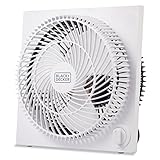
5. BLACK+DECKER 9-Inch Frameless Box Fan, Freestanding Desk Fan with 3-Speed Settings, Portable Fan for Home Office or Garage, BFB09W, White
Overview:
BLACK+DECKER’s 9-inch frameless box fan targets personal cooling with an ultra-compact, minimalist design. Weighing just 2.73 pounds and consuming only 40 watts, this desk-friendly unit provides quiet operation for bedrooms, offices, and dorm rooms. The frameless aesthetic maximizes airflow area while minimizing footprint, making it ideal for tight spaces.
What Makes It Stand Out:
The genuinely frameless design creates a sleek, modern appearance that integrates seamlessly into contemporary spaces. At 40 watts, it’s among the most energy-efficient fans available, costing pennies per day to operate. The whisper-quiet operation across all three speeds makes it ideal for noise-sensitive environments like bedrooms or study areas where focus is paramount.
Value for Money:
Positioned as a premium small fan, it costs more per inch than larger box fans but delivers superior efficiency and noise control. For personal cooling needs, it eliminates overpaying for oversized units. The energy savings offset the initial cost within a year of regular use, making it economically sensible for continuous operation.
Strengths and Weaknesses:
Strengths include exceptional energy efficiency, near-silent operation, space-saving frameless design, featherlight portability, and simple controls. Weaknesses are limited coverage area suitable only for personal space, lack of power for room cooling, no remote or timer, and premium pricing relative to size. The lightweight build feels less durable than heavier models.
Bottom Line:
Perfect for targeted personal cooling where space and noise are primary concerns. Ideal for nightstands, desks, or small dorm rooms. While not a room cooler, its efficiency and quiet operation make it invaluable for individual comfort. Choose this for bedside or workstation use rather than whole-room ventilation.
6. Hurricane Classic Floor Mount Box Fan w/ 3 Quiet Speeds, White, 20" - Corded Portable Electric Air Cooling Unit w/ Powerful 2400 CFM Airflow for Home, Garage, Office, Bedroom & Basement

Overview: The Hurricane Classic 20-inch Box Fan delivers industrial-strength airflow in a residential package. With 2,400 CFM output and three speed settings, this fan tackles everything from gentle bedroom circulation to aggressive garage ventilation. Its traditional box design houses a robust motor spinning at 1,100 RPM, making it suitable for homes, workshops, greenhouses, and basements where stale air accumulates.
What Makes It Stand Out: This fan’s exceptional 2,400 CFM rating places it among the most powerful consumer box fans available. The high-quality polymer blades strike an ideal balance between durability and lightweight efficiency, while the three “quiet” speed settings provide noticeable airflow without the disruptive roar common in high-velocity fans. Its space-saving profile and adjustable feet allow seamless integration into any room, then tuck away flat for storage.
Value for Money: Priced competitively with premium box fans, the Hurricane Classic justifies its cost through superior performance and longevity. Comparable 20-inch models typically max out at 1,800-2,000 CFM, making this 20% more powerful. The durable construction ensures years of reliable service, eliminating the replacement cycle cheaper fans require. It’s an investment that pays dividends in comfort and durability.
Strengths and Weaknesses:
- Strengths: Exceptional airflow output; genuinely quiet operation; lightweight yet durable polymer construction; portable and easy to store; versatile for multiple environments.
- Weaknesses: Lacks modern features like remote control or timer; corded-only operation limits placement; basic aesthetic may not suit contemporary décor.
Bottom Line: For those prioritizing raw cooling power and reliability over fancy features, the Hurricane Classic is an outstanding choice. It’s a workhorse that excels in demanding environments where airflow matters most, making it ideal for homeowners needing serious ventilation without premium pricing.
7. SONBION Small Box Fan, 10 inch Window Fan with 3 Speeds Strong Airflow, DC Adapter Square Table Fan for Bedroom Living Room Office Apartment, Quiet and Lightweight, 5ft Power Cord

Overview: The SONBION 10-inch Box Fan redefines personal cooling with its compact footprint and DC brushless motor technology. Designed for intimate spaces like bedrooms, offices, or apartments, this square fan delivers targeted airflow up to 15 ft/s while maintaining whisper-quiet 40 dB operation. Its versatile design functions as a table fan or window unit, with a removable base for flexible placement.
What Makes It Stand Out: The integrated aromatherapy box sets this fan apart—add essential oils to infuse your space with fragrance while cooling. The DC brushless motor provides remarkable energy efficiency and reduced noise compared to traditional AC motors. Its sleek white and grey design complements modern aesthetics, while the one-button control simplifies operation across three speeds. The 12-month replacement guarantee demonstrates manufacturer confidence.
Value for Money: This fan occupies the budget-friendly segment while offering premium features typically found in more expensive models. The DC motor’s energy savings offset operational costs, and the aromatherapy function eliminates separate diffuser purchases. While 10-inch fans generally cost less, SONBION adds meaningful value through quiet operation and multi-functionality that justifies its slightly higher price point versus bare-basics competitors.
Strengths and Weaknesses:
- Strengths: Ultra-quiet DC motor; aromatherapy capability; lightweight and portable; simple one-button operation; removable base for versatile mounting; 12-month guarantee.
- Weaknesses: Limited airflow suitable only for personal spaces; 5-foot cord restricts placement; 10-inch size inadequate for room cooling; lacks oscillation or remote features.
Bottom Line: Perfect for desk workers, students, or anyone needing quiet personal cooling with a wellness twist. The SONBION excels in small-scale applications where silence and air quality matter. Don’t expect whole-room cooling, but for targeted, fragrant breeze, it’s an excellent compact solution.
8. Vornado TRANSOM Window Fan with 4 Speeds, Remote Control, Reversible Exhaust Mode, Weather Resistant Case, Whole Room, Ice White

Overview: The Vornado TRANSOM represents the pinnacle of window fan engineering, designed for homeowners seeking intelligent climate control. This low-profile unit fits single or double-hung windows 26-40 inches wide, delivering four-speed airflow with electronic reversibility for intake or exhaust. The included remote and auto temperature control transform passive cooling into an automated system, while the weather-resistant case enables year-round installation.
What Makes It Stand Out: Electronic reversibility with a single button press eliminates manual fan flipping—a game-changer for daily ventilation routines. The auto temperature control automatically adjusts fan speed based on ambient conditions, optimizing comfort and energy usage. Vornado’s signature vortex action ensures whole-room air circulation rather than directional blasts. The Soft-fit foam block system creates an impressively secure, draft-free seal without complex installation.
Value for Money: Positioned at the premium end, the TRANSOM costs 2-3x basic window fans but delivers proportional value. The convenience of remote operation, intelligent temperature sensing, and reversible functionality rivals small air conditioning units at a fraction of the price. For those who ventilate daily, time savings and energy efficiency quickly recover the initial investment.
Strengths and Weaknesses:
- Strengths: Remote control and auto temperature sensing; effortless electronic reversibility; excellent window seal system; quiet operation; weather-resistant for permanent installation; whole-room circulation.
- Weaknesses: Premium pricing; requires screen removal for many windows; limited to horizontal installation; fits specific window dimensions only; 7-inch height may block views.
Bottom Line: If you regularly ventilate your home and value convenience, the TRANSOM is worth every penny. It transforms window fans from seasonal annoyances into sophisticated climate management tools. For set-it-and-forget-it operation and premium build quality, this is the undisputed category leader.
9. Genesis 20" Box Fan, 3 Settings, Max Cooling Technology, Carry Handle, White (G20BOX-WHT)

Overview: The Genesis G20BOX-WHT delivers traditional box fan performance with modern durability enhancements. This 20-inch floor fan features three speed settings and a copper motor designed for extended lifespan, making it appropriate for whole-home cooling. Its neutral white design integrates unobtrusively into any décor, while the integrated carry handle facilitates easy repositioning from bedroom to living room to garage as needed.
What Makes It Stand Out: The copper motor construction distinguishes Genesis from competitors using aluminum or coated components, promising superior heat dissipation and longevity. “Max Cooling Technology” optimizes blade pitch and guard design to maximize airflow efficiency. The fan’s lightweight yet robust frame provides commercial-grade feel without the commercial-grade weight, while the simplified three-speed dial ensures foolproof operation for all ages.
Value for Money: Among 20-inch box fans, Genesis hits the sweet spot between budget and premium tiers. It costs slightly more than bare-bones models but significantly less than high-performance units like the Hurricane Classic. The copper motor justifies the modest upcharge, potentially doubling operational lifespan. For cost-conscious buyers wanting reliability without sacrificing power, this represents excellent mid-range value.
Strengths and Weaknesses:
- Strengths: Durable copper motor; lightweight portability; simple intuitive controls; attractive neutral design; integrated carry handle; competitive pricing.
- Weaknesses: No remote or advanced features; unspecified CFM rating likely lower than premium models; basic plastic construction; not marketed as “quiet”; limited speed variability.
Bottom Line: The Genesis fan is a reliable, no-frills workhorse for budget-minded consumers who still value durability. It won’t impress with smart features or silence, but it will consistently move air year after year. Ideal for supplemental cooling, garage ventilation, or anyone wanting a dependable fan without premium pricing.
10. AMCHIXIN 31.5-33.5 Inch Vertical Window Exhaust Fan for Sliding Windows – Align Perfectly with Window Top and Bottom Frames Tool-Free With Variable Speed for Bedrooms Smoky Spaces Hot Areas(Black)
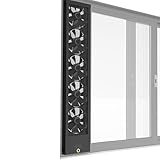
Overview: The AMCHIXIN vertical window fan solves a specific problem: ventilating sliding windows where traditional horizontal fans simply don’t fit. Engineered for window frames 31.5-33.5 inches tall, this aluminum-alloy unit installs tool-free in under 30 seconds using a spring-loaded tension system. Five high-performance fans behind stainless steel mesh provide stepless variable speed control for everything from gentle bedroom ventilation to aggressive exhaust for cigar rooms or pet areas.
What Makes It Stand Out: This is the only purpose-built solution for sliding window ventilation most consumers will find. The vertical orientation and spring-loaded frame create a perfect fit without permanent hardware or window damage. Five fan arrays deliver exceptional airflow for exhaust applications, while reversible operation enables year-round use. The flush-mount design preserves full window function—a crucial advantage over bulky alternatives.
Value for Money: Priced in the premium window fan range, AMCHIXIN’s value is absolute for sliding window owners who’ve had no viable options. Standard fans require modification or leave gaps; this fits perfectly out of box. The durable aluminum construction and stepless control justify costs compared to jerry-rigged solutions. For those with compatible windows, it’s invaluable; for others, it’s irrelevant.
Strengths and Weaknesses:
- Strengths: Perfect sliding window solution; tool-free 30-second installation; five-fan power; reversible airflow; preserves window function; durable aluminum frame; stepless speed control.
- Weaknesses: Extremely niche sizing (31.5-33.5" only); premium price for limited market; not suitable for standard double-hung windows; black color may not suit all exteriors.
Bottom Line: If you have sliding windows within the specified dimensions, this is a must-have product that delivers flawless execution. The AMCHIXIN transforms previously un-ventable spaces into properly circulated rooms. For everyone else, measure carefully—this exceptional but hyper-specialized tool only fits one very specific need.
Understanding Box Fans for Window Ventilation
How Box Fans Work for Window Applications
Box fans operate on a simple principle: they move large volumes of air through a square or rectangular housing, creating directional airflow that can be harnessed for window ventilation. When positioned in a window frame, these fans can either exhaust indoor air outward or pull fresh outdoor air inward, depending on which direction you face the unit. The blade design and motor power determine how effectively the fan can overcome resistance and maintain strong airflow.
Benefits of Window-Mounted Ventilation
Strategic window ventilation with box fans offers multiple advantages beyond simple cooling. It removes cooking odors, humidity from showers, and accumulated pollutants while introducing fresh oxygen. This constant air exchange can reduce reliance on air conditioning, lower electricity bills, and improve indoor air quality significantly. Unlike ceiling fans that simply circulate existing air, window fans actively replace stale indoor air with fresh outdoor air.
Types of Box Fans Suitable for Windows
Not all box fans are created equal for window use. Standard household box fans can work, but models specifically designed for window mounting include features like expandable side panels, weather-resistant housings, and reversible airflow functions. Twin-window fans offer independent motor control for intake and exhaust simultaneously, while high-velocity box fans provide maximum airflow for larger spaces or stubborn hot zones.
Key Features to Consider
Airflow Capacity and CFM Ratings
Cubic Feet per Minute (CFM) measures how much air a fan moves, and this specification is crucial for window ventilation effectiveness. A fan with 1,000-1,500 CFM works well for small to medium rooms, while larger spaces or whole-house ventilation might require 2,000+ CFM. Consider your room size and how quickly you want to exchange the air when evaluating CFM ratings. Remember that advertised CFM often represents optimal conditions without resistance.
Speed Settings and Controls
Multiple speed settings give you flexibility to adjust airflow based on time of day, outdoor temperature, and noise tolerance. Look for fans with at least three speeds, though five or more offers finer control. Rotary dials provide reliable mechanical operation, while electronic controls may include memory functions and precise speed adjustment. Some advanced models feature variable speed dials rather than preset levels, allowing infinite adjustment.
Build Quality and Materials
The construction quality directly impacts durability, especially for window units exposed to temperature fluctuations and humidity. Metal grilles and housings offer superior longevity compared to plastic, though they add weight. Industrial-grade fans feature reinforced corners, sealed motors, and heavy-duty power cords. For residential window use, a balance of sturdy plastic housing with metal blade guards provides adequate durability without excessive weight.
Power Cord Length and Placement
Window installations often create cord routing challenges. A minimum 6-foot power cord provides flexibility, though 8-10 feet is ideal for reaching distant outlets without extension cords. Consider the cord exit location—bottom-mounted cords work better for floor placement, while side or top exits suit window mounting. Some fans include cord storage features to keep excess length tidy and prevent tripping hazards.
Sizing and Placement Strategies
Measuring Your Window Opening
Before purchasing, measure your window’s width, height, and depth to ensure proper fit. Most standard box fans are designed for windows 20-27 inches wide, but expandable panels can accommodate larger openings. Measure the narrowest point of your window track or sash, not just the glass area. Don’t forget to account for screens, storm windows, or other obstructions that might limit installation depth.
Positioning for Optimal Airflow
Strategic placement dramatically impacts ventilation effectiveness. For single-hung windows, position the fan in the lower portion for intake or upper portion for exhaust, as hot air naturally rises. Double-hung windows offer more flexibility. South and west-facing windows capture the most heat, making them prime exhaust candidates during hot afternoons. North-facing windows typically provide the coolest intake air.
Multiple Fan Configurations
Creating a cross-breeze with multiple fans exponentially improves ventilation. Place one fan exhausting hot air on the leeward side of your home (away from prevailing winds) and another drawing cool air in on the windward side. This pressure differential creates a powerful airflow path through your entire living space. Experiment with different window combinations to find the most effective configuration for your home’s layout.
Energy Efficiency Considerations
Wattage and Power Consumption
Typical box fans consume 50-100 watts on high speed, significantly less than the 500-3,500 watts used by central air conditioning. Energy-efficient models may use as little as 30 watts on low while still moving substantial air. Calculate operational costs by multiplying wattage by your electricity rate and expected usage hours. Even running continuously, most box fans cost only pennies per day to operate.
Energy Star Ratings and Standards
While fewer box fans carry Energy Star certification compared to major appliances, some manufacturers do submit models for testing. These certified units meet strict efficiency standards, using 20-30% less energy than conventional models while maintaining equivalent airflow. The certification also indicates the fan meets noise level requirements, ensuring efficient operation doesn’t come at the cost of excessive sound.
Operational Cost Calculations
To determine true operating costs, use this formula: (Wattage ÷ 1,000) × Hours Used × Electricity Rate (kWh). For example, a 75-watt fan running 8 hours daily at $0.12 per kWh costs approximately $0.072 per day or $2.16 per month. Compare this to air conditioning costs, which can exceed $100 monthly during peak summer, and the value proposition becomes clear.
Noise Levels and Operation
Decibel Ratings Explained
Fan noise is measured in decibels (dB), with typical box fans ranging from 40 dB (quiet library) on low to 65 dB (normal conversation) on high. Manufacturers may advertise “quiet” models, but these claims require scrutiny. A 10 dB reduction represents half the perceived loudness, so small numerical differences matter significantly. Look for fans specifically engineered for quiet operation if noise is a primary concern.
Quiet Operation Technologies
Modern quiet box fans employ several noise-reduction strategies: aerodynamically optimized blade designs that reduce turbulence, rubber isolation mounts that prevent motor vibration from transferring to the housing, and brushless DC motors that operate more smoothly than traditional AC motors. Some fans use irregular blade spacing to break up harmonic noise patterns, creating a less intrusive white noise profile.
Placement Impact on Noise
Where you place your fan affects perceived noise levels more than you might expect. Mounting directly against a window frame can amplify vibrations through the glass and walls. Using foam weatherstripping as a gasket between fan and window dampens these vibrations. Positioning the fan away from walls and corners reduces sound reflection. Running the fan on lower speeds during quiet hours maintains airflow while preserving peace.
Safety Features and Certifications
Overheat Protection Mechanisms
Quality box fans include thermal overload protection that automatically shuts off the motor if it overheats due to blocked airflow or mechanical failure. This prevents fire hazards and extends motor life. Some models feature automatic shutoff timers, ensuring the fan doesn’t run unattended for extended periods. Look for fans with resettable thermal fuses rather than one-time-use components.
Safety Certifications to Look For
UL (Underwriters Laboratories) or ETL certification indicates the fan has undergone rigorous safety testing for electrical components, stability, and fire resistance. These certifications verify that the product meets national safety standards. For window applications, additional weather-related safety considerations apply, though specific outdoor ratings are rare. Never use fans designed exclusively for indoor use in exposed outdoor locations.
Child and Pet Safety Considerations
Tight grille spacing prevents small fingers or paws from contacting blades—look for gaps smaller than ½ inch. Stable bases prevent tipping when used freestanding, while secure mounting hardware keeps window installations safe. Some fans include tip-over switches that automatically shut off the unit if it falls. Consider cord management to prevent tripping or chewing hazards from curious children or pets.
Installation and Mounting Options
DIY Mounting Solutions
Creating a secure window installation doesn’t require professional help. Adjustable window brackets support the fan weight while allowing easy removal. For a more permanent solution, build a wooden frame that fits your window opening and houses the fan securely. Weatherstripping tape creates an airtight seal around edges, maximizing efficiency. Always ensure the installation can support the fan’s weight, typically 8-15 pounds.
Weatherproofing Your Setup
Window installations face rain, humidity, and temperature extremes. Use silicone caulk to seal any gaps where moisture could penetrate electrical components. Install a drip loop in the power cord so water runs off before reaching the outlet. Consider removable installations you can bring indoors during severe weather. Some enthusiasts build exterior hoods that shield fans from direct rain while allowing airflow.
Removable vs Permanent Installations
Removable setups offer flexibility to use the fan elsewhere and protect it during harsh weather. However, they require seasonal installation and removal effort. Permanent installations provide convenience and can be better sealed against air leaks. Consider your climate, how often you’ll use the fan, and storage space when deciding. Hybrid approaches using quick-release brackets give you the best of both worlds.
Maintenance and Cleaning
Regular Cleaning Schedules
Dust accumulation reduces airflow efficiency by up to 30% and strains the motor. Clean your fan every 2-4 weeks during heavy use. Unplug the unit and remove the front grille if possible. Vacuum the blades and housing with a brush attachment, then wipe down with a damp cloth. For deeper cleaning, some models allow blade removal. Never submerge the motor housing or get electrical components wet.
Filter Replacement and Care
Some window box fans include washable foam filters that catch pollen and dust. Clean these monthly with mild soap and water, ensuring they’re completely dry before reinstalling. Replace filters that show wear or damage. While filters slightly reduce airflow, they significantly improve indoor air quality and keep the fan’s internal components cleaner, extending overall lifespan.
Storage Best Practices
When cooling season ends, clean the fan thoroughly and ensure it’s completely dry. Store in a dry location away from temperature extremes that could damage motor components. Wrap the cord loosely to prevent kinks and stress on connections. Cover with a plastic bag to prevent dust accumulation during storage. For fans used seasonally, consider running them for 30 minutes every few months to keep motor bearings lubricated.
Seasonal Usage Tips
Summer Cooling Strategies
Maximize cooling by running fans during the coolest parts of the day—early morning and evening. Create a “chimney effect” by exhausting hot air from upper windows while drawing cool air in at lower levels. Use multiple fans to establish continuous airflow paths. Close windows and blinds on the sunny side during peak heat to reduce thermal load, then ventilate when outdoor temperatures drop below indoor temperatures.
Winter Air Circulation
Box fans aren’t just for summer. Reverse your winter strategy by using fans to distribute warm air from central heating systems more evenly. Position fans to blow warm air from heating vents into colder rooms. Briefly ventilate even during cold months to reduce indoor pollutant buildup and control humidity that can lead to mold. Some fans feature thermostats that automatically operate when temperatures reach certain thresholds.
Year-Round Ventilation Benefits
Consistent air exchange maintains healthy indoor air quality regardless of season. Use fans to quickly clear cooking fumes, pet odors, or chemical smells from cleaning products. During spring and fall, when temperatures are moderate, box fans can completely replace mechanical heating and cooling, providing fresh air comfort at minimal cost. This natural ventilation reduces energy consumption and gives your HVAC system a well-deserved break.
Troubleshooting Common Issues
Addressing Vibration and Rattling
Excessive vibration usually indicates an unbalanced blade, loose mounting, or worn motor bearings. Check that the fan sits level and all screws are tightened. Clean the blades thoroughly, as even small dust buildup can cause imbalance. If vibration persists, the motor bearings may need lubrication or replacement. For window installations, ensure the mounting doesn’t press the fan housing against the window frame, which amplifies vibrations.
Power and Performance Problems
If your fan runs but moves little air, check for obstructions in the grille or blade area. Reduced airflow can also indicate a failing motor capacitor. Fans that won’t start may have a faulty switch, thermal fuse, or motor. Test the outlet with another device first. Intermittent operation often points to a loose connection or overheating issue. For persistent electrical problems, professional repair is safer than DIY attempts.
Weather-Related Challenges
Rain can damage inadequately protected fans. If moisture gets inside the housing, unplug immediately and allow thorough drying before reuse. Extreme heat can cause thermal shutdown—ensure adequate ventilation around the motor. Cold weather may stiffen lubricants, causing temporary noise until the fan warms up. Wind can overpower fan operation or create backdrafts; adjust fan speed or temporarily close windows during high winds.
Cost and Value Considerations
Price Range Expectations
Quality box fans for window use typically range from $25 to $80, with premium models reaching $150. Basic fans offer simple operation and adequate performance for occasional use. Mid-range options include better motors, more speeds, and improved build quality. Premium fans feature quiet operation, energy efficiency, smart controls, and exceptional durability. Consider how frequently you’ll use the fan when determining your budget threshold.
Warranty and Support Options
Most manufacturers offer 1-3 year limited warranties covering defects in materials and workmanship. Extended warranties rarely provide value for low-cost appliances. Read warranty terms carefully—some require product registration within 30 days. Reliable customer support matters more than warranty length for troubleshooting installation or operation questions. Check online reviews specifically mentioning customer service experiences before purchasing.
Long-Term Value Factors
A $60 fan that lasts 10 years provides better value than a $20 fan replaced every two years. Calculate total cost of ownership including energy consumption and expected lifespan. Metal components and sealed motors typically outlast plastic alternatives. Consider whether the fan can serve multiple purposes—window ventilation, floor circulation, workshop cooling—to maximize utility. The ability to repair rather than replace also contributes to long-term value.
Environmental Factors
Indoor Air Quality Impact
Proper ventilation with box fans can reduce indoor pollutant concentrations by 50-70%, removing volatile organic compounds from furniture, cleaning products, and building materials. The constant air exchange dilutes carbon dioxide buildup from occupants, which improves cognitive function and reduces fatigue. For allergy sufferers, timing ventilation when outdoor pollen counts are low brings fresh air without triggering symptoms.
Humidity Control Benefits
Strategic ventilation helps maintain optimal indoor humidity levels (30-50%). Exhausting humid air from bathrooms and kitchens prevents moisture problems that lead to mold growth and structural damage. During humid summer nights, ventilation can actually increase indoor humidity—monitor levels with a hygrometer and ventilate during driest parts of the day. In winter, controlled ventilation prevents condensation on windows and walls.
Allergen Reduction Potential
While fans can’t filter allergens like dedicated air purifiers, proper ventilation reduces allergen concentration by introducing fresh outdoor air and exhausting contaminated indoor air. For maximum benefit, ventilate during low-pollen times (early morning or after rain). Some homeowners install inexpensive furnace filters behind box fans to create DIY air purifiers, though this reduces airflow significantly. Regular fan cleaning prevents allergen redistribution.
Smart Features and Modern Technology
Remote Control and Automation
Modern box fans increasingly include remote controls, allowing speed adjustment and on/off operation without accessing the window unit. This convenience proves especially valuable for hard-to-reach installations or for users with mobility limitations. Some remotes include timer functions and thermostat settings. Ensure the remote uses common battery types and has a storage slot on the fan to prevent loss.
Timer Functions and Scheduling
Integrated timers allow automatic operation during specific hours, such as cooling your bedroom for two hours after bedtime or ventilating the kitchen after dinner. Digital timers offer precise programming, while mechanical timers provide simple twist-to-set operation. Smart plugs can add timer functionality to basic fans without built-in features. Scheduling ventilation during off-peak electricity hours can provide additional cost savings where time-of-use rates apply.
Integration with Home Systems
While rare in basic box fans, some premium models now offer smart home integration through WiFi or Bluetooth. These fans connect to home automation systems, allowing voice control through virtual assistants and coordination with other smart devices like thermostats and window sensors. This integration enables sophisticated strategies like automatically starting ventilation when indoor temperature exceeds outdoor temperature by a set amount.
Ventilation Strategies for Different Home Types
Apartment and Condo Solutions
Multi-unit dwellings present unique challenges, including limited window access and restrictions on permanent modifications. Focus on reversible fans that can both intake and exhaust, maximizing versatility in a single unit. Coordinate with neighbors when possible—if everyone exhausts simultaneously, effectiveness drops. Check lease agreements and HOA rules before installing anything visible from the exterior. Portable units allow you to take your investment when you move.
Single-Family Home Applications
Detached homes offer maximum flexibility for whole-house ventilation strategies. Install fans in multiple rooms to create comprehensive airflow patterns. Use attic fans in conjunction with window fans to purge the hottest air from your home. Consider your home’s orientation—exhaust south and west windows during peak heat, then intake from shaded north sides after sunset. Basement windows provide excellent cool air intake opportunities.
Multi-Story Ventilation Techniques
Heat rises, making upper stories naturally hotter. Prioritize exhausting upper-level windows while drawing cool air in at ground level. This stack effect creates powerful natural convection. For homes with central stairways, position a fan at the top blowing outward to pull cool air up through the entire house. Monitor temperature differences between floors—effective ventilation should reduce the typical 5-10 degree temperature stratification.
Frequently Asked Questions
What size box fan do I need for my window?
Measure your window’s narrowest width and height. Most standard box fans fit windows 20-27 inches wide. For larger windows, look for models with expandable side panels or purchase multiple smaller fans. The fan should fit securely without forcing—gaps around the edges reduce efficiency. Consider the room size too: spaces up to 200 square feet typically need 1,000-1,500 CFM, while larger rooms benefit from 2,000+ CFM.
Can I leave a box fan running in the window overnight?
Yes, most box fans are designed for continuous operation, but observe safety precautions. Ensure the installation is secure and weatherproof. Use a fan with thermal overload protection and don’t block airflow. Consider using a timer to automatically shut off after a few hours. Check that the power cord isn’t pinched or exposed to moisture. For peace of mind, choose a model with a good safety certification like UL or ETL.
How do I reduce noise from my window fan?
First, ensure the fan is level and all screws are tight. Place foam weatherstripping between the fan and window frame to dampen vibrations. Run the fan on lower speeds when quiet is paramount. Position the fan away from walls and corners that reflect sound. Clean the blades regularly, as dust buildup causes imbalance and noise. Consider upgrading to a fan specifically designed for quiet operation with features like rubber isolation mounts and aerodynamic blade designs.
Should my window fan blow air in or out?
This depends on your goal and the time of day. Exhaust hot indoor air during the day by facing the fan outward, especially on the sunny side of your home. Draw cool evening air inside by facing the fan inward, preferably on the shaded side. For whole-house cooling, use multiple fans—exhaust from upper floors and intake on lower levels. Some twin-window fans allow simultaneous intake and exhaust for maximum effectiveness.
How much electricity does a box fan use compared to air conditioning?
A typical box fan uses 50-100 watts, costing roughly $2-5 per month if run continuously. Central air conditioning consumes 500-3,500 watts, translating to $50-200+ monthly during summer. This means box fans use 90-95% less electricity than AC systems. While fans don’t cool air like AC, they provide effective comfort through air movement and ventilation at a fraction of the cost, making them ideal for moderate weather or supplemental cooling.
Can I use a box fan in the window when it’s raining?
Only if the fan is properly protected from direct moisture. Rain can damage the motor and create electrical hazards. Install an exterior hood or awning to shield the fan, or bring it inside during precipitation. Never allow water to pool in or around the motor housing. If the fan gets wet, unplug it immediately and allow thorough drying before reuse. For exposed windows, consider removable installations you can easily bring indoors during weather events.
What’s the difference between a regular box fan and a window fan?
Window fans are specifically designed for window installation with features like expandable side panels, reversible airflow, and weather-resistant construction. They’re typically more compact to fit standard window frames. Regular box fans are more versatile but may require DIY mounting solutions for window use. Window fans often include thermostats and rain-resistant motors, while box fans prioritize portability and general-purpose air circulation.
How often should I clean my window-mounted box fan?
Clean window fans every 2-4 weeks during periods of heavy use. Dust accumulates faster in window applications due to outdoor air intake. Vacuum the grille and blades weekly for maintenance. Deep clean monthly by removing the grille (if possible) and washing blades with mild soap and water. Ensure the fan is completely dry before reassembly and use. Regular cleaning maintains airflow efficiency and extends motor life significantly.
Can box fans help with allergies?
Box fans can help by ventilating indoor allergens like dust and pet dander, but they also bring in outdoor pollen. For allergy relief, ventilate strategically during low-pollen times (early morning, after rain). Some users attach furnace filters to the intake side, creating a DIY air purifier, though this reduces airflow. Keep windows closed during high pollen count days. Regular fan cleaning is essential to prevent redistributing allergens accumulated on blades and grilles.
How long do box fans typically last?
With proper care, quality box fans last 5-10 years. Factors affecting lifespan include usage hours, cleaning frequency, environmental conditions, and build quality. Fans run continuously during summer may need replacement sooner. Signs it’s time to replace include excessive noise, reduced airflow despite cleaning, wobbling blades, or a burning smell. Investing in a well-built fan with a sealed motor and metal components typically provides longer service life than budget plastic models.
See Also
- 10 Expert-Recommended Box Fans for Garage Ventilation in 2026
- 10 Top-Rated Box Rechargeable Fans According to Experts in 2026
- The 10 Ultimate Best Box Fans for Whole-Room Cooling in 2026
- 10 Premium Box Rechargeable Fans for Industrial Use (Worth the Investment)
- We Tested 50 Box Rechargeable Fans - Here are the 10 Best for Home Use