Table of Contents
Summer heat can transform your home into an unbearable sauna, leaving you desperate for relief. But what if your space lacks the heavy-duty electrical setup required for traditional central air or higher-voltage units? You’re not alone. Many homeowners, apartment renters, and office managers face the frustrating reality of standard 110-volt outlets being their only cooling option. This common limitation doesn’t mean you have to suffer through sweltering days or break the bank on complex installations. Understanding the specific world of air conditioners designed explicitly for standard household circuits is your key to effective, accessible comfort.
Navigating the market for these specialized units can feel overwhelming. Terms like BTU, EER, sleeve dimensions, and installation requirements swirl together, making informed decisions difficult. The critical question isn’t just “which unit is best?” but rather “which features are essential for my situation with a standard outlet?” This guide cuts through the confusion. We’ll focus entirely on the practical realities of selecting, installing, and operating 110-volt wall air conditioners – the ones engineered to plug directly into the outlets found in nearly every room. Forget generic lists; we’re diving deep into the why and how to ensure you get reliable cooling that works safely with your existing electrical system, without costly upgrades or guesswork.
Top 10 110 Volt Wall Air Conditioners
Detailed Product Reviews
1. LG 11,800 BTU Through the Wall Air Conditioner, 115V, Cools up to 530 Sq. Ft. for Bedroom, Living Room, Apartment, with Remote, 3 Cool & Fan Speeds, Universal design fits most sleeves, White

Overview: This LG through-the-wall AC unit targets medium-sized rooms up to 530 sq. ft., designed exclusively for wall sleeve installations (not windows). It features R-32 refrigerant, three cooling speeds, and essential modes like Energy Saver and Dry.
What Makes It Stand Out: The industry-leading R-32 refrigerant delivers an impressive EER of 10.6 for superior energy efficiency. Its dedicated wall-mount design ensures optimal airflow and stability, while the included trim kit and reusable filter simplify setup and maintenance. The turbo fan enhances cooling speed significantly.
Value for Money: Priced competitively for its capacity, it justifies cost through long-term energy savings from R-32 and efficient operation. While initial investment is higher than basic window units, the focus on wall-specific performance offers better value for permanent installations compared to adapters.
Strengths and Weaknesses: Strengths: High energy efficiency, robust wall-mount design, effective dehumidification (2.9 pints/hour), comprehensive remote. Weaknesses: Not suitable for windows, requires existing sleeve, lacks smart connectivity, installation can be complex for DIYers.
Bottom Line: An excellent choice for permanent wall installations needing efficient, reliable cooling for rooms up to 530 sq. ft.; ideal for apartments or homes with pre-existing sleeves, though not for window use or tech-focused users.
2. BLACK+DECKER Window or Through The Wall Air Conditioner 18000 BTU, AC Window Unit Cools Up to 1000 Square Feet, Window AC Unit with Remote Control, 3 Cooling Speeds and Fan Only, BD18WT6, White

Overview: This versatile 18,000 BTU unit cools large spaces (up to 1,000 sq. ft.) and functions as either a window or wall-mounted AC. It includes adjustable accordion panels for windows and a wall sleeve kit, plus remote-controlled features like sleep mode and a 24-hour timer.
What Makes It Stand Out: Its dual-installation capability is rare for high-BTU units, accommodating both standard double-hung windows (28"-40.5" wide) and wall sleeves. The robust cooling capacity handles large areas effectively, and the full-function remote adds significant convenience for scheduling and mode adjustments.
Value for Money: Offers strong value for large-room cooling, undercutting many comparable BTU competitors. The included wall sleeve kit eliminates an extra purchase, though professional installation for wall mounting adds potential cost. Energy efficiency is adequate but not class-leading.
Strengths and Weaknesses: Strengths: High cooling capacity, flexible installation options, user-friendly remote with timer, effective for large/open spaces. Weaknesses: Heavy and cumbersome, wall installation requires professional help, energy efficiency lags behind newer models, accordion panels may not fit all windows perfectly.
Bottom Line: A practical solution for cooling expansive areas where dual-installation flexibility is essential; best suited for those with window access or willingness to hire an electrician for wall mounting, despite moderate efficiency.
3. Confortotal 12000 BTU Mini Split Air Conditioner and Heat Pump 110V Ductless,1 ton,with WIFI Compatible with Alexa

Overview: This ductless mini-split system provides both cooling (12,000 BTU/1 ton for ~750 sq. ft.) and heating, featuring Wi-Fi connectivity compatible with Alexa and Google Assistant. It uses pre-charged refrigerant lines for simplified installation.
What Makes It Stand Out: The standout feature is true dual functionality as an AC and heat pump, eliminating the need for separate heating units. Smart home integration via Wi-Fi allows remote control and voice commands, while the pre-charged design significantly reduces installation complexity and cost compared to traditional splits.
Value for Money: Justifies its premium price with year-round climate control and smart convenience. The energy savings from efficient heating/cooling and smart scheduling offset costs over time, especially versus running separate systems. Installation savings from pre-charged lines add further value.
Strengths and Weaknesses: Strengths: Heating + cooling capability, seamless smart home integration, energy-efficient operation, quiet indoor unit, simplified installation. Weaknesses: Higher upfront cost than single-function units, requires professional mounting (though less complex), limited to 750 sq. ft. coverage.
Bottom Line: A top-tier investment for smart home enthusiasts needing efficient, year-round comfort in medium spaces; the Wi-Fi and heat pump features deliver exceptional long-term value despite the initial cost.
4. Keystone 10,000 BTU Through the Wall Air Conditioner and Dehumidifier, 115V, Through the Wall AC Unit for Bedroom, Bathroom, Nursery, Small-Medium Sized Rooms up to 450 Sq.Ft., Quiet, High Efficiency

Overview: This compact 10,000 BTU through-the-wall unit cools spaces up to 450 sq. ft. and doubles as a dehumidifier, removing 2.3 pints of moisture hourly. It includes a smart remote, 3 fan speeds, and energy-saving modes, targeting bedrooms, bathrooms, or nurseries.
What Makes It Stand Out: The integrated dehumidifier is ideal for moisture-prone areas like bathrooms, a rarity in wall units. Its “smart” remote measures room temperature independently and updates every 3 minutes for precise cooling, enhancing comfort accuracy beyond standard remotes.
Value for Money: Excellent budget-friendly option for smaller rooms, with its dehumidifier adding significant utility without extra cost. Energy Saver and Sleep modes reduce operating costs, making it more economical than similarly priced units lacking these features or dehumidification.
Strengths and Weaknesses: Strengths: Built-in dehumidifier, accurate smart remote, quiet operation, space-saving wall design, strong value. Weaknesses: Lower cooling capacity (450 sq. ft.), no heat pump function, remote sensor accuracy can vary, basic installation kit.
Bottom Line: Highly recommended for small to medium rooms needing reliable cooling plus dehumidification; unbeatable value for damp spaces like bathrooms, though insufficient for larger areas.
5. LG 10,000 BTU Through the Wall Air Conditioner, 115V, Cools up to 440 Sq. Ft. for Bedroom, Living Room, Apartment, with Remote, 3 Cool & Fan Speeds, Wall AC Unit, White
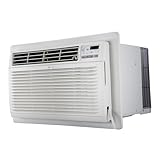
Overview: LG’s 10,000 BTU wall-mounted AC cools rooms up to 440 sq. ft., utilizing eco-friendly R-32 refrigerant. Designed solely for wall sleeves, it offers three cooling speeds, Energy Saver mode, and a moisture-removing Dry mode, targeting apartments and bedrooms.
What Makes It Stand Out: Its EER of 10.7 and R-32 refrigerant set a high bar for energy efficiency in its class, reducing environmental impact and electricity costs. The 4-way air deflector provides superior airflow customization compared to units with fixed vents, enhancing room-wide comfort.
Value for Money: Commands a slight premium over budget brands but delivers through efficiency savings and LG’s reliability. It’s competitively priced against similar R-32 units, offering better long-term value than less efficient models despite a higher initial outlay.
Strengths and Weaknesses: Strengths: Industry-leading energy efficiency, effective 4-way airflow, quiet operation, washable filter, strong dehumidification (2.9 pints/hour). Weaknesses: Wall-sleeve only (no window option), lacks smart features, basic remote functionality, installation requires existing sleeve.
Bottom Line: A dependable, efficient choice for permanent wall installations in medium rooms; ideal for eco-conscious buyers prioritizing low running costs, though not suited for windows or smart home integration.
6. TABU 12000BTU Mini Split Air Conditioner with Heater, 110-120V 19 SEER2 Wall-Mounted Ductless AC& Heat Pump, Energy Saving, Inverter, WIFI Enabled,Cools Rooms up to 750 Sq.Ft
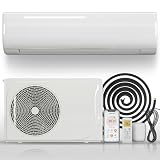
Overview:
The TABU 12000BTU Mini Split is a versatile ductless system designed for year-round climate control in rooms up to 750 sq. ft. Operating on standard 110-120V, it combines cooling, heating, dehumidifying, and fan functions in a sleek wall-mounted unit, targeting homeowners seeking efficient, space-saving comfort.
What Makes It Stand Out:
Its standout features include rapid 30-second cooling/60-second heating activation, true inverter technology for 19 SEER2 energy efficiency, and comprehensive Wi-Fi control compatible with Alexa/Google Assistant. The 4-in-1 functionality (cooling, heating, dehumidifying, fan-only) and space-saving wall-mount design offer flexibility lacking in many competitors.
Value for Money:
Priced competitively for a full-featured mini-split, it justifies cost through energy savings (reducing bills vs. window units), eliminating ductwork expenses, and replacing multiple appliances. While pricier than basic window ACs, its year-round utility and efficiency deliver strong long-term value for medium-sized rooms.
Strengths and Weaknesses:
Strengths: Exceptional multi-season versatility; quiet inverter operation; intuitive app/remote control; effective dehumidification; space-efficient installation.
Weaknesses: Requires professional installation (increasing upfront cost); 750 sq. ft. cooling claim may be optimistic in extreme heat; Wi-Fi setup can be finicky for non-tech users.
Bottom Line:
Ideal for homeowners wanting an efficient, all-in-one climate solution for medium rooms, the TABU delivers robust performance and smart features. Despite installation complexity, its energy savings and year-round comfort make it a worthwhile investment for permanent setups.
7. Whirlpool 12,000 BTU 230V Through-the-Wall Air Conditioner with Supplemental Heat, Dehumidifier and Remote, Wall AC Unit for Apartment, Living Room and Medium Rooms up to 550 Square Feet in White

Overview:
This Whirlpool through-the-wall unit targets apartments and medium rooms (up to 550 sq. ft.) with 12,000 BTU cooling and supplemental heat. Designed for permanent sleeve installation, it prioritizes straightforward operation with remote control, dehumidification, and energy-saving modes in a compact white chassis.
What Makes It Stand Out:
Its universal sleeve fit (24.5"-27" width) simplifies replacement for existing setups, while 8-way directional louvers and 3 fan speeds offer precise airflow control. The Eco and Sleep modes optimize energy use, and the quick-access filter eases maintenance—key advantages for renters or those upgrading older units.
Value for Money:
Competitively priced for a sleeve-fit unit, it offers solid value through reliable Whirlpool engineering and included trim kit. However, the 230V requirement necessitates a dedicated circuit (increasing installation costs), and supplemental heat limits winter utility, making it less cost-effective than heat pumps in cold climates.
Strengths and Weaknesses:
Strengths: Easy retrofit into existing sleeves; excellent airflow customization; user-friendly Eco/Sleep timers; simple filter maintenance; robust build quality.
Weaknesses: 230V wiring requirement complicates DIY installation; supplemental heat is inadequate below freezing; higher noise levels (52-58 dB) than mini-splits; less energy-efficient than inverter systems.
Bottom Line:
A dependable choice for apartments with pre-installed sleeves needing powerful cooling, the Whirlpool excels in ease of replacement and airflow control. Avoid if 230V isn’t available or primary heating is required; better suited for cooling-focused climates.
8. 2 In1 Mini Wall Mounted Air Conditioner Fan, Portable Cooling And Heating Air Conditioners Heating System for Bathroom Office Bedroom RV, Ac and Heater Combo Unit(White)
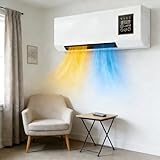
Overview:
This compact unit markets itself as a “2-in-1” ductless AC and heater but functions primarily as a PTC heater with a fan-based cooling system. Targeting small spaces like bathrooms or RVs, it promises portability without exhaust hoses, though true refrigerative cooling is absent.
What Makes It Stand Out:
Its key differentiator is the claim of “no exhaust needed” portability and wall-mount flexibility. The focus on bathroom-safe installation, ultra-quiet operation (<40 dB), and dual heater/fan functionality cater to niche scenarios where traditional ACs can’t be installed, like damp rooms or tiny dwellings.
Value for Money:
At a lower price point than mini-splits, it offers limited value. While the heater component is effective for small areas, the “cooling” is merely a fan—ineffective in hot weather. It replaces a space heater but not a real AC, making it poor value for those expecting actual temperature reduction.
Strengths and Weaknesses:
Strengths: Truly portable and exhaust-free; safe for bathroom use; silent operation; simple plug-and-play setup; useful as a supplemental heater.
Weaknesses: Provides no refrigerative cooling (fan-only “cooling” is misleading); inadequate for rooms >150 sq. ft.; heating capacity limited to immediate vicinity; not a substitute for real AC in warm climates.
Bottom Line:
Only consider this as a quiet, space-saving heater for very small, cool spaces (e.g., bathrooms). It fails as an air conditioner. Avoid if you need genuine cooling—this is a fan/heater hybrid misrepresented in marketing.
9. Kol Air 9000 BTU Mini Split Air Conditioner & Heat Pump - 110V/120V Wall Mount Ductless Inverter AC/Heating System - 19 SEER2, Ultra Quiet, Cools & Heats 500 Sq Ft
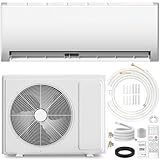
Overview:
Kol Air’s 9000 BTU mini-split delivers efficient cooling and heating for spaces up to 500 sq. ft. using standard 110-120V power. Certified to 19 SEER2 with R32 refrigerant, it emphasizes quiet operation, smart features, and durability for bedrooms or offices in temperate to cold climates.
What Makes It Stand Out:
AHRI certification guarantees performance claims, while R32 refrigerant offers eco-efficiency and cold-weather reliability down to -4°F. The ultra-quiet 25-35 dB operation, auto self-cleaning, and precise ±1°F temperature control via inverter tech surpass many budget mini-splits.
Value for Money:
Priced mid-range, it delivers exceptional value through ENERGY STAR savings (36% vs. window units), AHRI-backed efficiency, and cold-climate heating. The 110V compatibility avoids costly electrical upgrades, and low maintenance (self-clean/washable filter) reduces long-term costs versus non-inverter systems.
Strengths and Weaknesses:
Strengths: Truly quiet library-level operation; reliable sub-zero heating; certified efficiency (AHRI/R32); user-friendly remote/timer; self-cleaning prevents mold.
Weaknesses: 500 sq. ft. capacity suits only small rooms; professional installation required; remote lacks app connectivity; limited brand service network vs. major OEMs.
Bottom Line:
A top pick for small rooms needing whisper-quiet, energy-efficient year-round comfort. Its cold-weather prowess and certified efficiency justify the cost, though installation complexity means it’s best for permanent residential use.
10. Smart Air Conditioner Wall Mounted Heating Machine, 2 In 1 Portable Ac Unit Fan, Indoor Space Heater and Natural Wind, 110V White Quiet Mini Fans for Bedroom Living Room Office(White)

Overview:
This wall-mounted unit is marketed as a “2-in-1” AC/heater but functions solely as a fan-driven system—providing heater functionality and airflow, not refrigerative cooling. Targeting bedrooms and bathrooms, it emphasizes quiet operation, portability, and space-saving design for supplemental comfort.
What Makes It Stand Out:
Bathroom-safe installation and true plug-and-play simplicity (no sleeve or wiring) distinguish it. The ultra-quiet operation (<35 dB) and compact wall-mount design cater to spaces where even mini-splits can’t fit, like small bathrooms or RVs, positioning it as a niche “fresh air” solution.
Value for Money:
Affordable upfront, but limited value for cooling needs. It effectively replaces a small space heater and basic fan, but the “AC” claim is misleading—it won’t lower room temperature. Worthwhile only as a supplemental heater/fan in tiny, cool spaces, not as a primary climate solution.
Strengths and Weaknesses:
Strengths: Safe for humid environments (bathrooms); silent operation; effortless DIY installation; no exhaust or ducting; useful as a focused heater or breeze generator.
Weaknesses: Zero actual cooling capability (fan-only); heating insufficient for cold rooms; ineffective beyond personal proximity; marketing inaccurately implies AC functionality.
Bottom Line:
A decent quiet heater/fan for small, cool spaces like bathrooms, but not an air conditioner. Only purchase if you need supplemental warmth or airflow in areas under 150 sq. ft. and understand its severe cooling limitations.
Understanding the 110-Volt Wall AC Landscape
Why Standard Voltage Matters for Your Cooling Solution
Choosing an air conditioner designed specifically for 110-volt circuits (often referred to as 120V in technical specs) is non-negotiable for safety and functionality in most residential settings. Standard household outlets in North America operate on this voltage. Units requiring 220/240V need dedicated, high-amperage circuits installed by an electrician – a significant hurdle for renters or those avoiding major renovations. A true 110V wall unit plugs directly into your existing outlet, leveraging the common infrastructure already in your walls. This eliminates complex electrical work, making targeted room cooling accessible and affordable without altering your home’s wiring.
Distinguishing True Wall Units from Window Models
It’s crucial to differentiate between genuine wall-mounted air conditioners and window units adapted for wall sleeves. True wall air conditioners are engineered from the ground up for permanent horizontal installation through an exterior wall sleeve. They feature a robust, integrated chassis designed for this specific orientation, often with distinct airflow patterns optimized for wall placement. Window units, while sometimes retrofitted into wall sleeves using kits, are primarily designed for vertical window sashes. Their internal components, weight distribution, and drainage systems may not function optimally or safely in a horizontal wall installation, potentially leading to performance issues, water leaks, or premature failure.
The Critical Role of Amperage and Circuit Capacity
Voltage is only half the story; amperage (amps) is equally vital. Standard 110V household circuits are typically rated for 15 or 20 amps. Air conditioners draw significant current, especially during startup. A unit’s amp draw must stay comfortably below the circuit’s rating, factoring in other devices potentially sharing the circuit (like lamps or chargers). Exceeding this capacity trips the breaker, causing disruptive shutdowns. Always check the unit’s specific amperage requirement (found on its nameplate or spec sheet) and ensure your chosen circuit has adequate spare capacity. A dedicated circuit is highly recommended for reliable operation and to prevent nuisance tripping.
Sizing and Placement: Matching Cooling Power to Your Space
Calculating the Right BTU for Your Room Dimensions
Selecting the correct cooling capacity, measured in British Thermal Units (BTU), is paramount for efficiency and comfort. Too few BTUs, and the unit runs endlessly without cooling the space. Too many, and it short-cycles – turning on and off rapidly – failing to adequately dehumidify the air, leading to a clammy, uncomfortable feel. Start with basic room size: measure the square footage (length x width). As a general baseline, you need roughly 20 BTUs per square foot. However, this is just the starting point; numerous other factors significantly influence the ideal BTU requirement.
Key Factors Beyond Square Footage
Don’t stop at basic math. Sun exposure plays a huge role; a room with large south or west-facing windows absorbing intense afternoon sun may need 10-20% more BTUs. High ceilings (over 8 feet) increase the air volume to cool. Occupancy matters too – each regular occupant adds body heat, suggesting an extra 600 BTUs per person. Kitchens generate significant heat from appliances, often requiring higher capacity. Insulation quality is critical; poorly insulated rooms or those with single-pane windows lose cool air rapidly, demanding more cooling power. Always adjust your initial BTU calculation upwards based on these real-world conditions.
Strategic Placement for Optimal Airflow and Efficiency
Where you install the unit dramatically impacts its performance. Center the unit on the wall if possible for balanced airflow distribution. Avoid placing it directly above heat-generating appliances like TVs or entertainment centers. Ensure the exterior portion has ample clearance – several inches on all sides – for unrestricted intake and exhaust of air; blocking vents forces the compressor to work harder, reducing efficiency and lifespan. Position it away from direct obstructions like shrubs or fences outside. Crucially, the interior louver should direct cool air across the room, not straight at a wall or ceiling, to promote even circulation and prevent cold spots.
Installation Essentials for Safety and Performance
Preparing the Wall Sleeve: Precision is Key
The sleeve is the structural foundation for your wall unit. Proper installation begins with cutting a hole in the exterior wall that precisely matches the sleeve manufacturer’s specifications – usually slightly smaller than the sleeve flange. This ensures a tight, weatherproof seal. The sleeve must be installed with a slight downward tilt (typically 1/4 inch per foot) towards the outside. This critical angle allows condensate water to drain properly away from your home’s interior, preventing leaks and potential water damage inside your walls or living space. Never install a sleeve perfectly level.
Achieving a Weatherproof and Energy-Efficient Seal
Gaps around the sleeve are major sources of energy loss, drafts, and moisture intrusion. After inserting the sleeve, meticulously seal the exterior perimeter where it meets the siding or brick using a high-quality, paintable exterior caulk designed for flexibility and durability. On the interior side, use closed-cell foam insulation or specialized sleeve sealing kits to fill the gap between the sleeve and the wall framing. This thermal break minimizes conductive heat transfer through the metal sleeve. Finally, ensure the unit itself fits snugly within the sleeve, with its own integrated weather flaps or seals properly engaged against the interior wall surface.
Verifying Electrical Safety at the Outlet
Before plugging in your new unit, inspect the outlet. It should be a standard NEMA 5-15R or 5-20R receptacle (two vertical slots plus a ground hole). Test the outlet with a plug-in circuit tester to confirm correct wiring (hot/neutral/ground). The outlet must be on a circuit capable of handling the unit’s amperage draw (check nameplate). Crucially, never use an extension cord or power strip. These can overheat, melt, and cause fires due to the high current draw of air conditioners. Plug the unit directly into the wall outlet. If the outlet feels warm during operation or the circuit breaker trips frequently, stop using it immediately – this indicates an unsafe electrical situation requiring an electrician.
Maximizing Efficiency and Comfort Features
Decoding the Energy Efficiency Ratio (EER)
The Energy Efficiency Ratio (EER) is the key metric for comparing the energy consumption of 110V wall air conditioners. It’s calculated by dividing the unit’s cooling capacity (in BTUs) by its power input (in watts) under specific, standardized test conditions (usually 95°F outdoor temperature, 80°F indoor, 50% humidity). A higher EER signifies greater efficiency – the unit delivers more cooling per watt of electricity consumed. While SEER ratings are common for central systems, EER is the standard for room air conditioners. Look for units with the highest EER your budget allows; the long-term savings on electricity bills often outweigh a slightly higher upfront cost.
The Value of Programmable Timers and Thermostats
Manual operation is inefficient and inconvenient. Units featuring programmable 24-hour or 7-day timers allow you to set cooling to start just before you arrive home or wake up, avoiding the energy waste of running the AC all day when you’re not there. A precise, easy-to-read digital thermostat is essential for maintaining your desired temperature consistently. Avoid units with only basic “high/low” fan settings and no temperature control; these lead to uncomfortable temperature swings and higher energy use. Look for thermostats offering a range of settings (e.g., 60°F to 88°F) for fine-tuned comfort.
Smart Features for Modern Convenience
Beyond basic cooling, consider features enhancing usability. Multi-speed fan settings (high, medium, low) provide flexibility for different cooling needs and noise levels. A dedicated “dry” or dehumidify mode is invaluable in humid climates, removing moisture from the air without drastically lowering the temperature, improving comfort at higher thermostat settings. Sleep mode gradually adjusts the temperature upwards (or fan speed down) through the night for energy savings and comfort. Remote control operation is almost essential for wall units, eliminating the need to get up to adjust settings. Some newer models offer Wi-Fi connectivity for app control and scheduling, adding significant convenience.
Ensuring Quiet Operation and Longevity
Understanding Decibel Ratings for Peaceful Cooling
Noise level, measured in decibels (dB), is a major factor for comfort, especially in bedrooms or home offices. Manufacturer specs often list noise levels for different fan speeds. Pay close attention to the dB rating at the medium or low setting, as this is often the most-used mode for maintaining temperature. Generally, units below 50 dB on low are considered relatively quiet for a bedroom, while those above 55 dB can be noticeably disruptive. Consider the placement; noise travels, so avoid installing a louder unit directly outside a bedroom window on an adjacent wall if possible. Internal fan design and compressor insulation significantly impact noise output.
The Importance of Regular Filter Maintenance
The air filter is your unit’s first line of defense against dust, pollen, and debris. A clogged filter severely restricts airflow, forcing the compressor to work much harder. This drastically reduces cooling efficiency, increases energy consumption, strains components, and can lead to frozen coils or complete breakdowns. Most units have easily accessible, washable filters. Make it a habit to check and clean or replace (if disposable) the filter every two weeks during peak cooling season. This simple, quick task is the single most effective way to maintain performance, efficiency, and extend the unit’s lifespan.
Seasonal Storage and Off-Season Care
When cooling season ends, proper storage protects your investment. Thoroughly clean the unit, including the filter, evaporator, and condenser coils (use a soft brush and coil cleaner if needed). Run the unit on “fan only” mode for 30 minutes to dry out internal components and prevent mold growth. Carefully remove the unit from the sleeve according to the manufacturer’s instructions. Seal the exterior sleeve opening with a tight-fitting, insulated cover to prevent cold air, pests, and moisture from entering your home. Store the unit upright in a dry, protected place like a garage or basement. Avoid laying it on its side, as this can damage the compressor.
Safety, Cost Considerations, and Realistic Expectations
Avoiding Common Electrical Hazards
Electrical safety is non-negotiable. Reiterating: never use an extension cord, surge protector, or power strip with a wall air conditioner. These devices are not designed for the continuous high current draw and present a severe fire hazard. Ensure the outlet is grounded (three-prong). If the unit’s plug feels warm, smells hot, or shows signs of melting, unplug it immediately – this indicates a dangerous problem. If your home has older wiring (e.g., knob-and-tube or ungrounded outlets), consult a qualified electrician before installing any major appliance. Don’t risk fire for the sake of convenience.
Realistic Cooling Capacity Limitations of 110V Units
It’s essential to understand the inherent limitations of standard-voltage wall air conditioners. Due to the constraints of 15-20 amp circuits, these units typically max out around 12,000 to 14,000 BTUs. This is sufficient for standard-sized rooms (up to 550-700 sq ft, depending on conditions) but is inadequate for cooling large open floor plans, multiple rooms, or very hot/sunny spaces. They are designed for spot cooling, not whole-house solutions. If your cooling needs exceed what a single 110V unit can handle, you’ll need to explore multiple units (on separate circuits) or alternative solutions requiring different electrical setups. Managing expectations prevents disappointment and ensures you choose a viable solution.
Estimating Operating Costs for Budget Planning
While upfront cost matters, the long-term cost of operation is significant. Calculate estimated running costs: Find the unit’s wattage (on the nameplate or specs; often 900W-1400W for 110V models). Multiply watts by hours of use, then divide by 1000 to get kilowatt-hours (kWh). Multiply kWh by your local electricity rate (found on your bill, e.g., $0.15/kWh). For example: 1200W unit running 8 hours = 9.6 kWh. At $0.15/kWh, that’s $1.44 per day. Higher EER units cost less to run. Factor this into your decision; a slightly more expensive, efficient model often pays for itself over a few seasons. Also, consider that running an AC increases humidity removal, potentially reducing the need for a separate dehumidifier.
Frequently Asked Questions
Frequently Asked Questions
Can I install a 110-volt wall AC unit myself, or do I need a professional? Many homeowners with basic DIY skills can install a true wall unit following the manufacturer’s instructions, especially sleeve preparation and sealing. However, if electrical work is needed (like installing a dedicated circuit) or you’re uncomfortable with structural modifications, hire a licensed professional for safety and compliance.
Why does my 110V AC trip the circuit breaker when it starts? This usually indicates the circuit is overloaded. The unit’s startup surge (higher than running amps) may exceed the circuit’s capacity, especially if other devices share the circuit. Try plugging it into a different, dedicated circuit. If tripping persists, an electrician may need to assess the circuit or unit.
Is it safe to run a 110V wall AC 24/7 during a heatwave? While designed for continuous operation, constant running puts significant strain on components. Ensure the unit is correctly sized for the space (undersized units run non-stop), filters are clean, and airflow is unrestricted. Monitor for unusual noises or excessive heat from the unit or outlet as warning signs.
Do I really need a sleeve, or can I just mount the unit directly in the wall? A properly installed sleeve is absolutely essential. It provides structural support, creates a weatherproof seal, allows for correct drainage slope, and enables safe removal for maintenance or storage. Mounting directly in the wall without a sleeve is unsafe, inefficient, and will lead to leaks and damage.
How much does it cost to run a typical 110V wall air conditioner per hour? Cost depends on the unit’s wattage and your electricity rate. A common 10,000 BTU unit uses about 900-1000 watts. At $0.15 per kWh, running costs roughly $0.135 to $0.15 per hour. Higher BTU or less efficient models cost more; check the specific wattage and your local rate for accuracy.
Can a 110V wall AC effectively cool a room with large windows? It can, but you’ll likely need a higher BTU capacity (e.g., 15-20% more than standard calculation) to combat solar heat gain. Using blackout curtains or reflective window film during peak sun hours significantly reduces the cooling load and improves efficiency.
Why is my unit blowing warm air even though it’s running? Common causes include a dirty air filter restricting airflow, clogged condenser coils (exterior part), low refrigerant (requires professional service), or the unit being set to “fan only” mode accidentally. Check filters and settings first; persistent issues need a technician.
Is condensation dripping inside normal for a wall AC? A small amount of water draining outside the unit is normal condensation. However, water dripping inside your room indicates a problem: a clogged drain channel, incorrect installation tilt (sleeve not sloped outward), or a severely dirty evaporator coil preventing proper drainage. Address this promptly to prevent water damage.
Can I use a generator to power my 110V wall AC during an outage? Only if the generator has sufficient continuous wattage capacity (check unit’s running and startup wattage requirements) and is properly sized and installed. Most portable generators lack the capacity for AC units. Never plug an AC directly into a generator without understanding its capabilities; improper use can damage both.
What’s the average lifespan of a quality 110-volt wall air conditioner? With proper installation, regular filter cleaning, and seasonal maintenance, expect 8-12 years of reliable service. Factors like usage intensity, climate (extreme heat shortens life), electrical stability, and maintenance diligence significantly impact longevity.
See Also
- 10 Expert-Recommended 220 Volt Wall Air Conditioners for Large Spaces in 2026
- 10 Most Durable 110 Volt Wall Air Conditioners Based on Real User Reviews in 2026
- 10 Most Durable 220 Volt Wall Air Conditioners Based on Real User Reviews in 2026
- 10 Essential 220 Volt Wall Air Conditioners Every Homeowner Needs in 2026
- 10 Game-Changing 110 Volt Wall Air Conditioners for Renters in 2026